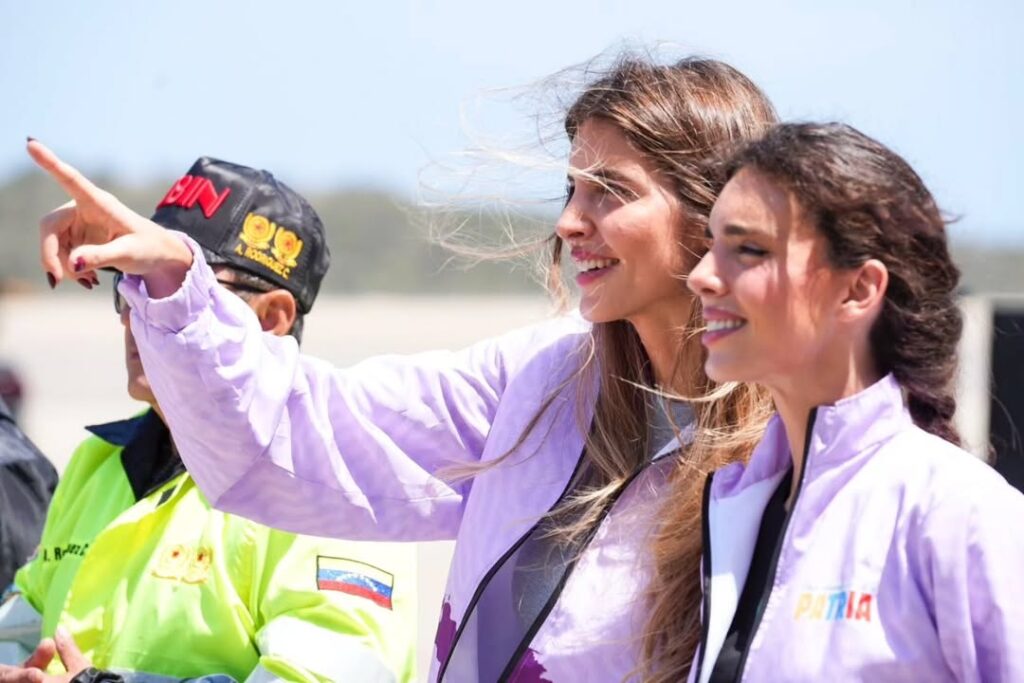
The head of the Return to the Homeland Plan, Camilla Fabri, receives a repatriation flight on Monday, February 15, 2026, at the Simón Bolívar International Airport in Maiquetía, La Guaira state, Venezuela. Photo: IG/@vueltalapatria.
The head of the Return to the Homeland Plan, Camilla Fabri, receives a repatriation flight on Monday, February 15, 2026, at the Simón Bolívar International Airport in Maiquetía, La Guaira state, Venezuela. Photo: IG/@vueltalapatria.
Caracas (OrinocoTribune.com)—Last week, Venezuela welcomed three new groups of migrants under the Return to the Homeland Plan, marking a steady increase in repatriation efforts since flights resumed earlier this year. These operations, landing at Simón Bolívar International Airport in Maiquetía, La Guaira, take place as Venezuela continues to face the aftermath of the January 3 US military aggression.
Recent flight data and statistics
Since the start of 2026, 16 repatriation flights have arrived from the US, bringing a total of 2,914 Venezuelan deportees back home. Last week alone, 304 Venezuelans were repatriated. When added to cumulative figures from the previous year, a total of 21,885 migrants have returned, many of whom were escaping wrongful detention and racist persecution in the US.
View this post on Instagram
The latest flights, operated by the US-based GlobalX Airlines, are detailed below:
• Flight 112: Arrived Monday, February 16, with 110 deported migrants from Miami, Florida. The group included three minors, 15 women, and 92 men.
• Flight 113: Arrived Wednesday, February 18, with 110 deported migrants from Miami, Florida, including 14 women and 96 men.
• Flight 114: Arrived Friday, February 20, returning 84 Venezuelans from Miami, Florida. The group consisted of nine minors, 14 women, and 61 men.
These arrivals follow the previous 2,610 individuals who returned earlier this year across flights 99 through 111. This logistical program continues following the January 3 attack by the US regime, which included the kidnapping of President Nicolás Maduro and First Lady Cilia Flores, as well as the murder of over 100 people.
Dynamics of forced displacement and sovereign return
The displacement of Venezuelans began during the severe economic decline between 2015 and 2020, a direct result of the illegal blockade and hybrid warfare waged by the US. This orchestrated instability was compounded by a persistent media campaign targeting Venezuelan migrants, leading to waves of xenophobic attacks and the criminalization of the diaspora. Subsequently, the US regime transitioned from encouraging migration to executing mass detentions and summary deportations, often uprooting individuals who had ongoing legal immigration processes and no criminal history.
Every Venezuelan returning under the Return to the Homeland Plan is received with established protocols, including immediate medical care, psychological support, and legal and socioeconomic guidance. Since its inception in 2018, the program has provided a safe and dignified return for those who faced exploitation and xenophobia abroad.
Escalation of SOUTHCOM extrajudicial killings
While repatriation efforts continue, US Southern Command (SOUTHCOM) reported a new lethal strike in the Caribbean on Monday, February 23. This latest aggression brings the total number of deaths from so-called “kinetic strikes” against small boats to 146.
In its statement on Monday, SOUTHCOM reported that Operation Southern Spear conducted a “successful kinetic strike” against a vessel suspected of drug trafficking. The operation resulted in four deaths, with no survivors recorded.
While the US military characterizes these actions as counter-narcotics measures, international legal experts label the policy as a campaign of extrajudicial killings. Critics point out that the use of lethal force against suspects who do not pose an imminent violent threat violates international law, human rights, and the right to due process. US organizations such as the ACLU have noted that SOUTHCOM is acting as “judge, jury, and executioner” on the high seas, highlighting that the summary execution of individuals on civilian boats lacks any legal basis in either US or international maritime law.
Statistical analysis of the extrajudicial murders
According to data tracked by Orinoco Tribune, the death toll from these operations has reached a grim new milestone. Since the strikes began in September last year, a total of 146 people have been killed in 43 separate strikes.
The statistical breakdown of the fatalities reveals the geographical scope of the violence:
• Eastern Pacific: 89 deaths recorded in 29 strikes.
• Caribbean Sea: 57 deaths recorded in 14 strikes.
The deadliest day this year remains February 16, 2026, when three separate US strikes in both regions resulted in 11 deaths. The data further shows a trend of “zero-survivor” outcomes. Search-and-rescue operations for those missing at sea are frequently terminated shortly after the strikes occur, with individuals later presumed dead. For this reason, a February 9 survivor was designated by Orinoco Tribune as dead in the latest update.
Special for Orinoco Tribune by staff
OT/JRE/SF