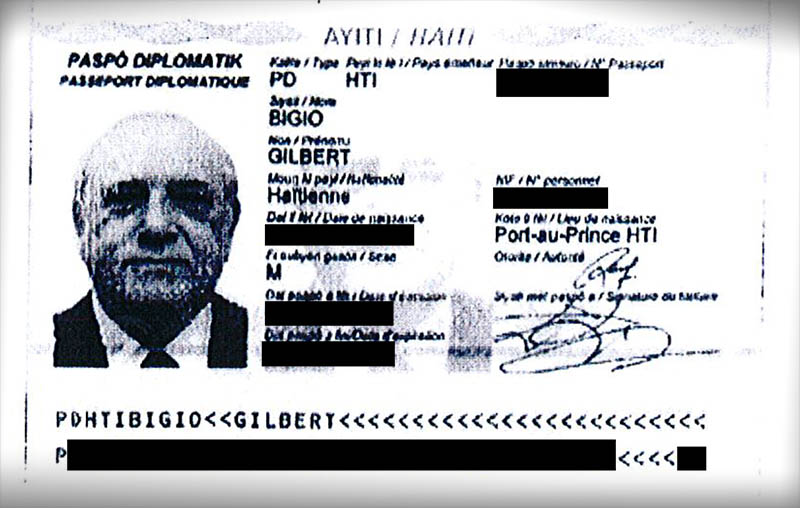
Composite image of Gilbert Bigio against a backdrop of armed Haitians. Photo: MintPress News

Orinoco Tribune – News and opinion pieces about Venezuela and beyond
From Venezuela and made by Venezuelan Chavistas
Composite image of Gilbert Bigio against a backdrop of armed Haitians. Photo: MintPress News
By Kit Klarenberg – Oct 4, 2024
In December 2022, Canada imposed strict sanctions on Gilbert Bigio, frequently referred to as “Haiti’s only billionaire” and the deeply impoverished country’s “richest man.” He, along with two other super-wealthy Haitian citizens, was accused by Ottowa of using his outsized influence and power in the country “to protect and enable the illegal activities of the armed criminal gangs” that have been tearing Port-au-Prince apart for years. Since then, Bigio has remained at liberty and unpunished – meanwhile, Haiti has slid ever further into catastrophe.
Markedly, no other Western country – notably the sanctions-happy U.S. – followed Canada’s lead. While wave upon wave of UN-mandated peacekeepers from every corner of the world have been deployed to Haiti in recent years, they have been unable to quell – and often exacerbated – the violence that has left the country without a functioning state or civil society. Kenya, currently leading an international “anti-gang” initiative in Port-au-Prince, recently called for the effort to be transformed into a dedicated U.N. peacekeeping operation.
For his part, Latin American & Caribbean Studies Professor Danny Shaw has zero doubt that Bigio and others like him are fundamentally responsible for encouraging and facilitating Haiti’s collapse. He tells MintPress News, “Only a tiny, well-connected clique of white warlords completely isolated from the needs and reality of the 99.9% of the Haitian population has the necessary private airports, ports and border contacts to smuggle guns and other contraband objects into the country.”
That the arms have kept flowing all along, and no action has been taken to neutralize the international criminal networks operated by Bigio, undergirding that influx, tends to suggest the tycoon’s illicit activities are actively, if quietly permitted by powerful elements within Western governments. As we shall see, Israel may lie at the forefront of Bigio’s international protection racket. Comprehending how he furthers Israel’s interests in Haiti and the wider region may be crucial to understanding how Tel Aviv’s tendrils extend elsewhere overseas.
Professor Shaw notes that Bigio is also active in the neighboring Dominican Republic, working closely with President Luis Abinader. For example, Pablo Daniel Portes Goris, CEO of Bigio’s GB Energy company, is Abinader’s financial advisor. Walkiria Caamaño and Joan Fernandez Osorio are Bigio executives working for the Dominican president. Shaw adds:
“Individuals like Bigio have historically been untouchable on both sides of the border. Dominican Republic elites have historically teamed up with corrupt Haitian leaders against the 99.9 percent of the island’s population. The Bigios and a handful of other multimillionaire families, along with their hired politicians, are a state within a state. Much of what occurs in Haitian politics, from political coups to targeted assassinations, can be traced back to the power struggle that occurs between them.”
‘Admiration for Israel’
In reporting on Bigio’s sanctioning by Canadian authorities, the Western media universally refused to mention his lifelong dedication to Zionism or intimate, long-running ties with the Israeli state. This deficit is indefensible, given a February 2004 Jewish Telegraphic Agency report on the history of Jews in Haiti featured a lengthy portrait of the oligarch, offering some highly revealing, deeply suspect disclosures along the way.
Bigio was described as the “de facto leader” of the country’s ever-diminishing Jewish community, routinely convening celebrations such as Rosh Hashanah and Yom Kippur at his “big, beautiful house” in “one of the few upscale neighborhoods in Port-au-Prince.” Despite not being “a religious man,” Bigio was “especially proud of the Torah scroll he keeps in his study – the only Torah in Haiti.” Coincidentally, Israel’s founders were typically not observant Jews but predominantly atheists and evangelical Christians. They remain among Tel Aviv’s most rabid supporters today.
The Jewish Telegraphic Agency revealed how Bigio’s grandfather and father emigrated to Haiti in the late 1800s and during World War I, respectively, part of a contemporary wave of Sephardi Jew arrivals from Egypt, Lebanon, and Syria. Thereafter, the oligarch’s forebears “prospered in the export of cotton, cacao and campeche wood.” Come the present day, Bigio and his family had expanded their Haitian operations to include “industry and trading,” a steel mill, and banking. These activities made them “extremely wealthy” in a country where: “About 50 percent of the population is illiterate, and 76 percent of children under age five are underweight or suffer from stunted growth.”
Despite this, while residing in a “well-guarded” palatial home replete with “a luxurious swimming pool and a gazebo for outdoor parties,” Bigio dismissed suggestions average Haitians felt any “resentment” towards him or other wealthy expatriates in the country, which included a number of high-profile Israelis. Instead, he suggested, “If you know how to manage success, people admire you instead of hate you.” He also “laughed” when asked if he’d ever experienced antisemitism in the country.
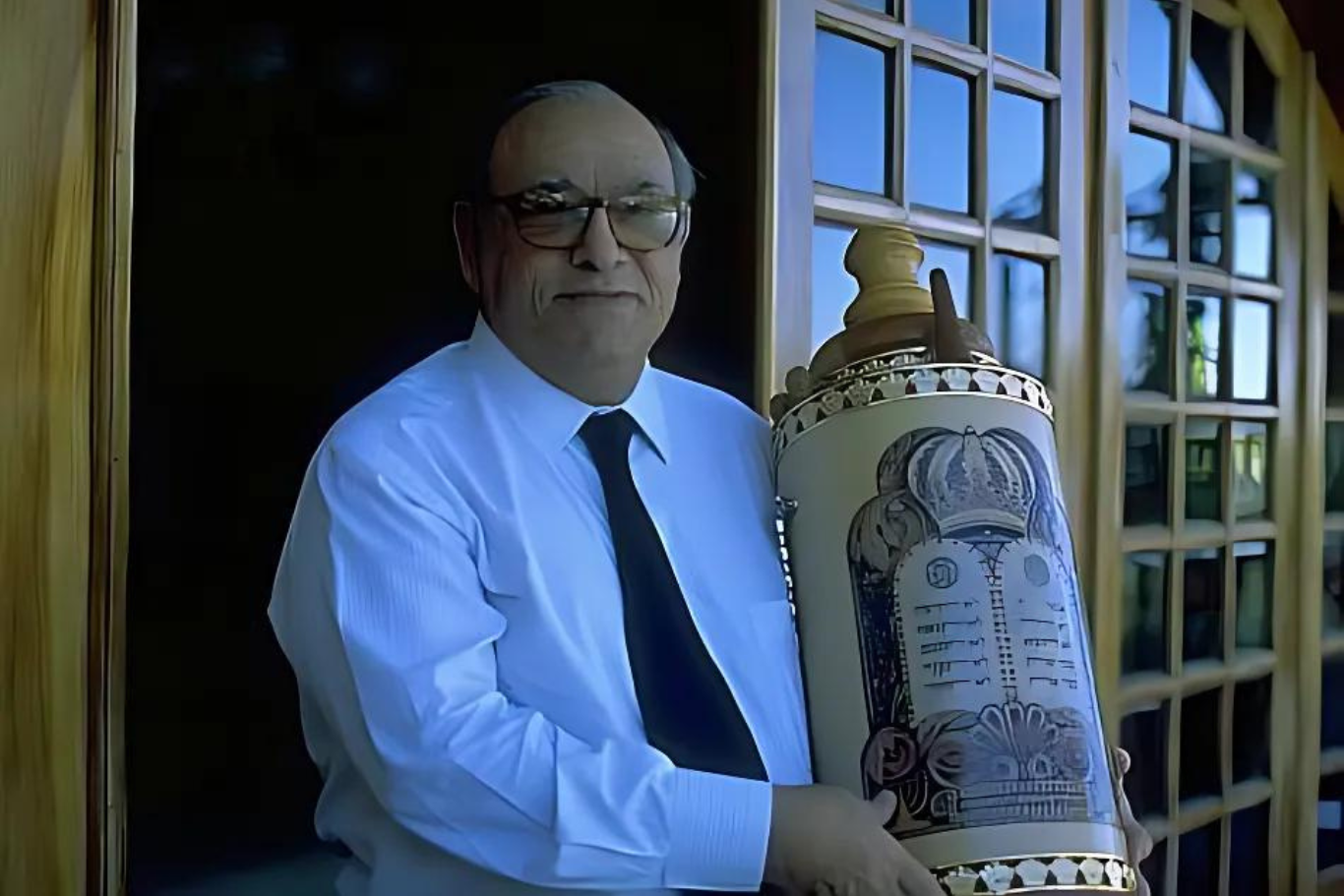
Bigio countered that Haitians “have a lot of respect for the Jews and a lot of admiration for Israel,” noting Haiti voted in favor of the 1947 UN partition plan for Palestine, which created Israel. In the present day, he added, Port-au-Prince “annually imports $20 million worth of Israeli goods, ranging from telecom equipment to Uzi machine guns,” and the pair enjoyed “good” relations. As the Jewish Telegraphic Agency noted, the tycoon was well-placed to comment on this issue:
“Bigio…is the honorary Israeli consul in Haiti, which explains the enormous Israeli flag in front of his house – as well as his bulletproof Mercedes SUV.”
This may mean Bigio enjoys de facto diplomatic immunity, which could partly explain how, despite the Canadian government’s censure, weapons continue to flow into Port-au-Prince without hindrance and how he has not faced prosecution or penalties stateside or elsewhere. Conversely, though, a 2004 Jewish Telegraphic Agency interview concluded with Bigio refusing to “discuss politics or offer a Jewish perspective on the current revolt” against Haiti’s democratically elected President, Jean-Bertrand Aristide. The unrest had been raging exponentially for two years by that point. Bigio explained:
“Our principle, which we respect daily, is to not mix in Haitian politics. Even after three generations, we are considered foreigners. So we believe that to have good relations with the government, we have to step aside. We take care of business, and let them take care of politics.”
‘Bigio Empire’
Just two-and-a-half weeks later, Haiti succumbed to yet another brutal, death squad-initiated, CIA-orchestrated coup. The effects reverberate throughout the country to this day. Aristide’s removal from office was quickly followed by wholesale destruction of all his administration’s progressive achievements for average citizens, U.S.-imposition of a savage junta in Port-au-Prince, and murderous paramilitary crackdowns on the ousted President’s supporters and political base. The parlous state into which modern Haiti has been thrust directly results from these dire developments. That’s indeed no accident.
The full extent of the cloak-and-dagger connivances that spurred Haiti’s February 2004 coup and the identities of influential individuals and organizations implicated in sponsoring, funding, and training insurrectionary forces responsible for expelling widely-beloved Aristide may never be known. Nonetheless, Bigio has been regarded as a key orchestrator of the insurrectionary upheaval.
In the spirit of cui bono?, the oligarch – contrary to his professed commitment to non-interference in Haiti’s political affairs – seems an immediately obvious candidate for supporting Aristide’s downfall.
Jeb Sprague, a leading academic researcher on paramilitarism in Haiti and transnational capitalism in the Caribbean, tells MintPress News that there were earlier attempts to remove Aristide’s second government from office before February 2004, in late 2000 in the lead-up to his government’s inauguration, in an attempted assault on the National Palace in December of 2001, and through a low-intensity contra campaign carried out in the country’s central plateau in 2002-2003:
“Bigio was widely suspected to have supported these abortive efforts, in conjunction with fellow industrialists and treacherous, high-ranking local police and security officials. Bigio, as well as some other oligarchs and leaders of the Haitian military, were placed on a U.S. government list of supporters of the Cédras junta, which seized power after the 1991 CIA-backed coup that ousted President Aristide.”
Moreover, mainstream U.S. media has acknowledged Bigio’s industrial-scale profiteering from the dismantling of what remained of Haiti’s crumbling state institutions. Without minimum wages and protections for Haitian workers and state restrictions on foreign ownership and exploitation of the country’s industry and resources, his family’s financial interests expanded across the island – encompassing both Port-au-Prince and the Dominican Republic – exponentially. Among the most lucrative components of Bigio’s newly enlarged portfolio were energy, security, and shipping. The Miami Herald reported in December 2021:
“The conglomerate’s reach extends to the entire Haitian economy, from providing construction supplies and fuel to offering household necessities like cooking oil and food. He has branched out as well into the Dominican side of Hispaniola…Much of what is bought, sold or consumed in Haiti is likely to touch some corner of the Bigio empire.”
Significantly, this expansion included building and overseeing Port Lafito, a significant export and import hub not far from the Haitian capital. It is here that the vast majority of heavy, war-grade weapons enter the country, then reach the hands of dangerous gangs and militias, therefore ensuring a state of constant crisis locally. In April 2018, a source with knowledge of the matter informed independent journalist Corey Lynn that the Israeli government assisted in Port Lafito’s construction:
“He can enter anything [into Haiti] he wants…He also has powerful lobbyists in Washington D.C. to help him keep control of his assets…He does not allow competition and will crush anyone trying to compete with everything he produces or imports…[Bigio] has a private army of about 80 men protecting himself, his home and establishments. He also makes full use of every military, paramilitary, and police force in the country. Every chief of police is on his payroll.”
Sprague explained to MintPress that:
“The ‘families,’ with surnames like Bigio, Brandt, Madsen, Acra, and others, have maintained powerful positions at the heights of Hispaniola’s economy. Even so, they’ve transitioned over the closing decades of the 20th Century and into the 21st Century from long alliances with the coercive rule of the Duvaliers and ruling military factions to seeking out corporate inputs through the globalizing economy and working in line with U.S. soft power in the region. Some maintain important linkages to security firms and paramilitary groups and the arms trade.”
‘Pariah State’
Lynn’s source further alleged Bigio “has close ties” to the Israeli military and uses “10 Israeli commandos for his personal security when he feels the situation is at a critical point.” A particularly “critical point” in recent Haitian history was a catastrophic earthquake that struck the island in January 2010. Almost immediately, Tel Aviv dispatched a sizable IDF “humanitarian” team to assist locals and authorities. It was a widely reported, grand publicity stunt that regionally provided the Israeli government with enormous positive PR.
Perhaps unsurprisingly, Bigio’s family was centrally involved in facilitating and managing this effort. At the time, Amos Radian, Tel Aviv’s ambassador to the Dominican Republic and the Caribbean, told the Jerusalem Post: “[they] assisted in such a way that made us look so good.” This included donating “a football field-sized space,” which served as an IDF “field hospital.” Gilbert’s son Reuven boasted to the outlet that his family’s “desire to help” Tel Aviv’s propaganda initiative in Haiti “was unconditional”:
“People need help, we need to be there…Being in a city where there’s no synagogue, prayers are done at our house, Israel to us is the motherland. It’s the rock. It’s how we identify ourselves.”
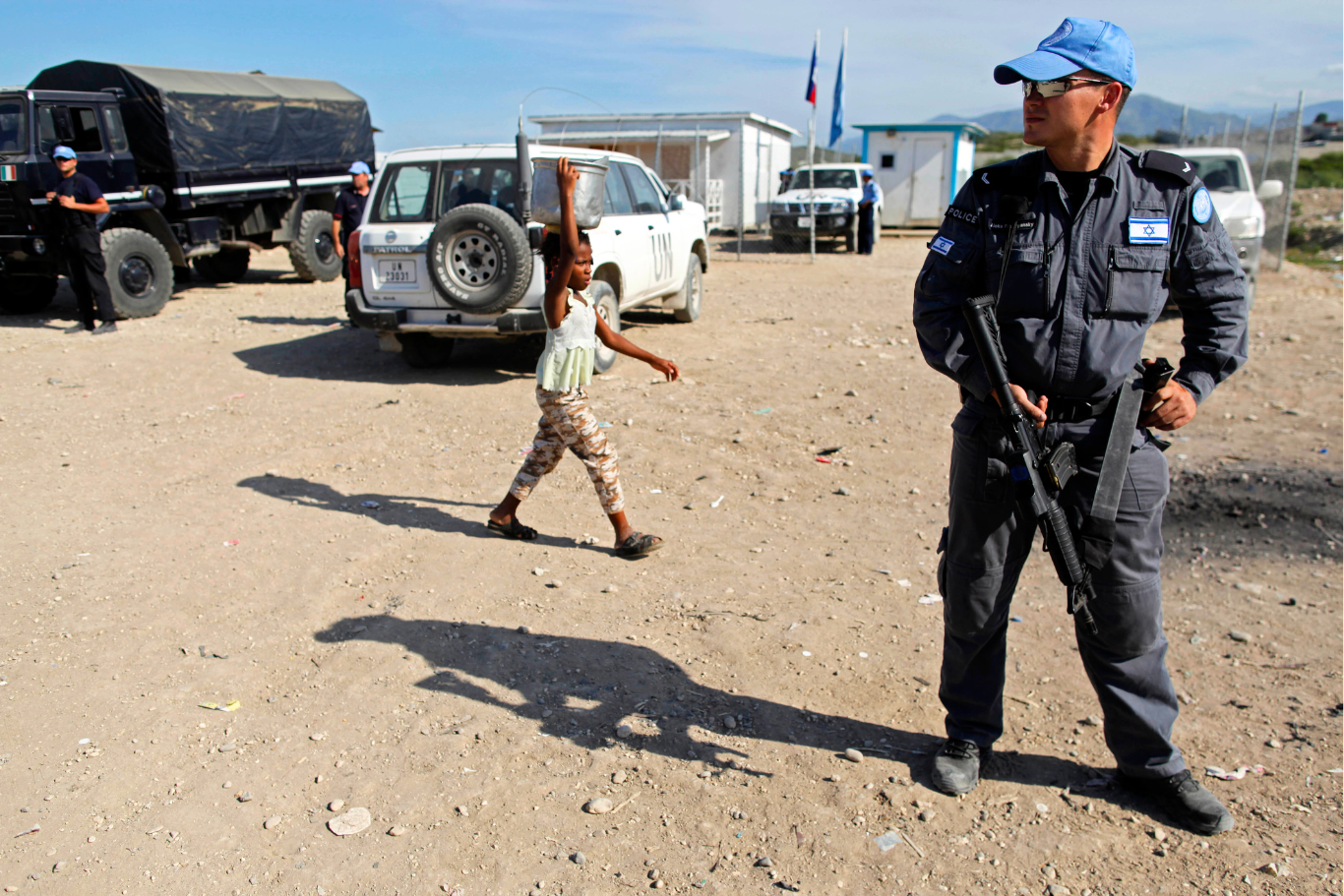
Before mass violence in Gaza erupted in October 2023, such displays of international magnanimity were a routine – and devastatingly effective – soft power play for Tel Aviv. For example, following Tbilisi’s routing in its five-day-long August 2008 war with Russia, Israel began repairing extensive damage inflicted on the country by Moscow’s forces. In the process, Israeli investors reaped over one-third of all reconstruction contracts handed out by the Georgian government.
Fast forward to November 2012. The IDF viciously attacked Gaza, slaughtering hundreds of Palestinians and wounding thousands more. International outcry and condemnation was amply forthcoming – but by and large, not in Georgia. Their government remained silent, and scores of average citizens even took to the streets of their capital to express solidarity with Tel Aviv. In the years since, Tbilisi has signed numerous big-ticket deals to purchase weapons, missile systems, and security service and police training from Israel.
Georgia is just one country where Israel has pulled off such an international relations coup. These activities garner Israel an enormous amount of international goodwill, in turn reliably securing silence, if not outright support, for its slow-motion erasure of the Palestinian people. The oppressive methods and tools of control and mass killing that it uses on Gaza and the West Bank are then sold to its foreign allies.
This is a longstanding strategy for Tel Aviv. In the 1980s, Israel formed close ties with governments in the Global South, including brutal Western-backed dictatorships in Argentina, El Salvador, Guatemala, the Philippines, apartheid South Africa, and Zaire, just as foreign powers were starting to distance themselves from these regimes. As a member of the Likud party, who once headed the Knesset foreign relations committee, explained in 1985:
“Israel is a pariah state. When people ask us for something, we cannot afford to ask questions about ideology. The only type of regime that Israel would not aid would be one that is anti-American. Also, if we can aid a country it may be inconvenient for the US to help, we would be cutting off our nose to spite our face not to.”
‘Smart Fence’
Anti-Zionist Israeli Jeff Halper and independent Australian journalist Antony Loewenstein have both written extensively about how what remains of Palestine is a laboratory, replete with test subjects held in controlled conditions, for Israel.
It is seldom considered today that Haiti was the U.S. Empire’s original testing ground for imperial connivances throughout Washington’s “backyard” for centuries and the entire globe since 1945. While Haitians often describe their country as the CIA’s “laboratwa,” the country is indelibly linked to resistance, its historical genesis in the rebellion against French rule producing the world’s first – and to date only – independent state governed by former slaves.
Yet, ever since, the U.S. has engaged in a wide variety of tactics to deny Haiti’s sovereignty, hamper development, kill hope, and ensure relentless instability. But of course – neverending chaos means the wealthy, such as Bigio, can enrich themselves at the local population’s expense untrammeled, while Washington is provided with constant justifications for interference, meddling and military occupation to support that goal. In December 2019, this malign international mission was codified into U.S. law with the passing of the Global Fragility Act.
The legislation effectively grants USAID, which in part functions as an intelligence cutout, and “the Departments of State, Defense, and the Treasury” a blank check to interfere in and take action against “fragile states,” supposedly prone to conflict, extremism, instability, and poverty. Haiti was explicitly cited as an initial target country for the effort. Unsurprisingly, no reference is made in the law’s text to the fact that any “fragility” suffered in Port-au-Prince is explicitly caused by Washington’s machinations there over many years.
Israel stands to profit handsomely from instability worldwide, and it is unsurprising that Tel Aviv similarly seeks to perpetuate upheaval and vulnerability internationally and take advantage of disasters to provide a pretext for coming to the rescue via assets like Gilbert Bigio. The Dominican Republic is currently constructing a “smart fence,” at some expense, to prevent the violence engulfing Port-au-Prince from spilling across its borders. The structure is of Israeli design and technology, modeled directly on Gaza’s apartheid walls, or “separation barriers,” as Israeli authorities refer to them.
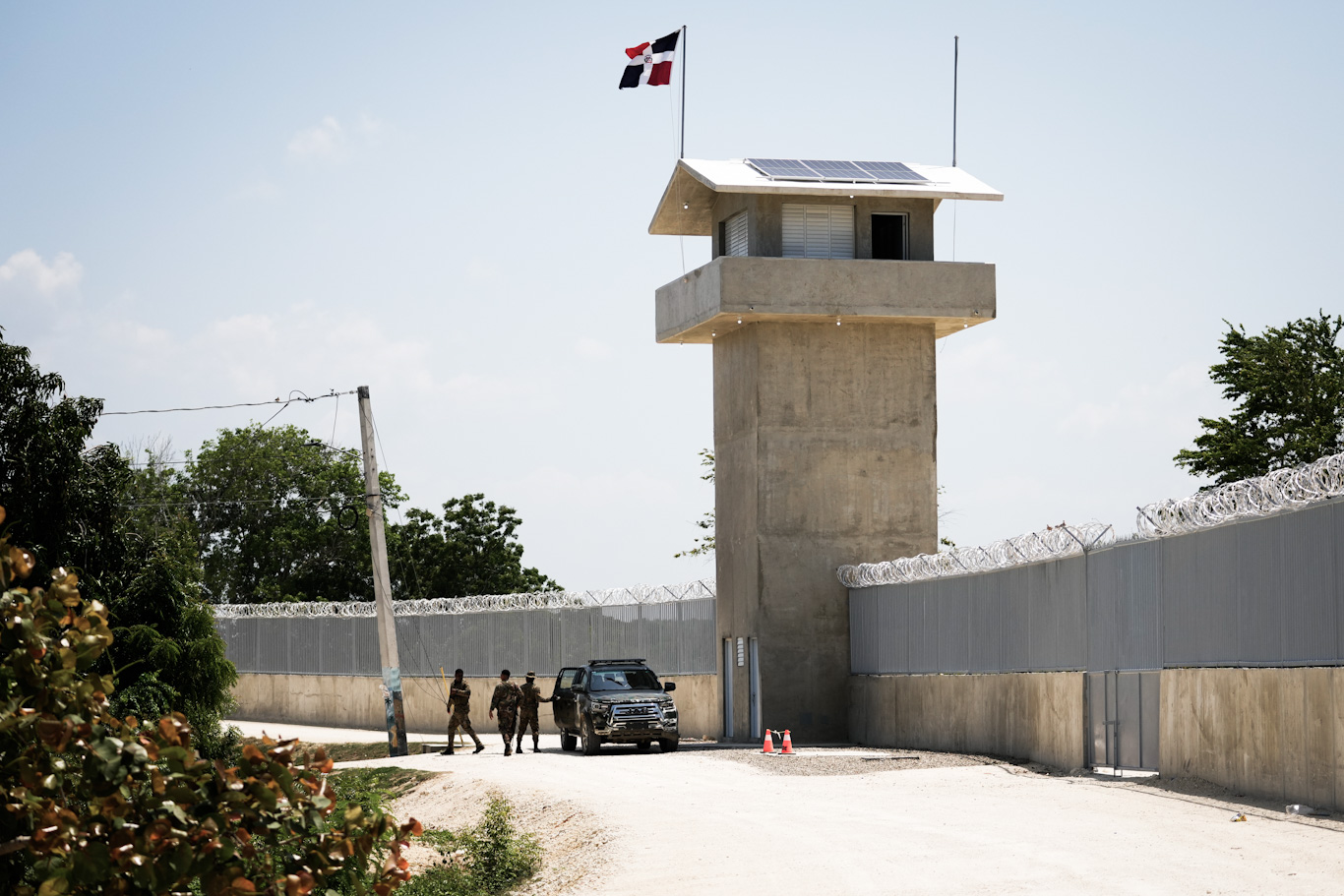
The Dominican Republic’s fence runs 160 kilometers, comprising reinforced concrete walls and a metal structure 3.90 meters high, crowned by an accordion of barbed wire with sharp blades. All along, 170 surveillance towers, spying systems, motion detectors, high-definition CCTV cameras with night vision and infrared capacity, checkpoints and 71 controlled access gates prevent anyone from getting in or out without permission. Meanwhile, a squadron of surveillance drones patrols 24/7, every inch.
The fence’s mere existence ensures friction and literal division between the two countries, which could otherwise be comrades-in-arms while justifying Israeli and U.S. presence throughout the border strip. That presence is likely to endure, if not expand, as long as Gilbert Bigio’s ownership of Port Lafito guarantees an inevitable flow of weapons and other harmful contraband into the country. It was indeed not for nothing that Bigio’s father played a pivotal role in securing Haiti’s support for Israeli statehood back in 1947.

Kit Klarenberg is an investigative journalist exploring the role of intelligence services in shaping politics and perceptions.