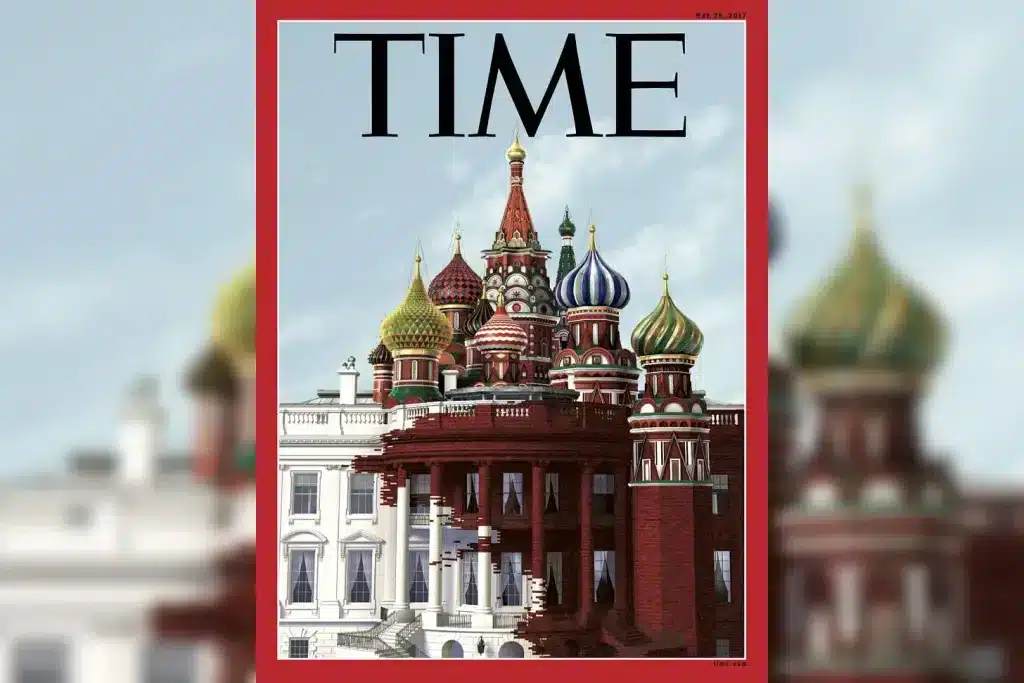
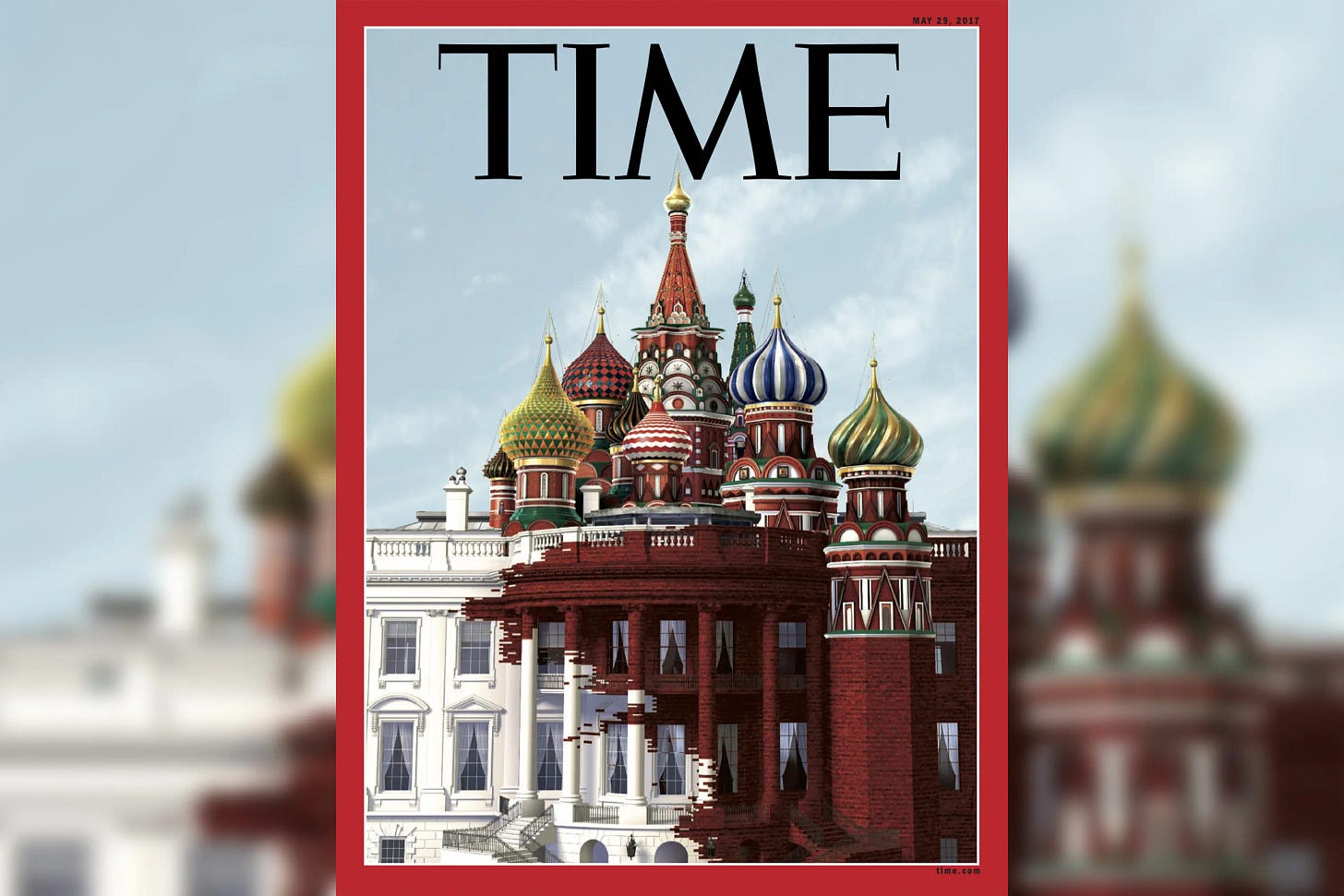
May 2017 TIME magazine cover, depicting the White House being absorbed by the Kremlin. File photo.
May 2017 TIME magazine cover, depicting the White House being absorbed by the Kremlin. File photo.
By Kit Klarenberg – Aug 10, 20225
On July 30th, the ODNI declassified damning evidence from a US intelligence community whistleblower. They attest to being aggressively – but unsuccessfully – pressured by superiors into signing off on the infamous 2017 Intelligence Community Assessment, which expressed “high confidence” Russia interfered in the previous year’s Presidential election to ensure Donald Trump’s victory. Their testimony indicates senior US spy agency officials not only well-knew the ICA’s findings were bogus, but consciously ignored and suppressed far more compelling evidence of widespread, non-Russian meddling in the vote.
The whistleblower is a US intelligence veteran who 2015 – 2020 served as Deputy National Intelligence Officer, at the ODNI-overseen National Intelligence Council. They specialised in “cyber issues”, including “cyber-enabled information operations”. Prior to the 2016 vote, they led the production of an ICA on “cyber threats” to US elections, at the order of Director of National Intelligence James Clapper, for which they were “commended”. They were then tasked by the outgoing Obama administration to assist in the 2017 ICA’s production.
That Assessment purported to expose “Russian activities and intentions” in the Presidential election. The whistleblower’s role was to investigate alleged attempts by Moscow “to access US election-related infrastructure”, as “reporting suggested many Russia-attributed IP addresses were making connection attempts that the [US intelligence community] could not explain the purpose of.” However, an official – name redacted – subsequently “directed us to abandon any further study of the subject,” on the basis it was “something else.”
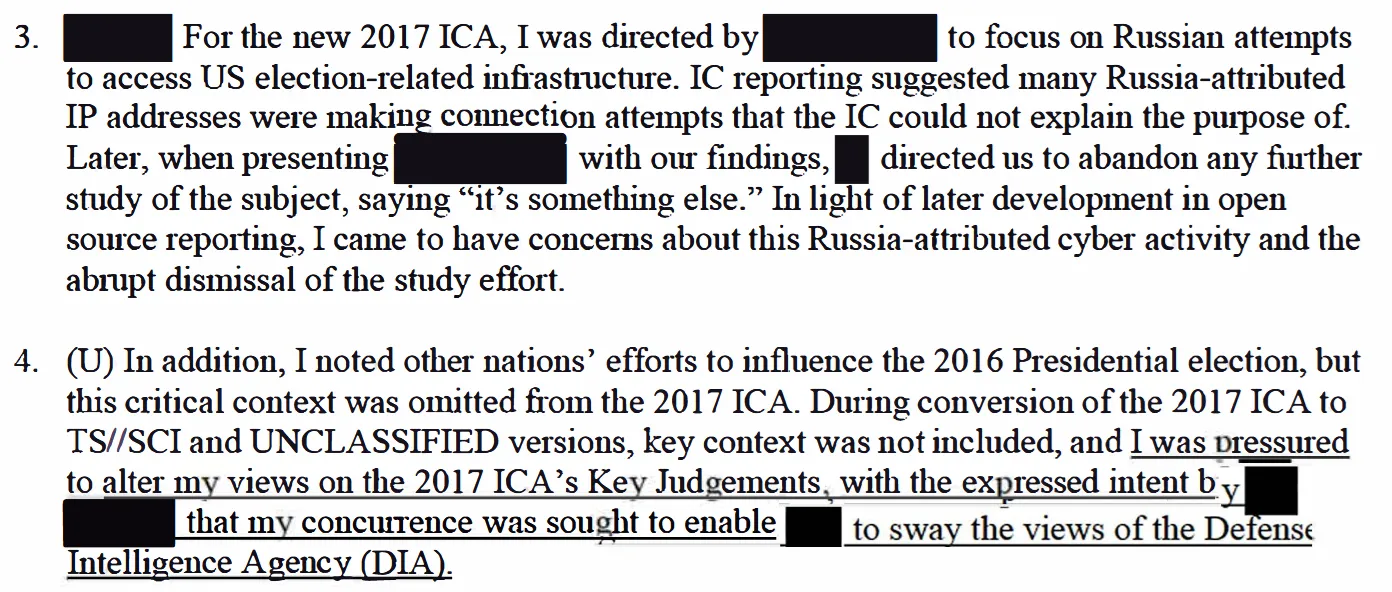
For the whistleblower, the “abrupt dismissal of the study effort” raised significant concerns about the true nature and source of the “Russia-attributed cyber activity.” They suspected their superiors were attempting to conceal how state or non-state actors closer to home may have been engaged in “Domain Name Service (DNS) record manipulation”, to falsely ascribe cyber meddling efforts to Moscow. Their anxieties only multiplied when superiors rebuffed their attempts to include references to “other nations’ efforts to influence the 2016 Presidential election” in the 2017 ICA.
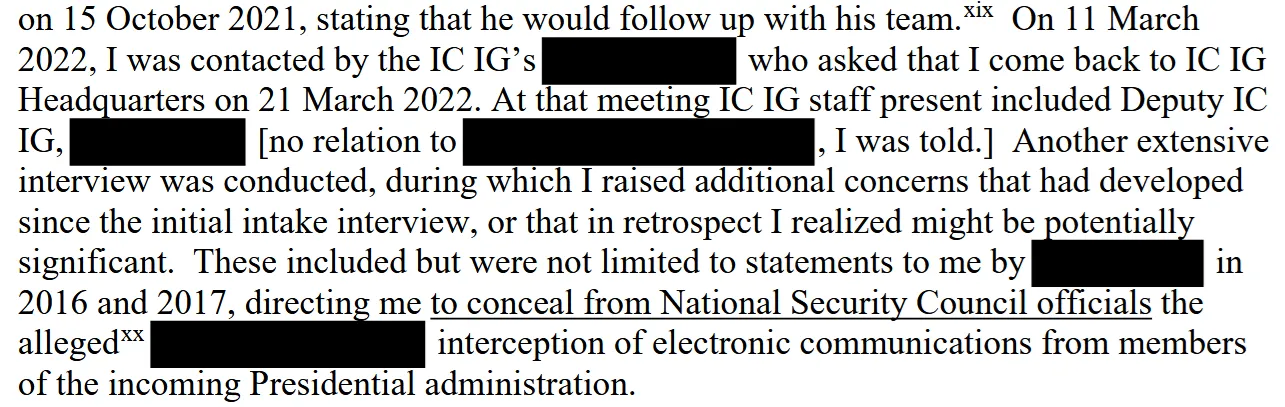
The whistleblower’s “professional judgment…was multiple nations were seeking to shape the views of the US electorate,” and therefore influence their voting preferences. This assessment was based not only on relentless negative media coverage of Trump in allied countries – especially Britain, and other “NATO partners” – but the “interception of electronic communications from members of [Trump’s] incoming Presidential administration.” The source of this interception is redacted. So too is the identity of an official who repeatedly demanded the whistleblower conceal this from the National Security Council.
‘Tradecraft Standards’
The ICA’s release on January 6th 2017, 11 days prior to Trump’s inauguraration, ignited a media frenzy over the President-elect’s potential ties to Russia, and the Kremlin’s purported role in installing him in the White House. The New York Times dubbed the document a “damning and surprisingly detailed account” of Moscow’s “efforts to undermine the American electoral system.” The Washington Post boldly described it as “a remarkably blunt assessment”, and “extraordinary postmortem of a Russian assault on a pillar of American democracy.”
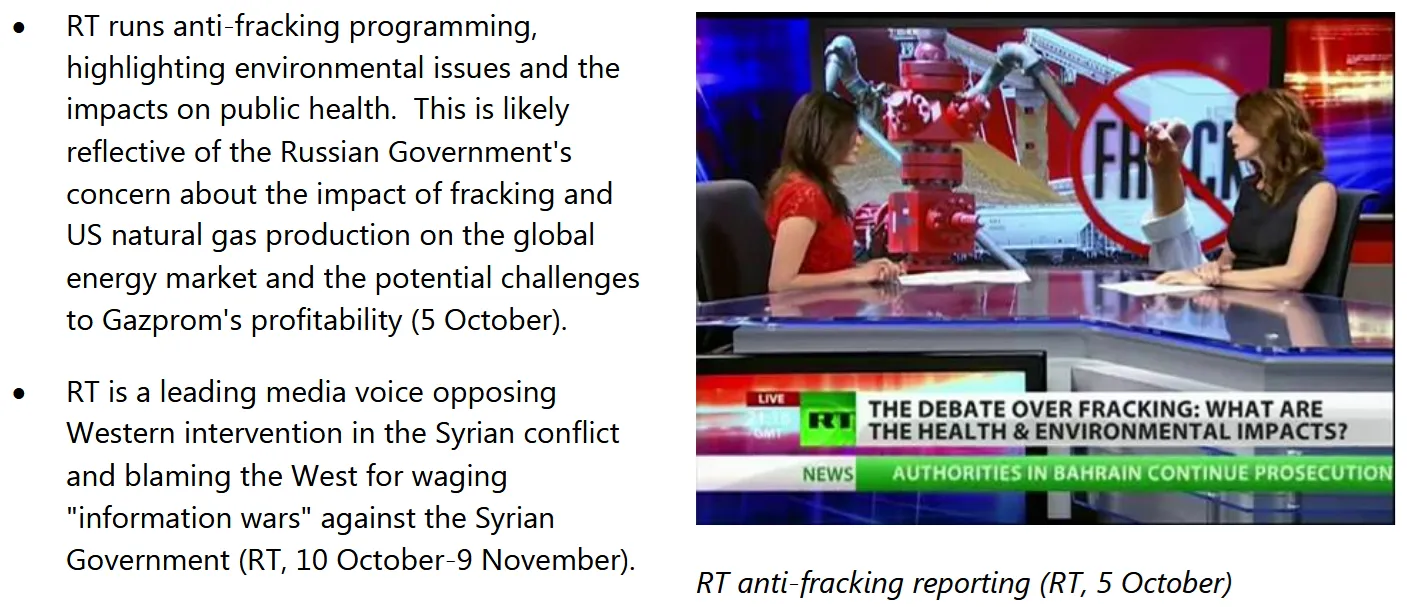
In reality, the ICA offered zero evidence to support any of its bombastic headline conclusions. This glaring deficit was justified on the basis “full supporting information on key elements of [Russia’s] influence campaign” was “highly classified”. Bizarrely, much of the Assessment’s content focused instead on the output of Russian media – both for domestic and international audiences – with no relevance whatsoever to the 2016 election. This included RT America coverage of topics including police brutality, fracking, and “alleged Wall Street greed.”
When the whistleblower learned the ICA was so heavily dependent on a “simplistic treatment” of “English language Russian media articles”, they expressed “substantial concern” over the “legitimacy” of the Assessment’s “analytic tradecraft”. They moreover “could not concur in good conscience based on information available,” and their “professional analytic judgement,” of a “decisive Russian preference” for Trump’s victory, as concluded by the ICA. The whistleblower thus refused to sign off on its findings.
Excerpt from January 2017 ICA
This was not well-received by a senior US intelligence official, name redacted. Leading up to the ICA’s release, they sought to harass and suborn the whistleblower into endorsing the Assessment. After multiple failed attempts to bully the whistleblower to “abandon” their “tradecraft standards” and simply “trust” there was “reporting you are not allowed to see,” which “if you saw it, you would agree,” the official strongly implied the whistleblower’s subsequent promotion was contingent on their agreement.
When this approach didn’t work, the “visibly frustrated” official fulminated, “I need you to agree with these judgments, so that DIA [Defense Intelligence Agency] will go along with them.” This prompted discussion between the pair about the DIA’s “supposed trust” in the whistleblower, and “the necessity” of them proving their “bona fides” as an intelligence community officer “by doing what it took to bring DIA on board as an additional [intelligence] Agency signing on to the 2017 ICA.”
Refusing to compromise on “standards, tradecraft, and ethics”, the whistleblower defied his superior’s direct order “to misrepresent my views to DIA.” While unexplored in the declassified file, the official’s desperation for the DIA to endorse the ICA is understandable. In September 2020, it was revealed the entire US intelligence community had no “confidence” in the Assessment. In fact, then-CIA director John Brennan personally wrote the report’s incendiary conclusions, before selecting a coterie of his close Agency confidantes to sign off.
Many US intelligence analysts conversely assessed Russia favoured Hillary Clinton’s victory, and viewed Trump as a potentially dangerous “wild card”. As such, creating the false impression of US intelligence community unanimity over Brennan’s concocted conclusion was of paramount importance to the CIA chief. In the end, only the Agency, FBI, and NSA publicly endorsed the ICA’s findings. Even then, the NSA – which closely monitors communications of Russian officials, and could therefore detect any high-level discussions about the 2016 election in Moscow – merely expressed “moderate confidence”.
‘Something Else’
The whistleblower was surprised the FBI expressed “high confidence” in the 2017 ICA. They were aware “as recently as September 2016,” the Bureau “pushed back” against suggestions “of Russian intent to influence” the Presidential election, believing “such a judgement would be misleading.” The whistleblower notes the FBI “altered its positions…without any new data other than the election’s unexpected result [emphasis added] and public speculation Russia had ‘hacked’ the vote – a scenario [US intelligence] judged simply did not occur.”
They were furthermore shocked to learn years later disgraced former MI6 spy Christopher Steele’s ‘Trump-Russia’ dossier was a core component of the “highly classified” material, upon which the ICA’s dynamite conclusions heavily relied. It was their understanding the ODNI viewed the dossier at the time “as non-credible sensationalism”, the Office’s chief James Clapper considered it “untrustworthy”, and Steele’s ludicrous claims “had never been taken seriously” by US intelligence more widely.
The whistleblower’s grave, myriad qualms about the Assessment’s construction led them to approach a variety of US government oversight agencies, including the Intelligence Community Inspector General, with what they knew. Despite receiving acknowledgement they “had witnessed malfeasance”, the whistleblower was stonewalled, and their evidence never appears to have reached any relevant authority, let alone been acted upon. Given the explosive nature of the whistleblower’s insider testimony, ominous questions abound over why they encountered such resistance – and where the non-Russian interference they identified truly emanated from.
The whistleblower’s account of being tasked to investigate alleged Russian hacking of “election-related infrastructure” the US intelligence community found inexplicable, only to be told to leave it alone as it was “something else”, is particularly striking. There are several explanations for this activity, all of which point to concerted attempts to falsely concoct the narrative of Russian election interference for malign purposes. For example, in September 2016, Hillary Clinton-connected lawyer Michael Sussmann approached the FBI, claiming to possess explosive evidence of Trump’s collusion with Moscow.
The material comprised DNS logs, supposedly indicating the Trump Organization used a secret server belonging to Russia’s Alfa Bank for back-channel communications with the Kremlin. This was fed to the media, and excitedly reported by certain liberal outlets prior to the election. However, The Intercept rubbished the trove, given the DNS records supplied couldn’t “prove anything at all, and certainly not ‘communication’ between Trump and Alfa.” In sum, “no one…can show that a single message was exchanged between Trump and Alfa.”
An alternative may be the Department of Homeland Security was responsible for targeting election infrastructure. In December 2016, The Wall Street Journal reported an attempted hack into the state of Georgia’s voter registration database traced back to a DHS IP address. The incursion came at a time the Department was lobbying for election systems to be regarded as “critical infrastructure”, therefore making their protection part of the agency’s formal purview.
On January 6th 2017, the same day the ICA dropped, DHS secretary Jeh Johnson jubilantly announced he had designated “election infrastructure” part of the agency’s already vast domestic spying remit. He acknowledged “many state and local election officials…are opposed to this designation.” It was certainly a good day to bury bad news. And assist the CIA and Clinton campaign in furthering nonsense conspiracy theories about Russian attempts to “hack” the 2016 Presidential election, therefore hopefully invalidating its “unexpected result”.

Kit Klarenberg is an investigative journalist exploring the role of intelligence services in shaping politics and perceptions.