By Misión Verdad – Jan 22, 2026
During last week’s Annual Message to the Nation, the acting president of Venezuela, Delcy Rodríguez, presented relevant data on the country’s oil sector performance in 2025.
She highlighted milestones, such as reaching the production target of 1.2 million barrels of oil per day (BPD).
Rodríguez reported that oil production experienced a 12.9% increase over the past 12 months. Consequently, oil activity in the country grew by 16% in its gross domestic product (GDP).
According to her, a large part of those results was possible because of the Productive Participation Contracts (CPP) model, which is part of the Anti-Blockade Law for National Development and the Guarantee of Human Rights, in effect since 2020.
During 2025, the CPP framework facilitated direct investment of $900 million in the country’s oil activities.
The acting president also formally requested that the National Assembly enact a reform to legally “shield” the CPPs. This amendment seeks to modernize the legal framework to facilitate the attraction of foreign and domestic investment, allowing greater private capital participation in the operation of oil fields.
In this regard, Venezuela will now discuss and execute a reform process in the concession administration of oil fields.
Context of the Anti-Blockade Law
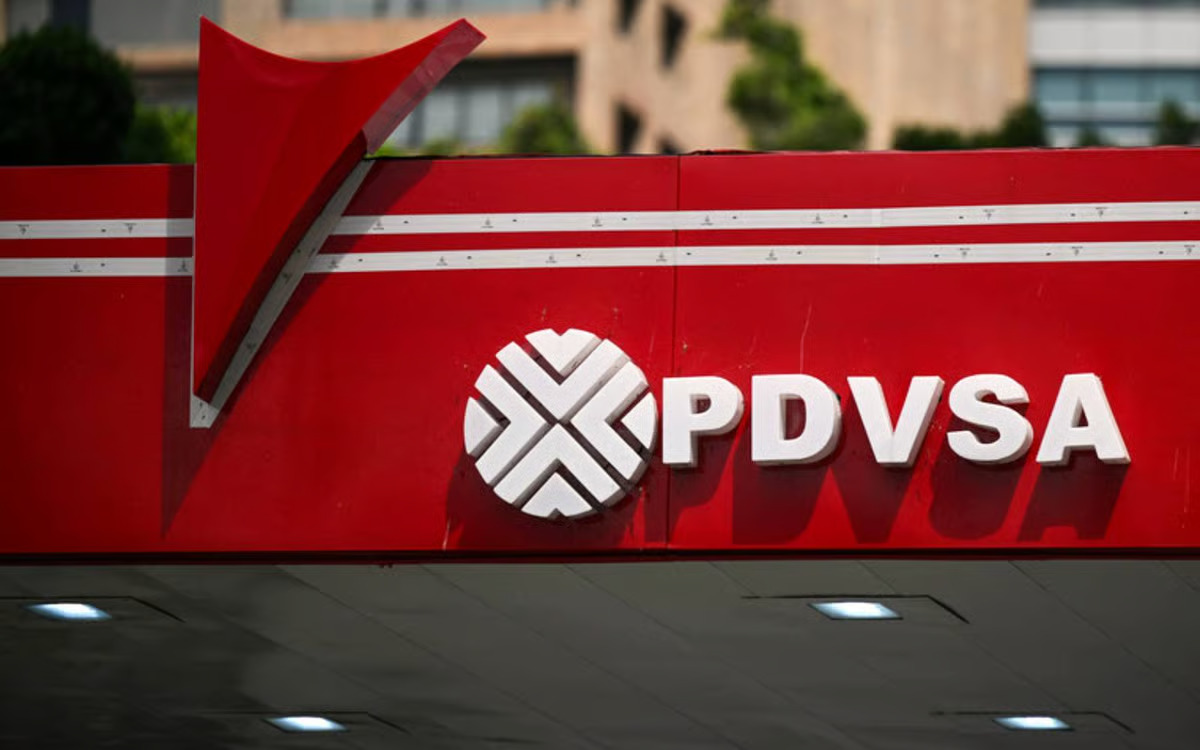
In August 2017, Donald Trump’s first administration unveiled its first major package of illegal sanctions against Venezuela’s oil activities. As the sanctions regime was implemented, the state-owned Petróleos de Venezuela (PDVSA) was barred from accessing any international financing mechanism.
This consisted of removing PDVSA from the international oil bond market, thereby disabling its ability to obtain financing through debt mechanisms.
Various PDVSA accounts abroad were frozen, along with other assets (such as Citgo Petroleum in the US). In 2019, the US government barred Venezuela from the international energy market, designating all of its production as “sanctioned oil.”
With the discretionary framework of the illegal unilateral coercive measures, it became very difficult for PDVSA to form any alliance with any international oil company.
Consequently, all commercial, investment, or financing activity based on Venezuelan hydrocarbons entered a gray area, sustained primarily by the emerging structure of an alternative, non-public, and entirely discretionary trade and investment system.
In this regard, it is necessary to highlight some particularities of the oil industry. It is a sector that requires constant investment, which is necessary to sustain production levels and cover the needs of the supply chain, including inputs, spare parts, capital goods, and the human resources that drive the sector.
By 2019, PDVSA was in no position to sell crude oil in the international market. This broke the company’s cash flow. Field production declined once the undelivered crude oil storage tanks collapsed, incurring high additional costs for storage on ships.
In this context, the Anti-Blockade Law was born, approved by the then National Constituent Assembly.
Practical questions
There are many practical examples of the Anti-Blockade Law and its implementation. One of them is that, according to the current Organic Hydrocarbons Law, companies authorized to trade Venezuelan crude oil must have a broad, verifiable public record of at least two years as international petroleum product marketers.
In the context of the illegal US blockade against Venezuela, various trading companies registered in allied countries such as Iran, Russia, Qatar, Turkey, China, and others emerged that did not meet that requirement. So, to allow the flow of oil evading the blockade, it was necessary to suspend that condition without amending the Hydrocarbons Law or dismantling or repealing it entirely.
The Anti-Blockade Law emerged within a framework of planned and managed ambiguity. It was superimposed on other national laws, including organic laws, to manage the economic and social situation, preventing a downright collapse of the country’s main economic activity and the central hub of national life.
Its implementation resulted in the selective non-application of certain key provisions of other laws, in order to make government administration practical in an extraordinary, accelerated, and changing context.
Productive Participation Contracts (CPPs) are defined in the Anti-Blockade Law as a mechanism for partnership between the Venezuelan State and private capital from various sources to meet the financing, operational, and commercial needs of the Venezuelan oil industry.
Article 28 of the law empowers the government to design and implement exceptional procurement and payment mechanisms, prioritizing domestic production for the purposes of fundamental rights, foreign exchange generation, and the management of entities affected by sanctions.
It has implemented a practical approach to attract oil and gas investment, allowing private companies to operate fields with certain benefits—without necessarily forming joint ventures with PDVSA—in exchange for increasing production, as a response to unilateral sanctions and by easing management under PDVSA.
These contracts seek to provide legal certainty and benefits to both partners and the Venezuelan State, through faster investment recovery (in less than a year), lower tax burdens, and greater participation by allied companies in production.
According to some sources, the companies that have participated in CPPs in Venezuela’s oil sector include international firms such as China Concord Petroleum, Hainan Breey Energy, North American Blue Energy Partners, Vulcan Energy Technology, and Miller Energy, as well as Venezuelan companies such as Inversiones Alvorada & Cladoca.
These are companies that have protected their financial assets from the reach of Western governments to avoid secondary sanctions for doing business in Venezuela.
Some of these associations have focused on key fields such as PetroCedeño and PetroZamora.
However, many CPPs were developed under a locked-down scheme, or with information subject to confidentiality, since the Anti-Blockade Law highlights the need to protect data on alliances in order to safeguard the parties involved in the agreements.
Investments, resources, and geopolitics
Acting President Delcy Rodríguez has urged legislative action to incorporate elements of the Anti-Blockade Law into a reformed Organic Law of Hydrocarbons.
All of this points in two fundamental directions: first, to ensure the transition of the Venezuelan economy and its energy activities from a period of intense blockade to one of new licenses and the partial lifting of illegal sanctions; and second, to leverage the experience of CPPs to shape new concession schemes and business models. The partial reform of the Hydrocarbons Law would bring together the essential elements currently in force, along with those that have been tested in recent years.
Rodríguez highlighted that the current Hydrocarbons Law was designed when Venezuela had enough developed fields to attract investment. The new reform seeks to facilitate the inflow of capital specifically into virgin or “green” fields (those without prior intervention or infrastructure), which were not prioritized in the past.
Venezuela currently has 14 mega oil fields that account for 60% of the country’s certified reserves. This suggests that 40% of the estimated reserves are located in key areas of the country where there is no corresponding investment in oil production.
CPP mechanisms, “shielded” by a new Hydrocarbons Law, could increase international investment, boost oil production, and reshape the production outlook in the coming years. But they could also offer new geopolitical opportunities.
The Venezuelan oil issue has unfolded under the dilemma of whether Venezuelan resources should be in the Western or non-Western orbit. But objective realities suggest other issues. For example, Venezuela has some 303 billion barrels of reserves that have not been tapped or developed. The contrast is evident between the amount of reserves and the current production level.
Another element to consider is that the country has spent a decade under a barrage of coercive sanctions that have directly targeted its oil industry, when what should have been pouring in was investment, given the strategic value of being the world’s largest crude oil reserve.
The Organization of the Petroleum Exporting Countries (OPEC) has projected that, by 2050, the world will consume about 123 million barrels per day, while the International Energy Agency (IEA) has reported that 80% of the world’s oil wells have passed their peak production and are in decline.
These data suggest that only countries with large reserves should be earmarked to receive the largest medium- and long-term investment. In light of these data, the case of Venezuela has been an exception.
It is an objective fact that the country is large enough and has sufficient resources to accommodate most of the major oil companies from the various global power blocs.
That is one of the premises suggested by Delcy Rodríguez regarding the restoration of energy relations with the United States, reaffirming the country’s interest in partnering on various fronts “with China, Russia, and other countries also,” given that, up to 2019, the United States was the second-largest customer for Venezuelan oil, until Washington’s own coercive measures no longer allowed it.
The strategic reorientation of Venezuela’s oil sector, both internally and externally, could be achieved through effective mechanisms such as integrating the CPPs into the Hydrocarbons Law, while preserving the State’s absolute ownership of PDVSA as the leading and central entity in the national oil industry.
Translation: Orinoco Tribune
OT/SC/SH
Misión Verdad
Misión Verdad is a Venezuelan investigative journalism website with a socialist perspective in defense of the Bolivarian Revolution