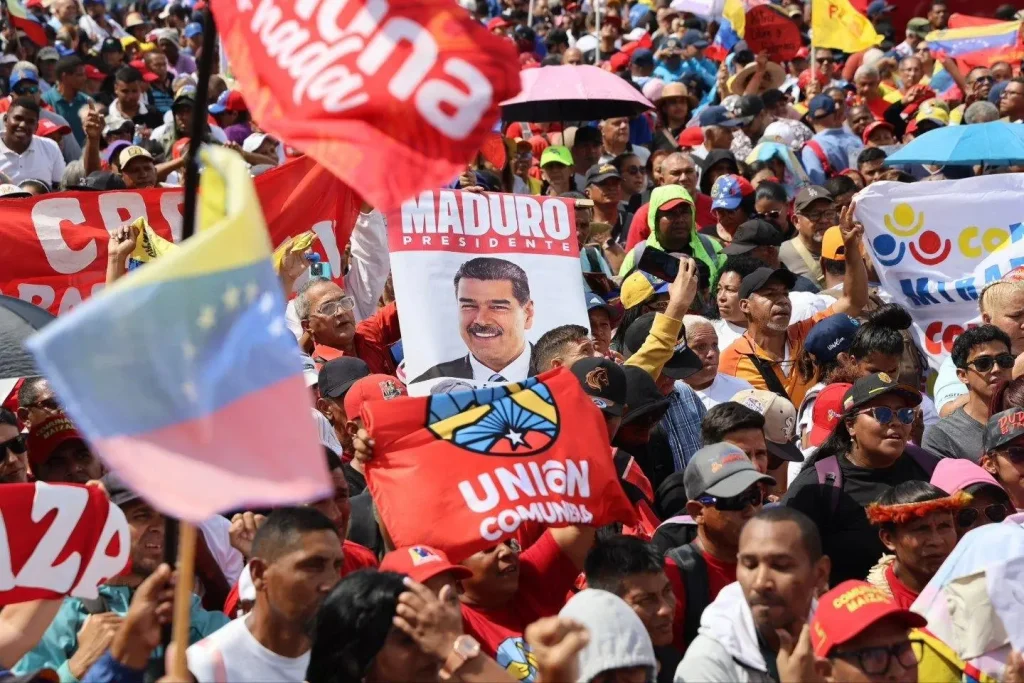
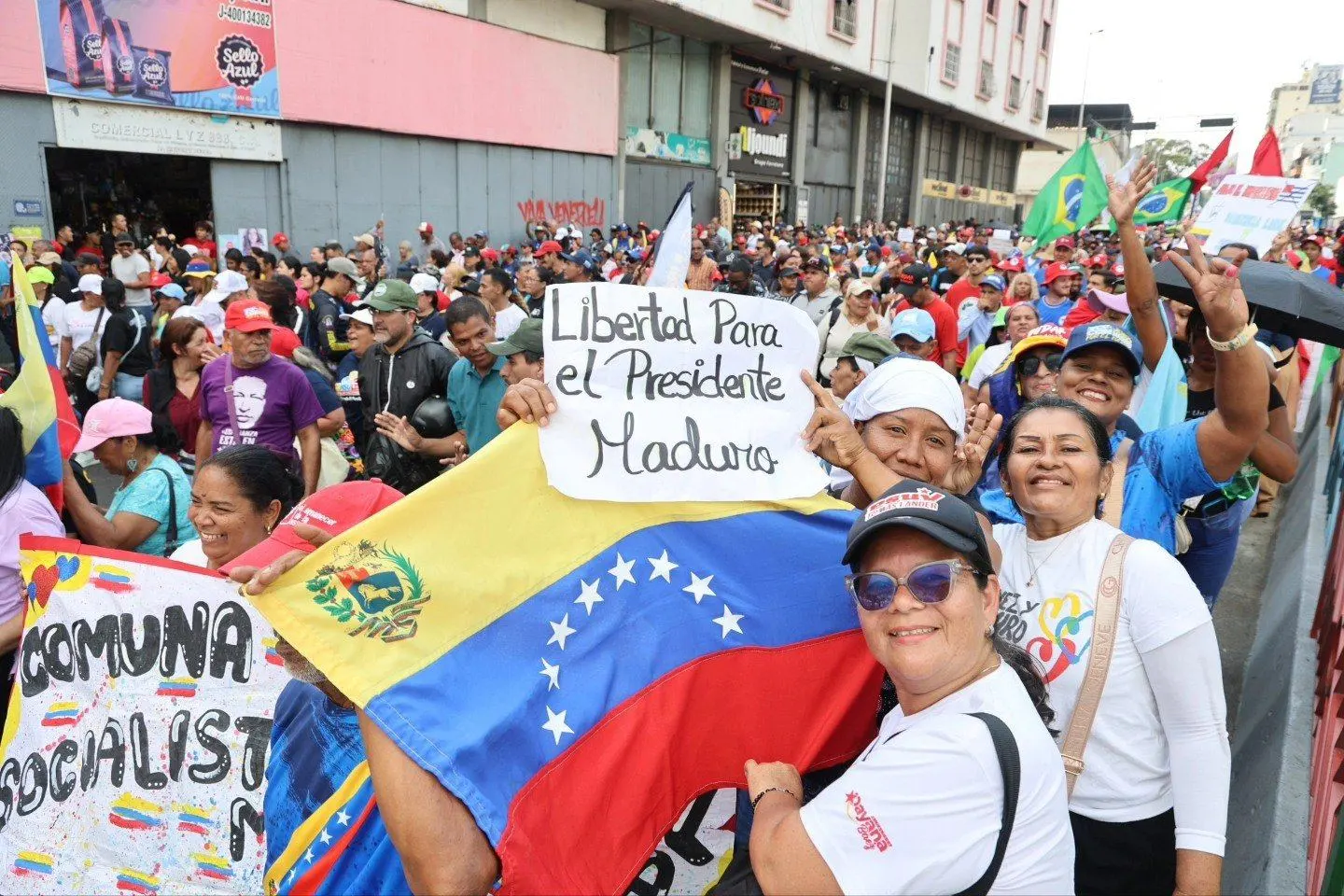
Caracas, January 7, 2026: Demonstrators demand that their president, Nicolás Maduro, be liberated by the US. President Maduro was abducted in the morning of January 3, 2026. Photo: Thierry Derrone.
Caracas, January 7, 2026: Demonstrators demand that their president, Nicolás Maduro, be liberated by the US. President Maduro was abducted in the morning of January 3, 2026. Photo: Thierry Derrone.
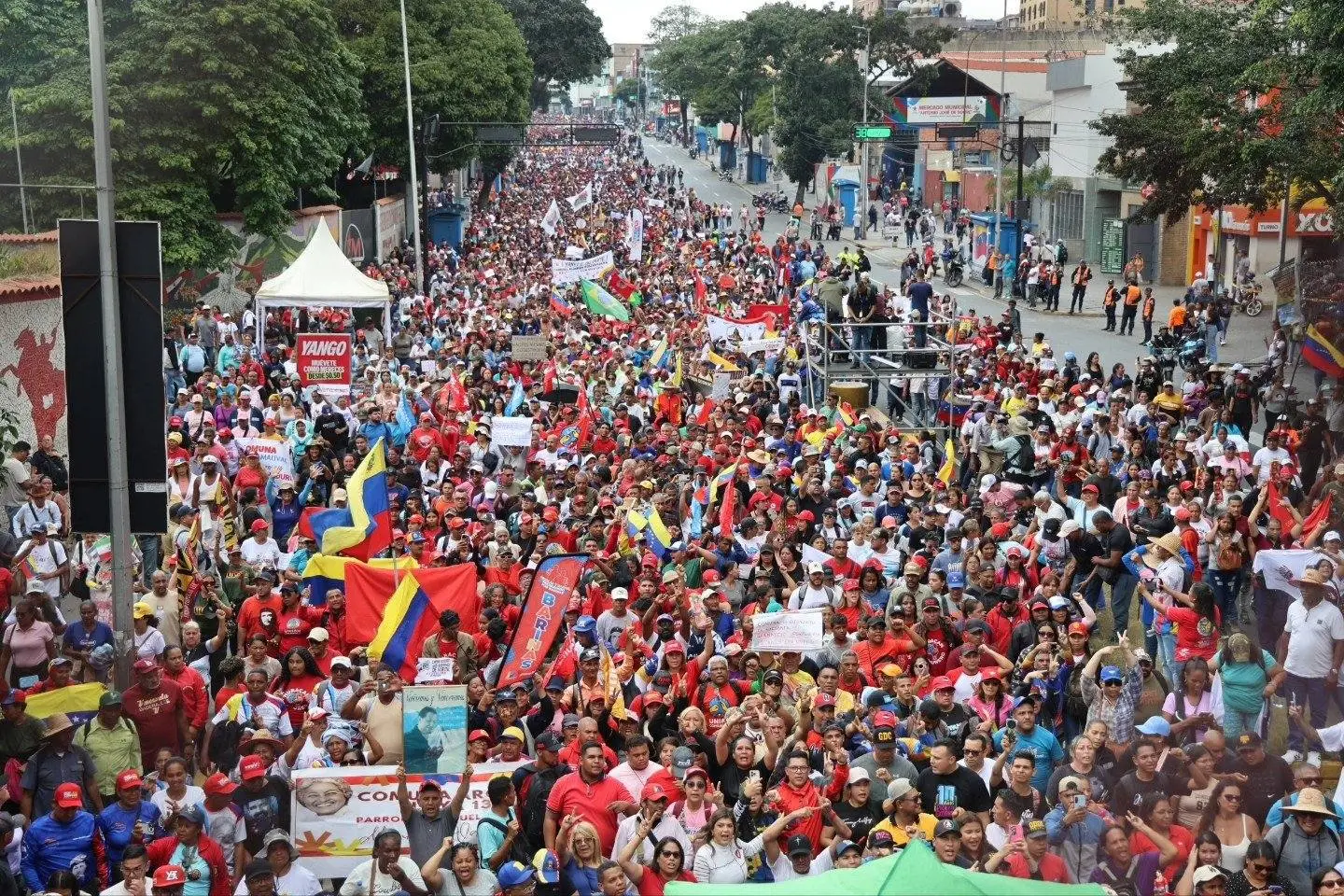
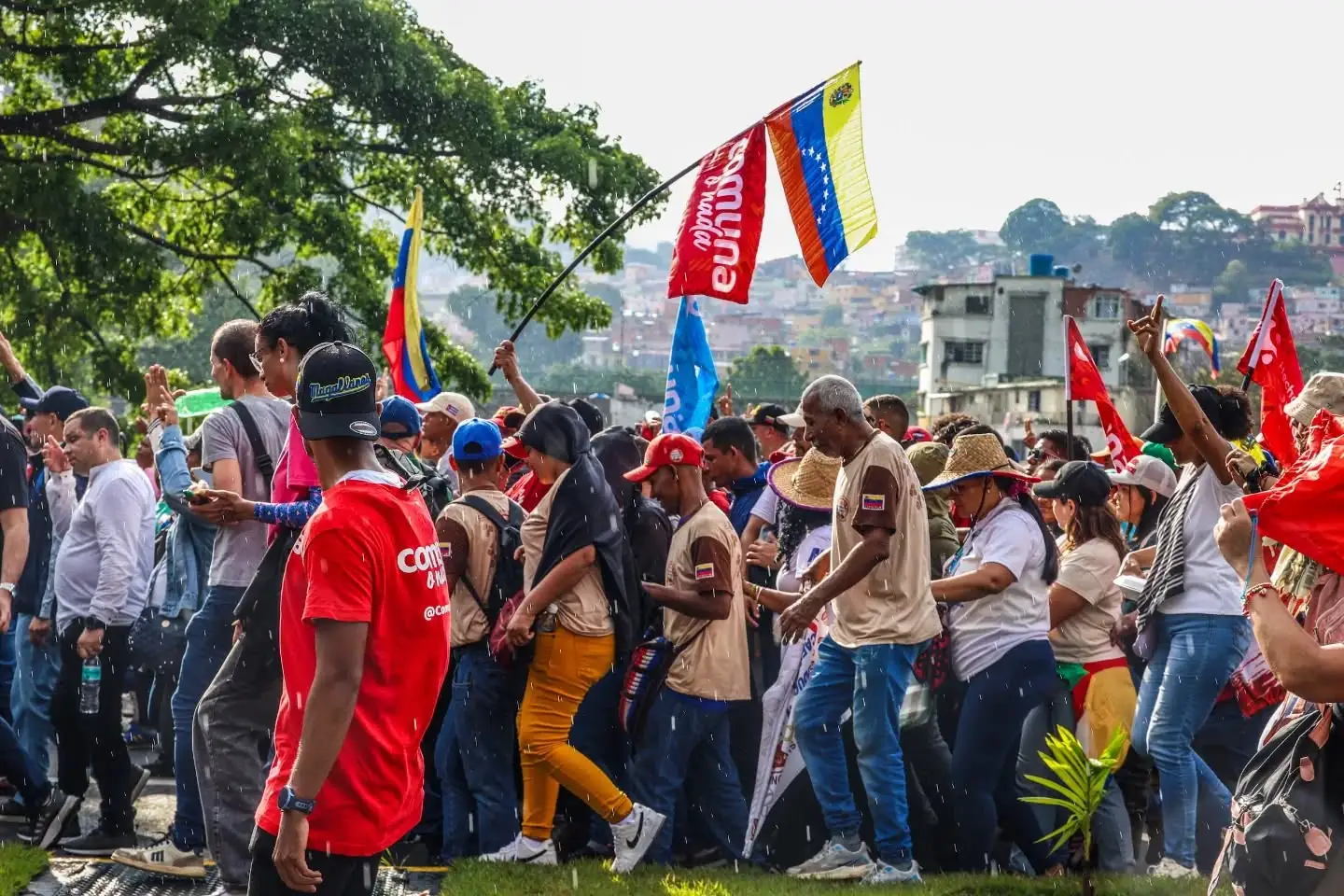
On January 6, a new wave of popular mobilization took place to defend Venezuela’s Bolivarian Revolution and demand the immediate release of the country’s president, Nicolás Maduro, and his wife Cilia Flores. Thousands of representatives from self-governing communes from across Venezuela gathered in the streets of the capital.
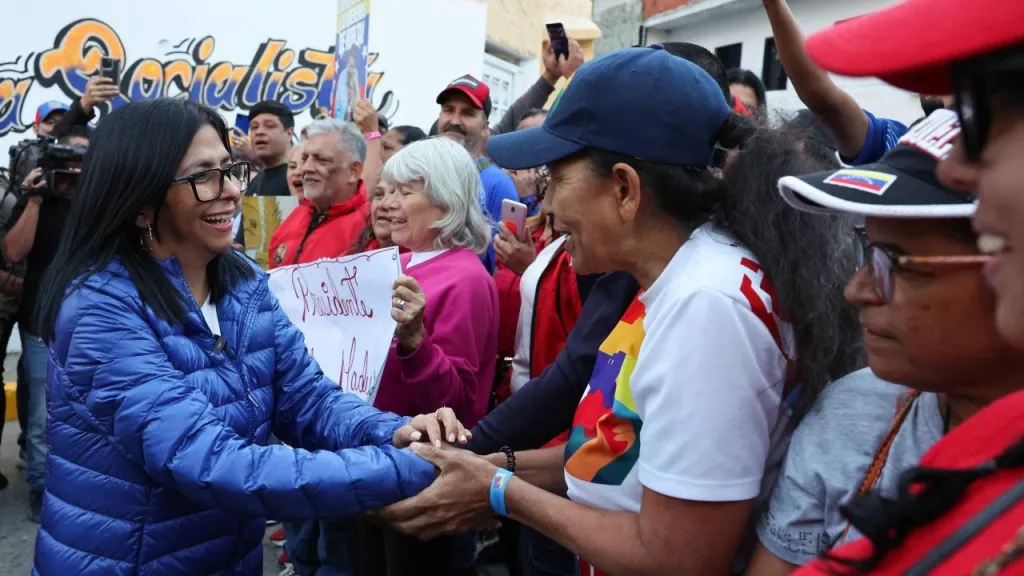
The fundamental strategy of the Bolivarian Revolution is the transfer of political and economic power to the communes—the only way to build a true direct democracy. This movement, initiated by President Hugo Chávez and continued by President Maduro, will develop in 2026. During her first visit with the people since assuming the interim presidency, Delcy Rodriguez met with residents of the José Félix Rivas Commune in Caracas.
This “revolution within the revolution” already encompasses 4,950 communes. These are people’s self-governments that are found in both urban and rural areas. They can range in size from 1,000 to over 50,000 inhabitants, depending on the case.
In 2024, President Nicolas Maduro appointed Angel Prado—leader of the peasant commune “El Maizal”—to head Venezuela’s Ministry of Communes, Social Movements, and Urban Agriculture.
In 2025, two-thirds of residents reported that a commune existed in their area, and 83% of them knew the members of their communal council. One of the missions entrusted to the new minister was to reach out to and strengthen 6,000 communes by the end of 2026. In 2025, the president issued directives to the ministers: “70% of each of your budgets must be transferred to the communal councils and communes.”
In parallel, every three months, in a nationwide vote, residents of the communes choose one of seven projects (socio-productive, infrastructural, cultural, educational, public services, etc.) previously defined by their assemblies. The implementation of these projects are co-financed by the government. These “consultas populares” (popular consultations) are a training ground for meaningful participation by everyone, regardless of their political affiliation, as well as an effective tool against corruption, since communal committees receive, monitor, and report to the residents on the proper use of the funds provided by the government.
For the November 23, 2025, election, 8,508 polling stations were set up, including 2,518 new ones, to ensure greater accessibility to voting. This represents a 70% increase in the number of polling stations compared to previous elections.
This bottom-up communal model has also enabled the implementation of a new justice system. On December 15, 2024, in 4,817 polling stations spread across communes throughout the country, Venezuelans elected 28,486 communal justices of the peace. These justices of the peace are responsible for arbitrating local disputes between citizens living in the communes, thus preventing them from having to resort to traditional courts.
Another large-scale creation that complements the political, economic, productive, and legal aspects is the University of Communes, a comprehensive training center in law, political economy, agroecology, and other pertinent fields. This university, the main headquarters of which opened on May 24, 2025, in the state of Carabobo, develops course content and organizes training throughout the country based on needs assessments conducted by the inhabitants of the communes.
Furthermore, in 2026, a sweeping Constitutional reform will make the commune a foundation of the Venezuelan state. Thousands of assemblies will be held throughout the country to generate proposals aimed at “building a modern democracy based on the direct participation of citizens, the power of social movements, and the community,” in the words of Nicolás Maduro. “We are moving towards a major process of broad democratization of Venezuelan society, of political, institutional, economic, social, cultural, and educational life.”
(Venezuela Infos) by Thierry Derone
Translation: Orinoco Tribune
SL