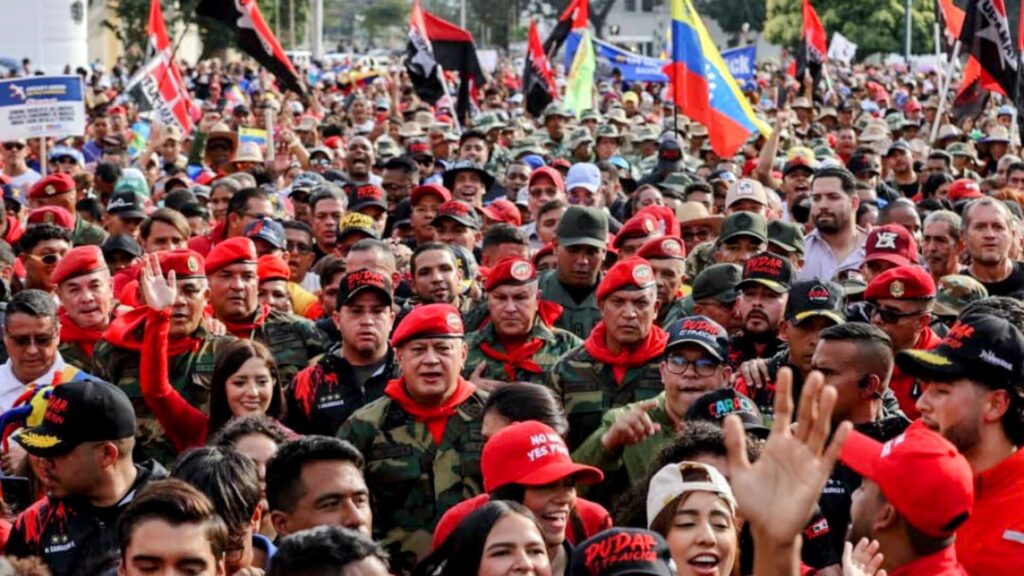
Venezuelan Chavista leader Diosdado Cabello marching Wednesday, February 4, among the people in Maracay during a demonstration to commemorate the Febtuary 4, 1992 civic-military uprising. Photo: Con el Mazo Dando.
Venezuelan Chavista leader Diosdado Cabello marching Wednesday, February 4, among the people in Maracay during a demonstration to commemorate the Febtuary 4, 1992 civic-military uprising. Photo: Con el Mazo Dando.
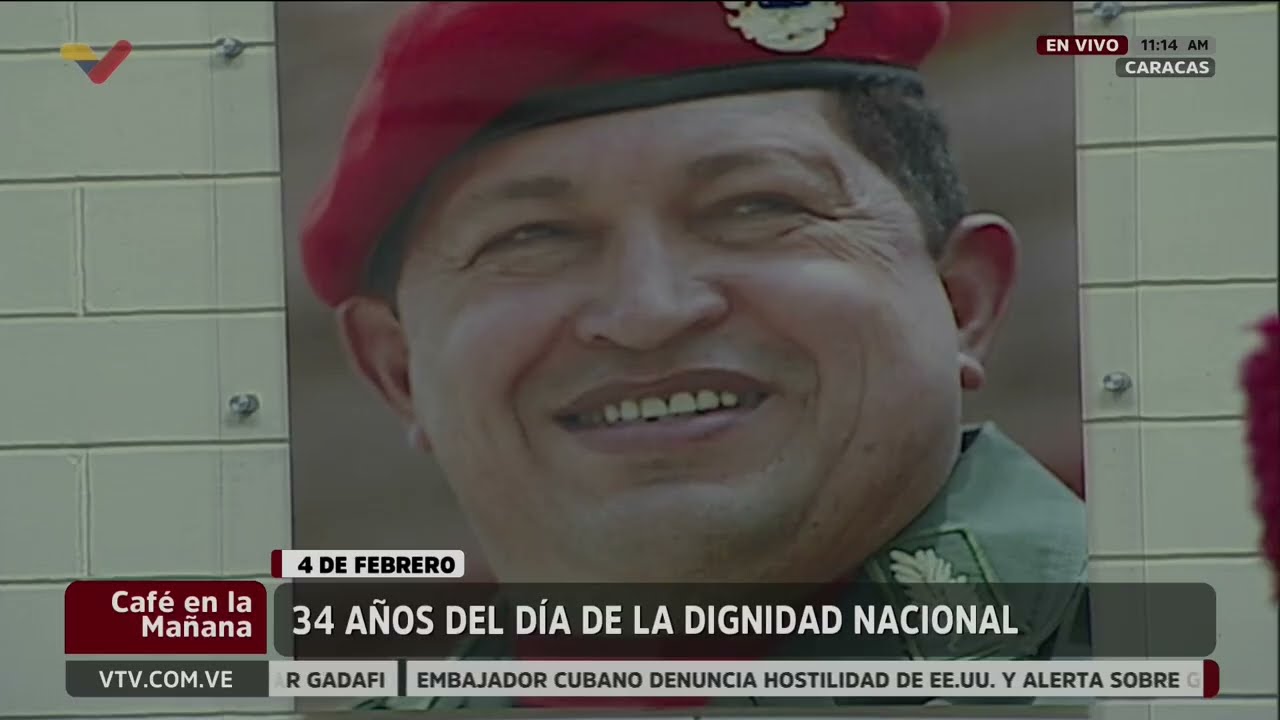
Caracas (OrinocoTribune.com)—In an emotional ceremony held at the Mountain Barracks in Caracas to commemorate the 34th anniversary of the February 4, 1992 military rebellion, the Secretary General of the United Socialist Party of Venezuela (PSUV), Diosdado Cabello, reaffirmed that Venezuela changed forever on that day.
During the event this Wednesday, February 4, Cabello noted that the discourse of Commander Hugo Chávez, who led the historical action, was always centered on unity, making him the primary reference point in the country’s recent history. Cabello also reiterated that “today the whole world knows: we are the only ones who guarantee peace in this country; it is the Bolivarian Revolution.”
Historical significance of February 4
The top Chavista leader called for the eradication of individualism and asserted that Hugo Chávez’s sacrifice was not in vain, as the nation is now firmly reaping the fruits of that struggle. As an example, he mentioned the movement’s capacity to transform adversity into popular victories, referring to the ongoing resistance against foreign aggression.
Cabello, who was among the military leaders who took up arms against the government of former president Carlos Andrés Pérez, reiterated that the events of February 4, 1992, altered the country’s trajectory permanently. He praised the uprising of all the participating military officers who defended a Venezuelan people then-oppressed by the neoliberal governments of the Fourth Republic. He explained that Chávez moved forward with a meritocratic system and maintained a steady direction, adding, “President Maduro also asked us for calm and composure,” emphasizing that “he who despairs loses.”
Resistance against the January 3 US attack
Reflecting on recent events, Cabello addressed the January 3 military strikes conducted by the US empire, which he described as a “treacherous, vile attack” against the people. “We have to take off our berets before our people and say that Hugo Chávez did not plow the sea. Today, we are reaping what allows us to remain standing,” he expressed. “Today, the whole world knows, the only ones who guarantee peace in the country are us.”
Venezuela’s Interior Minister recalled that the only thing a revolutionary has to offer is their life, which is exactly what the rebels did on February 4, 1992. “Feel proud because history will recognize you,” he said, adding that he was filled with strength by the presence of his comrades in arms from that historic day as he recounted the events of the rebellion.
Unity against a historical enemy
Cabello pointed out that Venezuela is navigating a complex moment that demands heightened leadership and awareness. “Today Venezuela stands tall, and we will never kneel before anyone,” he said. He explained the historical enemy remains the same and continues to exist in various forms, and that Venezuela has developed. He reiterated that “as long as they see us united, they will think twice; if they see us divided, they will devour us one by one, and no one will be left.”
Cabello called for continued unity in a single bloc to maintain Venezuela’s stability while lamenting the January 3 US military aggression. He demanded the release of President Nicolás Maduro and First Lady Cilia Flores, and expressed firm support for the administration of Acting President Delcy Rodríguez, who has shown leadership and strength under unprecedentedly complex circumstances.
Commemoration in Maracay
In the afternoon, Cabello traveled to Maracay, Aragua state, to participate in a demonstration commemorating the historical landmark for Venezuela and Chavismo. From Maracay, he addressed the absence of the kidnapped leadership: “Yes, two are missing, Nicolás and Cilia; and we also miss the more than 100 comrades murdered by bombs. We also miss those Venezuelan men and women who died of heart attacks.”
He concluded by highlighting the resilience of the movement, noting that critics predicted that the end of the revolution would follow after the death of Commander Chávez. He pointed out that Chavismo continues to lead Venezuela’s social, political, and economic life even after the loss of Chávez and the kidnapping of President Maduro.
Special for Orinoco Tribune by staff
OT/JRE/AU