By Mark Weisbrot – Dec 23, 2020
In recent weeks, Donald Trump has been ridiculed, slathered with contempt, and repeatedly branded a “liar,” as well as an existential threat to democracy in the United States, by the biggest media outlets in the country. This is in response to his attempts to reverse the results of the U.S. presidential election, and claiming—without evidence—that it was stolen. He still clings to these allegations, but he will be leaving the White House on January 20.
But just over a year ago, a similar effort was launched in Bolivia, and it actually prevailed. The country’s democratically elected president, Evo Morales, was toppled three weeks after the October 20 vote, before his term was finished. He left the country after the military “asked” him to resign.
The similarities are remarkable. Leaders of the Bolivian opposition indicated before the votes were counted, as Trump did, that they would not accept the result if they lost. Like Trump, they had no evidence for their allegations of fraud when the votes were counted. And as with Trump, the falseness of their charges was obvious from day one.
Some readers may question the relevance of the comparison with a developing country whose democratic institutions have a shorter history, and are in important ways weaker than those in the U.S. government. But the Bolivian right would not have succeeded, where Trump has failed, if not for another important difference: the Bolivian right had powerful help from outside the country in pulling off their coup.
Not surprisingly some of this help came from the Trump administration, which stated the day after the coup that “Morales’s departure preserves democracy and paves the way for the Bolivian people to have their voices heard.”
Even more important help came from the Organization of American States (OAS), which, not coincidentally, gets 60 percent of its funding from the United States. The OAS also currently has a leader, Luis Almagro, who at the time of Bolivia’s election needed the support of Trump and his allied right-wing governments in the Americas in order to be reelected as the head of the organization. The OAS issued a statement the day after the election, expressing “deep concern and surprise at the drastic and hard-to-explain change in the trend of the preliminary results.”
RELATED CONTENT: Bolivia: New Gov’t Sets to Work Undoing Damage Left by US-Backed Añez Regime
This allegation turned out to be “false,” as the New York Times would later report; but as the Times noted, this false allegation “changed the South American nation’s history.” It changed history because it served as the political foundation for the military coup on November 10, 2019.
Another similarity: remember when Trump and his Republican allies were saying that the Democrats were “stealing” the election here because the later, mostly mail-in votes were coming in overwhelmingly from Democrats? Of course this was false; the truth was simply that more Democrats than Republicans were voting by mail.
The OAS allegation in Bolivia was the same: for various reasons—including geography—votes in the pro-Morales areas came in later than those for the opposing candidates. This was obvious from the day after the election by simply looking at the areas where the earlier and later votes were coming from; the data was all on the web. That’s why 133 economists and statisticians from various countries—the majority from the United States—signed a letter demanding that the OAS retract its false statements.
That’s why four members of the U.S. Congress asked the OAS if they ever considered the possibility—which amazingly was not mentioned in three more OAS reports—that the later-reporting precincts were politically different from the earlier ones.
RELATED CONTENT: 2019 Bolivian Precedent Justifies Trump’s Accusations of Fraud
It’s been a year, and the OAS still hasn’t answered.
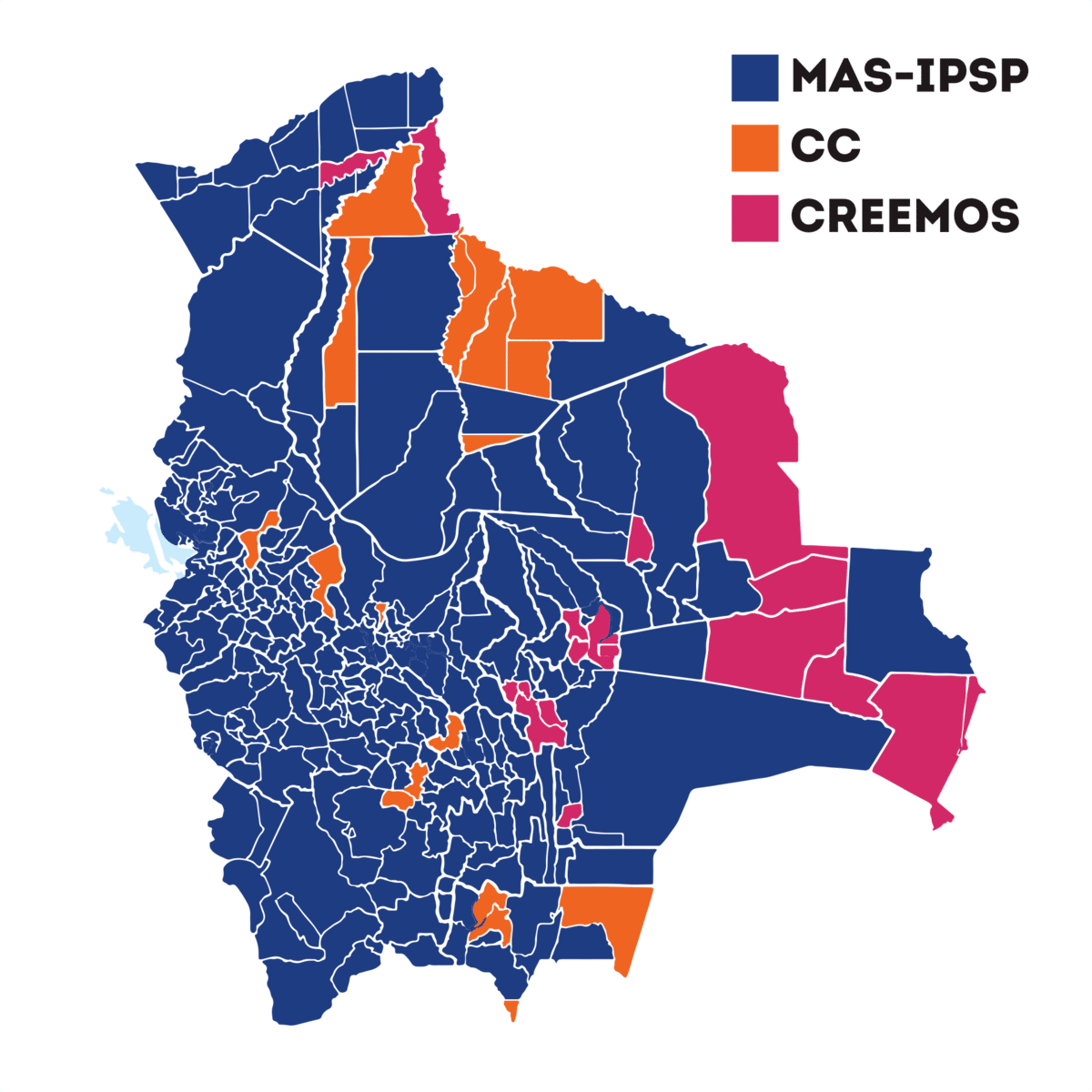
In October, the de facto government, which took power after last year’s coup, held elections, after postponing them twice. Luis Arce, Evo Morales’s economy minister for 13 years, won by a margin of more than 26 percentage points.
But the people killed by the post-coup government, including at least 22 people killed in two massacres committed by security forces, cannot be brought back to life. The victims were all Indigenous.
Like the effort of Trump in the United States—as seen in the recent Republican attempt to throw out hundreds of thousands of votes from Detroit, Michigan, where nearly 80 percent of residents are Black—the assault on democracy in Bolivia is also tied to systemic racism.
Evo Morales is the first Indigenous president in a country with the largest percent of Indigenous population in the Americas, who have overwhelmingly supported him and his party; the leaders of the coup are infused with white supremacists and seek to restore the dominance of the mostly white elite who ruled the country before Morales was first elected in 2005.
U.S. Representatives Jan Schakowsky and Jesus “Chuy” Garcia, both of Chicago, have called for Congress to investigate the role of the OAS in Bolivia following the 2019 election.
This is vitally important, because the coup, and the violence and political repression that followed, might never have happened without the OAS’s pivotal role. Perhaps most importantly, the OAS had an enormous impact on the international and domestic media, with many journalists mistakenly believing that the OAS Electoral Observation Mission was impartial, and that therefore their allegations were true.
But the Bolivian coup is not the first time that the OAS has abused its authority as an electoral observer, in order to support a U.S.-backed effort to topple a democratically elected government. This happened in Haiti between 2000 and 2004. And also in Haiti, the OAS did something in 2011 that perhaps no election observers had ever done: they reversed the results of a first-round presidential election, without even a recount or a statistical analysis.
The OAS and its leadership must be held accountable, or these crimes will keep happening.
Featured image: Photograph Source: P Cesar Maldonado – File:Bolivia_municipios.png – CC BY-SA 3.0
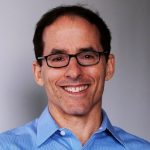
Mark Weisbrot
Mark Alan Weisbrot is an American economist and columnist. He is co-director with Dean Baker of the Center for Economic and Policy Research in Washington, D.C. Weisbrot is President of Just Foreign Policy, a non-governmental organization dedicated to reforming United States foreign policy.