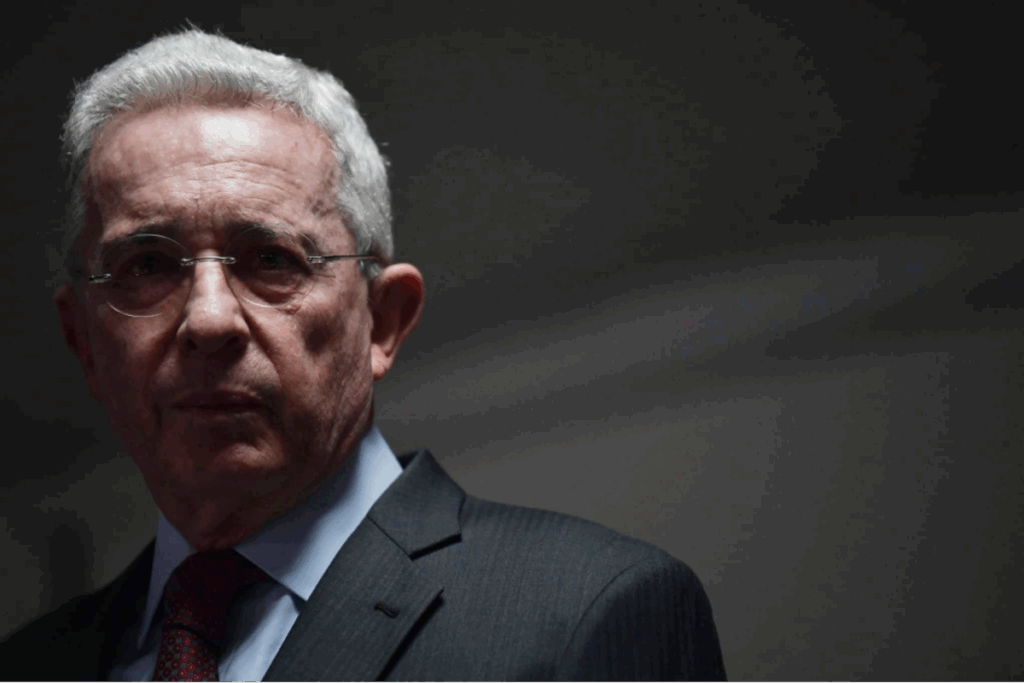
Former far-right Colombian president, Álvaro Uribe. Photo: Jose Vargas/file photo.
Former far-right Colombian president, Álvaro Uribe. Photo: Jose Vargas/file photo.
On Monday, Judge Sandra Liliana Heredia, 44th judge of the Bogotá criminal court, found former Colombian President Álvaro Uribe Vélez guilty of witness bribery and procedural fraud.
The verdict concludes a 13-year judicial process fraught with political tensions, complex evidence, and heated debate over the independence of Colombia’s judiciary.
At the hearing’s start, Heredia sent a forceful message to the country: “The wait is over. We want to tell Colombia that justice has arrived.”
The judge called this one of the most significant moments in recent judicial history: “The law cannot tremble in the face of noise, and justice does not kneel before power. Justice does not see names, positions, or stature because its gaze focuses exclusively on legal truth and the ethical duty to resolve [cases] according to law and trust.”
Heredia addressed defense and prosecution arguments point by point. She upheld the validity of the Supreme Court’s 2018 wiretaps, dismissing claims that they were obtained in bad faith. She explained an inadvertent error occurred in intercepting former Congressman Nilton Córdoba’s telephone line, but noted that authorities acted with “diligence and good faith” in terminating the wiretaps upon discovering the mistake.
The judge also rejected the defense’s request to invalidate all evidence collected between 2018 and 2020—when the Supreme Court had jurisdiction—arguing Uribe’s resignation from his senate seat to transfer to ordinary jurisdiction “only produces effects going forward.” Heredia deemed this move an attempt to “instrumentalize” the change of jurisdiction for legal advantages.
During her ruling, the judge dismissed several defense testimonies due to contradictions and inconsistencies. Among these, she invalidated statements by Enrique Pardo Hasche and a former Monsalve lawyer for lacking supporting evidence.
Simultaneously, the ombudsman’s office urged respect for Heredia’s judicial decision and independence, stressing the judiciary “should not be pressured or stigmatized.” Colombia’s judges’ union called for special protection for Heredia following recent accusations and threats.
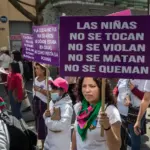
As the hearing proceeded, Uribe’s supporters and opponents gathered across Bogotá and Medellín. In the capital, protesters assembled before a mural reading “Las cuchas eran razón” (“the cuchas were right) – referencing mothers seeking justice for disappearances during Uribe’s administration – awaiting the verdict.
The Uribe-Cepeda case, initiated over a decade ago, ranks among Colombia’s most-watched judicial proceedings. This ruling marks both a legal milestone and a development with direct implications for the 2026 legislative and presidential elections, analysts say.
Heredia’s decision represents a turning point for justice and political power in Colombia. Beyond the conviction, the trial tested judicial independence against a figure who governed for eight years and remains highly influential politically.
Legally, either party may appeal to Bogotá’s superior court. If upheld, the defense could still seek review by the Supreme Court or international bodies.
Witnesses’ deaths under suspicious circumstances
The judicial process against Uribe has involved significant violence against witnesses. The confirmed details are as follows:
• Carlos Enrique Areiza Arango, a former paramilitary member and key witness, was murdered on April 14, 2018, in Bello, Antioquia. He was shot by two men on a motorcycle without license plates. Areiza had testified about Uribe’s alleged witness tampering and later claimed a retraction letter implicating Senator Iván Cepeda was forged under threat.
• Juan Guillermo Monsalve, another critical witness who accused Uribe of founding paramilitary groups, survived two assassination attempts (a stabbing and poisoning) while in prison. Colombia’s Supreme Court ordered enhanced protection for him due to “continuous and repeated threats.”
Colombia Court Admits Bribery Charges Against Ex-President Álvaro Uribe
The judicial process against Uribe has been marred by the deaths of several witnesses under suspicious circumstances, raising concerns about the safety of those involved in the investigation. Uribe faces charges related to his alleged ties to paramilitary groups and corruption, including the “parapolítica” scandal, which implicated politicians in organized crime. Several witnesses, including former officials and informants, have died in unexplained ways such as sudden illnesses, accidents, or violent incidents. For example, Óscar Albeiro Gómez, a key witness in the case, died in 2019 under unclear conditions, while others have been found dead in circumstances that authorities have not fully explained. These deaths have fueled accusations of intimidation and threats against those cooperating with the judiciary, complicating the legal proceedings and eroding public trust in the process.
The Colombian courts have investigated some of these deaths, but many remain unresolved, with families and human rights groups demanding transparency. Critics argue that the lack of accountability for these incidents suggests a pattern of silence or complicity. Meanwhile, Uribe’s legal team has denied any wrongdoing, attributing the deaths to natural causes or unrelated factors.
(Ultimas Noticias) with Orinoco Tribune content
Translation: Orinoco Tribune
OT/JRE/SL