By Sarah B. – Aug 20, 2025
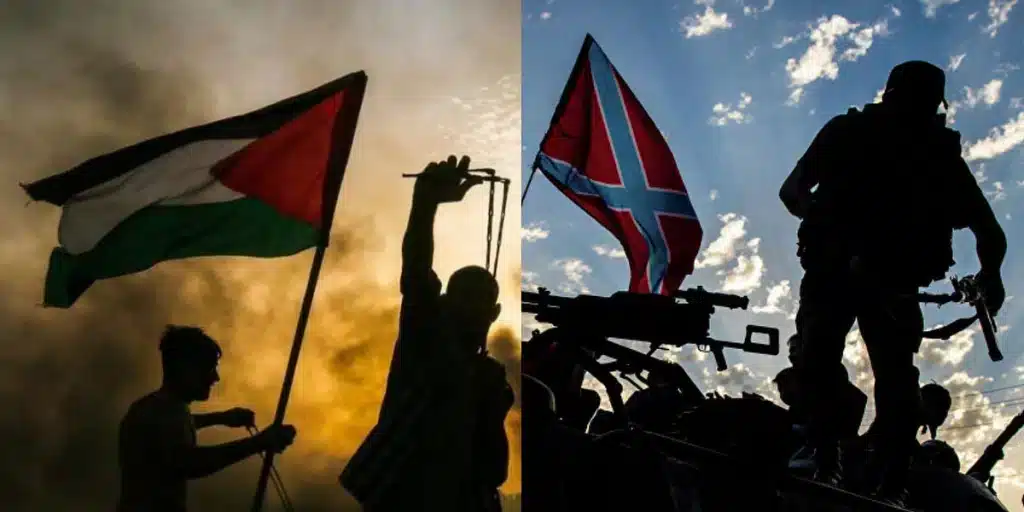
From Bandera to Ben-Gurion, a new axis of ethno-supremacy is rising, fueled by U.S. backing. Same guns. Same flags. Same ideology. Gaza and Donbass are not separate wars. They are one machine.
The Ukraine–Israel Nexus: Pragmatic Alliances Amid Paradoxes and Shared Challenges
From Bandera to Ben-Gurion, echoes of ethno-nationalist revival resonate in the modern trajectories of Ukraine and Israel, two states forged through war, hardened by siege mentalities, and fueled by historical narratives of existential struggle. But these similarities are no accident of parallel development. They reflect a deepening alignment shaped by shared adversaries like Russia and Iran, backed and brokered by the same Western patrons.
From Bandera to Ben-Gurion, echoes of ethno-nationalist revival resonate in the modern trajectories of Ukraine and Israel, two states forged through war, hardened by siege mentalities, and fueled by historical narratives of existential struggle. But these similarities are no accident of parallel development. They reflect a deepening alignment shaped by shared adversaries like Russia and Iran, backed and brokered by the same Western patrons.
In 2022, an officer of Ukraine’s Azov Regiment, toured Israel after surviving the siege of Mariupol. By 2025, Israeli drones were flying missions over Rafah, while American-made PSRL-1 rocket launchers, initially supplied to Ukraine, were spotted in conflict zones across the Middle East. Some experts suggest these may have reached Gaza through black-market channels, though a direct transfer remains unproven. What is undeniable, however, is the convergence of military technologies, intelligence doctrines, and battlefield logistics spanning both theaters.
In April 2022, Ukrainian President Volodymyr Zelenskyy, himself a stalwart ally to the Zionist cause, declared that he envisioned Ukraine becoming “a big Israel.” In doing so, he abandoned the pretense of liberal reform and embraced a future defined by permanent militarization, domestic surveillance, and an ideologically mobilized citizenry. Ukraine, he suggested, would survive not by joining Europe’s post-national dream, only by imitating the ethos of a heavily securitized Middle Eastern state.
Zelenskyy’s statement didn’t emerge in a vacuum. It followed decades of quietly intensifying Ukrainian–Israeli ties, in historical memory, military cooperation, tech integration, and shared narratives of victimhood. But it also exposed a deeper and more disturbing fusion. When the president of a country still reckoning with the legacy of the Holocaust and its own fascist collaborators calls for the building of a “Big Israel,” he is not just invoking a model of defense, he is invoking a model of justified violence, permanent siege, and a long tradition of selective memory, one that both Ukraine and Israel have wielded to reconcile uncomfortable historical alliances of culpability.
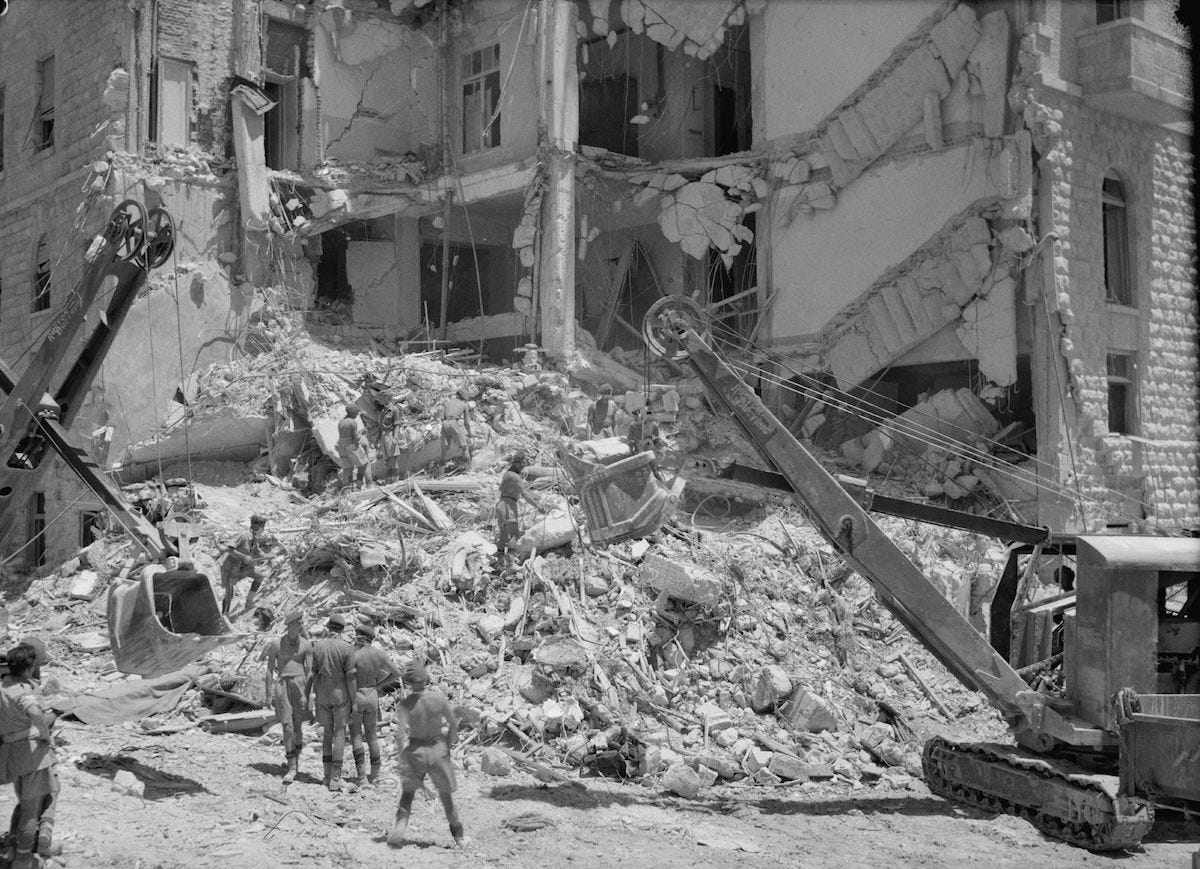
Just as the OUN’s collaboration with Nazi Germany is selectively reframed within the Ukrainian national mythos, Israel’s founding story often omits its own moments of strategic accommodation with fascism. In the 1930s and ’40s, elements of the Zionist movement, most notably the Haavara Agreement between Nazi Germany and the Jewish Agency, facilitated Jewish emigration to Palestine while bypassing international boycotts of the Nazi regime. Revisionist factions like Lehi (the Stern Gang) and Irgun Zvai Leumi even sought military cooperation with the Axis powers against the British. These uncomfortable truths, long buried beneath the moral absolutism of Holocaust remembrance, underscore a shared willingness, Ukrainian and Zionist alike, to collaborate with and even become genocidal regimes when national aspirations were at stake.
What binds Gaza and Donbass is not a monolithic “machine of violence” but a transnational matrix of ideological alignment, technical cooperation, and strategic utility. Ukraine’s campaign of “decommunization” often mirrors Israel’s internal securitization and demographic engineering, both clad in the moral armor of historical trauma. In practice, both states justify aggressive internal and external policies through the language of survival.
This article maps the ideological, military, economic, and cultural architecture of the Ukraine–Israel relationship. From Soviet-era tensions to the post-2014 reconfiguration of alliances, we explore how pragmatic imperatives have forged a new axis of ethno-nationalist power, increasingly central to NATO’s long-term vision of regional dominance.
I. Historical Ties
To understand the modern partnership between Ukraine and Israel, one must begin with their shared, and often contradictory past. Ukraine was both a cradle of early Zionism and a site of violent antisemitic pogroms. Movements like Hibbat Zion, emerged in the 1880s in cities like Odessa and Kiev, decades before Theodor Herzl’s more famous Vienna-based political Zionism. Their mission: to restore the Jewish people to their ancestral homeland in Palestine. Ukraine, in this sense, was an incubator for the ideological DNA of the Israeli state.
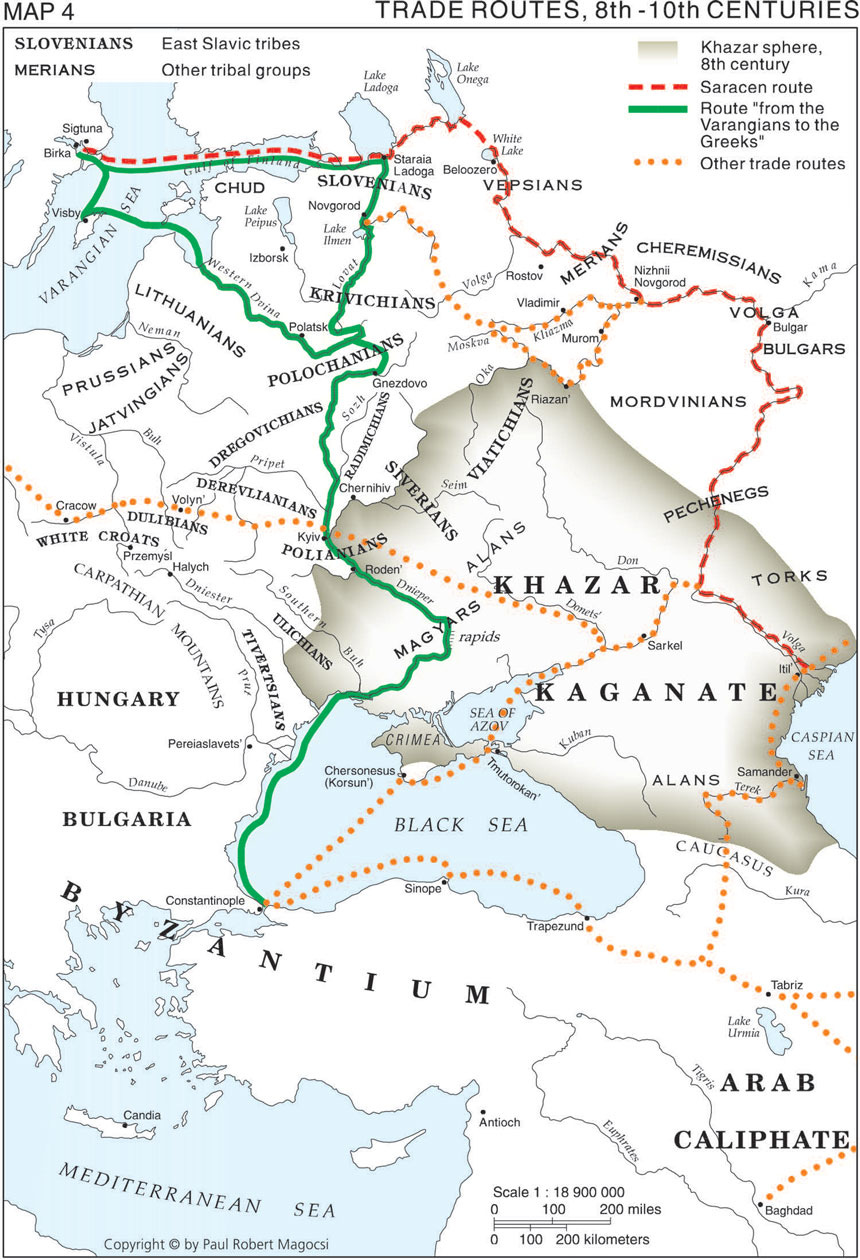
In today’s geopolitical terrain, however, deeper ideological and historical motifs are reemerging, some deliberately, others as specters. One such motif is the ghost of Khazaria, a medieval polity centered in southern Ukraine, ruled by a Turkic elite that famously converted to Judaism under King Bulan in the 9th century. The Khazar Hypothesis, popularized by Hungarian-Jewish author Arthur Koestler in The Thirteenth Tribe, argued that Ashkenazi Jews descend not from the ancient Israelites, but from these Central Asian converts. Though academically rejected by most geneticists and historians, the idea has persisted and recast by some as a Zionist cover story, by others as an antisemitic myth, and by a few as prophecy.
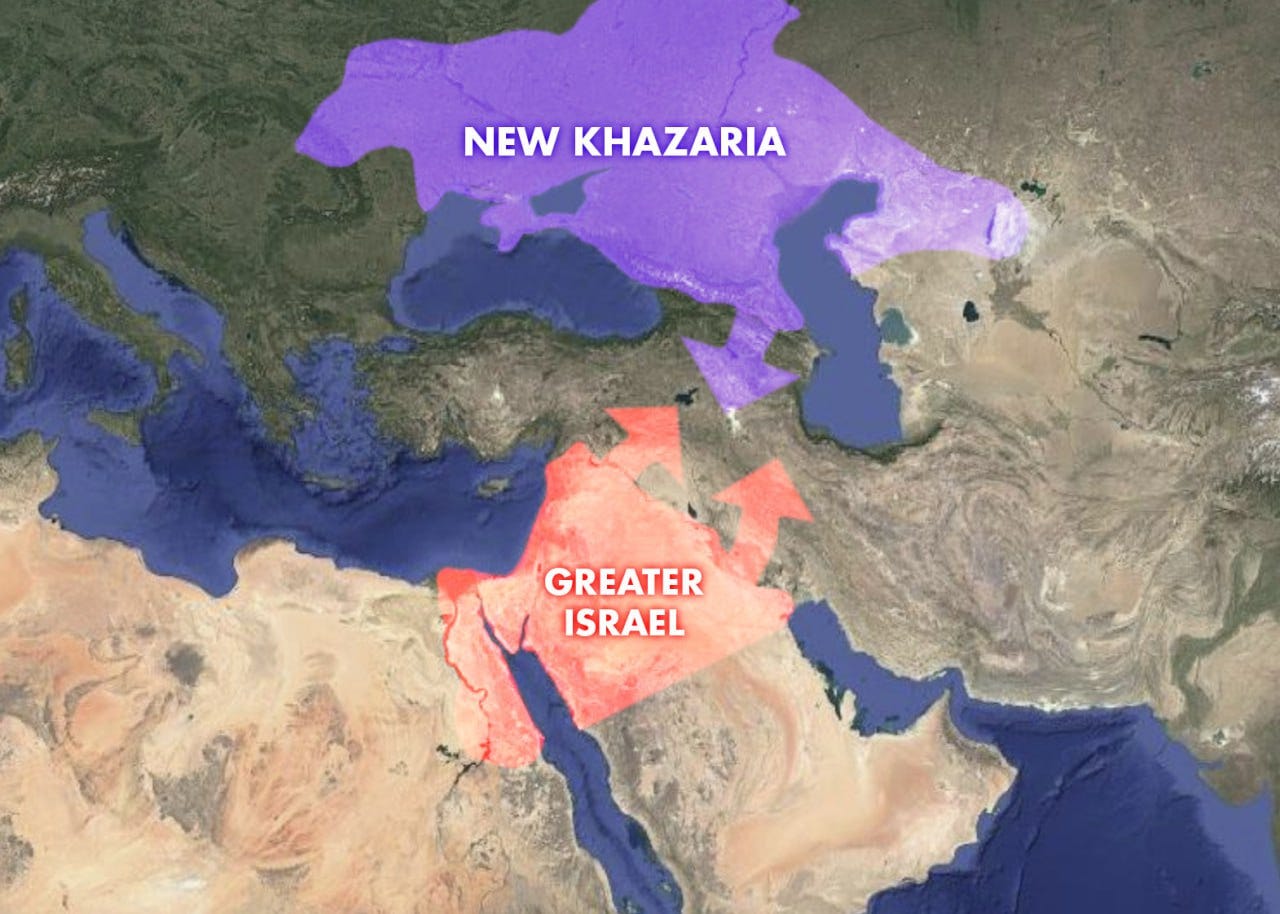
Today, the notion of a “New Khazaria” is floated on the fringes of the internet, yet it is not merely a conspiracy theory. Ukrainian lands, particularly Dnepropetrovsk and Kherson Oblasts, have long held symbolic importance in ultra-Orthodox Jewish cosmology: they are the birthplace of Hasidic dynasties, the homeland of sages like the Lubavitcher Rebbe, Menachem Mendel Schneerson, and the final resting place of mystics whose graves draw tens of thousands of pilgrims annually. Israeli oligarchs have quietly purchased land in former Khazar strongholds; Ukrainian political elites, including Volodymyr Zelenskyy himself, maintain close personal and financial ties to Israel. His parents live in Israel; his real estate portfolio reportedly included properties in Herzliya.
Some see in this a symbolic return to the ancestral European Zion, or perhaps the creation of a fallback ethnostate, an ideological parallel to the Israeli model, one centered not in the Levant but in the steppe. In this context, Ukraine becomes both a forward operating base for Western interests and a mythic echo of Jewish statelessness reclaimed through force and finance.
Ironically, even the Ukrainian far-right seems to tolerate this arrangement. Groups like Azov and Right Sector, once steeped in antisemitic tropes, have muted their hostility toward Jews. Their funding from Israeli-aligned sources, partnership with Zionist ideologues, and absence of “Khazarian” rhetoric suggest an intentional realignment. The enemy is no longer the Jew, it is the Russian. And if that means working with Israeli intelligence, joint training with IDF veterans, and fighting side by side with Zionist-linked PMCs in Gaza, so be it.
Thus, the historical ties between Ukraine and Israel are not just about shared suffering or ideological overlap. They are about symbolic geography, strategic mythmaking, and the resurrection of old narratives in service of new empires. Whether through the revival of Zionism’s Eastern European roots or the whispered dream of a “New Khazaria,” Ukraine is once again a staging ground for war, for memory, and perhaps, for reinvention.
From Pogroms to Prime Ministers: The Complicated History of Ukraine and Israel
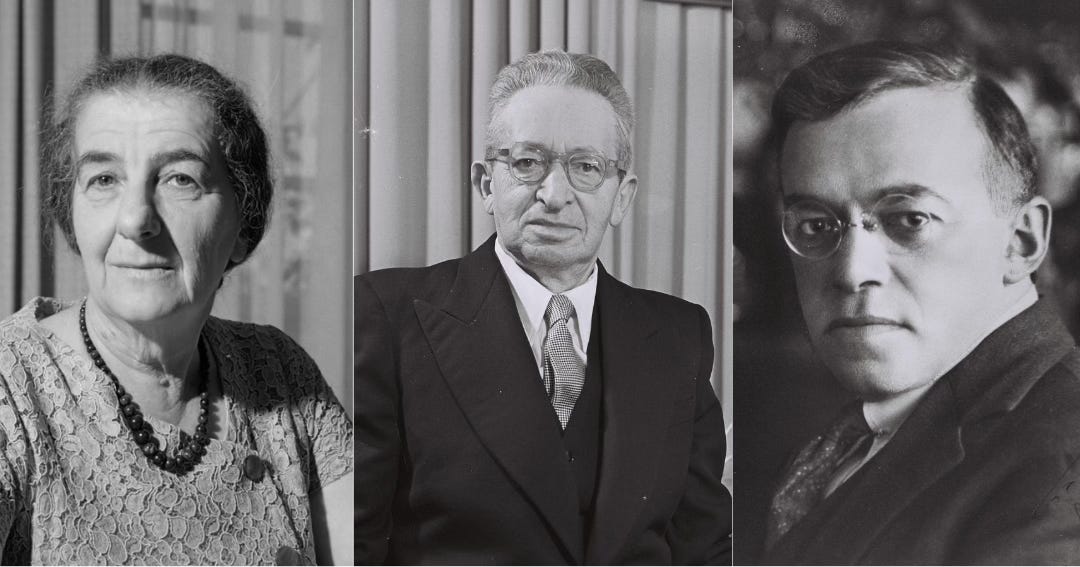
Ukraine contributed significantly to Zionism: Golda Meir (Kiev), Yitzhak Ben-Zvi (Poltava), and Ze’ev Jabotinsky (Odessa), who would go on to shape Israel’s political, military, and ideological architecture.
In 1919, forces loyal to Symon Petliura massacred tens of thousands of Jews across the Ukrainian People’s Republic. Just over two decades later, members of the Organization of Ukrainian Nationalists (OUN) and the Ukrainian Insurgent Army (UPA), celebrated today by some as independence heroes, participated in the 1941 pogroms in Lvov and collaborated with the Nazis in the Holocaust. The paradox of this legacy continues to haunt the present.
After World War II, many Ukrainian nationalists found refuge in Western countries like Canada and the United States. While there is no documented integration of these figures into Israeli institutions, their political descendants have reemerged in Ukraine’s post-Maidan landscape and some openly celebrated. In 2019, the Lvov regional council declared the year of Stepan Bandera, sparking international criticism, including from the World Jewish Congress. Still, the Israeli government made no formal move to halt bilateral cooperation.
What we see today is not a “convenient forgetting,” but a complex reckoning shaped by shifting geopolitical priorities. Israeli officials have condemned Russian efforts to weaponize Holocaust memory, such as Lavrov’s 2022 claim that Hitler was part Jewish, while Ukrainian President Zelenskyy has repeatedly invoked Holocaust analogies to frame Ukraine’s war with Russia. This rhetorical exchange, while controversial, reveals a mutual strategy: anchoring nationalist war efforts in historical trauma to secure legitimacy and Western backing.
This pragmatism is mirrored in material cooperation. Despite concerns over Ukrainian far-right groups like Azov, Israel has continued to sell arms and surveillance technologies to Ukraine. In 2018, Israeli human rights groups petitioned the High Court to stop arms sales due to Azov’s documented abuses. The petition was rejected. By 2025, reports confirmed missile intelligence sharing between Kiev and Mossad, a relationship unprecedented in the history of post-Soviet Ukraine.
Financially, the paradox is even starker. Ihor Kolomoisky, one of Ukraine’s wealthiest oligarchs and a Jewish-Israeli citizen, played a major role in funding the Azov Battalion in its early days. His case demonstrates how ethno-nationalism can be toleratedand even subsidized, when aligned with broader anti-Russian imperatives.
The historical relationship between Israel and Ukraine is not one of ideological clarity. It is a pragmatic evolution, shaped by war, memory, trauma, and strategy. The next sections will examine how these contradictions manifest on the battlefield through weapons, doctrine, personnel, and propaganda, across Gaza and Donbass alike.
Selective Memory: How Competing Genocides Forged Strategic Amnesia
In the narrative war between historical truth and political utility, few examples are as revealing, or as cynical, as the ways Ukraine and Israel have reframed and often embellished their respective traumas to enable strategic cooperation.
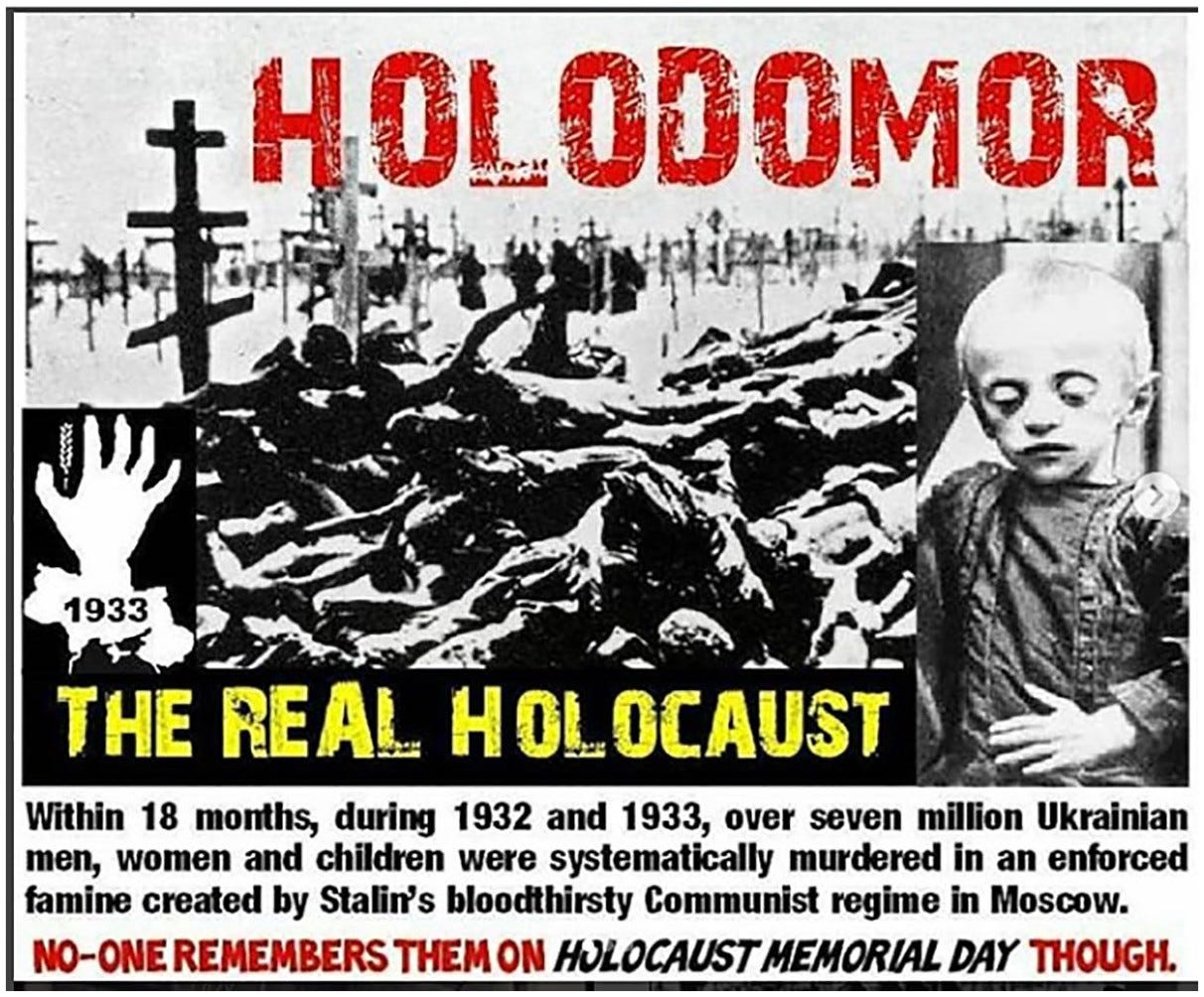
By the 1980s, Ukrainian nationalist émigrés began aggressively promoting the 1932–33 Soviet famine, or Holodomor, as the “Ukrainian Holocaust.” This was a calculated response to the rising global awareness of Jewish suffering, spurred by the 1978 NBC miniseries Holocaust, which explicitly portrayed Ukrainians as Nazi collaborators. For diaspora groups still loyal to Stepan Bandera’s legacy, the documentary posed a threat to their rehabilitated image, which they had worked fervently to whitewash. In turn, they constructed a counter-narrative of equal, if not greater, Ukrainian victimhood, one that would cast the Soviet state as genocidal and reframe Ukrainian history through the lens of national martyrdom.
This rhetorical project relied on inflating death tolls, often citing 7 to 10 million dead, with some going as high as 15 million, while invoking a phonetic and symbolic parallel between Holodomor and Holocaust. It was, as historian Grzegorz Rossoliński-Liebe writes, less about demographic accuracy than ideological utility. The famine, while catastrophic, was not an orchestrated ethnic extermination campaign like the Shoah. But by elevating it to genocide status, Ukrainian nationalists could deflect scrutiny of their wartime collaboration with the Nazis, including participation in pogroms and ethnic cleansing under the OUN.
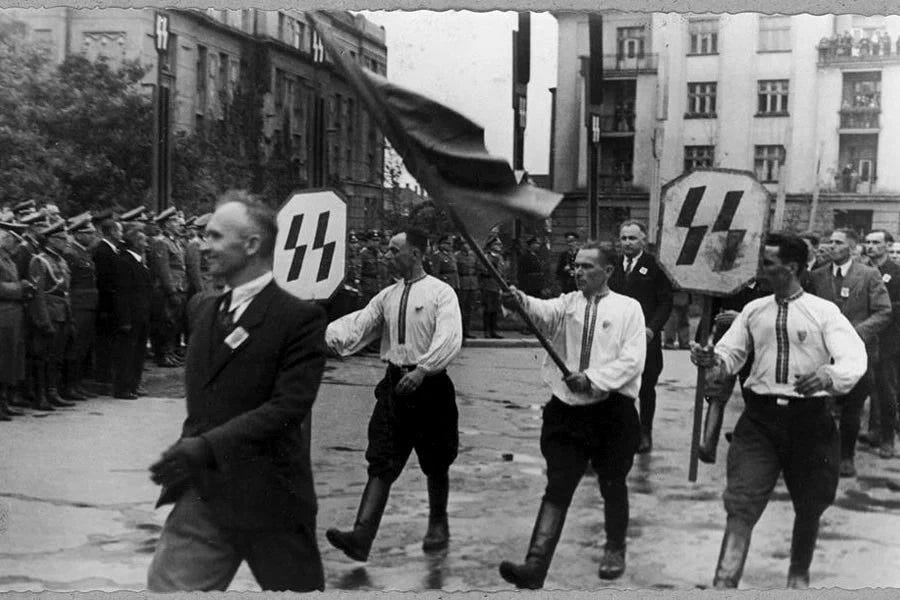
This historical sleight of hand achieved two goals: it sanctified Ukraine as a perennial victim of foreign empires, and it neutralized Jewish accusations of Holocaust complicity by establishing a kind of “moral equivalence.” For the Ukrainian extremist and opportunist, it is “his” genocide, comparable in scope and brutality to whatever accusations his grandfather had to ‘live down’ since the era of dominion by the brutal Nazi gauleiter.
For Israel, this distortion has been tolerated and even strategically overlooked. Despite the Ukrainian state’s open veneration of Nazi collaborators like Bandera and Shukhevych, Israel has prioritized its growing intelligence and defense relationship with Kiev. In the face of shared geopolitical adversaries (e.g. Russia and Iran) historical clarity has been sacrificed in favor of realpolitik.
The result is a pact built on strategic amnesia: a cold alliance between two states whose foundational traumas have been rewritten to serve military alignment, ideological affinity, and common enemies. The memory of the murdered is not erased, it is repurposed, selectively deployed to justify partnerships that would be morally indefensible if judged by the very history both sides claim to honor.
II. Blood Ties and Battle Lines: Commanders, Crusaders, and Collaborators
The machinery of transnational warfare is not only built with weapons, laws, and doctrines, but with men. Individuals who embody the ideological convergence between Zionist ethno-nationalism and Ukrainian fascism do not operate in the shadows; they are often celebrated, recruited, and strategically deployed across theaters like Gaza and Donbass. These figures serve as ideological evangelists, field commanders, propaganda tools, and networking nodes between far-right militias, Western intelligence networks, and private security structures.
Some are Azov veterans turned actors and influencers. Others are American-Israeli contractors building bridges between Tel Aviv and Kiev. Many blur the line between battlefield leadership and civilian activism, using NGOs, media, or politics to launder their roles in violent operations. Together, they form the human core of a war machine marketed as democracy promotion but built on blood.
Andriy Biletsky: The Crusader Who Learned to Pivot
Once a fringe neo-Nazi agitator, now a battle-hardened military commander and nationalist politician, Andriy Biletsky represents the ideological core and strategic evolution of Ukraine’s far-right movement. As founder of the Azov Battalion and later the National Corps party, Biletsky’s journey traces the arc from street-level extremism to institutional legitimacy, powered by paradoxes and geopolitical convenience. Beneath the rebranding lies a continuity of vision: a Ukraine purified through war, myth, and selective memory.
Born in 1979 in Kharkov, Biletsky was shaped by the Soviet collapse and the nationalist revival it unleashed. He studied history at Kharkov National University and wrote his thesis on Cossack rebellions—foreshadowing his later glorification of martial struggle and mythic national rebirth. As a young man, he immersed himself in football hooliganism, Slavic paganism, and neo-Nazi circles. His early ideological lodestars were Dmytro Dontsov and Stepan Bandera, filtered through a white supremacist lens. In 2005, he founded Patriot of Ukraine, a group that carried out violent attacks on immigrants, Roma, and leftists under the banner of racial purification.
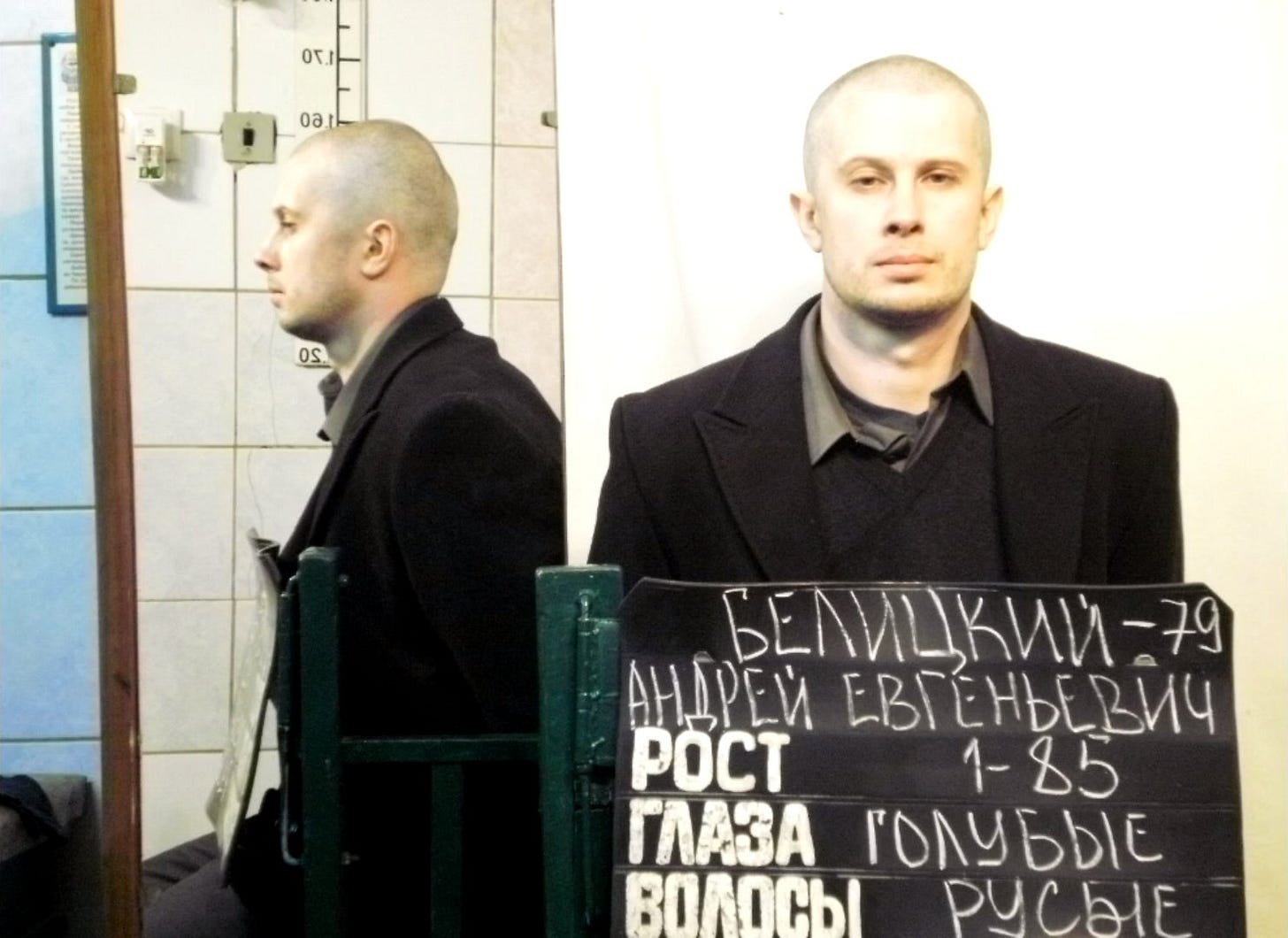
The 2014 Maidan uprising and war in Donbass propelled Biletsky into national prominence. He organized the Azov Battalion in Mariupol, which rapidly grew into one of the most notorious and effective paramilitary formations in Ukraine. With reported funding from oligarch Ihor Kolomoisky, himself Jewish and Israeli-citizen, Azov’s contradictions became evident: white supremacist symbolism coexisted with Jewish funders and Israeli-made weapons. Azov was incorporated into the National Guard later that year, and Biletsky stepped back from military command to launch the National Corps political party, a civilian arm of the Azov movement.
Biletsky served in the Ukrainian parliament from 2014 to 2019, but never built a strong electoral base. His influence instead spread through youth paramilitary training camps, “national-patriotic education” centers, and Azov’s growing network of international allies. Even as his overt rhetoric softened and he dropped explicit references to race and Hitlerite language, his strategic aims remained the same: a monoethnic Ukrainian state built on militarism, myth, and permanent mobilization. In a 2024 interview with The Times, Biletsky framed Azov as inclusive and civic-minded, noting that it even included “Israeli citizens.”
“It was actually a Russian fabrication. I can say unequivocally that I’m not an antisemite. In my brigade, we have Jewish people, including Israeli citizens. We have company commanders, platoon leaders, medical officers who are Jewish.”
— Andriy Biletsky, The Times interview, 2024
The pivot worked. In 2024, the U.S. formally lifted its ban on supplying weapons to Azov. Biletsky’s narrative of resistance against Russia, corruption, and moral decay aligned perfectly with Western appetites for proxy heroes. He compared the siege of Mariupol to the Jewish defense of Masada, and repeatedly praised Israel’s model of an ethno-nationalist, militarized democracy. Ukrainian and Israeli flags appeared side by side at Azov recruitment events, and his operatives echoed IDF talking points in English-language interviews.
Yet the substance of Biletsky’s vision never changed. He continues to promote Cossack revivalism, Slavic unity through struggle, and the spiritual regeneration of Ukraine through war. His 3rd Assault Brigade, composed of hardened Azov veterans, has become a prestigious formation in the new Ukrainian military, even as it retains the old Azov aesthetics and battlefield mythos. He frequently posts about martyrdom, destiny, and civilization’s edge, blending Orthodox Christian symbolism with militarized folklore.
Video: 3rd Assault Brigade begging for pick-up trucks, May 2025.
Biletsky’s greatest achievement may be ideological laundering. The man who once dreamed of a “white crusade” has been embraced by governments, journalists, and military partners across Europe and the U.S. His public image has been burnished through selective forgetting and strategic partnerships, particularly with Jewish-Ukrainian elites and Israeli military sympathizers. The far right has been folded into the state… and the state into the far right.
He is not an aberration. He is a blueprint.
Ihor Kolomoisky: The Zionist Oligarch Behind Ukraine’s Neo-Nazi Militias
Ihor Valeriyovych Kolomoisky, born in Dnepropetrovsk in 1963, is a Ukrainian-Israeli-Cypriot billionaire oligarch whose name became synonymous with both the rise of Ukraine’s post-Maidan far-right militias and the uneasy geopolitical fusion of Zionism with Ukrainian ultranationalism. Known for his ruthless pragmatism and immense wealth, Kolomoisky represents one of the clearest examples of how ethnic identity, ideology, and realpolitik can converge in paradoxical and dangerous ways.
Born to Jewish parents during the Brezhnev era, Kolomoisky came of age in a Soviet society that simultaneously discouraged religious expression and quietly tolerated discrimination. His early years in Dnepropetrovsk were defined by technical education and economic ambition. He graduated with a degree in metallurgy in 1985 but pivoted swiftly into the business world during the perestroika reforms. Post-1991, he embraced his Jewish identity more openly, founding the European Jewish Union and funding the Menorah Center, the largest Jewish complex in the world, in his hometown.
Despite the political risks, Kolomoisky wore his identity publicly and provocatively, even sporting a t-shirt reading “Zhido-Bandera” (below), a defiant embrace of his dual status as a Jew and supporter of Ukrainian nationalist icons like Stepan Bandera. It was this calculated blending of symbols that would define his political career.
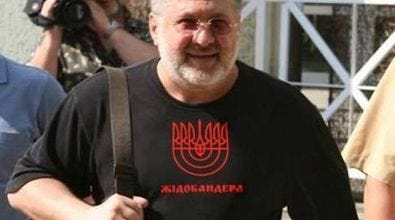
In the post-Maidan power vacuum, Kolomoisky became one of the most influential oligarchs in Ukraine. He co-founded PrivatBank, Ukraine’s largest bank, and expanded into oil, media (owning 1+1 TV), and aviation. But it was his brief term as governor of Dnepropetrovsk (2014-2015) that marked a historic turning point. As war broke out in the Donbass, Kolomoisky poured millions of dollars into volunteer battalions, including the infamous Azov Battalion, Dnipro-1, Aidar, and others.
Estimates suggest he personally funded these forces to the tune of at least $10 million. He even offered bounties of $10,000 for captured “separatists.” Though some of these militias, like Azov, were internationally condemned for their neo-Nazi affiliations, Kolomoisky backed them as part of a broader anti-Russian strategy.
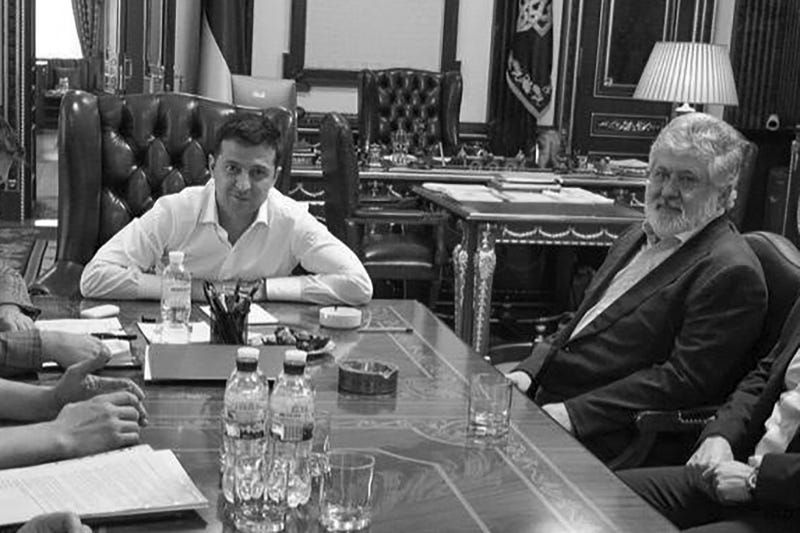
His influence didn’t stop at the battlefield. Through his media empire, he shaped public opinion, promoted nationalist narratives, and indirectly supported political arms of the far right, such as the National Corps. At the same time, he played kingmaker in national politics, backing comedian-turned-president Volodymyr Zelenskyy in 2019, a move widely seen as an attempt to hedge against other oligarchic rivals.

Kolomoisky’s entanglement with Israeli and Zionist networks makes his role in empowering neo-Nazi militias all the more striking. He has held Israeli citizenship since the 1990s, maintains real estate holdings in Tel Aviv, and enjoys strong ties to Chabad-Lubavitch and other influential Jewish organizations. He also helped found the Brussels-based European Jewish Union, modeled after the Knesset, to advocate for Jewish interests across Europe.
Yet it was under this same banner of Zionism that Kolomoisky rationalized his support for groups like Azov. While Azov’s founders, including Andriy Biletsky, made openly antisemitic statements in the early 2010s, Kolomoisky dismissed these origins as outdated, irrelevant, or subordinate to the larger anti-Russian mission. In practice, this meant financing militias that would later try to sanitize their image by pointing to Jewish members, Israeli connections, and broader international support.
His dual role as both a Jewish community leader and sponsor of extremists underscores what one might call a strategic amnesia: a selective forgetting of ideology when the politics demand expediency.
In 2023, Kolomoisky fled to Israel as legal investigations into fraud and embezzlement intensified in Ukraine. He was later detained upon return, facing charges related to the infamous PrivatBank scandal, a $5.5 billion black hole in Ukraine’s banking system. On July 4, 2025, Ukrainian courts extended his detention as he became entangled in an additional case involving a contract killing. Just weeks later, he lost a $1.9 billion lawsuit in the United Kingdom to the very bank he once controlled.
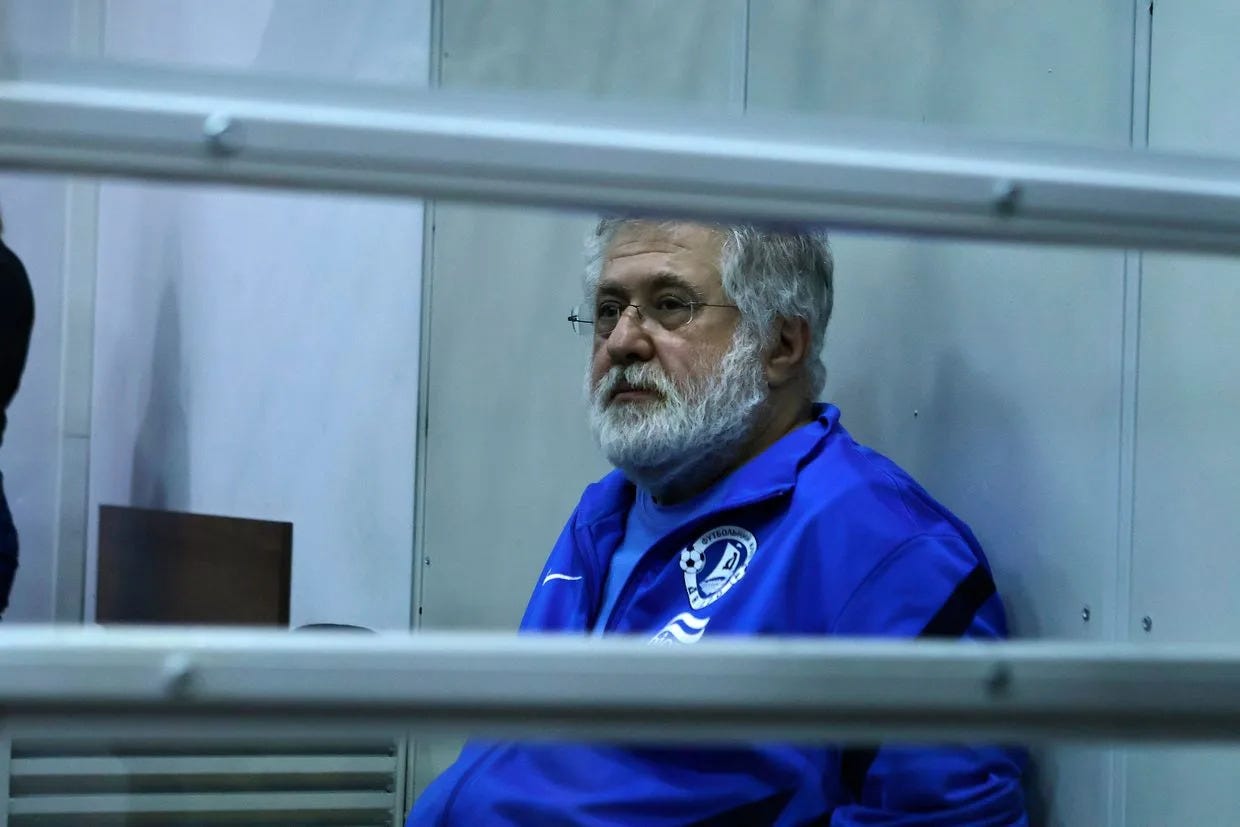
Despite the mounting charges, Kolomoisky remains under the protection of Israeli citizenship. Diaspora networks, particularly within Chabad, have pushed for leniency and framed his prosecution as politically motivated. But in Ukraine, he now carries the stigma of betrayal, sanctioned by the Zelenskyy administration and vilified by anti-corruption watchdogs like OCCRP, which labeled him “Ukraine’s most notorious oligarch.”
Kolomoisky’s story is not just a tale of corruption or moral compromise, it’s a warning. His career exemplifies the rise of a new type of actor in modern warfare and politics: the ethno-nationalist oligarch, able to fund extremist violence under the banners of both nationalism and Zionism, manipulating identity and allegiance to serve empire, capital, and personal power.
In the nexus of Ukraine and Israel, he helped build an alliance not based on shared values but on mutual enemies. That alliance now undergirds military, political, and ideological cooperation in conflicts from Donbass to Gaza. Kolomoisky didn’t create this axis, but he financed it, legitimized it, and lived it.
His fall may be a moment of reckoning. But the networks he empowered, and the contradictions he embodied, are far from dismantled.
Nathan Khazin: The Zionist Commander of Ukraine’s “Jewish Hundred”
Note: Nathan Khazin is sometimes spelled “Chazin” in Western or diaspora sources, but refers to the same figure.
Few figures better embody the ideological contortions of the Ukraine–Israel alliance than Nathan (Natan) Khazin: an Israeli-Ukrainian IDF veteran, Chabad-ordained rabbi, and founding member of Ukraine’s far-right paramilitary scene. While Western narratives have often portrayed Azov and its ideological kin as neo-Nazi holdovers incompatible with Jewish interests, Khazin’s career tells another story, one of tactical alliances, symbolic paradoxes, and the weaponization of identity in modern warfare.
Born in Odessa to a Jewish family during the final decades of the Soviet Union, Khazin came of age during the upheavals of the 1990s. Grappling with post-Soviet antisemitism and the broader collapse of state structures, he became deeply involved in Zionist institutions, eventually immigrating to Israel in the early 2000s. There, he served in the Israel Defense Forces, reportedly in the Givati Brigade, a unit notorious among Palestinians for its brutality during the Second Intifada and subsequent Gaza operations. Trained in urban warfare and counterinsurgency, Khazin absorbed a tactical doctrine that would later echo in Ukraine’s far-right militias.
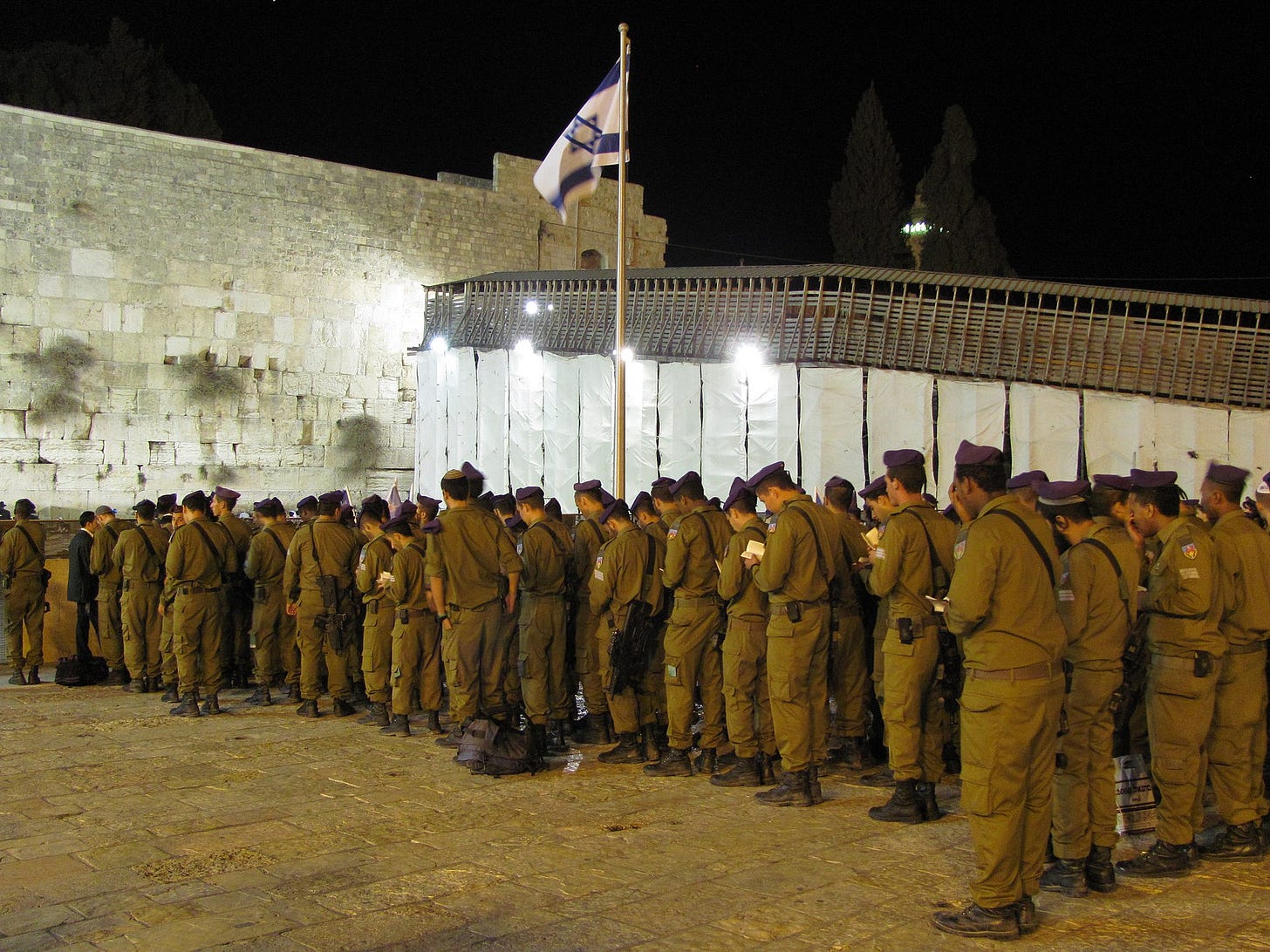
By late 2013, Khazin had returned to Kiev amid the rising tensions of Euromaidan. What followed was one of the most curious fusions of identity in the conflict: Khazin helped form and lead the so-called “Jewish Hundred,” a unit of Jewish volunteers organized to defend the Maidan barricades and counter accusations that Ukraine’s protests were antisemitic. As street battles intensified, Khazin’s unit drilled side by side with Right Sector and other ultranationalist formations, some adorned with Nazi-inspired insignia. In interviews with The Forward and other Jewish outlets, Khazin downplayed the contradictions.
“The Jewish community in Kiev is not under threat,” he said. “We are participants in this revolution, not victims.”
But Khazin’s involvement didn’t stop at symbolism. In 2014, as fighting spread to Donbass, he became an early backer and field contributor to the newly formed Azov Battalion. Drawing from his IDF experience, he helped train Azov fighters in close-quarters tactics, drone reconnaissance, and battlefield coordination. Publicly photographed alongside Azov symbols, Khazin insisted that the unit’s antisemitism was overstated, even fabricated. “Antisemitism isn’t happening,” he told reporters. He framed Azov as a defense force, not an ideology.
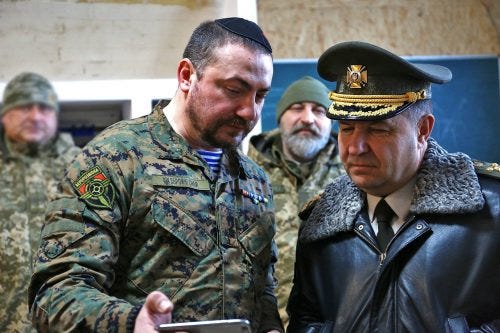
He also became an early co-founder of Aerorozvidka, a drone reconnaissance and strike unit that began as a volunteer effort and evolved into a formal component of Ukraine’s armed forces. Aerorozvidka played a key role in integrating Western surveillance technology with nationalist paramilitary tactics which was a natural extension of Khazin’s dual identity as a Zionist technocrat and battlefield tactician. The group’s ethos of civilian–military fusion and rapid-response strikes echoed the Israeli model of tech-enabled warfare.
This positioning made him a key node in the informal exchange between Israeli and Ukrainian security structures. Khazin operated well within Zionist networks that facilitated tactical support, logistics, and personnel mobility between Zionist and Ukrainian nationalist spheres. His Chabad affiliation linked him to Brodsky Synagogue (Kiev’s central Chabad hub) and to influential donors like Ihor Kolomoisky. The relationship was less about theology than infrastructure: Khazin used religious cover and diaspora fundraising to support a far-right military formation that otherwise would have been politically toxic in Western Jewish communities.
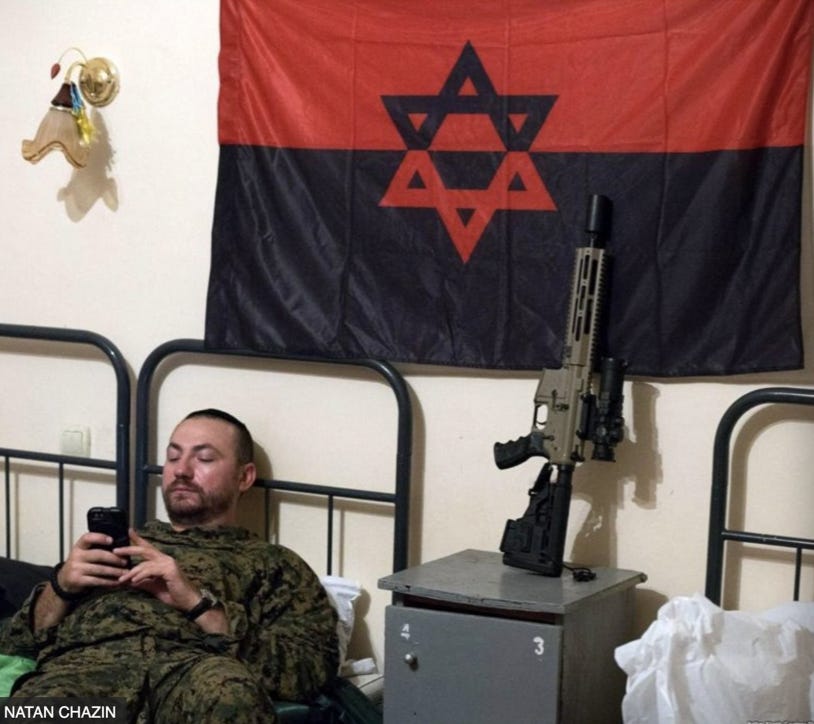
By 2015, Khazin had largely faded from the battlefield and public view. He returned to a quieter life alternating between Israel and Ukraine, continuing his role as a religious leader while avoiding major political engagements. Yet his legacy remains controversial. Social media posts as recently as August 2025 describe him as “Nazi-adjacent,” pointing to his simultaneous service in Israel’s Givati Brigade, accused of atrocities in Gaza, and his support for Azov in Mariupol. Critics see in Khazin the cynical flexibility of modern ideological warfare: a rabbi who helped train fascists, a Zionist who normalized Nazi-linked units, a man who turned “defending Israel” into a license to arm ultranationalists.
Still, for Khazin and his defenders, the logic was simple: Russia was the greater enemy. And if fighting Russia meant embedding with Ukrainian extremists, then pragmatism would prevail over purity. In that, Khazin was not an anomaly but a symbol of the convergence now formalized in Israeli–Ukrainian defense ties, mutual intelligence exchanges, and a growing ideological realignment where ethno-nationalism marches under the same banner of “defense.”
Illia Samoilenko: Azov’s Masada Mythmaker
Illia Samoilenko, better known by the nickname “Gandalf,” is one of the most publicly visible figures to emerge from Ukraine’s Azov Regiment. A historian by training and an amputee survivor of the 2022 siege of Mariupol, Samoilenko has used his personal narrative of defiance, endurance, and rebirth to rebrand Azov for a global audience. In particular, his postwar alignment with Israeli state memory and Zionist narratives marks a strategic reframing of Ukrainian far-right militarism as righteous, inclusive resistance.
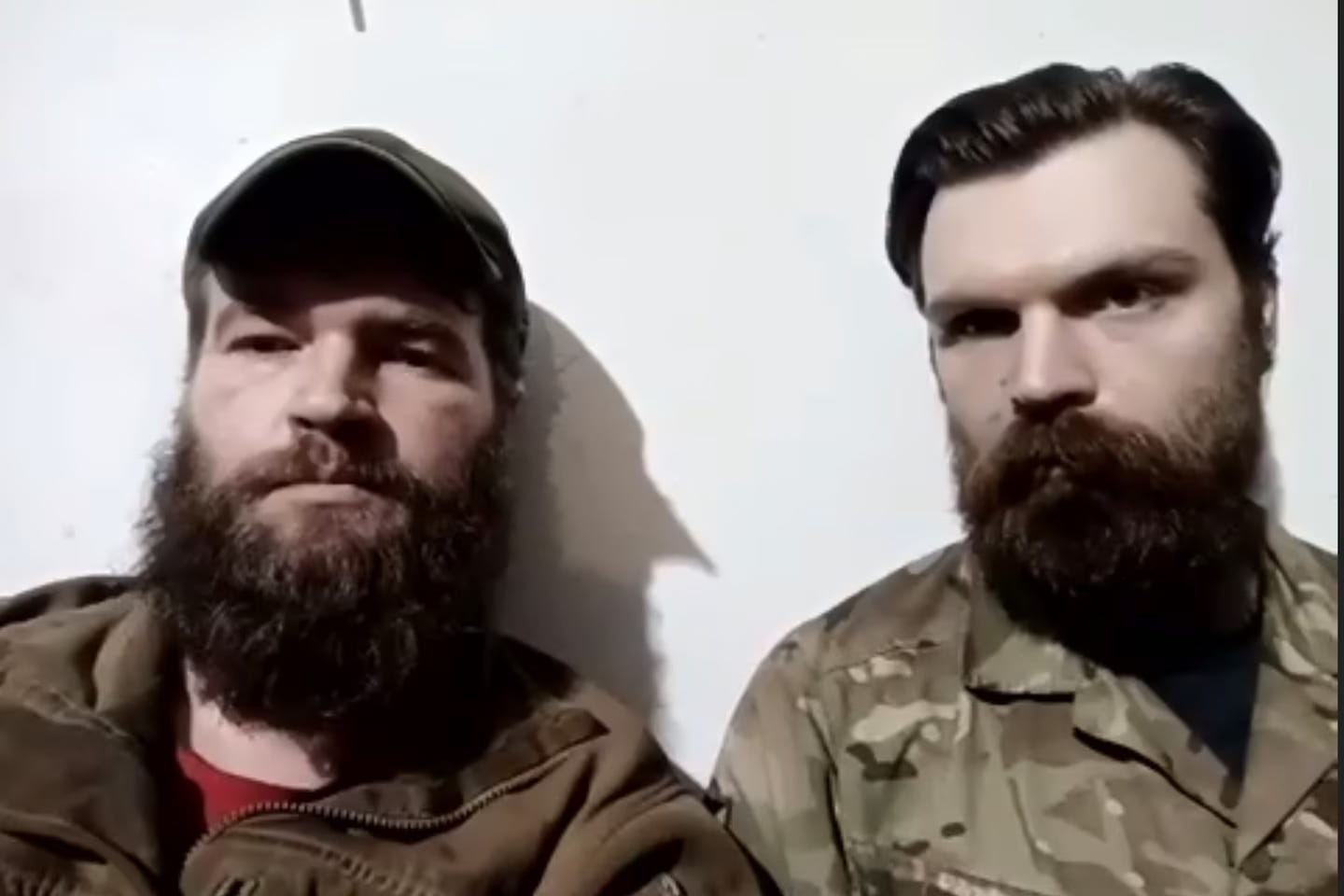
Born in 1994 in post-Soviet Ukraine, Samoilenko came of age amid economic chaos and the country’s growing nationalism. He studied history at Taras Shevchenko National University in Kiev, focusing on ancient and medieval history. His scholarly bent earned him the nickname “Gandalf,” a nod to Tolkien’s wise wizard, which stuck with him even on the battlefield. Though there is no evidence of Jewish ancestry, but by 2022, he would be invoking Jewish historical memory for public diplomacy. His symbolic transformation from militia officer to ideological envoy was neither incidental nor apolitical, it was core to Azov’s shifting identity.
Samoilenko joined the Azov Regiment in 2015 at the age of 21. He was not, by all accounts, a hardened ideologue; his recruitment appears to have been motivated by patriotism and anti-Russian sentiment rather than the overt white supremacist ideology that animated much of Azov’s early leadership. Nonetheless, he quickly distinguished himself as an intelligence officer. In combat near Ilovaisk, he lost his left arm and right eye which required titanium prosthetics and extensive recovery. Despite this, he returned to the front lines and became one of Azov’s most recognizable media figures.
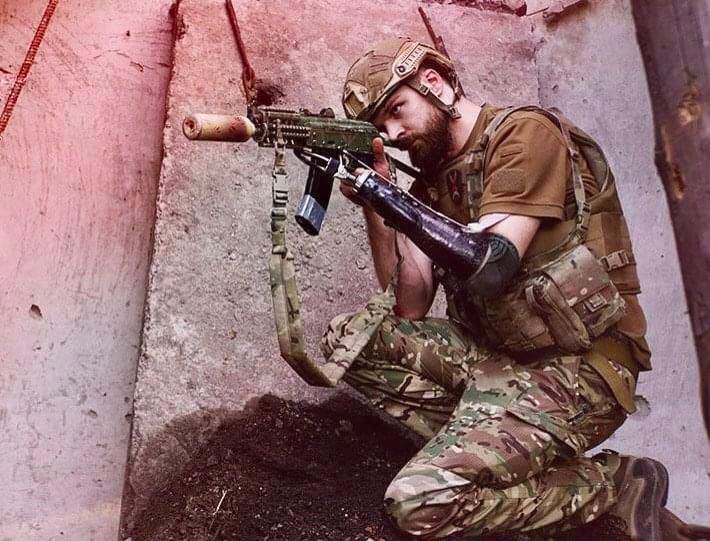
His moment came during the siege of Mariupol in 2022, where he was among the last Ukrainian forces holed up in the Azovstal steelworks. Broadcasting from the bunkers beneath the facility, Samoilenko delivered regular press briefings in English, Ukrainian, and Russian, positioning Azov not as a fringe nationalist force, but as heroic defenders against Russian imperialism. He was captured by Russian forces on May 20, 2022, and spent nearly four months in solitary confinement before being released in a prisoner exchange on September 21.
Following his release, Samoilenko transitioned into a new role: cultural ambassador. In December 2022, he toured Israel as part of a public diplomacy mission organized by the Ukrainian government. The tour was highly symbolic. Samoilenko invoked the ancient siege of Masada, where Jewish rebels resisted Roman conquest until mass suicide, comparing it to the Azovstal stand in Mariupol. “Mariupol is our Masada,” he told Israeli audiences, planting an oak tree to symbolize strength and resilience. He met with former Soviet dissident and Zionist icon Natan Sharansky and praised the IDF’s “spirit of resistance.” Despite not serving in Israel’s military, Samoilenko adopted the tone and references of Zionist memory culture, repurposing its symbols for Azov’s benefit.
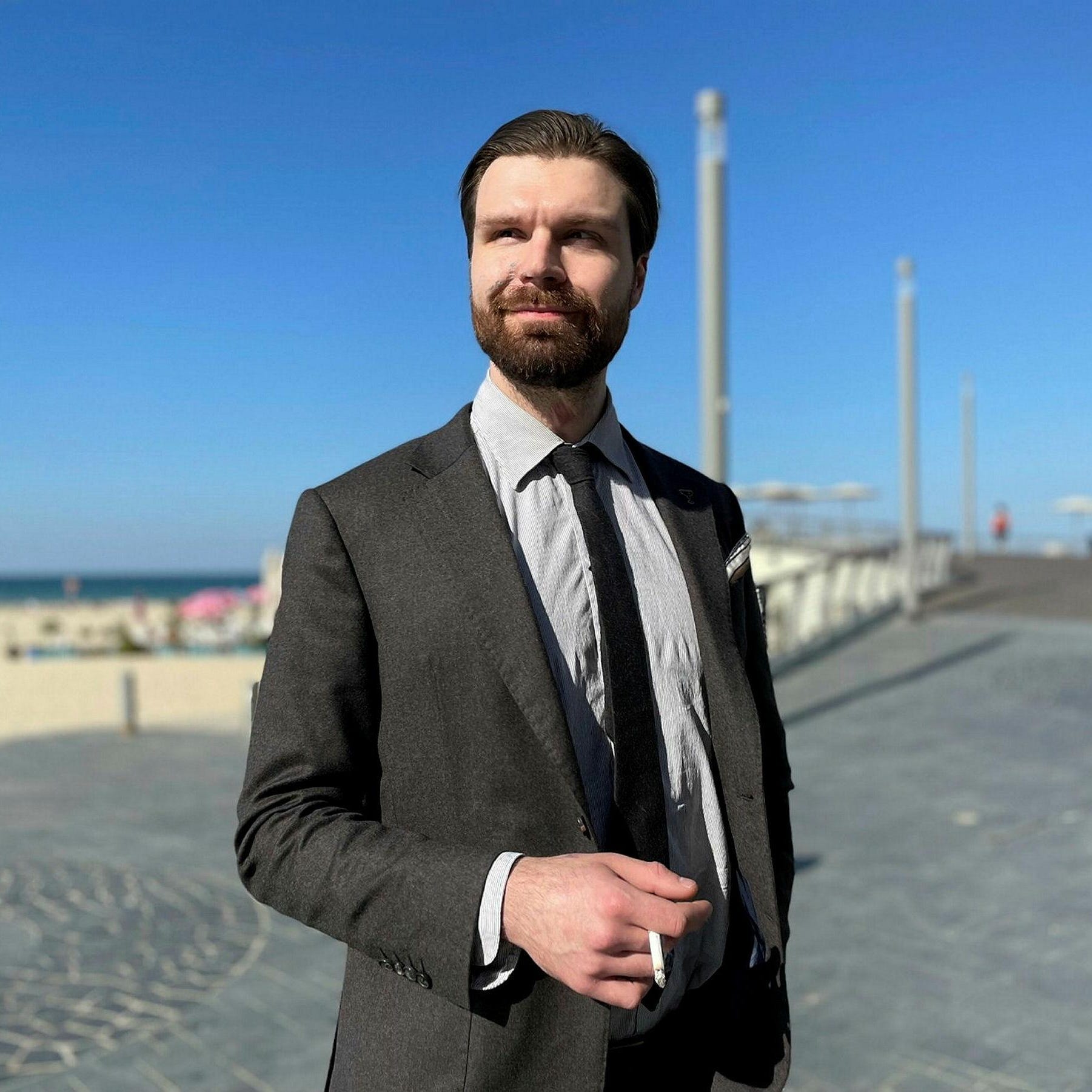
This framing was not accidental. It aligned with President Zelenskyy’s broader effort to position Ukraine as a “Big Israel,” a fortress society bound by memory, trauma, and military readiness. Samoilenko’s rhetoric mirrored this strategy, distancing Azov from its neo-Nazi origins without disbanding or reforming it. In interviews with Israeli media, including Times of Israel and Haaretz, he insisted Azov had evolved: “We’re professional defenders, not extremists.” Behind the scenes, oligarch Ihor Kolomoisky was believed to be facilitating connections between Ukrainian nationalists and Israeli political networks. Some Azov fighters had even enlisted in Chabad-linked outreach, further complicating the narrative of ideological purity.
Critics accused Samoilenko of laundering Azov’s image for Zionist approval. “Gandalf’s Masada tour whitewashes fascism,” one user wrote in 2025, referencing his ongoing posts and speeches. But this too was part of a larger geopolitical realignment. By 2025, Israel was actively supporting Ukraine with intelligence exchanges and weapons systems. Figures like Samoilenko were no longer fringe, they were central to the West’s narrative of Ukrainian heroism.
As of August 17, 2025, Samoilenko lives in Ukraine and maintains a low military profile, focusing instead on veteran advocacy and public speaking. His X account, @GandalfAzov, remains active, sharing messages about unity, resilience, and remembrance. His physical injuries have become part of his personal mythology. To his supporters, he represents strength through suffering. To his critics, he embodies Azov’s calculated metamorphosis from fascist militia to mainstream symbol of national defense.
What remains clear is that Illia Samoilenko is no longer simply a man. He is a mythmaker, a living metaphor for a war that is as much about symbols as it is about territory. And in the new world of strategic memory, where the lines between victim and victor blur, Gandalf of Azov knows exactly how to tell the story.
Arsen Avakov: The Architect of Institutionalized Extremism
Arsen Borisovych Avakov (b. January 2, 1964) is an Armenian-Ukrainian businessman, politician, and former Interior Minister of Ukraine (2014–2021). He is best known for overseeing the formal integration of far-right militias like Azov into Ukrainian state structures and for cultivating strong security ties with Israel. Though not an ideologue himself, Avakov’s legacy is one of pragmatic realpolitik: tolerating and empowering extremist elements to secure international alliances and consolidate internal power, especially in the chaotic post-Maidan era.
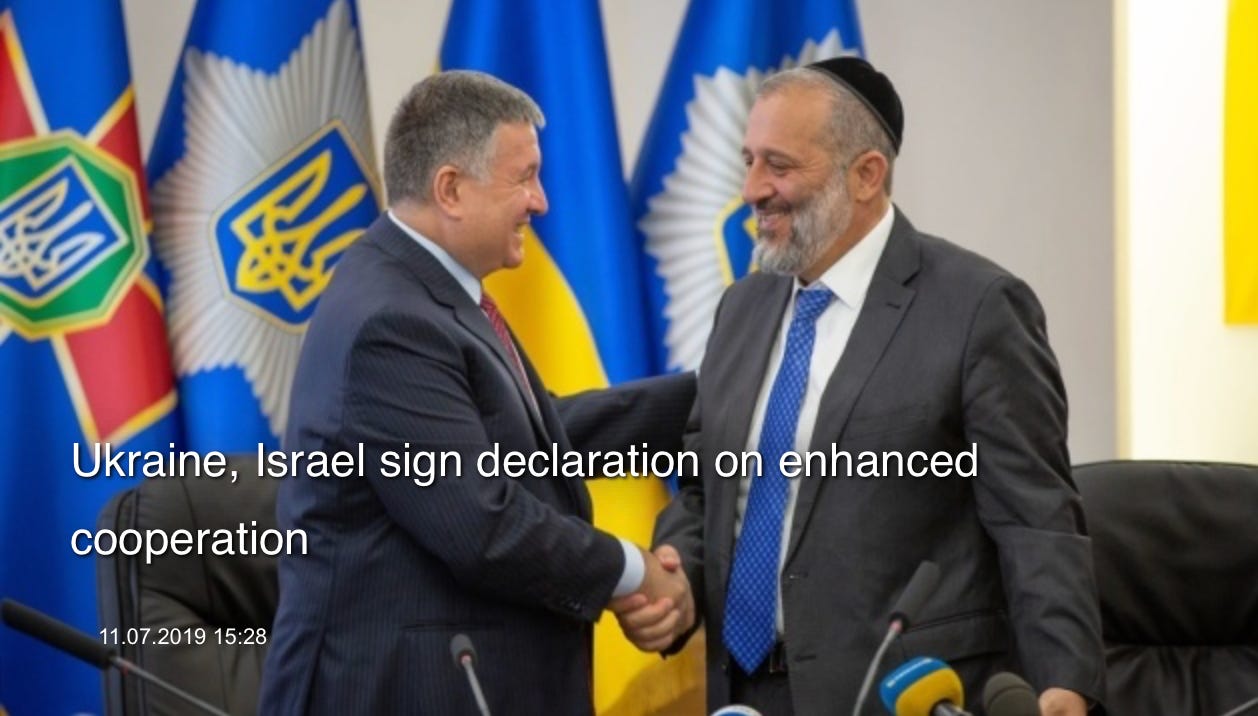
Avakov was born in Baku, Soviet Azerbaijan, to Armenian parents and moved to Kharkov at the age of two amid ethnic tensions. His early life was marked by the experience of diaspora identity, Soviet multiculturalism, and occasional discrimination, particularly directed at Armenians. He graduated from Kharkov Polytechnic Institute in 1988 with a degree in systems engineering and launched his business career during the perestroika-era liberalization.
During the 1990s, Avakov capitalized on Ukraine’s privatization wave, building a fortune through ventures in banking, oil, and media. His roots in Kharkov’s Armenian and Jewish business circles helped him navigate Ukraine’s oligarchic networks, cultivating a political identity centered on security, sovereignty, and liberal nationalism. By the mid-2000s, he was governor of Kharkov Oblast under the Our Ukraine party and later an MP with Batkivshchyna, allied with Yulia Tymoshenko.
Avakov’s pivotal role began after the 2014 Maidan coup, when he was appointed Minister of Internal Affairs in the transitional government. With Ukraine’s security apparatus in collapse and Donbass in open revolt, Avakov pursued a “security first” policy that emphasized control and territorial integrity above all else.
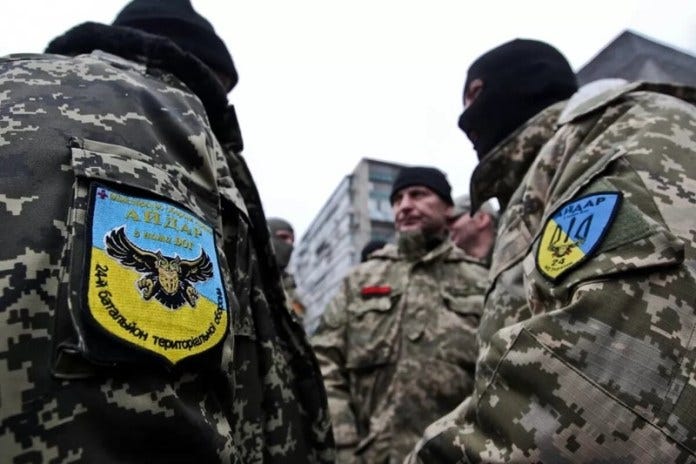
This policy gave birth to one of the most consequential decisions of the war: the integration of far-right volunteer battalions like Azov, Aidar, and Right Sector into the formal structure of the National Guard. Under Avakov’s ministry, Azov received state funding, weapons, and training, despite its open neo-Nazi symbology and history of abuse. Amnesty International and Human Rights Watch both documented cases of torture and extrajudicial detention by these units, but Avakov deflected criticism, framing such actions as necessary wartime measures.
While not an extremist himself, Avakov legitimized and institutionalized groups that were. His pragmatism which was grounded in the belief that Ukraine’s survival required all available tools, blurred the line between state and militia. By the time he resigned in 2021, the far-right had become a normalized component of Ukraine’s military-security architecture.
Avakov also served as a crucial bridge between Ukraine and Israel’s national security establishment. During his tenure, he hosted multiple Knesset delegations, signed readmission and law enforcement agreements with Israeli ministries, and emphasized the protection of Jewish sites like the Hasidic pilgrimage site in Uman. His 2017-2019 declarations positioned Israel as a model for Ukraine’s transformation into a “fortress state,” a country defined by militarized borders, aggressive policing, and permanent mobilization.
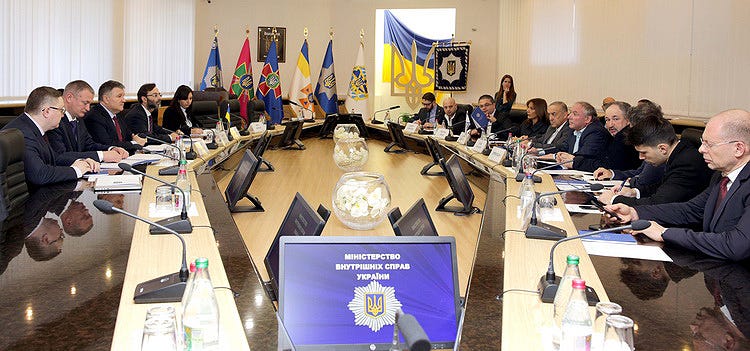
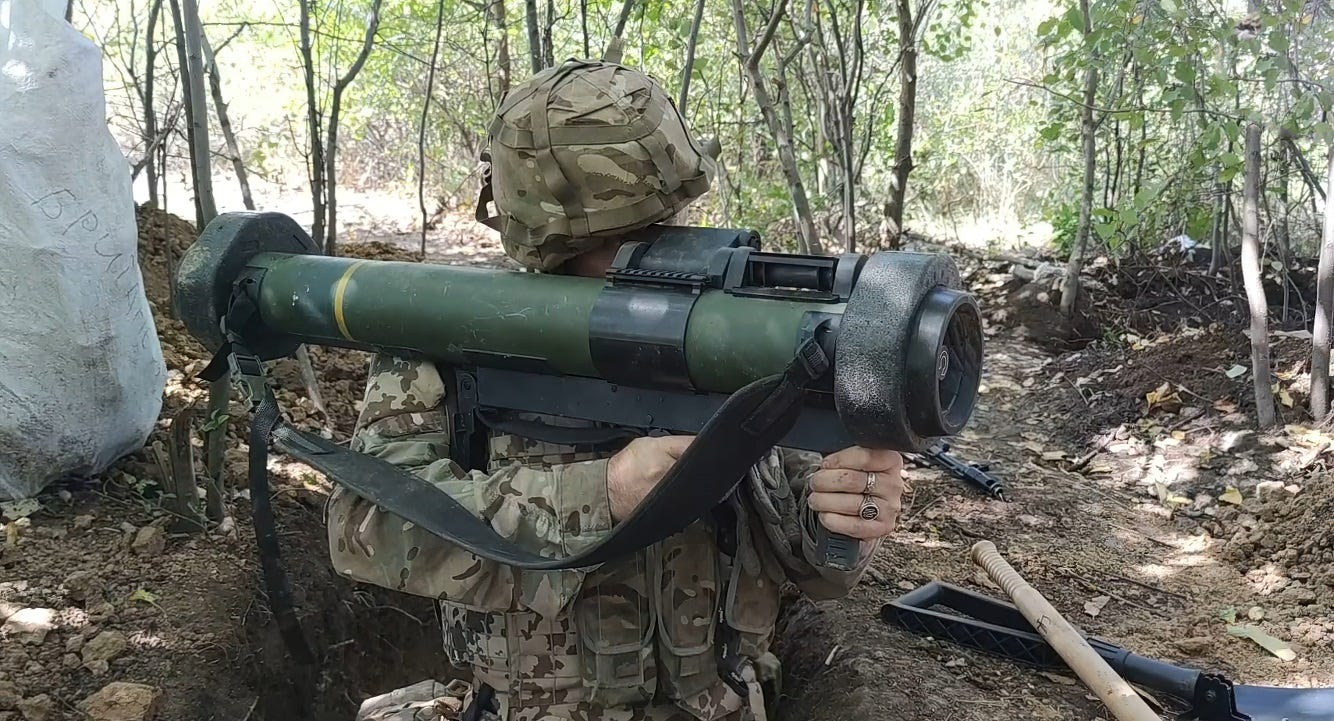
Avakov’s rhetoric was matched by material cooperation. Israeli cyber tools, tactical training methods, and anti-terror frameworks were imported into Ukraine’s law enforcement sphere. Far-right battalions under his ministry, were documented using Israeli-origin weapons like the RGW-90 MATADOR.
His ties extended into oligarchic Zionist networks. Avakov was politically and logistically supported by Ihor Kolomoisky. Though Avakov himself was Armenian and not Jewish, his collaboration with Jewish-Ukrainian elites was instrumental to consolidating political control and attracting Western support. In this sense, his toleration of far-right actors was not merely local expediency, but a strategic alignment with Israel’s shared hostility toward Russia.
Avakov resigned from the Interior Ministry in July 2021 amid increasing scrutiny, internal scandals, and shifting political winds under President Zelenskyy. Since then, he has maintained a low profile, dividing his time between Ukraine and Italy, and occasionally posting policy commentary on social media. On August 12, 2025, he posted: “Ukraine’s security needs global partners—Israel model inspires.”
At 61, Avakov remains an influential figure among Ukraine’s post-Maidan political class, with over 200,000 followers on X, despite his lack of posting. He continues to advocate for a securitized Ukrainian state modeled on Israel’s internal defense posture. Despite criticism for enabling the normalization of extremism, he is still treated in some circles as an elder statesman of Ukraine’s modern security doctrine.
Avakov’s legacy lies not in ideology but in infrastructure. He was not a true believer, but an engineer of a system that merged far-right militias with international alliances, often under the rhetorical cover of Western liberalism and Zionist security models. His career illustrates how pragmatic actors can play decisive roles in the mainstreaming of fascistic forces—not by promoting their beliefs, but by offering them institutional cover and international legitimacy.
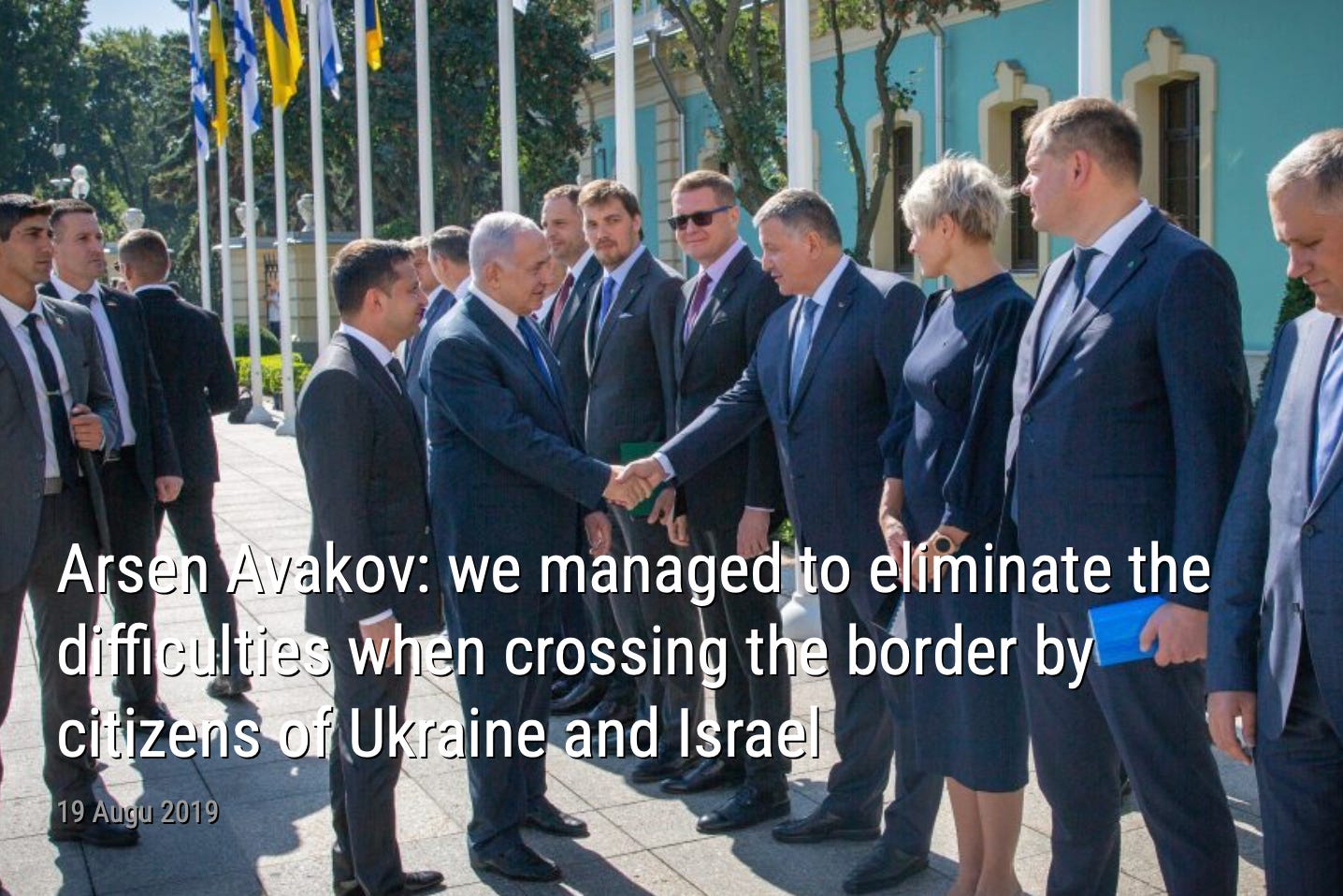
By embedding Azov into the Ukrainian state and aligning with Israeli models of governance, Avakov helped build a system where ethno-nationalist militias and global intelligence networks coexist in mutual reinforcement. In doing so, he created a template for the new Ukrainian state: militarized, transnationally networked, and ideologically incoherent, except in its opposition to Russia.
Danil Lyashuk: From Neo-Nazi to Jihadist Martyr
Danil Aleksandrovich Lyashuk, better known by his chosen moniker “Mujahid,” was a Belarusian-Ukrainian extremist whose violent trajectory mirrored the ideological schizophrenia of the post-Soviet space. Born in Belarus in the early 1990s and killed in Ukraine in 2023, Lyashuk’s life path wound through neo-Nazi circles, Islamist battlefields in Syria, and the most brutal fringes of Ukraine’s paramilitary police forces. His story offers a chilling case study in the convergence of far-right ultranationalism and radical Islam, both of which were, at different times, accommodated by Ukrainian state interests and, indirectly, by Zionist strategic objectives in the Middle East.
Lyashuk came of age during the political and economic turbulence of the post-Soviet era. While details of his early life remain scarce, what is known points to a young man radicalized online through neo-Nazi and white supremacist forums. Belarusian by birth, Lyashuk eventually moved to Ukraine, where his militant trajectory took off.
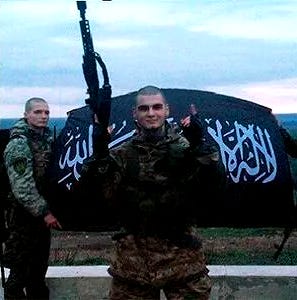
His first significant transformation came around 2013, when he reportedly converted to Islam and traveled to Syria to fight with jihadist groups opposing the Assad government. There, he was photographed posing with black Islamist flags and reportedly took part in armed operations against pro-government forces, including Russians and Iranian-aligned militias. His alias, “Mujahid,” meaning “holy warrior” was not just a signal of religious identification but a mask over a career of brutal violence.
In 2014, with war erupting in Donbass, Lyashuk returned to Ukraine and joined the now-notorious Tornado Battalion, a unit under the Interior Ministry formed to fight separatist forces. Within months, Tornado had gained a reputation as one of the most criminally violent units on the battlefield.
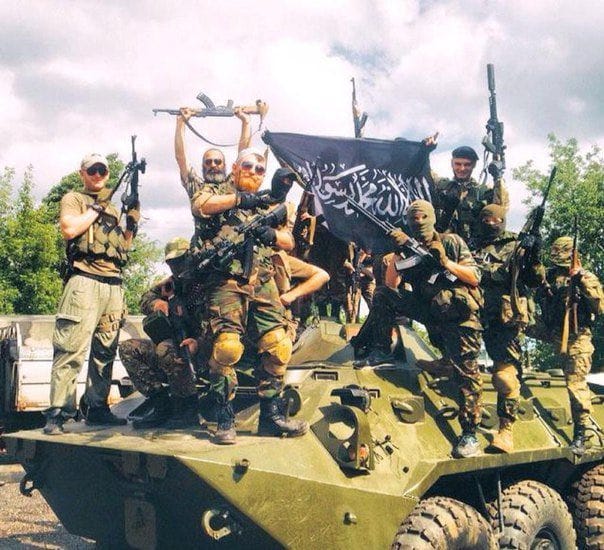
Lyashuk quickly distinguished himself, not for heroism, but for unspeakable cruelty. Ukrainian court records and international reports from Amnesty International and the UN detail his participation in serial rape (including of minors), torture, and extrajudicial killings. One case involved abducting civilians and sexually assaulting them with blunt objects while recording the scenes on video. Another saw him electrocuting detainees during interrogations.
In 2015, the Tornado Battalion was disbanded, and Lyashuk was convicted and sentenced to 11 years in prison. But in 2022, amid Russia’s full-scale invasion, President Volodymyr Zelenskyy issued him a pardon despite widespread knowledge of his crimes. By 2023, Lyashuk was dead, reportedly killed in Bakhmut while fighting Russian forces. In death, he was elevated by parts of the Ukrainian state and nationalist movement as a “fallen hero,” his atrocities airbrushed in service of the broader war narrative.
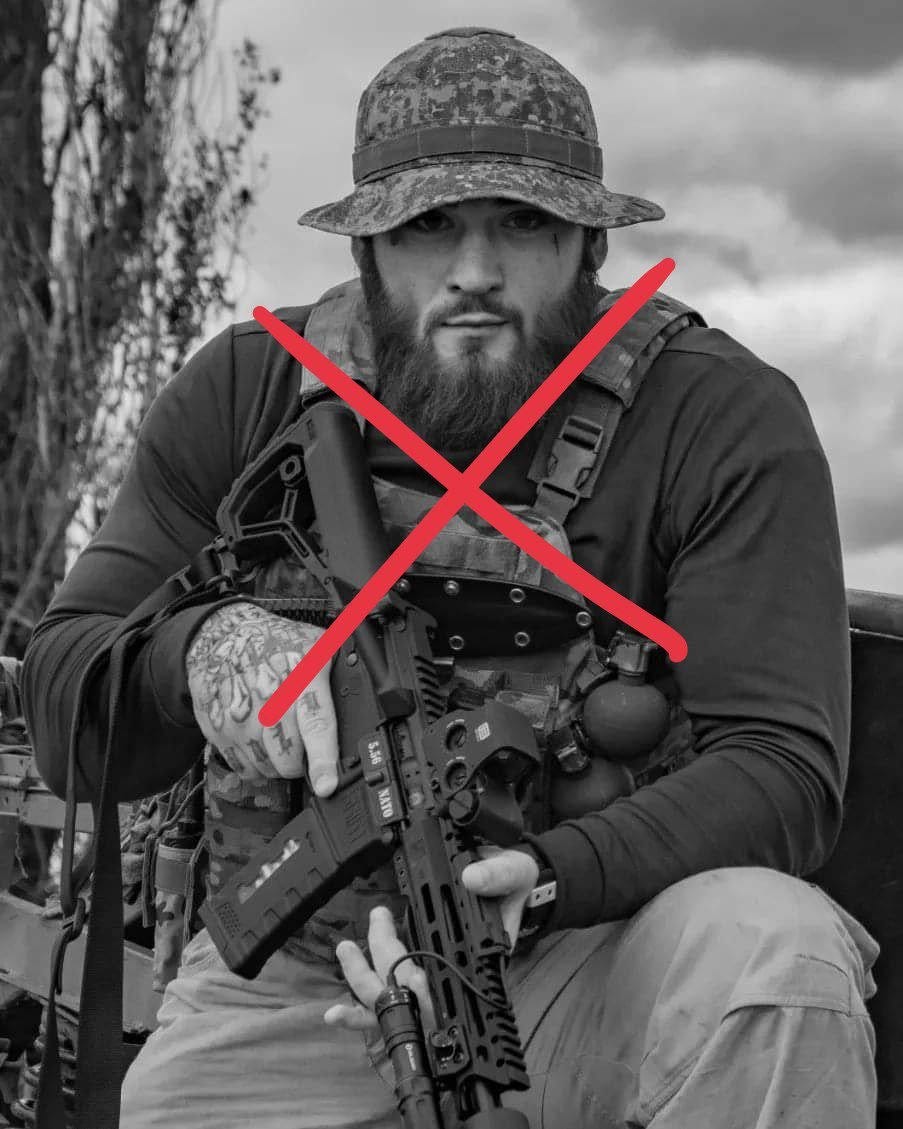
Lyashuk had no direct connection to Israel or organized Jewish networks. On the contrary, his early years as a neo-Nazi were marked by open antisemitism and fascist iconography. Yet his battlefield choices tell a more complicated story.
In Syria, Lyashuk fought against the Assad government and its allies, Iran, Hezbollah, and Russia. This alignment put him on the same side as Israeli strategic interests, if not formally under Israeli command. Numerous credible reports, including from Haaretz and the Wall Street Journal, document Israeli support to anti-Assad factions, including those linked to Jabhat al-Nusra, the very forces with whom Lyashuk was affiliated.
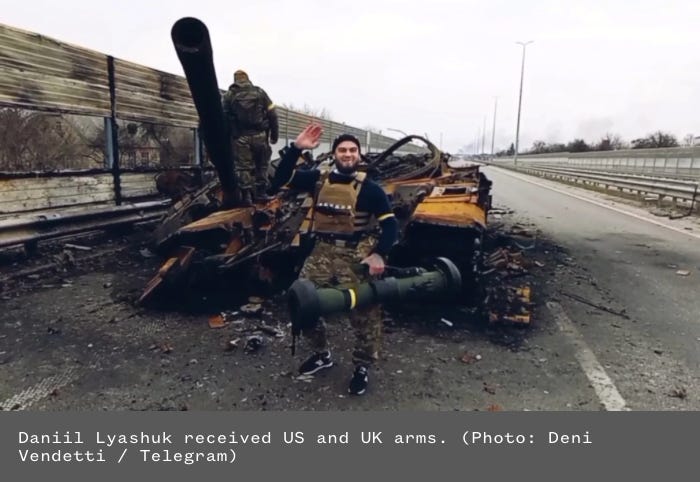
Later, in Ukraine, Lyashuk found himself indirectly benefiting from oligarch networks with deep Israeli and Jewish ties. The Tornado and Azov battalions received funding and political cover from Ihor Kolomoisky. Some critics on social media have summarized the contradiction bluntly: “Zionists tolerate jihadist Nazis like Mujahid for proxies.”
Following his death in 2023, Lyashuk was buried with honors. State-aligned figures celebrated him in official ceremonies and social media tributes, referring to him as a “warrior for Ukraine” and “hero of the resistance.” In August 2025, on the two-year anniversary of his death, memorial posts circulated across Ukrainian X, some accumulating thousands of likes. His tattoos, an amalgam of swastikas, pagan runes, and Islamic crescents, were not a source of caution but symbols of his “commitment.”
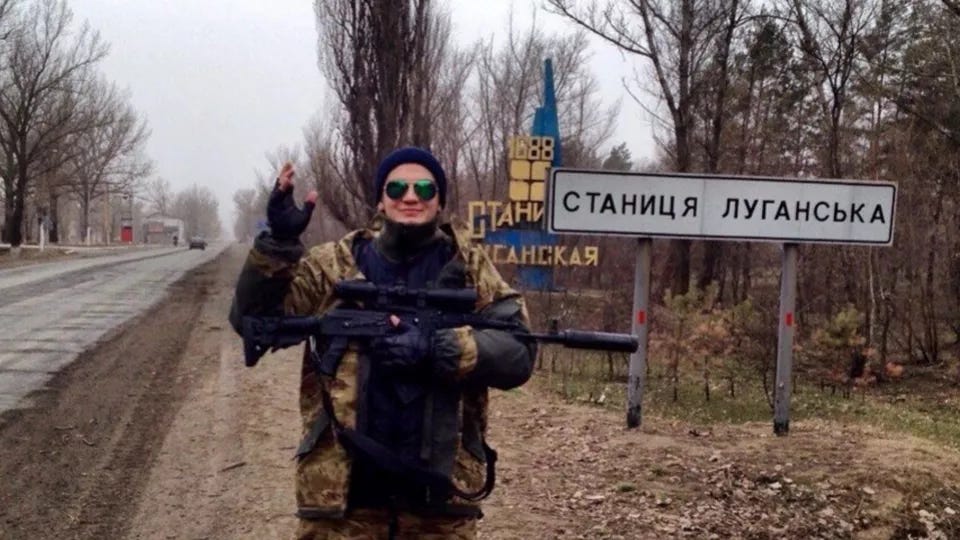
Lyashuk’s transformation from white supremacist to Islamist, from convicted sadist to national martyr, is a symbol of the ideological rot at the heart of Ukraine’s paramilitary project. It is also a reflection of how useful monsters are forgiven when their violence serves the right geopolitical purpose, whether in Donbass or Damascus.
Volodymyr Zelenskyy: The Pragmatist Who Normalized the Extreme
Volodymyr Aleksandrovich Zelenskyy, born in 1978 in Krivoy Rog, is one of the most paradoxical figures to emerge from the war. A Jewish comedian turned wartime leader, he has become an international symbol of “resistance” and Western liberal values. But beneath the cultivated myth lies a far more uncomfortable truth: Zelenskyy is the keystone legitimizer in Ukraine’s normalization of far-right extremism, not in spite of his identity, but because of it.
Raised in a Russian-speaking Jewish family in the industrial city of Krivoy Rog, Zelenskyy experienced firsthand the Soviet-era antisemitism and post-Soviet chaos that shaped a generation. He earned a law degree from the Krivoy Rog Economic Institute in 2000, but chose a career in comedy and satire, eventually founding the Kvartal 95 troupe. His 2015 television show Servant of the People, in which he played a humble schoolteacher who unexpectedly becomes president, catapulted him into national fame.
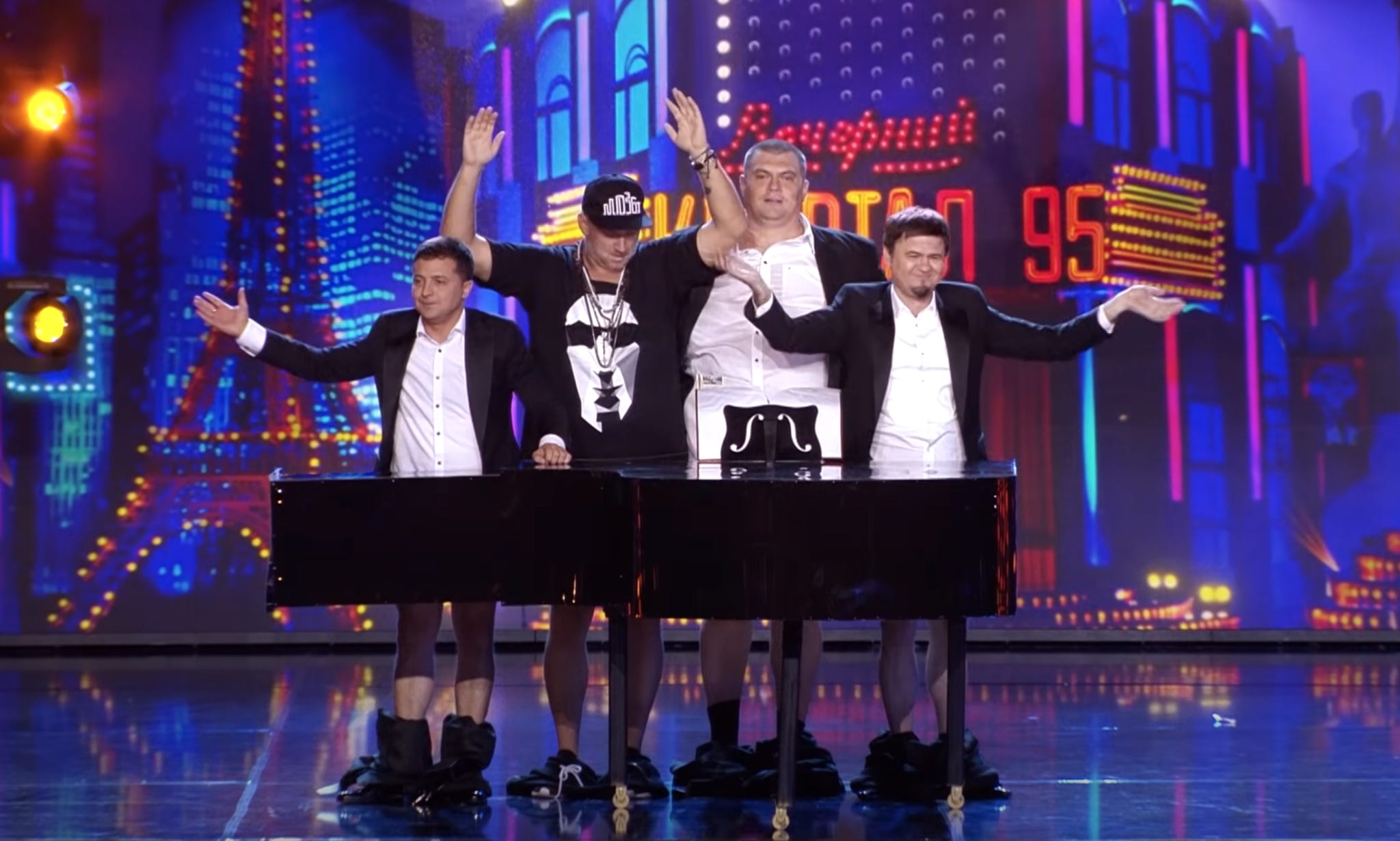
In 2018, life imitated art. Riding a wave of anti-oligarch sentiment and public fatigue with Petro Poroshenko, Zelenskyy launched his own political party, borrowing the name of his TV show, and won the 2019 presidential election in a landslide, taking over 70% of the vote.
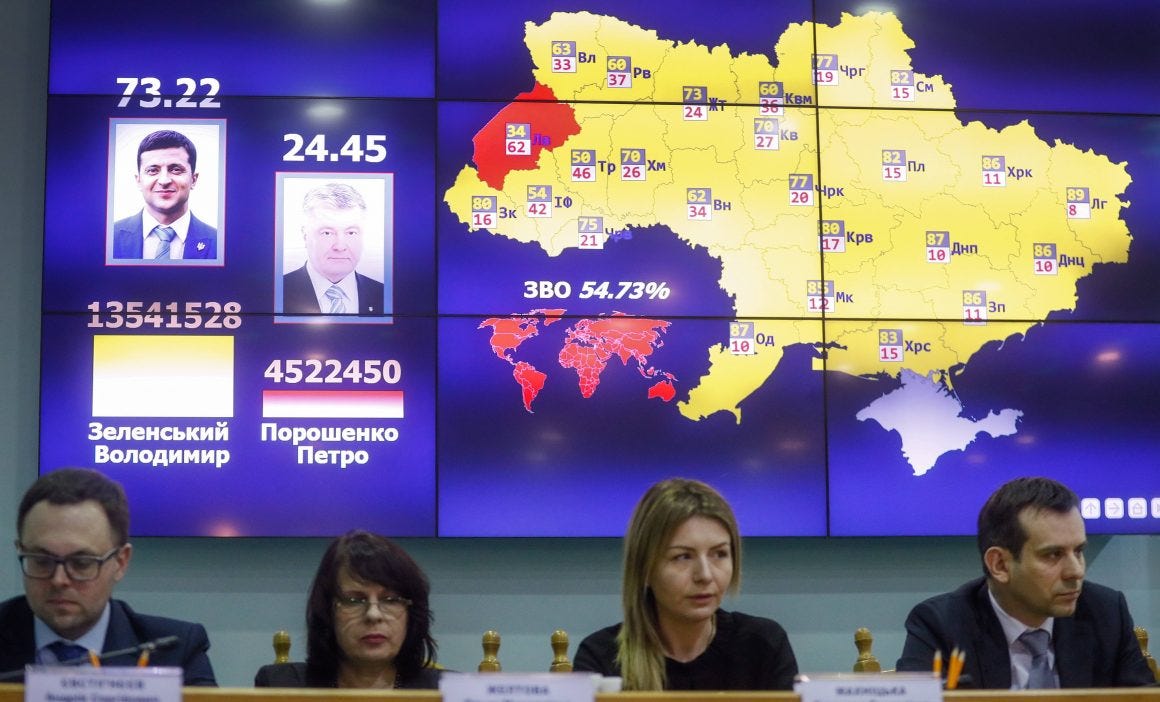
At the time, Zelenskyy appeared ideologically distant from Ukraine’s far-right fringe. His campaign promised peace with Donbass and normalization of relations with Russia. But once in power, his rhetoric softened, his promises evaporated, and the machinery of war began grinding forward with the same paramilitary formations he once distanced himself from now integrated into the state apparatus under his watch.
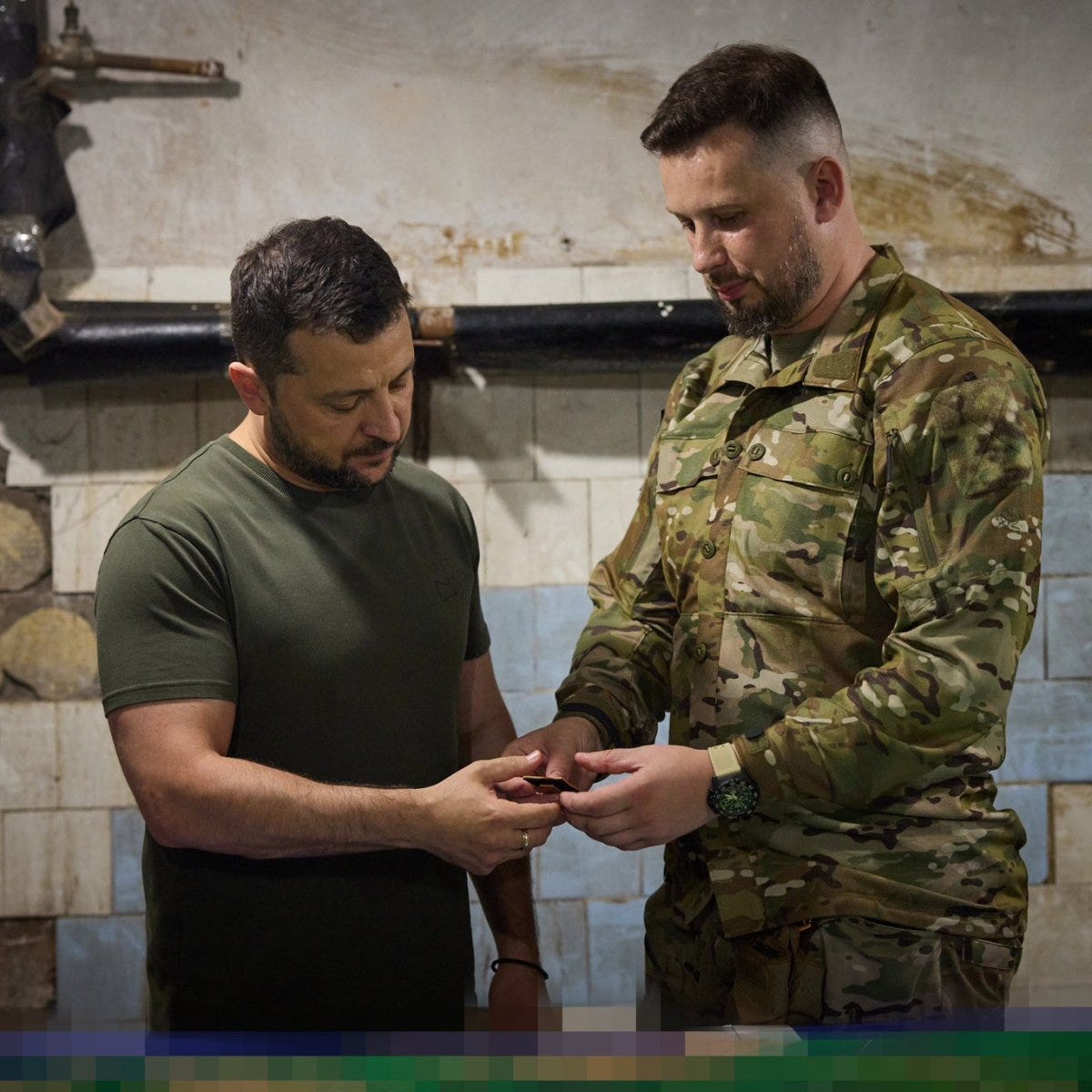
Zelenskyy’s presidency coincided with the formal mainstreaming of extremist militias like the Azov Regiment, the Tornado Battalion, and Right Sector. Though Azov had been absorbed into Ukraine’s National Guard in 2014, it was under Zelenskyy that it achieved full symbolic legitimacy. In 2023, Azov members were publicly awarded medals despite their use of SS-style insignia, and Zelenskyy referred to them in national speeches as “defenders of freedom.”
Zelenskyy’s defenders argued these moves were necessary under conditions of war. But the symbolic shift was profound: the Jewish president of Ukraine had now become the key validator of openly neo-Nazi formations and, more broadly, of a political culture that increasingly erased the boundaries between patriotism and fascism.
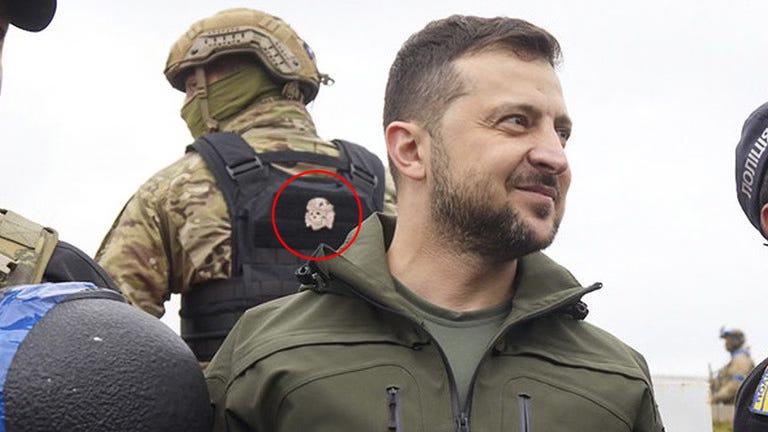
Zelenskyy’s Jewish identity played a central role in shaping his geopolitical posture. Early in his presidency, he gained support from prominent Jewish donors and Western liberal institutions. But it was his alignment with Israeli ideology and strategy that proved most consequential.
In a 2022 interview with Haaretz, Zelenskyy stated that Ukraine’s future should resemble a “big Israel,” a state built on constant mobilization, militarism, and national unity. The comparison wasn’t metaphorical. Zelenskyy repeatedly cited Israel’s compulsory service, hardened identity, and “resilience” as ideals for a wartime Ukraine.
“I think all our people will be our great army. We cannot talk about “Switzerland of the future.” But we will definitely become a “big Israel” with its own face. We will not be surprised that we will have representatives of the Armed Forces or the National Guard in all institutions, supermarkets, cinemas, there will be people with weapons.
— Volodymyr Zelenskyy, April 2022
In practice, this meant close coordination with Israeli and Zionist networks. Zelenskyy has consistently refused to condemn Israel’s military actions in Gaza, including the 2024–2025 bombardments that employed starvation tactics and AI-guided strikes. Instead, he echoed Israeli rhetoric about terrorism and security, drawing direct parallels between Ukraine’s fight against Russia and Israel’s war with Iran and its regional proxies.
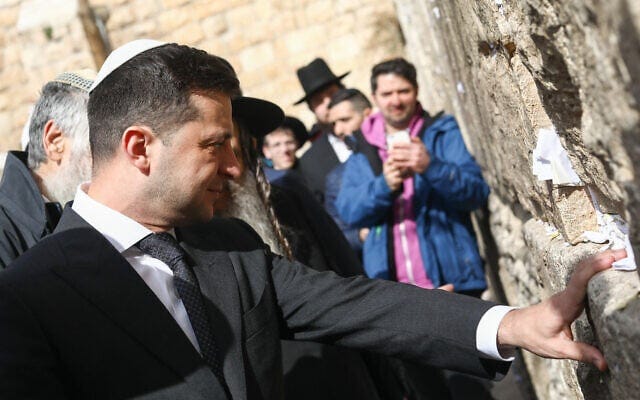
Military cooperation followed suit. Israeli-made drones and surveillance systems flowed to Ukraine through third parties. Ukrainian forces supplied intelligence to Israel on Iranian missile tech recovered from Russian stockpiles and downed drones. Zelenskyy hosted Israeli officials, sought Iron Dome defense systems, and oversaw joint data-sharing agreements between Ukraine’s cyber units and Israeli partners.
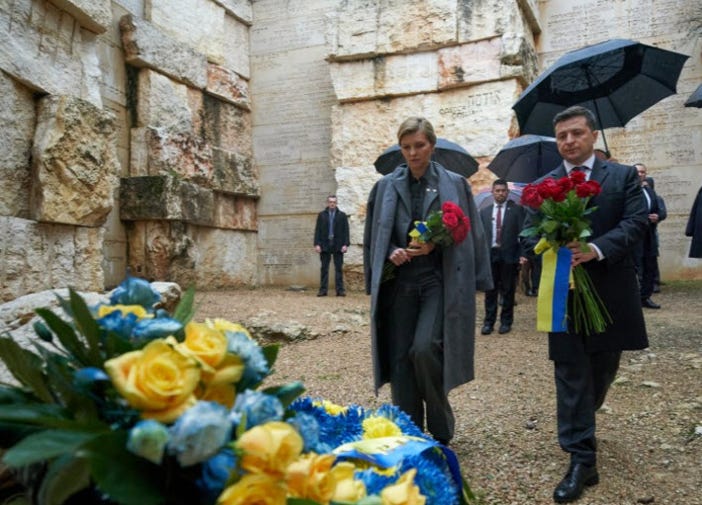
Zelenskyy’s personal connections only deepen the alignment. His parents have reportedly lived in Israel for years, a fact often omitted in mainstream profiles but acknowledged in Jewish community outlets. In 2020, Zelenskyy visited Yad Vashem and gave a carefully worded speech reframing Ukrainian nationalism as compatible with Holocaust memory. Instead of confronting Ukraine’s role in the Shoah, Zelenskyy emphasized shared trauma and unity, an appeal that resonated with Israeli officials eager for a strategic partner in Eastern Europe.
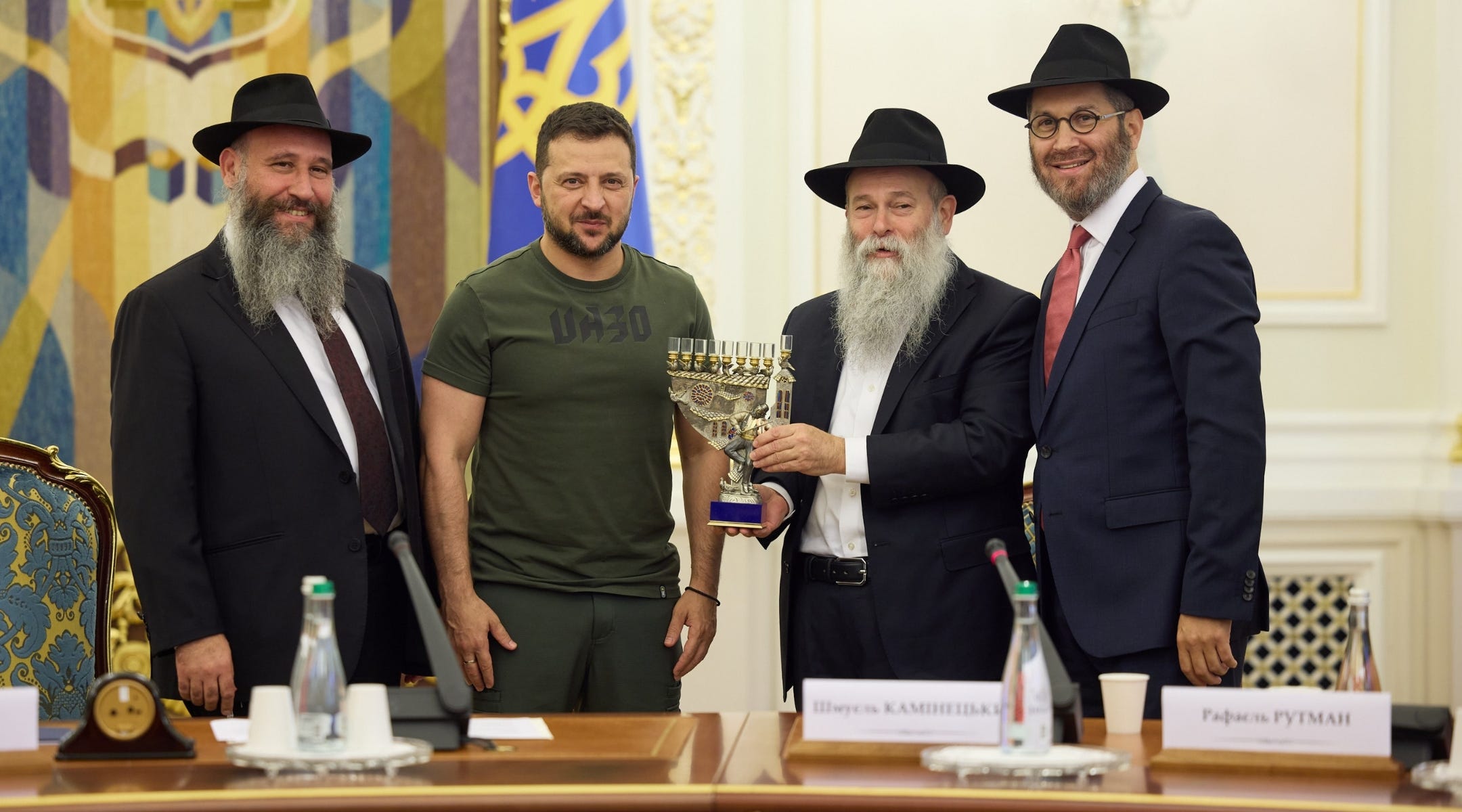
Zelenskyy’s ties to the Chabad-Lubavitch movement also run deep. Chabad maintains a large presence in Dnepropetrovsk, historically bankrolled by oligarch Igor Kolomoyskiy. Zelenskyy has also attended Chabad-sponsored events and leaned heavily on global Jewish networks to secure diplomatic and military aid.
The Shifting Center
Zelenskyy’s ideological transformation can be summarized in three phases:
· Pre-2019: A secular liberal, anti-corruption satirist with no links to the far-right.
· 2019–2022: A centrist reformer forced into security pragmatism by war.
· 2022–Present: A full convert to the “big Israel” model, integrating far-right forces and prioritizing militarized nationalism over liberal pluralism.
In the end, Volodymyr Zelenskyy may not be a fascist. But he has become the indispensable manager of a system that rehabilitates fascism, at home, abroad, and in the name of something larger. His legacy will not be one of purity or resistance, but of convergence.
III. Militias and Machinery
While the alliance between Ukraine and Israel is often framed in diplomatic or symbolic terms, its most potent expressions are found on the battlefield and in the shadowy networks that support it. From paramilitary formations and extremist brigades to intelligence-linked private contractors and surveillance platforms, the infrastructure of the Ukraine–Israel relationship is rooted in warfighting. It is an axis defined not just by shared enemies, but by shared methods: the fusion of nationalism, militarism, and privatized violence.
Azov Brigade (Ukraine)
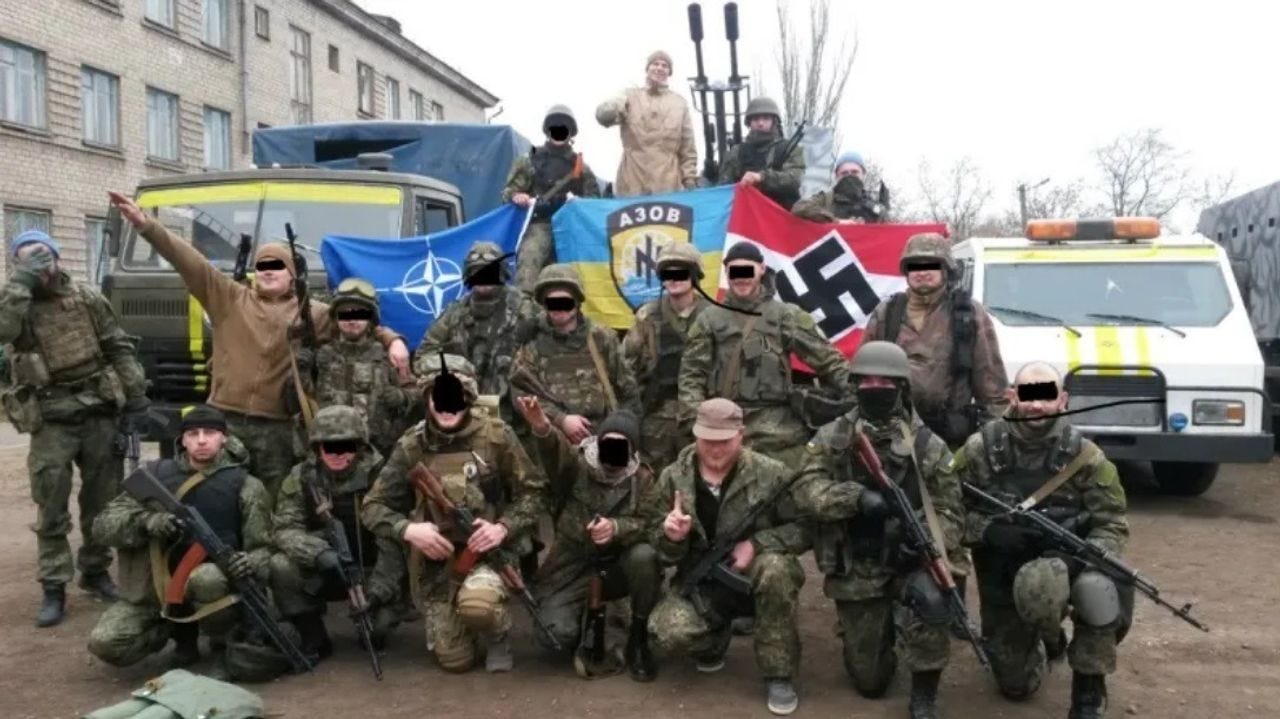
Originally founded as a neo-Nazi volunteer battalion in 2014, the Azov unit was later integrated into Ukraine’s National Guard. Its insignia includes Nazi-derived symbols such as the Wolfsangel and Black Sun, and its founding members, including Andriy Biletsky, openly espoused white supremacist views. Despite international condemnation, Azov has been celebrated by the Ukrainian government, with President Zelenskyy awarding them state honors and labeling them “heroes.”
· Funded by Jewish oligarch Ihor Kolomoisky (~$10M).
· Includes Jewish members like Nathan Khazin.
· Uses Israeli co-developed MATADOR anti-armor weapons.
· Delegations visited Israel.
· Battlefield intel coordination with Israel involving captured Iranian weapons (2025).
Right Sector / Ukrainian Volunteer Corps
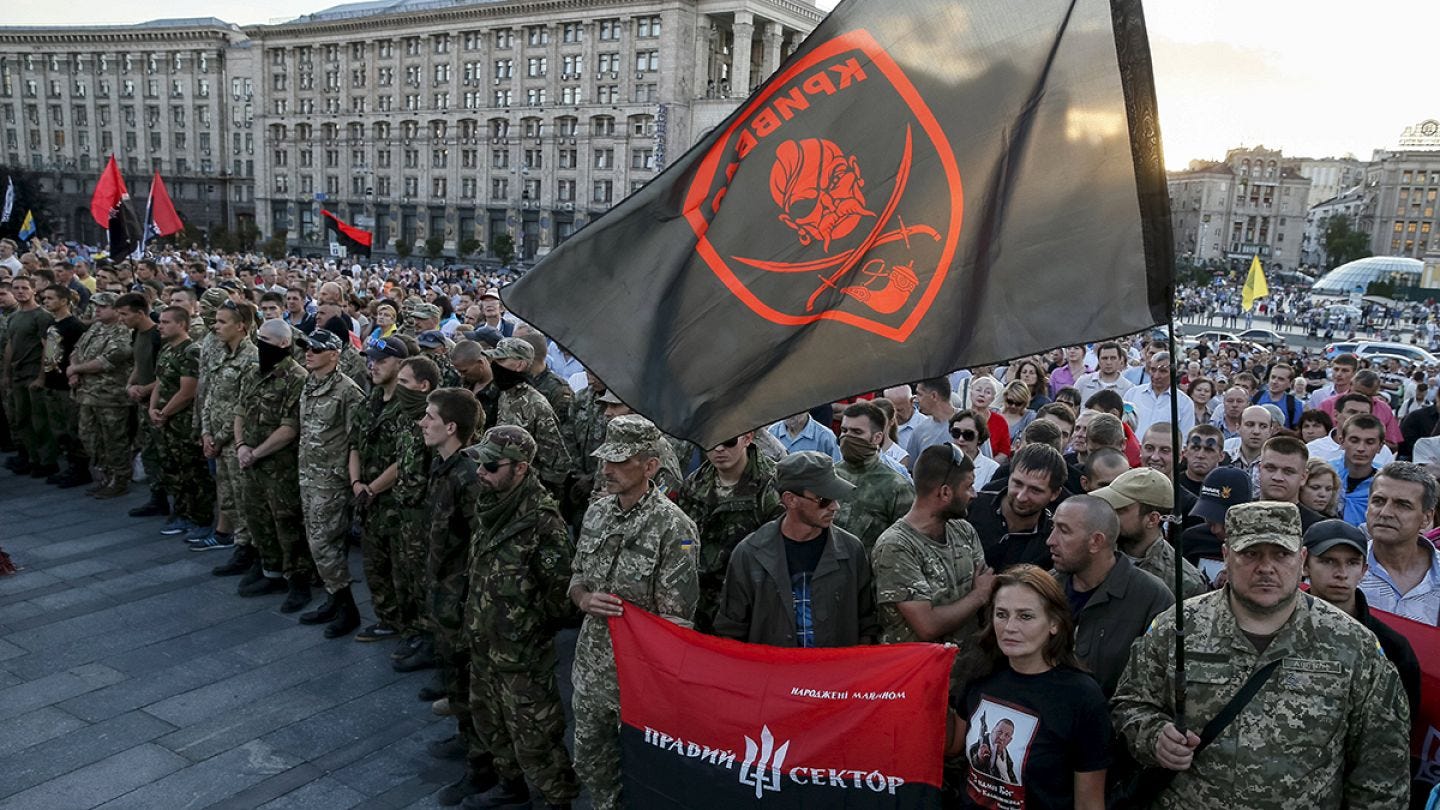
An ultranationalist paramilitary and political movement, Right Sector played a vanguard role during Euromaidan and later in Donbass. Though formally separate from Azov, they share ideology, personnel, and battlefield coordination. The group has attracted fighters from the global far-right and maintains ties with nationalist political factions in Europe and Israel.
· Boryslav Bereza, a Jewish MP affiliated with Right Sector, famously stated that ideology mattered more than ethnicity.
· Founder Dmytro Yarosh met with Israeli diplomats in 2014 to coordinate on provocations.
· Public rhetoric aligns with Zionist narratives, particularly in opposing Russia and Iran..
National Corps
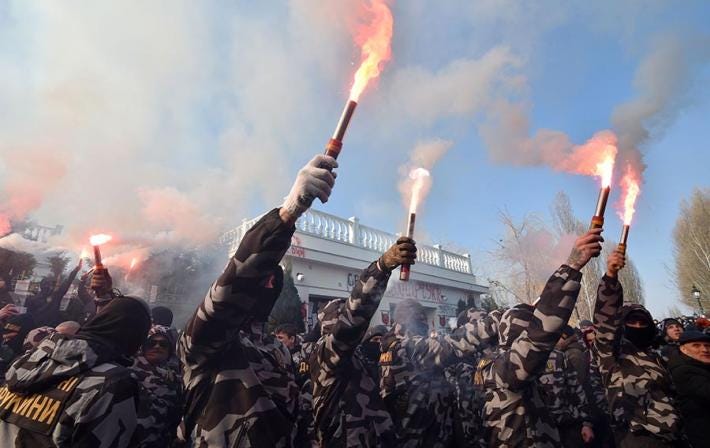
Formed in 2016 by Azov veterans, the National Corps is the far-right’s political arm, blending civic activism with fascist ideology. It reframes Ukraine’s paramilitary extremism as pro-Western patriotism, using public outreach and delegations to build legitimacy abroad.
· Participation in delegations to the U.S. and Israel.
· Rebranded as defenders of Western values and allies against Iran/Russia.
· Financial and reputational support via Kolomoisky and Israeli-aligned PR efforts.
Weapons of Convergence: Tracing the Israeli–Ukrainian Arsenal
Weapons like the Israeli co-developed RGW-90 MATADOR and NATO-supplied FN SCAR-L, seen in the hands of Azov fighters and Israeli special forces alike, underscore overlapping training ecosystems and logistical pipelines. The appearance of identical gear across Donbass and Gaza reflects deeper alignment: a shared doctrine of militarized ethno-nationalism, financed and equipped by the same global networks.
IV. Weapons Without Borders: Israel’s Expanding Military Footprint in the Ukraine War
While Israel has officially sought to project neutrality in the Ukraine war, a deeper look reveals the country’s quiet but consequential entanglement in the Western military supply chain. From billion-dollar missile defense deals with Europe to the covert movement of U.S. and Russian-made weapons through Israeli territory, Tel Aviv has positioned itself as a vital, if unofficial, node in the NATO-led war effort. The Ukraine war, for Israel, is both a test of strategic restraint and a marketplace opportunity.
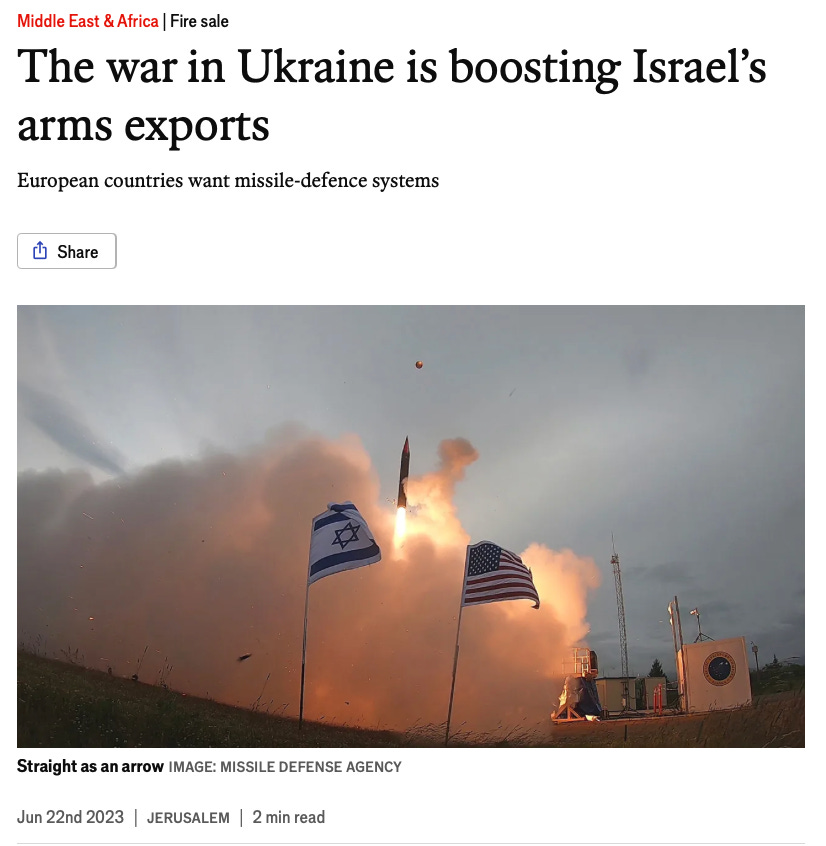
Israel’s “neutrality” is primarily pragmatic. Concerns about potential Russian retaliation, particularly in the sensitive Syrian theater where Russia and Israel maintain a deconfliction agreement, have tempered public commitments. But beneath the surface, Israel’s weapons industry has flourished. Since 2022, Israeli arms exports to Europe have surged, reaching $13.5 billion in 2023, with 35% directed to European clients (SIPRI, 2024). Preliminary 2024 data indicates a further rise to $14.8 billion, with nearly 40% of exports destined for European nations. These numbers suggest not impartiality, but integration.
Europe Arms Up: Israeli Defense Goes Continental
In the wake of Russia’s 2022 Special Military Operation (SMO), Europe has become Israel’s fastest-growing arms market. The most high-profile example is Germany’s record-breaking €4 billion purchase of the Israeli-American Arrow-3 missile defense system. Enabled by U.S. approval, the sale is the largest in Israeli history and places Israel at the heart of NATO’s European missile shield. Germany is just one of 21 countries now participating in the European Sky Shield Initiative, a regional anti-missile framework in which Israeli defense systems play a starring role.
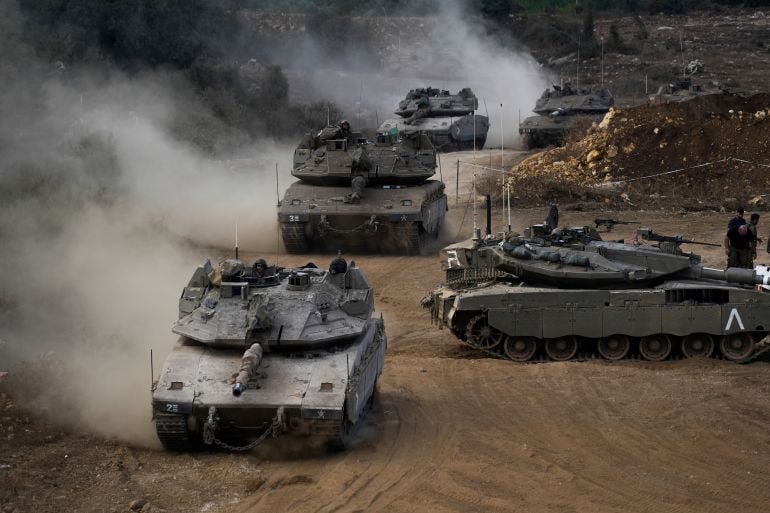
Other nations have followed suit. Finland and the Czech Republic recently procured short-range Israeli air defense systems. One unnamed European country has reportedly purchased surplus Merkava tanks, battle-tested in Gaza and Lebanon, to replace older armor systems transferred to Ukraine. These developments coincided with the 2022–2025 surge in Israeli arms exports, and with growing European interest in Israeli battlefield-tested hardware.
Irony ain’t dead: many of the systems now deployed or under contract across Europe were refined in Israel’s wars on Gaza and Lebanon. For Israel, the besieged Gaza Strip has long functioned as a testing lab for evolving technologies, from drones to AI-integrated missile defense. For NATO, it’s now a showroom. The same Merkava tanks that flattened neighborhoods in southern Lebanon are now pitched to European buyers as upgrades for NATO front lines. Arrow-3 batteries are sold as shields against Iranian or Russian threats alike.
Patriot Missiles and Plausible Deniability
The United States has quietly used Israeli territory to facilitate weapons transfers to Ukraine. In January 2025, Axios revealed that the U.S. military moved roughly 90 Patriot air defense interceptors from long-term storage in southern Israel to Poland, where they were then forwarded to Ukraine. Originally deployed to Israel during the Gulf War, the Patriot missiles had since been mothballed after Israel developed its own missile defense systems like Iron Dome and Arrow.
Though technically a U.S. operation, the transfer revealed how Israel functions as a quiet conduit in Washington’s arms pipeline to Kiev. Ukrainian officials had requested the Patriot interceptors months earlier, but Prime Minister Benjamin Netanyahu stalled, reportedly fearing Russian retaliation, particularly in Syria, where Russian S-400 systems operate near Israeli air routes.
Diplomatic deadlock only broke after a transactional compromise: Netanyahu sought Zelensky’s approval to allow tens of thousands of ultra-Orthodox Jews to make the annual pilgrimage to Uman, a key Chabad site in central Ukraine. Zelensky, in turn, used the pilgrimage as leverage, refusing to speak with Netanyahu until the transfer was approved. Once a deal was reached, Israel informed Moscow that the systems were merely being “returned” to the U.S., not transferred to Ukraine, a diplomatic fiction that preserved plausible deniability.
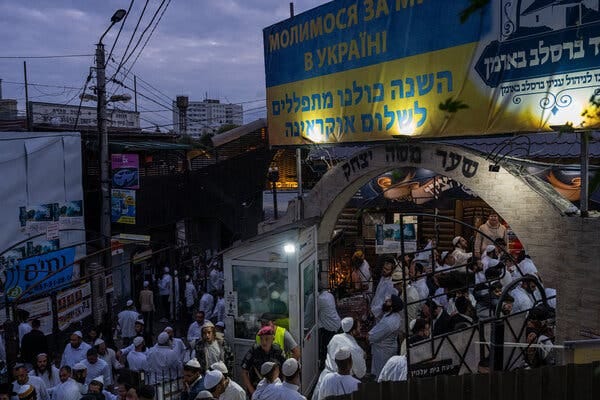
This episode not only highlights the complex diplomatic choreography Israel employs to straddle its ties with the West and Russia, but also reveals how Zionist networks and religious diplomacy, such as the pilgrimage to Uman and its links to Chabad hubs in Dnepropetrovsk, play into military negotiations. Despite active war conditions starting in 2022, pilgrims were once again allowed to travel to Uman under heightened security protocols first established under former Interior Minister Arsen Avakov.
The Patriot transfer, valued at approximately $90 million (interceptors cost ~$1M each), further cements Israel’s role as a strategically vital logistics node in the West’s war effort, even as it tries to maintain an official stance of neutrality.
From Hezbollah to Kiev: A Proposal to Send Captured Russian Weapons
In January 2025, Israel’s Deputy Foreign Minister Sharren Haskel met with Ukraine’s ambassador and offered to transfer Russian-made weapons captured from Hezbollah to Ukrainian forces. The Ukrainian embassy confirmed the discussion and praised the offer as recognition of the “common threats” faced by both nations.
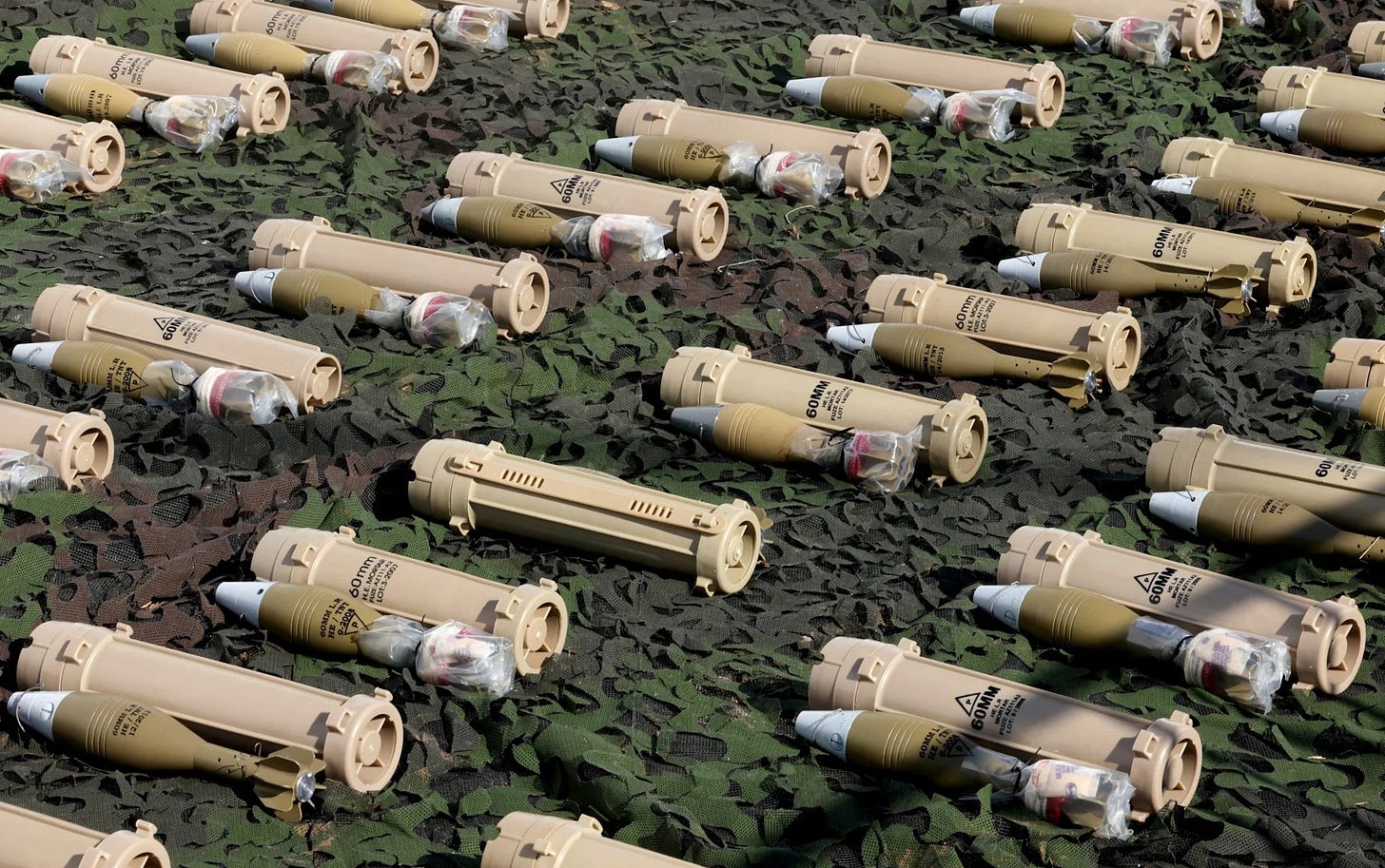
The weapons in question include Draganov sniper rifles, SPG-9 recoilless launchers, Kornet anti-tank missiles, and 9P163-1 launchers. All were reportedly seized by the IDF in Lebanon during operations against Hezbollah. Other captured munitions, like the Iranian Toophan and 107mm rockets, point to the shared technological base of Russian and Iranian support for other forces.
A bit of symbolism? Israeli officials propose to send Russian-made weapons, captured from an Iranian ally, to kill Russian soldiers in Ukraine. Though it’s unclear whether the transfer occurred, the offer alone signals a major shift in Israeli messaging. While Jerusalem continues to avoid sending direct aid to Ukraine, it is increasingly adopting the language and posture of NATO’s informal allies.
From Optics to Drones: The Unspoken Arsenal
Beyond headline-making transfers like Patriot interceptors or captured anti-tank systems, the convergence of Israeli and Ukrainian military technology is occurring quietly through parallel development, indirect exports, and battlefield mimicry. While Tel Aviv avoids direct weapons shipments to Kiev, its technologies, especially in drone warfare, precision optics, and digital battlefield systems, are increasingly visible on the Ukrainian front.
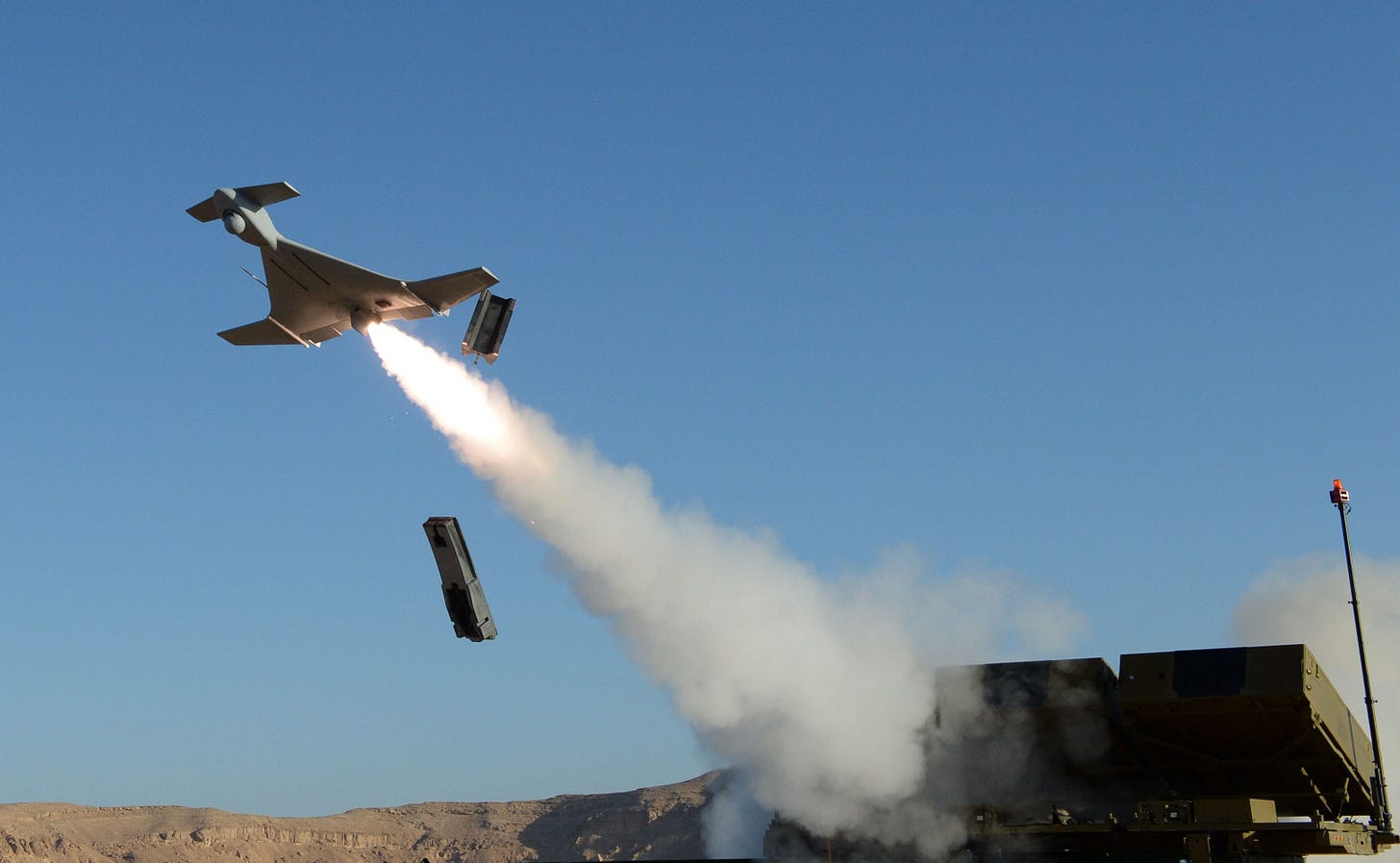
Israeli-designed UAVs and loitering munitions have become the blueprint for Ukraine’s own kamikaze drones. The RAM II, Ukraine’s most widely used suicide drone, strongly resembles Israeli platforms like the Harop or Hero-30, not just in form but in tactical role. Though there is no official transfer, analysts suggest the designs have diffused via NATO training, U.S. coordination hubs, and Eastern European arms firms that previously licensed or integrated Israeli tech.
Meanwhile, electro-optical and targeting systems of Israeli origin or imitation have appeared across Ukraine’s armed forces. The reflex sights, thermal scopes, and night vision optics mounted on NATO-donated rifles often bear the signatures of Israeli firms like Meprolight and Elbit Systems. Even smart artillery enhancements, such as laser-guided shell kits and top-attack modifiers, mirror proprietary Israeli conversion kits like those used on the MPR-500 bombs or SPIKE missile family.
Electronic warfare tools further blur the lines. Since mid-2023, Ukraine has fielded short-range jamming and drone disruption systems with characteristics remarkably similar to Rafael’s Scorpius and Elbit’s ReDrone. Though officially sourced from Western suppliers, signals intelligence firms have flagged overlaps in emissions, software patterns, and tactical roles.
None of this requires direct exports. In fact, the strength of Israel’s influence lies in its ability to embed capabilities across NATO through years of defense integration—enabling Kiev to benefit from Israeli know-how without Tel Aviv ever signing a delivery slip. The result is a battlefield dotted with Israeli fingerprints: on drones, optics, networks, and the tactics themselves.
If Gaza is Israel’s live-fire laboratory, Ukraine is its satellite showroom.
West Using Zelensky’s Jewish Heritage To Distract From Nazism in Ukraine – Putin
V. The Digital Doctrine: How AI and Surveillance Reinvent War
Beyond headline arms transfers and battlefield hardware, the Israel–Ukraine alliance is being cemented in the shadows through code, sensors, and algorithmic targeting. U.S.-based tech firms with deep Israeli ties, such as Palantir and Anduril, have become key enablers of this digital convergence. Their systems, routed through NATO contracts, UK procurement pipelines, or direct military partnerships, are turning Gaza and Ukraine into twin laboratories for algorithmic warfare. Here, AI doesn’t just support military campaigns; it transforms them, introducing a doctrine of predictive surveillance, autonomous targeting, and precision extermination cloaked as deterrence.
Palantir: From the Mediterranean to the Black Sea
Palantir Technologies, co-founded by pro-Israel billionaire Peter Thiel, is now embedded in Ukraine’s military infrastructure. Since 2022, Palantir’s battlefield AI tools have been used to:
• Predict Russian troop movements (via the MetaConstellation platform, which analyzes satellite imagery and drone feeds).
• Support demining and reconstruction logistics.
• Assist the SBU in intelligence fusion and targeting, similar to its past deployments with U.S. special forces.
By 2024, Palantir had formal contracts with Ukraine’s Ministry of Defense for real-time battlefield analytics and targeting support. But this isn’t new terrain for the company, Palantir previously supplied surveillance systems to the Israeli military, including platforms allegedly used in “Lavender,” the AI system accused of generating mass “kill lists” during the Gaza war (source: +972 Magazine, 2024).
The Israeli link isn’t just technical, it’s ideological and personal. Palantir maintains a Tel Aviv office staffed by IDF veterans (Globes, 2024) and works with Israeli intelligence-linked startups. Dream Security, founded by Shalev Hulio (creator of NSO Group’s Pegasus spyware), emerged in 2023 to develop next-gen AI surveillance tools. Though not officially affiliated with Palantir, Dream shares investors and platforms with Palantir’s network, demonstrating how Israeli cyberwarfare DNA flows into Ukraine’s digital battlefield.
The Israel–Palantir Nexus: Intelligence Integration
Palantir’s connections to Israeli intelligence run deep:
• Contracts with the IDF and Shin Bet for predictive policing, militant identification, and real-time targeting in Gaza and the West Bank.
• Palantir Israel’s collaboration with MoD-backed projects, using AI to build “360° situational awareness” tools for combat zones.
• Personnel overlap with Israeli military cyber units, NSO veterans, and surveillance startups.
By 2025, analysts at the International Institute for Strategic Studies (IISS) confirmed that Palantir’s technologies used in Gaza were being mirrored in Ukraine, showing not just technological convergence but a shared military paradigm.
Anduril: AI Towers and Kamikaze Swarms
Anduril Industries, founded by “radical Zionist” entrepreneur Palmer Luckey, exports the infrastructure of automated warfare. Modeled after Gaza’s “smart fences,” Anduril’s Sentry towers, autonomous drone interceptors, and AI-powered loitering munitions are now operational in Ukraine.
“I’m actually a radical Zionist.”
— Palmer Luckey, Tablet Magazine
Key deployments include:
• £3.8 million UK-funded installation of AI drone-detection towers for Ukrainian border and base defense.
• £30 million contract (March 2025) via the International Fund for Ukraine (IFU) to supply Altius-600M and 700M loitering munitions, kamikaze drones with real-time autonomous targeting.
• Integration of Anduril’s HAWK simulator to train Ukrainian drone operators in simulated GPS-denied and electronic warfare environments.
Anduril’s battlefield offerings reflect the same tactical logic seen in Gaza: containment, preemption, and AI-driven, human-less engagement.
Its 2025 partnership with Rheinmetall, announced at the Paris Airshow in June 2025, further deepens the Zionist–NATO convergence in drone warfare. The joint venture aims to mass-produce European variants of Anduril’s Barracuda and Fury drones, autonomous aerial systems built for both surveillance and strikes. This collaboration highlights Europe’s continued reliance on U.S. and Israeli-modeled defense technologies, especially amid growing doubts about U.S. military commitments under Trump’s second term.
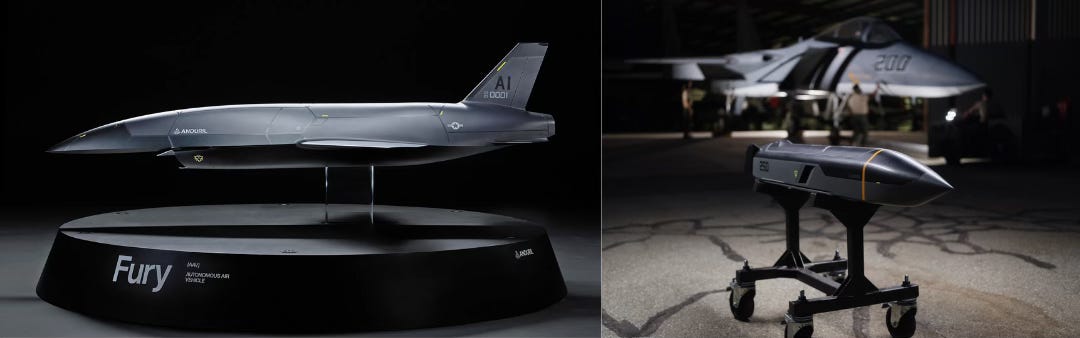
The Barracuda, designed to be cheap, modular, and swarm-capable, functions much like a cruise missile—while the Fury offers stealthier, long-range strike capacity with AI-guided targeting, battle-tested in contested environments like Ukraine.
VI. Axis of Private Warfare: Contractors, NGOs, and Intelligence Links
The wars in Ukraine and Gaza are not isolated; they are twin theaters of a global experiment in privatized, digitized warfare. A seamless ecosystem now spans both conflicts, one where military contractors, intelligence agencies, tech startups, and humanitarian NGOs operate under overlapping mandates. At its core is a warfighting class shaped by the Israeli model: a doctrine of containment, surveillance, and deterrence exported across continents.
Private Contractors and the Human Supply Chain
Since 2014, Israeli private military contractors (PMCs) have played a pivotal role in shaping Ukraine’s battlefield capabilities. Firms reportedly staffed by ex-Israeli special forces, such as the Spear Operations Group, trained far-right formations like Azov and Right Sector in urban warfare, “counterterror” raids, and crowd suppression.
Spear Operations Group, one such contractor, is a Delaware-based PMC founded by Abraham Golan, a Hungarian-Israeli security consultant. It gained notoriety for its work in Ukraine but also for a separate covert program in Yemen. Beginning in 2015, the UAE hired Golan’s team to carry out targeted assassinations during Yemen’s civil war, including the attempted killing of political figures—a precedent that raised serious legal questions under the U.S. War Crimes Act of 1996. The firm’s dual operations in Ukraine and Yemen exemplify the transnational nature of the privatized war economy.
By 2022, Israeli advisers had formalized relationships with Ukrainian agencies such as the SBU and National Police, providing instruction in detention protocols, checkpoint management, and psychological operations modeled after Shin Bet and IDF procedures.
These same techniques now appear in Gaza but reversed. U.S. and Israeli-backed contractors like Safe Reach Solutions and UG Solutions, with personnel reportedly drawn from Ukrainian militia ranks, now manage Gaza’s militarized aid regime. They secure food lines with biometric scanners, issue ID cards for rations, and enforce curfews with armed patrols. What began as training in Ukraine now manifests in population control in Gaza, revealing a circular flow of personnel, doctrine, and logistics, creating what amounts to a privatized human supply chain.
You can read more about Safe Reach Solutions and UG Solutions here.
Shared Surveillance: From Biometric Checkpoints to Kill Lists
Palantir Technologies sits at the nexus of this transnational warfare model. In Ukraine, Palantir’s Gotham platform fuses intelligence feeds, battlefield surveillance, social media, drone telemetry into real-time targeting dashboards used by the military and SBU. In Gaza, similar software underpins “humanitarian monitoring” systems, determining who receives aid and who gets flagged as a potential threat. The result is a dual-use surveillance architecture that simultaneously tracks enemy combatants and starving civilians.
Supporting this architecture is a suite of Israeli hardware: Elbit Systems’ “smart fences,” UAVs like the Hermes 450, and border surveillance towers, deployed along Gaza’s perimeter to enforce control and likely supplied to Ukraine’s EU-funded eastern frontier as part of Israel’s $12.5 billion defense exports in 2022. Funded by Western governments, operationalized by Israeli firms, and validated by wartime necessity, these tools redefine borders as total control interfaces digitized gates to manage, sort, and punish.
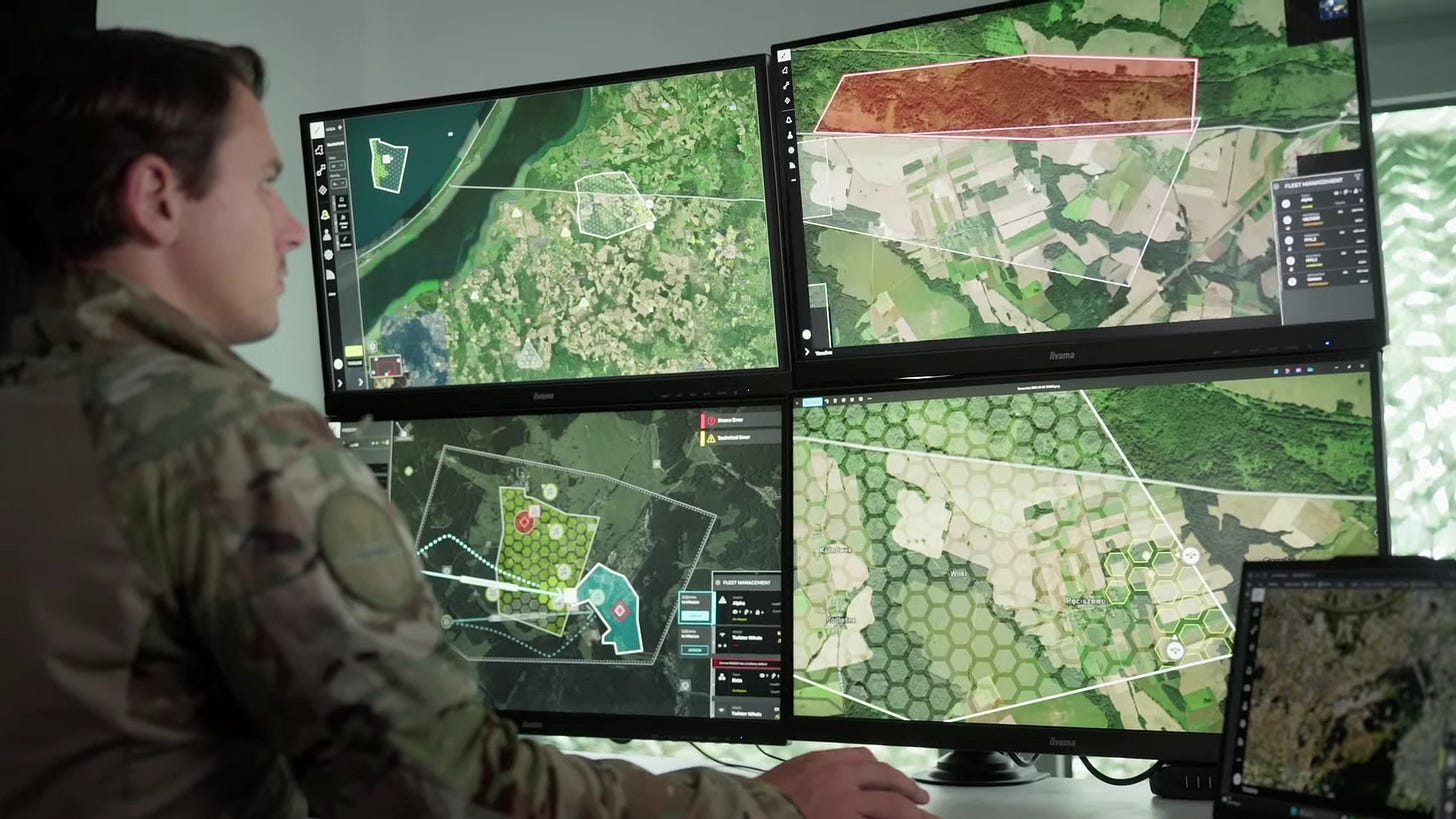
A lesser-known but crucial element is the Mosaic platform, co-developed by Israeli defense contractors and used by both IDF and Western allies. In Ukraine, Mosaic aggregates sensor data, drone feeds, and battlefield intelligence into automated targeting lists. In Gaza, it helps track food recipients, flagging “suspicious activity” among civilians. As a result, the same logic, and sometimes the same software, guides both missile strikes and food distribution.
NGOs, Legal Warfare, and Ideological Laundering
The ideological front is no less integrated. Israeli-aligned NGOs like Shurat HaDin and My Truth (manned by IDF vets and reservists) have recast Ukrainian nationalist battalions as heroes of Western civilization, whitewashing their Nazi-adjacent histories through a Zionist lens of “shared security.” Figures like Nathan Khazin are now framed as symbols of Jewish-Ukrainian unity, a narrative Israel promotes to justify weapons sales and deeper cooperation.
In Gaza, the same NGO complex facilitates “humanitarian” operations that double as security enforcement. The Gaza Humanitarian Foundation (GHF), backed by former CIA officers, Israeli advisors, and U.S. private military firms with evangelical aspirations, exemplifies this model. Armed contractors manage food sites, perform crowd control, and feed data into predictive analytics platforms. Some NGOs active in Gaza, potentially drawing on models from Ukraine’s conflict zones, blur the line between relief and reconnaissance.
The Startup War Class
This convergence has birthed a new elite: a startup war class of Israeli, Ukrainian, and Western entrepreneurs who see conflict not as tragedy but as opportunity. Defense tech firms like SpearUAV test their products in live combat, first in Mariupol, then in Rafah. Many are funded by Israeli VC firms like OurCrowd or NATO-aligned accelerators in Warsaw and Kiev. These startups incubate drone swarms, AI-powered kill chains, and predictive policing tools in Ukraine, then export them to Gaza and vice versa.
In this world, war is not just business. It’s beta-testing.
VII. Sanctified Hatreds: The Ideological Engine Behind Gaza and Donbass
Zionist–Banderite Symbiosis and the Fortress State Doctrine
The alliance between Ukrainian ultranationalists and Israeli Zionists seems paradoxical, one rooted in Stepan Bandera’s Nazi-collaborationist legacy, the other in Holocaust survival. Yet their partnership thrives on a shared ethno-nationalist vision: state-building through exclusion, where existential threats justify extreme violence. This symbiosis is no accident, but a deliberate convergence of doctrine, uniting Kiev and Jerusalem in a war for demographic dominance.
Ethno-Nationalism as Sacred Mandate
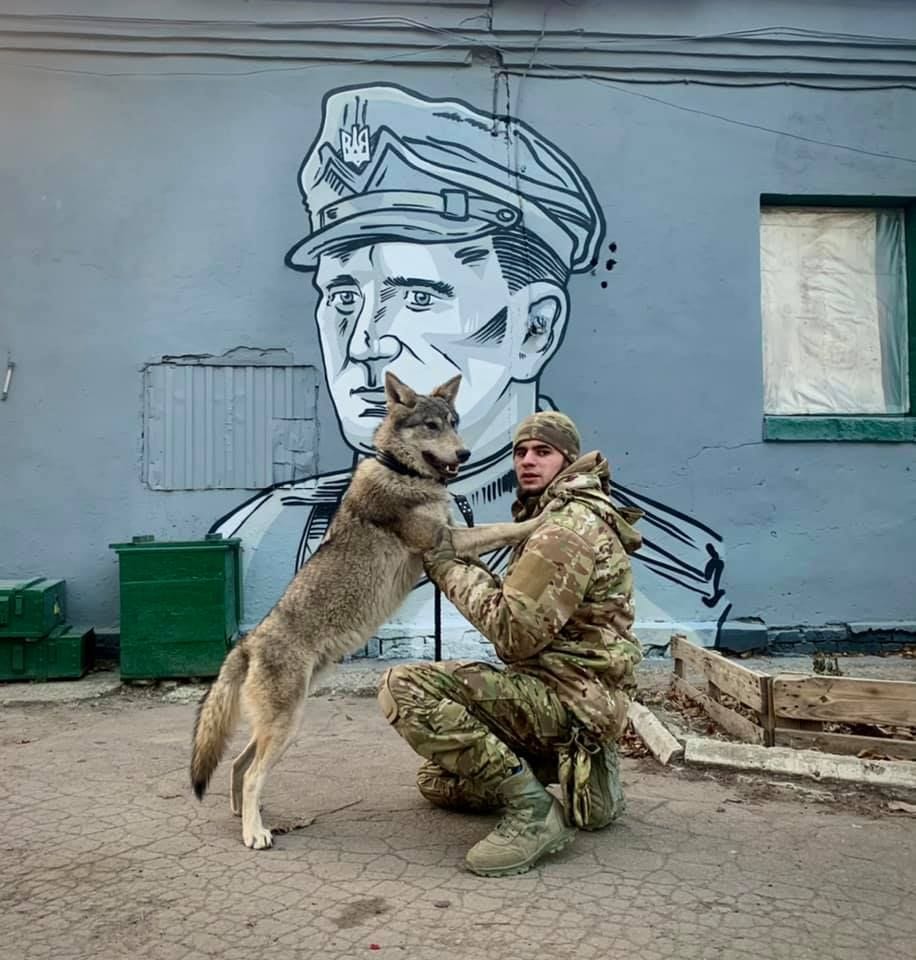
Ukraine’s post-2014 paramilitary surge drew on Bandera’s Organization of Ukrainian Nationalists, which envisioned a racially pure ethnostate free of Jews, Poles, and Russians. Units like Azov, Right Sector, and National Corps embraced this legacy, with early Azov leader Andriy Biletsky declaring, “Our mission is to lead the white races of the world in a final crusade… against the Semite-led Untermenschen.” Dmytro “Da Vinci” Kotsiubailo, commander of the Da Vinci Wolves, boasted in 2021 of feeding “Russian children’s bones”to his wolf in Donbass. Konotop’s mayor Artem Semenikhin, a former Svoboda member, vilified Russian culture as a threat to Ukrainian purity, demolishing Soviet monuments. These threats against Russians and Donbass residents echo a drive for ethnic exclusivity. Though Azov rebranded for Western aid, adopting Jewish members like Nathan Khazin, its Wolfsangel and Black Sun symbols signal enduring ethno-nationalist roots. Israel’s narrative mirrors this.
The Likud Charter asserts “between the Sea and the Jordan there will only be Israeli sovereignty,” casting Palestinians as a demographic threat. Finance Minister Bezalel Smotrich’s call to “wipe out” Palestinian villages and National Security Minister Itamar Ben-Gvir’s label of Palestinians as “wild beasts” reflect a Zionist drive for ethnic exclusivity. Like Bandera’s vision, Israel’s demands a state purified by force.
The Fortress State as a Moral Shield
Both nations frame themselves as besieged outposts of “civilization” against “barbarism.” Ukraine’s border fortifications and Kyrylo Budanov’s threats of “targeted killings” of Russians worldwide counter Russia’s “existential” threat. Israel’s Gaza blockades and racial profiling at checkpoints thwart “terror.” Azov’s Illia Samoilenko, visiting Israel in 2022, called both nations “civilized” fighting the “uncivilized” Russians and Palestinians.
This siege mentality sanctifies:
• Militarized borders as security purity.
• Collective punishment as strategic deterrence.
• Permanent mobilization as national resilience.
Israeli urban warfare tactics, including the Dahiya Doctrine of disproportionate force, have reportedly influenced Ukrainian strategies in Donbass, with IDF trainers sharing expertise since 2022. This Zionist–Banderite symbiosis fuels a fortress state model, where war is not policy but destiny, waging a crusade for exclusion and control.
Gaza and Donbass: Twin Fronts of the Same War
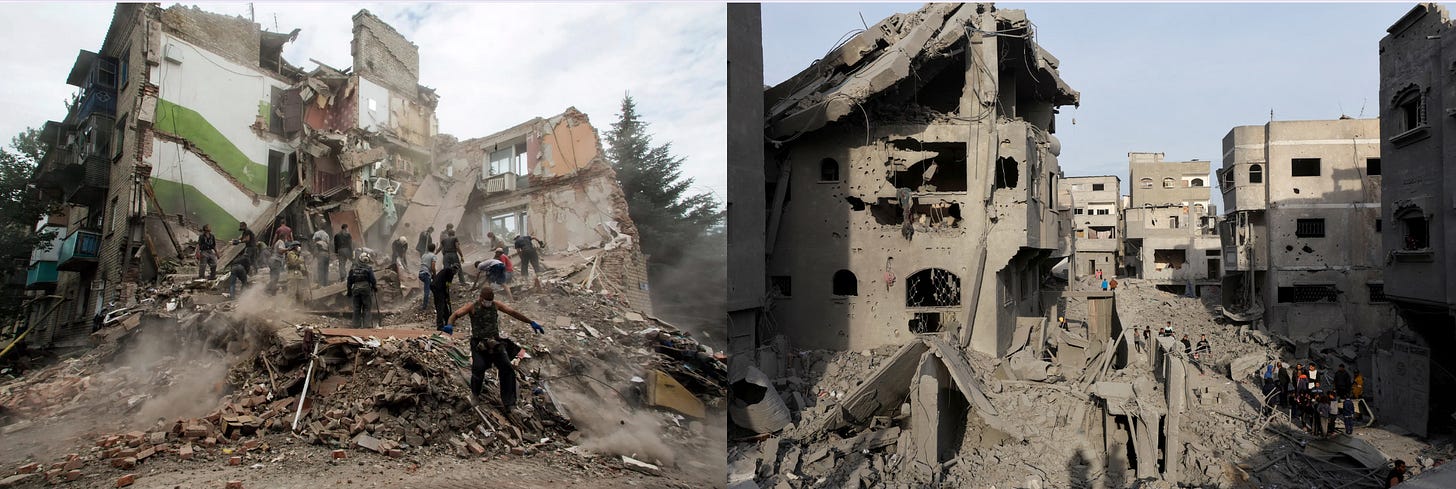
The war in Ukraine and the genocide in Gaza are not separate conflicts. They are parallel theaters of the same civilizational confrontation: East vs. West. In both, a militarized ethno-state backed by the West targets an Eastern people whose only crime is refusing to vanish.
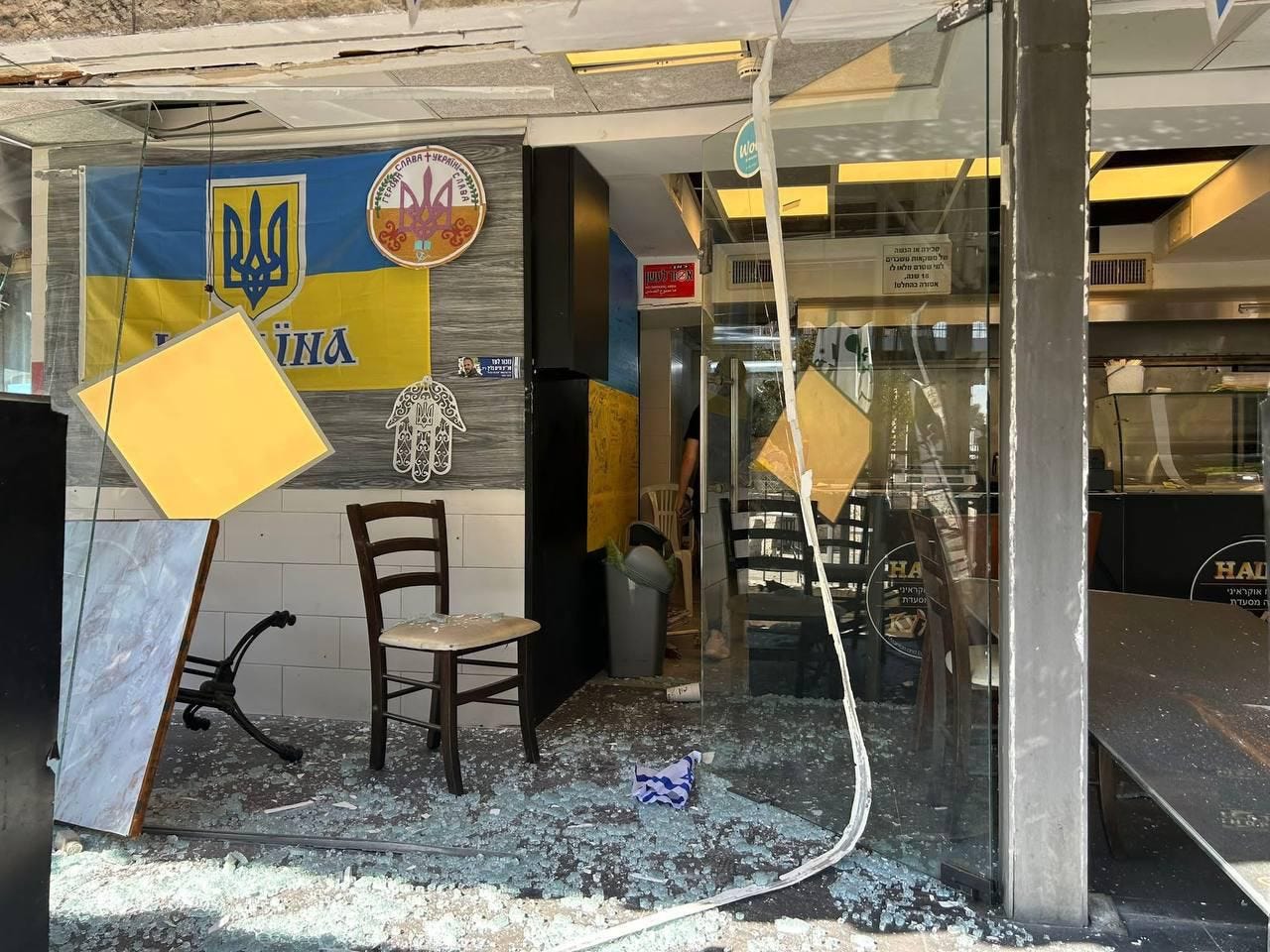
In Donbass, it was the people who resisted the Maidan coup, who refused to bow to a NATO-aligned regime built on racialized nationalism and historical amnesia. In Gaza, it is the people who refuse to surrender their land, their dignity, and their right to exist to a Western-backed settler state that sees them as demographic threats. Since 2014, both have been bombed, blockaded, starved, and slandered, framed as terrorists for daring to survive.
The West calls this order. But it’s an order built on siege.
Those who insist that Russia is secretly aligned with Israel misunderstand both history and the present moment. Russia may be cautious, even shifting in some diplomatic arenas, but it has not embraced the West’s logic of annihilation. It has not signed onto the project of fortress ethno-states wielding AI-powered drones against refugee camps or school basements. On the contrary, Russia stands, with all its contradictions, as a major brake on that world order.
If Israel is Ukraine, then Gaza is Donbass: two peoples on the wrong side of the Western empire, trapped behind barbed wire and digital crosshairs. And if Russia is anything in this equation, it may be what Iran is to Gaza, an imperfect ally, vilified for even daring to intervene.
These are not isolated wars. They are fronts in the same global conflict: a West that seeks to erase history, borders, and peoples, and an East that refuses to disappear. The propaganda may differ. The drones may evolve. But the battle lines are drawn.
From Donbass to Gaza, every empire meets its end.
(Substack)