This is the first legal action of its kind related to the lethal U.S. military operations in the region. Photo: Daniel Gonzalez / Anadolu / Gettyimages.ru
This is the first legal action of its kind related to the lethal U.S. military operations in the region. Photo: Daniel Gonzalez / Anadolu / Gettyimages.ru
On Tuesday, the family of a Colombian fisherman killed in a US bombing against an alleged “narco-boat” in the Caribbean filed a complaint against the United States before the Inter-American Commission on Human Rights (IACHR).
The relatives of Alejandro Carranza Medina, a fisherman from Santa Marta, argue that the government of President Donald Trump violated international law during an attack off the coast of Colombia in mid-September.
“On September 15, 2025, the US military destroyed the vessel of Alejandro Andrés Carranza Medina,” the document states. By carrying out these actions, “the United States has violated the American Declaration of the Rights and Duties of Man” regarding the right to life, equality before the law, recognition of legal personality, a fair trial, and due legal process.
The complaint—the first regarding recent lethal US operations in the Caribbean region—was filed by Dan Kovalik, attorney for Colombian President Gustavo Petro. Kovalik took on the president’s defense after President Petro and his close circle were placed on the so-called ‘“Clinton List,” or the the US Treasury Department’s Office of Foreign Assets Control (OFAC) register.
Kovalik explained that because the IACHR is “an organ within the framework of the Organization of American States,” a petition can be filed against a state for violations of the US Declaration of Human Rights.
“They are terrorizing people—this is terrorism,” said Kovalik. “People are afraid to go out fishing. They have plunged the entire region into a state of fear, which is exactly what they intend.”
“We know this is political—an invention,” Kovalik stated
The complaint identifies US Secretary of War Pete Hegseth as the official “responsible for ordering the bombing of vessels like that of Alejandro Carranza Medina and the killing of all on board.”
“Hegseth has admitted that he gave these orders despite not knowing the identities of the people targeted in these attacks and extrajudicial executions,” the document reads.
Kovalik said that they will seek “reparations for the family” and that this complaint is “a good first step” toward stopping what he considers an illegal practice.
For its part, the IACHR expressed “deep concern” over the series of lethal attacks carried out by the United States in the Caribbean and Eastern Pacific, recalling that the obligation to protect the right to life and ensure due process extends even to extraterritorial operations. It stated that Washington must “refrain from using lethal military force in the context of public security operations” and that any death resulting from such operations must be promptly, impartially, and independently investigated.
Key elements of US aggression
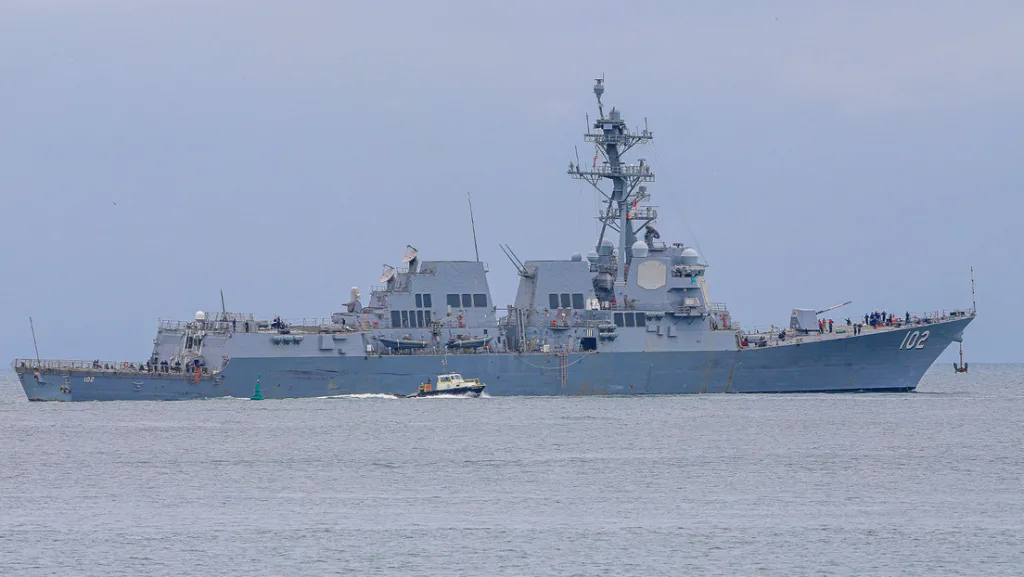
Military deployment: since last August, the US has maintained a significant military force off the coast of Venezuela, justifying it as part of anti-drug operations. Washington later announced the launch of Operation Southern Spear, officially aimed at “eliminating narcoterrorists” in the Western Hemisphere and “protecting” the US from “the drugs killing its citizens.”
Lethal operations: these operations have included bombings of alleged drug-trafficking boats, leaving more than 80 people dead, with no evidence that they were actually transporting narcotics. The Pentagon stated that attacks on “narco-boats” were approved by “the best military and civilian lawyers.”
Accusations and reward: Washington has accused Venezuelan President Nicolás Maduro—without producing any evidence—of leading a drug-trafficking cartel and has doubled the bounty for his capture.
Venezuelan position: President Maduro argues that the real US objective is a regime-change operation to seize Venezuela’s vast oil and gas resources. Venezuelan opposition and US politicians have been explicit about this.
Lack of factual basis: organizations such as the UN and the DEA note that Venezuela is not a main route for drug trafficking into the United States, as more than 80% of drugs in the region move through the Pacific route.
International condemnation: Russia, the UN High Commissioner for Human Rights, and the governments of Colombia, Mexico, and Brazil, among others, have condemned the US actions. Experts describe the attacks on boats as “summary executions” that violate international law.
Pope Leo Urges US to Pursue Dialogue, Rejects Threat of Venezuela Invasion
(RT)
Translation: Orinoco Tribune
OT/CB/SL

Cameron Baillie is an award-winning journalist, editor, and researcher. He won and was shortlisted for awards across Britain and Ireland. He is Editor-in-Chief of New Sociological Perspectives graduate journal and Commissioning Editor at The Student Intifada newsletter. He spent the first half of 2025 living, working, and writing in Ecuador. He does news translation and proofreading work with The Orinoco Tribune.