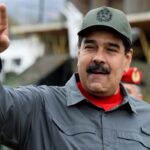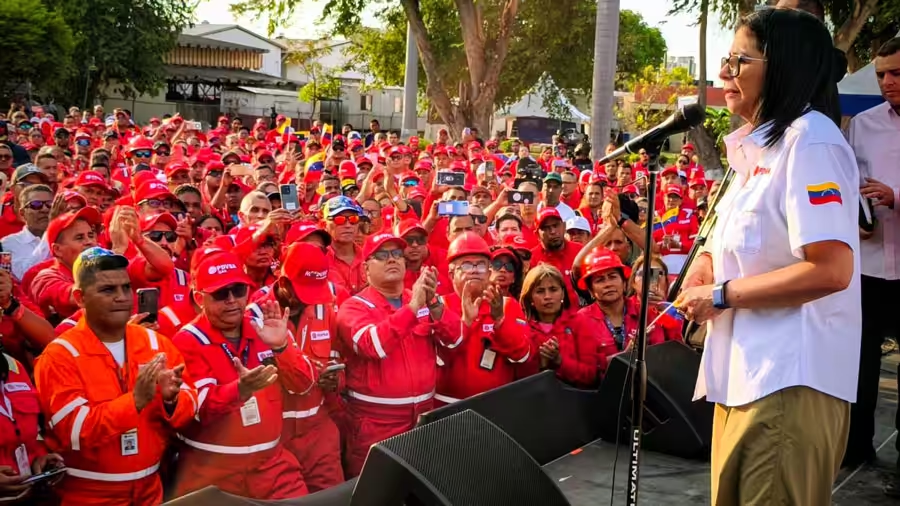
Delcy Rodríguez, Venezuela's acting president, with oil workers in the state of Anzoategui on January 25, 2026. Photo: Venezuela's Office of the Presidency.
Delcy Rodríguez, Venezuela's acting president, with oil workers in the state of Anzoategui on January 25, 2026. Photo: Venezuela's Office of the Presidency.
By Thierry Deronne – Jan 26, 2026
“Enough of Washington’s orders to Venezuelan politicians. It is Venezuelan politics that will resolve our differences and internal conflicts. We have had enough of dictates from foreign powers. Our republic has already suffered enough from the consequences of fascism and extremism.” These were the words of Delcy Rodríguez, Venezuela’s acting president, to oil workers in the state of Anzoategui, in the east of the country, on January 25.
She announced the creation of a new economic fund specifically designed to improve the income of the Venezuelan working class. Direct instructions to the vice-presidency for the economy aim to raise the necessary funds to strengthen purchasing power and offer improved social protection for workers. This measure will be accompanied by digital innovations. A new technological platform will replace the Patria Platform to ensure that these resources reach beneficiaries effectively and to adjust wage policies and bonuses in favor of workers’ well-being. Trump is seeking to present the fact that he has revived the oil agreements drawn up under Nicolás Maduro’s presidency as a victory, though Trump himself blocked these agreements by imposing multiple sanctions under pressure from the US far right. Delcy Rodríguez explained that the sale of Venezuelan oil will be used primarily to protect workers’ incomes.
This continues the protectionist policies implemented by President Nicolás Maduro–a former union leader–to combat the (over one thousand) sanctions imposed by the US and the US and EU blockade. He is one of the few heads of state who has not succumbed to the siren call of austerity. When he began by periodically increasing wages by 25% or 50%, the private sector offset these increases by raising its prices proportionally. Faced with an inflationary spiral, Maduro decided to reactivate the national productive apparatus through multipolar alliances. This was done not only to reduce dependence on oil revenues but also to replenish state coffers, notably by taxing the wealthiest citizens.
Venezuela’s Central Bank has thus begun to recover valuable resources to intervene in the foreign exchange market and defend the currency. The objective: to rebuild public services and gradually increase workers’ benefits while simultaneously limiting the inflation that is eroding them. A China-style strategy: maintain and strengthen the state as a strategic player in the economy.
As a result, the UN Economic Commission for Latin America and the Caribbean (ECLAC) reports that Venezuela has had the highest growth rate (6.5%) in South America for the past four years. For the first time in 150 years of oil production, the country is close to achieving food sovereignty and produces almost 100% of the food it consumes.
When, in February 2025, Donald Trump revoked Chevron’s license in an attempt to further strangle Venezuela’s economy, President Maduro responded by expanding the market to Asia and handing over the 5,258,000th home built by his administration to a working-class family. On May 1, 2025, he increased the “economic war allowance” from [US] $90 to $120 for 20 million families. An important point when studying purchasing power in Venezuela is that despite Western sanctions, and unlike under neoliberal regimes, public services and basic necessities are very cheap in Venezuela. Subsidized gasoline—the cheapest in the world (US 50 ¢/liter)—water, gas, electricity, internet, subway, etc., are available at low prices. Food distributed monthly by the government to the population in response to the blockade costs only 5% of the market price. Many health centers, as well as public education and culture centers, operate free of charge.
While in the West, a growing number of families struggle to make ends meet, Venezuelan workers flock to the shops and businesses that open daily. Caracas is filled with commercial music, and traffic jams form early in the morning around the giant malls. Thousands of Venezuelan migrants fled the impoverishment they endured in their host countries and returned home on the free, public airline long before the deportations and human rights violations perpetrated by the Trump regime.

“The Venezuelan people do not accept any orders from outside,” continued Delcy Rodríguez during the meeting with energy sector officials , members of the legislative branch, and national and foreign business leaders, convened to discuss the public consultation on the partial reform of the Organic Law on Hydrocarbons. “The Venezuelan people have a government, and this government obeys the people. Reciprocity characterizes the relationship between the Venezuelan people, their authorities, and their institutions.”
“We are also not afraid to maintain respectful relations with the United States,” she added, “but these must be based on respect: respect for international law, basic human decency in interpersonal relationships, and respect for the dignity and history of Venezuela. As for the personal threats I receive, I want you to know that I was already aware of them when I took office.”
From the very first hours following the abduction of President Maduro and his wife, and with no prior knowledge of Venezuela, many left-wing activists became “bots” in the US psychological warfare campaign. The refrain “Delcy betrayed Maduro” was hammered home relentlessly, blindly and with fervor, as if it were an absolute truth. The intensity of the media and online bombardment could have produced doubt, but it seems that by 2026, their capacity to resist these networks and media has eroded even further.
From Caracas, independent journalist Craig Murray dismantled this narrative that the media empires have desperately tried to make us believe: “One narrative which the Western powers are desperate to have you believe is that Acting President Delcy Rodríguez betrayed Maduro and facilitated his capture. That is not what Maduro believes. It is not what his party believes, and I have been unable to find the slightest indication that anybody believes this in Venezuela.
“The security services house journal, the Guardian, published about five articles making this claim, and flagged it as front-page lead and a major scoop. Yet, all of the sources for the Guardian story are still the same US government sources or Machado supporters from the wealthy Miami community of exiled capitalist parasites.
“What is interesting is why the security services wish you to believe that Delcy Rodríguez and her brother Jorge, Speaker of the National Assembly, are agents for the USA. Opposition to US imperialism has defined their entire lives since their father was tortured to death at the behest of the CIA when they were infants. They are both vocal in their continuing support for the Bolivarian Revolution and personally for Maduro. The obvious [US] American motive is to split and weaken the ruling party in Caracas and undermine the government of Venezuela.”

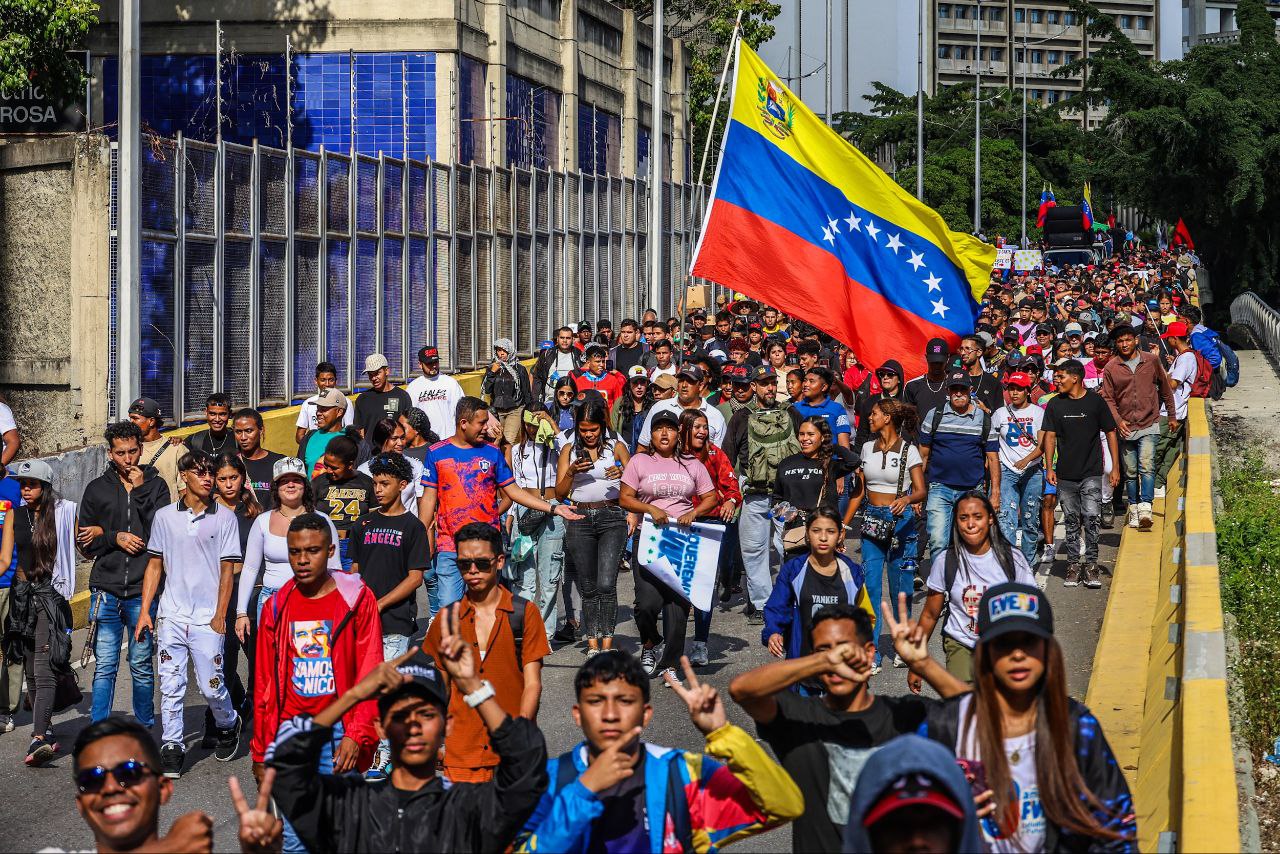
The support of Venezuelan workers, who took to the streets en masse with their organizations to demand the release of Nicolás Maduro and Cilia Flores, is bolstered by that of powerful movements in the Global South. These include the Landless Workers’ Movement (MST), with nearly two million members and highly mobilized in Brazil, and NUMSA, South Africa’s largest trade union, which also demands the release of Venezuelan President Nicolás Maduro and his wife Cilia Flores. “Today it’s Venezuela. Tomorrow it will be South Africa,” warned Irvin Jim, general secretary of the National Union of Metalworkers of South Africa (NUMSA), which boasts over 460,000 members. Irvin emphasized the need for an “anti-imperialist front to mobilize workers” beyond partisan and union affiliations: NUMSA “will soon organize a political symposium” to which all progressive political parties in the country will be invited. “It is high time to unite the working class … behind a revolutionary program,” as South Africa faces increasing aggression from the US far right.
In contrast, French Trotskyists brandished a leaflet from the CUTV (Union of Venezuelan Workers) about so-called “union repression” and, without knowing the reality of Venezuela, immediately endorsed it to distance themselves from the demand to free Maduro and maintain a routine anti-imperialism: “We support the Venezuelan people.” The author of the leaflet is Pedro Eusse, a member of the former leadership of the Venezuelan Communist Party, a group of about 15 people who for years have been flooding the world with communiqués about the “neoliberal, fascist dictatorship of Maduro” (sic). This “union” is in fact just a disguise “for the international community,” the typical “local endorsement” that Western leftists need. This manipulation is explained in detail in the article: “Rebirth and Victory of the Venezuelan Communist Party.”
Since the publication of Persian Letters [in 1721], the use of distant countries to settle internal French political scores has been a tradition. This was already the case with the text co-signed in August 2024 by the NPA (New Anticapitalist Party), the Socialist Party, and Clémentine Autain, who together denounced the “Maduro dictatorship.” The statement expressed “particular indignation” at Maduro’s mention of “re-education camps.” In reality, the president had asked of the relevant minister that far-right militants or mercenaries, despite being guilty of destroying public services and assassinating “Black people, therefore Chavistas,” be allowed to learn a trade in prison. Their early release, initiated by President Maduro in December—presented by the media as the “release of political prisoners”—demonstrates the Bolivarian government’s extreme commitment to national unity and reconciliation in its hope that these people, used by Venezuelan oligarchs, will not return to violence and will agree to enter the democratic, electoral field, as the moderate right has done.
Delcy Rodríguez Rejects US ‘Orders’ as Venezuela Advances Hydrocarbons Law Reform
Translated by Orinoco Tribune
OT/SL/JRE