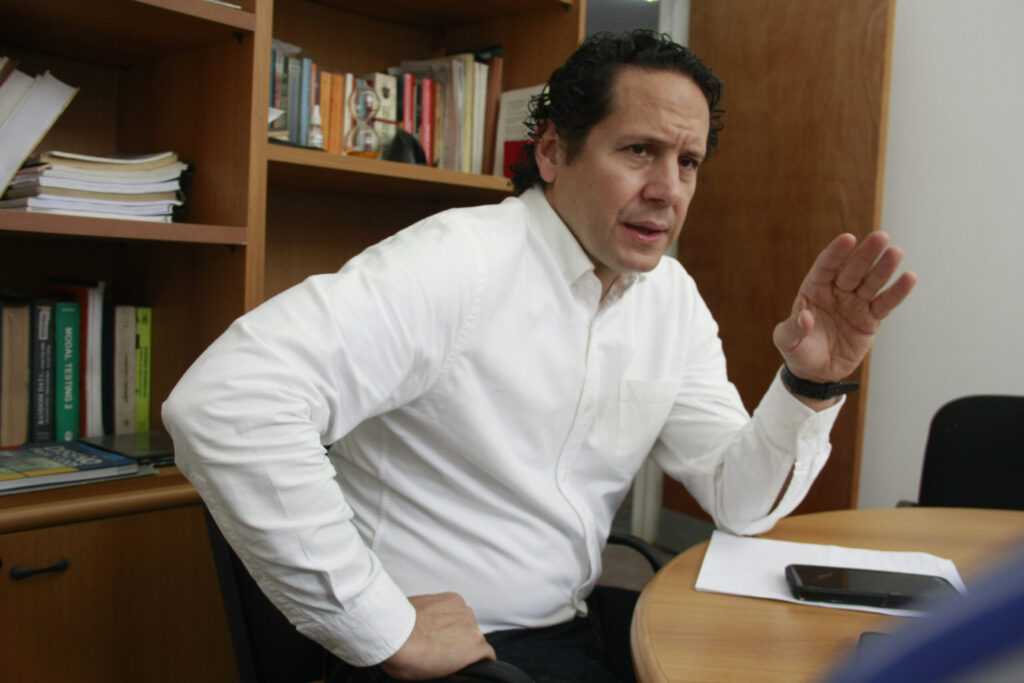
Francisco Garcés, a member of the Program for Peace and Democratic Coexistence, stated this Tuesday that the Venezuelan people maintain a strong desire for stability, citing recent studies that indicate that 80% of the population prefers negotiation over confrontation.
During an interview on the program Café en la Mañana, broadcast by Venezolana de Televisión (VTV), Garcés stated that this program brings together diverse political and social actors with the goal of consolidating democracy. “Venezuelans want peace, democracy, and coexistence,” he asserted, also highlighting that 98% of citizens express pride in their country.
Progress on the Amnesty Law
One of the key points highlighted by Garcés was the impact of the Amnesty Law, an instrument that has granted procedural benefits and full freedom to more than 8,000 people.
“It’s an example for the country and the world. We will continue to study the cases to ensure justice is served, but we must also ensure that the shadows of the past do not prevent us from moving forward,” he added.
Dialogue in the face of digital ‘lynching’
Garcés revealed that, although most of the meetings have been public, some sectors have requested private meetings to avoid the “lynching” on social media, carried out by groups that still do not understand the need for dialogue.
Despite this, he emphasized that the space has fostered trust even among journalists with initially opposing views. “There has been a reckoning with things that weren’t done well. We’ve made progress in working groups to dismantle hate speech and hatred on digital platforms,” he explained.
Finally, he recalled that Venezuela has been the victim of a “terrible aggression” resulting from extreme actions, but insisted that the country has ideal conditions for peace, as it does not present deep fractures in ethnic, racial or religious matters.
Roadmap for the pilgrimage to demand the definitive end of sanctions
He stated that the program is working to advance agreement, democratic peace, and understanding with different actors, but that sanctions severely limit the stability and progress needed to address the many issues delayed by unilateral coercive measures, which have left deep scars on public services, the health system, and Venezuela’s economy.
“It was a terrible damage done to the homeland,” he concluded.