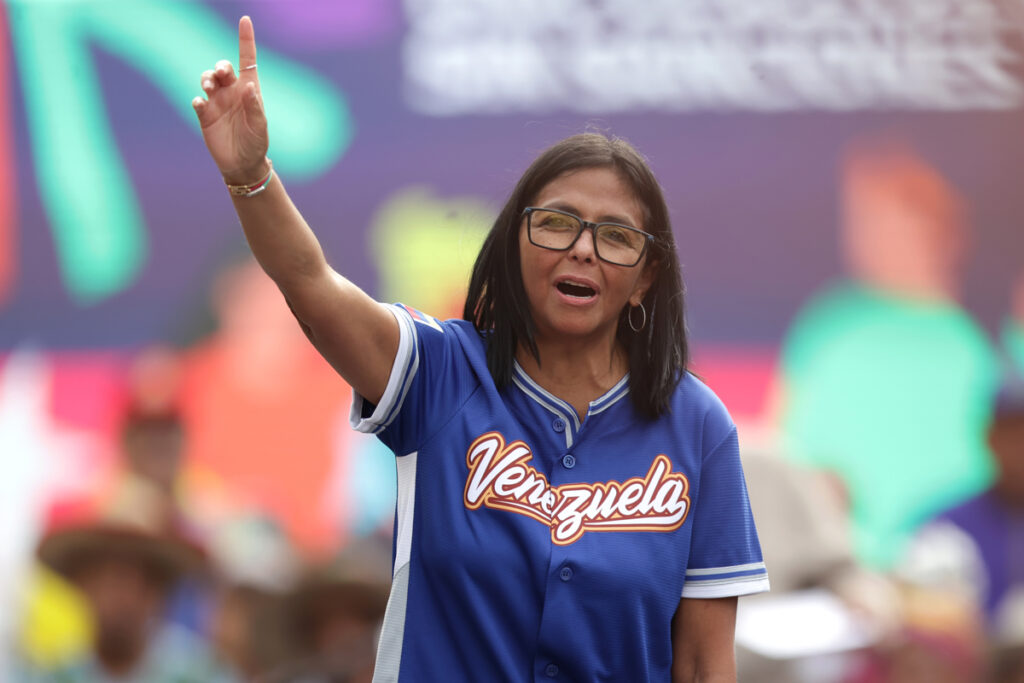
Venezuelan Acting President Delcy Rodríguez announcing an increase of workers income ahead of the May 1 holiday. Caracas, April 30, 2026. Photo: Ronald Peña/EFE.
Venezuelan Acting President Delcy Rodríguez announcing an increase of workers income ahead of the May 1 holiday. Caracas, April 30, 2026. Photo: Ronald Peña/EFE.
Caracas (OrinocoTribune.com)—Venezuela’s Acting President Delcy Rodríguez announced an increase in monthly income for public sector workers and pensioners on the eve of International Workers’ Day. Overall, so far in 2026 alone, workers’ income has increased by 66.6%, an adjustment not seen in Venezuela in recent years.
In an address to the nation on Thursday, Acting President Rodríguez announced an increase in the “integral minimum income” from roughly US $190 to $240, a 26% hike, for state and private-sector employees. The acting president did not specify if the raise included the legal base salary or only non-wage bonuses. Pensioners will receive $70 per month, up from $60.
The announcement of the increase comes two months after another raise from US $160 to $190, paid in bolívars at the official exchange rate of the day. This represents a 66.6% increase in the workers’ income in 2026 alone.
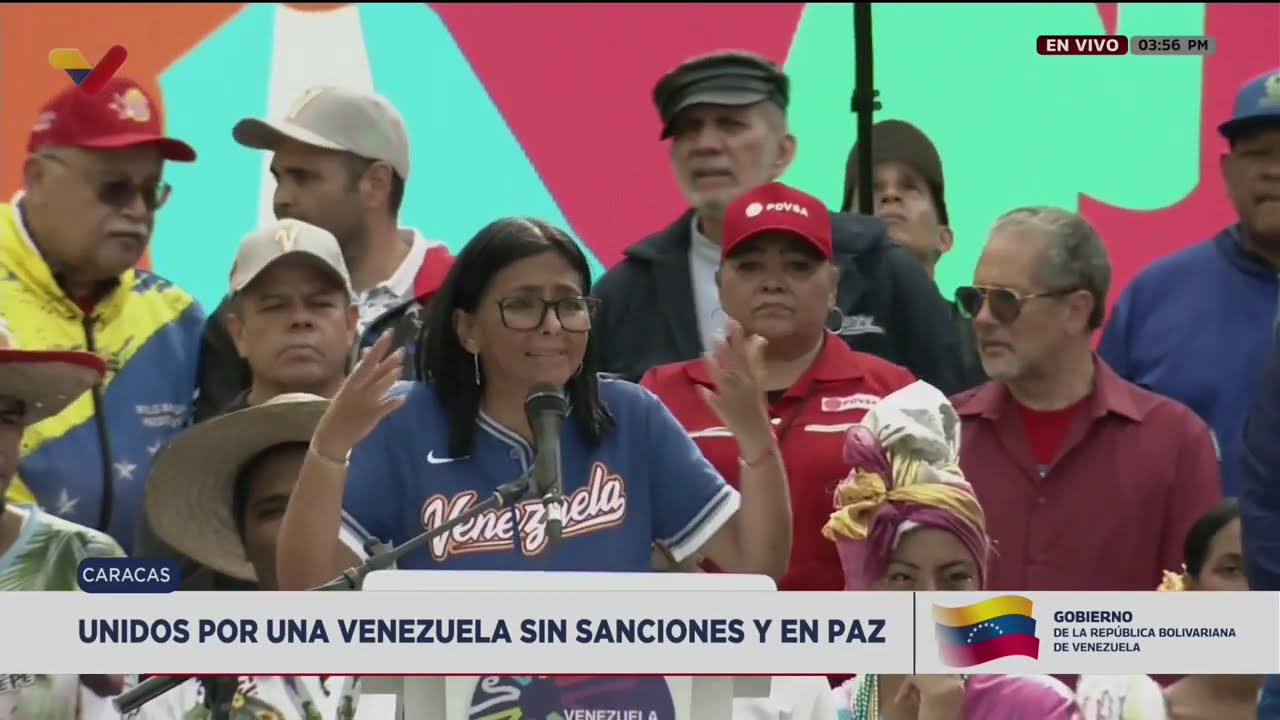
“This is the most significant increase in recent years,” said Acting President Rodríguez at a rally in Caracas to close the nationwide campaign launched on April 19 that called for the total removal of US economic sanctions. The mobilization, through several regions of the country, aimed to build national unity against ongoing US coercive measures and Washington’s oil sales takeover following President Nicolás Maduro’s abduction on January 3.
The acting president urged private companies to adjust their salaries so that they equal or surpass the new minimum income. Wages in the private sector are typically higher, recently ranging between US $150 and $200 per month. However, companies avoid legal obligations tied to official salary rates by paying workers informally in US cash.
The legal base salary for the public sector and pensioners has remained frozen since March 2022 at 130 bolívars per month, approximately US $0.27 at the current exchange rate. As a result, retirement pensions and severance pay have been virtually non-existent.
Acting President Rodríguez had previously warned that any increase in workers’ income would be a “responsible” act to avoid the inflationary spikes that had accompanied past salary increases. Between 2018 and 2022, several attempts to raise the minimum wage quickly backfired, as purchasing power was eroded by galloping inflation and the country lacked productivity growth to sustain wages and pensions over time.
In 2023, the Maduro government shifted to a policy of increasing the non-wage food bonus (Cestaticket) and the Economic War Bonus rather than raising the actual minimum wage to stabilize purchasing power. The bonuses are paid in Venezuelan bolívars but pegged to the official exchange rate set by Venezuela’s Central Bank (BCV). The recipients are roughly 3.5 million active public sector workers and 5 million pensioners.
Because these payments are bonuses, they have no impact on severance pay, vacation bonuses, or retirement pensions. This has drawn strong criticism from leftist organizations and workers’ unions for contravening the country’s labor legislation and Constitution. During the runup to May 1, International Workers’ Day workers and labor leaders in Venezuela staged several protests in Caracas to demand a real salary increase rather than just higher bonuses.
The past failed salary increases occurred amid an economic crisis driven primarily by crippling US sanctions on Venezuela’s oil industry, the country’s main source of foreign revenue, and compounded by low oil prices and corruption. The situation was further aggravated by US sanctions on the mining, banking, and other sectors.
Venezuela saw its oil output fall from 1.9 million barrels per day (bpd) in 2017 to less than 350,000 bpd in the second half of 2020. According to government sources, from 2022 to 2025, oil exports amounted US $93 billion, almost the same as the US $93.6 billion earned in 2012 alone.
Acting President Rodríguez has stressed that the long-term objective is to steady workers’ income sustained by economic growth and increased state revenues, leveraging renewed operations in the oil and mining industries. Earlier this year, the US Treasury’s Office of Foreign Assets Control (OFAC) issued temporary licenses to allow operations in these sectors, as well as authorizing Venezuelan state banks’ reinsertion into the international financial system amid negotiations with Caracas.
Central Bank of Venezuela Highlights Slowdown in the Dollar Exchange Rate
Since January, the Trump administration has taken control of most of Venezuela’s oil-related exports. This oil revenue is now deposited in the US Treasury, with only a portion of the income being sent to Caracas.
Caracas has pledged to administer the release of resources for rehabilitating public infrastructure while insisting that Washington must lift the broad economic blockade to recover the state’s revenue, improve workers’ salaries, and restore social benefits.
Special for Orinoco Tribune by Andreína Chávez Alava
OT/JRE/SL

Andreína Chávez Alava is a Caracas-based Venezuelan journalist with over a decade of experience reporting on Venezuela's political landscape and its stance against US intervention. She has contributed to anti-imperialist narratives while working and colaborating with news outlets like Telesur, Venezuelanalysis, and Orinoco Tribune.