Let’s Take a Look at Congo: A Brief History – #CongoWeek


Orinoco Tribune – News and opinion pieces about Venezuela and beyond
From Venezuela and made by Venezuelan Chavistas
By Steve Lalla – Oct 19, 2020
Although most of us have heard of Congo, many Westerners don’t really know precisely what the term refers to. #CongoWeek (October 18–24, 2020) is an initiative aimed at spreading awareness of the Congolese people’s struggle for dignity and sovereignty. Over six million innocent Congolese have perished in the war-torn nation since 1994, a humanitarian catastrophe that receives little or no international attention.
Flag of Democratic Republic of the Congo (DRC)Many of us, for example, don’t realize that there are two countries commonly referred to as “Congo”. The Democratic Republic of the Congo (DRC) is frequently confused with Republic of the Congo, a much smaller and less populated country located on DRC’s eastern border that’s the product of French colonialism rather than Belgian. The Democratic Republic of the Congo (DRC), formerly known as Zaire and Congo-Kinshasa, is the subject of this week’s #CongoWeek initiative.
Those learning about DRC quickly realize that it isn’t a poor land, nor is it small, nor under-populated, nor a desert. DRC is the world’s 10th largest country and the largest in sub-Saharan Africa in terms of total area. It’s huge. With about 100 million inhabitants, it’s the 15th-most populated nation in the world, and the most populated of all officially Francophone nations.
Many argue that no nation is wealthier in natural resources: 60% of the world’s cobalt production occurs in Congo, an essential component of lithium-ion batteries and alloys. 80% of the world’s known coltan reserves, used for cell phones and the tantalum capacitors included in almost every electronic device, is found here. DRC is also rich in more familiar resources such as diamonds, gold, copper, timber, tin, tungsten and uranium. Atomic bombs dropped on Nagasaki and Hiroshima were made with uranium from DRC. Behind only Brazil, DRC contains the greatest total area of rainforest in the world, although it is being depleted at a great rate. In terms of natural wealth, DRC is an international heavyweight.
Positioned in the heart of Sub-Saharan Africa and almost completely landlocked, DRC shares borders with South Sudan, the Central African Republic (CAR), Uganda, Rwanda, Burundi, Tanzania, Zambia, Angola, and Republic of the Congo.
Imposed by Belgian colonial authorities in the 19th century, the French language is used for administration and widely taught in DRC. French remains the official language although there are four other national languages. Inseparable from today’s Congo is the nation’s formation as a colonial entity. As the private property of Belgium’s King Leopold II from 1885–1908 Congolese lost their lives, their land, their culture, their history, their religion, and in many cases their language. Although it is estimated that over 200 distinct languages are still spoken in the country, many more were eliminated, and French remains dominant in the educational system.
Over 70% of the population live in extreme poverty. At least 20% of the population face starvation which, along with disease, remain the primary causes of death in the country. Hundreds of thousands have been murdered in recent conflicts and millions of Congolese have lost their homes and become internally displaced. Why does this happen? In order to place the Democratic Republic of Congo conflicts within a historical context, and for the sake of brevity, we’re going to focus on three key elements: extraction of resources during the colonial era, Patrice Lumumba, and Mobutu.
Capitalism, Colonialism, and the Pillage of the Congo
Similar to other colonized nations, DRC’s abundant natural wealth has proven to be a great curse to their sovereignty. “Nations endowed with high commodities are particularly vulnerable to the warfare that is financed by the exchange of the natural resources for arms, drugs, and money,” writes Olayiwola Abegunrin. “The Republic of Congo’s diamonds, gold, and other minerals have been the mainstay of the conflicts in these parts of Africa, and similarly in other parts of the continent… Many went as far as saying that if the nations were resource poor, there would be no wars.”

The African continent was diced up and divided among thirteen European powers at the Berlin Conference of 1884–85. The Berlin Conference was also known as the Congo conference, for it was the profits promised by the penetration of the Congo River Basin by white Europeans in 1876 that opened up the heart of Africa to foreign exploitation. Amid increasing skirmishes for control of the area between British, Portuguese, French, and Belgium speculators and their armies, European powers decided to slice up the entire continent for their mutual benefit, arbitrarily drawing borders that define today’s national boundaries. Belgium ended up with the giant Congo region, naming it the Belgian Free State, though it was in fact the king’s private property.
The atrocities of Belgian white supremacist rule are revolting. Indigenous peoples’ lives were turned upside down as they were uprooted from their lands and traditional ways of living. Like the Indigenous people of the Americas before them, the Congolese population was exterminated by famine, disease and mass murder. Thousands were sold into slavery. According to Adam Hochschild, author of King Leopold’s Ghost: A Story of Greed, Terror and Heroism in Colonial Africa, Congo had about 20 million inhabitants when Europeans arrived. By 1920 about 10 million had died.
King Leopold II of BelgiumRubber was an early focus of the Belgian resource extraction process. Inflatable tires made from rubber became a mass commodity around 1890, and international demand was insatiable. The Belgian system relied on forced labor. Congolese women were held hostage to force the men into the rainforests to gather the material from rubber trees. Workers’ hands were chopped off to save bullets. Failure to meet production quotas was punished by death. Rubber quotas were in part paid in chopped-off hands. “Baskets of severed hands, set down at the feet of the European post commanders, became the symbol of the Congo Free State,” writes Peter Forbath in The River Congo: The Discovery, Exploration and Exploitation of the World’s Most Dramatic River. “The collection of hands became an end in itself. Force Publique soldiers brought them to the stations in place of rubber; they even went out to harvest them instead of rubber … They became a sort of currency. They came to be used to make up for shortfalls in rubber quotas.”
King Leopold II was shocked at the apparent inefficiency of this method. “Leopold II reportedly disapproved of dismemberment because it harmed his economic interests,” wrote Stephen Bates in The Guardian. “He was quoted as saying ‘Cut off hands — that’s idiotic. I’d cut off all the rest of them.’” The gruesome tales of severed hands, though they received attention by historians and reporters, were just a small component of the genocide. Famine and illness caused by displacement and slavery were the deadliest effects.
RELATED CONTENT: South Africa to Ask UNHRC to Veto Human Rights Report of “Independent Mission”
Millions perished through Belgium’s ruthless exploitation of the land’s rubber, gold, diamonds, copper, tin, cobalt, and zinc, not a penny of which benefited the Indigenous people of Congo. Instead the riches were shipped back to Europe.
“The blood spilled in the Congo, the stolen land, the severed hands, the shattered families and orphaned children, underlie much that meets the eye,” writes Hochschild in a poignant description of Brussels, the Belgian capital. “The ornate, columned Royal Palace itself was renovated to its present splendor with Congo profits, as was the more grandly situated, domed château of Laeken, where the royal family lives, with its stunning array of greenhouses containing more than six acres of glass. Each spring the greenhouses are briefly opened to the public, and thousands of visitors walk past a bust of Leopold, decorated with camelias and azaleas. At Laeken also stands the five-story Japanese Tower, an architectural oddity that Leopold saw at a Paris world’s fair, took a fancy to, and bought with his Congo money. Dominating part of the city’s skyline is the grandest Congo-financed extravagance of all, the huge Cinquantenaire arch… But of the millions of Africans whose labors paid for all this and sent them to sepulchers of unmarked earth, there is no sign.”
In 1908 the Congo Free State was renamed Belgian Congo and rebranded as a Belgian colonial possession. Exploitation continued with little regard for human rights. Urbanization increased and a small middle class of educated Congolese emerged during this time. Educated in colonial schools, they didn’t learn anything about their own history, were taught French, and were prosecuted if found reading anything written by a Black author. The colonial entity continued in its determination to “civilize” Congolese, maintaining a white supremacist apartheid system: communal ways of life were destroyed, Congolese were indoctrinated into the twin religions of Catholicism and capitalism, “interracial” marriage was forbidden, Blacks were barred from leadership roles in civil or military society, and forbidden from entering the schools and hospitals of the white elite.
Today’s staggering death tolls reflect the reality that, in the words of Congolese lawyer and activist Jean-Marie Kalonji, “nothing has changed. We are still tortured, still killed.” Congo remains inequitably exploited by exterior entities, although today it is largely transnational corporations that have replaced the Belgians.
Coltan and cobalt is mined by hand in a fashion that hasn’t changed much since Belgian colonial times. Child labour is widely employed. Like the estimated eight million Incas who met their death in the mines of Potosi, Bolivia, the “birthplace of capitalism,” Congolese were exploited in an extreme manner by an imperialist system premised on genocide and white supremacy.
Patrice Lumumba and the Assassination of Congolese Sovereignty
The nation was granted independence by Belgium in 1960, following a widespread protest movement, organized strikes, and the erosion of international acceptance of outright white supremacy. Patrice Lumumba and his Mouvement National Congolais party (MNC) were the political heart of the Congolese independence movement. Lumumba was a pan-Africanist, anti-colonialist, and was inspired by the 1955 Asian-African Bandung Conference spearheaded by the Black and Brown anti-imperialist leaders of newly independent nations Indonesia (Sukarno) and India (Nehru).
Patrice Lumumba, 1960“During the first act of Congo’s independence,” confirms historian David Van Reybrouch, “Patrice Lumumba was incontestably the pivotal character. All eyes were turned on him after his inflammatory speech during the transfer ceremony. When the curtain went up on the Congolese drama, he was a dynamic people’s tribune, adored by tens of thousands of common folk.”
Lumumba was elected by popular vote as the first Prime Minister of Congo-Kinshasa in 1960. Nineteen parties ran in the election, over 80% of Congolese voted, and Lumumba’s MNC received 23.4% of the vote, almost twice as much as the runner-up. His great popularity resulted from his fiery intellect, and his inspiring skills as a speaker fluent in the French, Swahili, Tetela, Lingala, and Tshiluba languages. The pillars of Lumumba’s campaign were the rejection of ethnic divisions in politics, and the forging of a sovereign nation that would use the profits of resource extraction to benefit the Congolese people. For this he was a key target in US-led terror campaigns that brought the giant resource-rich countries of Brazil, Indonesia and DRC (among others) under the control of transnational capital in the aftermath of World War II. Since the first day of Congo-Kinshasa’s independence, Lumumba and any others who fought for Congolese sovereignty, or for Pan-Africanism, found their lives in danger.
Like many African nations formerly under white rule, upon declaring independence the new nation of Congo-Kinshasa faced a white supremacist secession movement. In Congo’s case it was the state of Katanga, backed by Britain and Apartheid South Africa, that took up arms within the new nation. Following failed appeals to the United Nations, Lumumba was driven to ask for help from Soviet Russia, for which he was immediately labelled a communist. This claim has been repudiated by Nikita Khrushchev, leader of anti-religious campaigns as Soviet Premier, who at one point joked that Lumumba was “as much a communist as I am a Catholic.”
RELATED CONTENT: Exclusive: Inside the Secret world of US Commandos in Africa
Lumumba took office on June 24, 1960 and was immediately marked for death by imperialists intent on maintaining their economic privileges and control. “On August 25, the White House gave the order, and the CIA drew up plans to have him killed,” writes Vincent Bevins in The Jakarta Method. “Bissell asked Dr. Sidney Gottlieb, the CIA’s in-house scientist — the same man who had overseen MK-Ultra, a program that kidnapped poor black men in the United States and dosed them with LSD to see if the Agency could control their minds — to prepare a poison. The CIA made plans to inject it into Lumumba’s food or toothpaste. That operation fizzled, so the Agency ran an operation to lure Lumumba out of United Nations protection, where he could be killed by local rivals… Lumumba lost UN recognition on November 22, and five days later fled house arrest in Leopoldville. Troops loyal to Joseph Mobutu, the CIA-backed Army chief of staff” kidnapped Lumumba and delivered him to Belgian-backed rebels in Katanga. They shot him three times and dumped his dead body into a shallow well.
“This heinous crime was a culmination of two inter-related assassination plots by American and Belgian governments, which used Congolese accomplices and a Belgian execution squad to carry out the deed,” wrote Georges Nzongola-Ntalaja for The Guardian on the 50th anniversary of Lumumba’s death. Belgian author Ludo De Witte called this “the most important assassination of the 20th century.” And thus, the Congolese dream of a sovereign nation died in its infancy.
Mobutu: Neocolonial Gatekeeper
By 1965 Mobutu Sese Seko, the CIA’s favourite among Congolese political and military figures, had taken control of the country. Wealth disparities in this large, rich nation were so great, and inequality and inequity so pronounced, that the role of the State in maintaining the class privilege of the elite would inevitably assume criminal proportions. Mobutu cemented his rule with an iron fist, torturing and killing political opponents while amassing a personal fortune through the plunder of State assets. He ordered the killing of journalists, priests, and rival politicians, while embezzling up to $15 billion during his 32-year rule.

Under the cover of Mobutu’s Africanization program, known as authenticité, the country was renamed from Congo-Kinshasa to Zaire in 1971, while torture and murder continued to be employed against any who opposed the neocolonial program. CIA, Belgian, French, British and Israeli intelligence agencies trained new generations of criminals to defend Mobutu’s grip on power.
The US and transnationals turned a blind eye to Mobutu’s corruption and human rights violations. George Bush Sr. called him “one of our most valued friends,” and invited Mobutu to be the first African head of state to visit him in the White House.
Mobutu Sese Seko, 1983“I have been impressed by his insight and his vision,” stated Bush in 1989, on the record, in his official capacity as president of the US. “In our talks, the President [Mobutu] and I have had the opportunity to review and renew the excellent bilateral relationship between our countries. And we’ve noted, to our mutual pleasure, that those ties continue to be beneficial and productive.”
“Mobutu was an important Cold War ally of the West in a region rich in strategic minerals,” writes historian Keith Somerville. “Western states tolerated his appalling human rights record and interference in the affairs of neighbouring states… The protection of mineral resources, Western investments and the propping up of a pro-Western regime were of primary importance, and they are the only explanation for the support given to a corrupt and brutal regime headed by a leader who became known as the Great Plunderer.” Mobutu became one of the world’s richest men, the ultimate neocolonial gatekeeper, his immense personal fortune directly “derived from the long-term theft of Zairean mineral resources and loans contracted by his own government.
Congo in the Wake of Mobutu
In 1997, while being treated for cancer in Switzerland, Mobutu was overthrown in an armed insurgency led by longtime revolutionary Laurent Kabila, who declared himself President, dynamiting ongoing struggles to establish a representative democracy. The country was renamed Democratic Republic of Congo. Kabila distanced himself from US sponsorship but, largely lacking popular support and in charge of a vastly disorganized nation, was unable to harness the loyalty of DRC’s armed forces or defend the nation’s sovereignty. Rwanda, Uganda and Burundi crossed the borders and began to share in the pillage of the nation, due in part to misinformation, and to the “indifference of the international community,” according to Georges Nzongola-Ntalaja. “Rwanda and Uganda appeared to have the support of the superpower ally, the United States. The third and no less important factor was the logic of plunder in the new era of globalization, which has to do with the growing tendency of states, Mafia groups, offshore banks and transnational mining companies to enrich themselves from crises.”
“The US together with the other Western democracies have invariably failed to uphold the internationally accepted norms and principles for parochial interests,” wrote Uganda’s The Monitor. “Hence their rogue allies like Rwanda and Uganda can, with impunity and arrogance, occupy a sovereign state and cause massacres and destruction.”
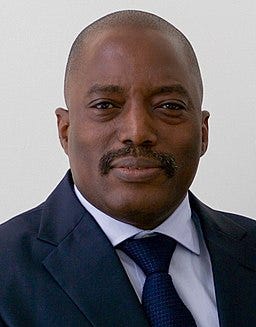
Laurent Kabila was assassinated under mysterious circumstances in 2001. His son Joseph, also a military commander, was declared the new President, and promptly visited Washington and other European capitals in an attempt to rebuild relations. Under his leadership the exploitative capitalist system continued while Congolese continued to suffer, although he did sign a peace agreement that ostensibly ended the war with Uganda and Rwanda. Constitutional reform and democratic elections, which saw Joseph Kabila elected in 2006 and 2011, were met with skepticism both internally and by political analysts. New President Félix Tshisekedi, who does not have a military background, took office on January 24, 2019.
Congo, Africa and the World
During a panel organized by #CongoWeek earlier today, activist and founder of Congo Love, Patricia Lokwa Servant likened DRC to the beating heart of Africa. Like our planet as a whole, DRC has been suffocated by international capital, imperialism, colonialism and neocolonialism, and scarred by environmental damage perpetrated by mining, logging, and extraction industries. Without the salvation of DRC, she reminded us, Africa cannot move forward, and the world cannot move forward. “If we don’t understand what history has put on us, we won’t understand why we’re here today.”
“All free people of the world must be prepared to avenge the crime of the Congo,” asserted Che Guevara.
Surely those who insist that ‘Black Lives Matter’ should take a long, hard look at the plight of the Congolese nation, and surely Congo Week is the time to begin this challenging journey.
For additional information about #CongoWeek 2020, “Breaking the Silence, including blogs, films, panels, and lectures, visit www.congoweek.org.
“All of them, fighting for African unity, have said ‘No’ to the strangulation of Africa. All of them immediately realised that the attempts of the imperialists to restore their rule threaten not only the independence of the Congo but also the existence of all the independent states of Africa. They all realised that if the Congo perishes, the whole of Africa will be plunged into the gloom of defeat and bondage…
“We have gathered here in order that together we may defend Africa, our patrimony. In reply to the actions of the imperialist states, for whom Belgium is only an instrument, we must unite the resistance front of the free and fighting nations of Africa. We must oppose the enemies of freedom with a coalition of free men. Our common destiny is now being decided here in the Congo.
“It is, in effect, here that the last act of Africa’s emancipation and rehabilitation is being played. In extending the struggle, whose primary object was to save the dignity of the African, the Congolese people have chosen independence. In doing so, they were aware that a single blow would not free them from colonial fetters, that juridical independence was only the first step, that a further long and trying effort would be required. The road we have chosen is not an easy one, but it is the road of pride and freedom of man.
“We were aware that as long as the country was dependent, as long as she did not take her destiny into her own hands, the main thing would be lacking. This concerns the other colonies, no matter what their standard of life is or what positive aspects of the colonial system they have…
“Our internal difficulties, tribal war and the nuclei of political opposition seemed to have been accidentally concentrated in the regions with our richest mineral and power resources. We know how all this was organised and, in particular, who supports it today in our house.
“Our Katanga because of its uranium, copper and gold, and our Bakwanga in Kasai because of its diamonds have become hotbeds of imperialist intrigues. The object of these intrigues is to recapture economic control of our country.
“But one thing is certain, and I solemnly declare that the Congolese people will never again let themselves be exploited, that all leaders who will strive to direct them to that road will be thrown out of the community.”
-Patrice Lumumba, Speech at the opening of the All-African Conference in Leopoldville, August 25, 1960 [complete transcript]
References & Further Reading
Abegunrin, Olayiwola. Africa in Global Politics in the Twenty-First Century. A Panafrican Perspective. Palgrave MacMillan, 2009.
Bevins, Vincent. The Jakarta Method: Washington’s Anticommunist Crusade and the Mass Murder Program that Shaped Our World. PublicAffairs, 2020.
Hochschild, Adam. King Leopold’s Ghost: A Story of Greed, Terror and Heroism in Colonial Africa. Mariner Books, 1998.
Nzongola-Ntalaja, Georges. The Congo from Leopold to Kabila: A People’s History. Zed Books, 2002.
Nzongola-Ntalaja, Georges. Patrice Lumumba: the most important assassination of the 20th century. The Guardian, January 17, 2011. [link]
Somerville, Keith. Africa’s Long Road Since Independence. Penguin, 2015.
Featured image: Flag of Democratic Republic of the Congo (DRC)

Steve Lalla is a journalist, researcher and analyst. His areas of interest include geopolitics, history, and current affairs. He has contributed to MR Online, Counterpunch, Resumen LatinoAmericano English, ANTICONQUISTA, Orinoco Tribune, and others.