Haitian Revolution - Drawing by an unknown artist showing black slaves killing white slavers. Photo: Wikipedia.
Haitian Revolution - Drawing by an unknown artist showing black slaves killing white slavers. Photo: Wikipedia.
By Kim Ives – Apr 10, 2024
“Anyone waiting for a ‘pure’ social revolution will never live long enough to see it. He is only a revolutionary in words, who understands nothing of what a real revolution is.”
Lenin in Review of a Discussion on the Law of Nations,
1916, Works, Volume 22.
On the night of August 21, 1791, the enslaved men and women of the French colony of Saint Domingue, then the richest in the Western Hemisphere, rose up in fury.
They had been kidnapped from Africa, survived the deadly “middle passage,” seen their families separated, enslaved under inhuman conditions, worked around the clock, tortured, raped, abused, and humiliated.
When the day of reckoning came, three centuries of anger erupted in a geyser of violence.
The rampaging slaves burned the plantations and homes of their European enslavers. They killed men, women, and children, even infants, sometimes mutilating them as they had been mutilated. They also torched slave quarters and the abodes of free men who owned no slaves.
European historians and newspapers reported on this violence in lurid detail, perhaps inventing events in their accounts, and some of them even cited the uprising’s ferocity as proof of why slavery had been justified in the first place.
But 1791’s violence and the ensuing 13 years of the Haitian revolution gave birth to a completely new and transformative society, one where slavery was abolished and all men and women—at least formally—had equal rights and standing, a first in modern human history.
Today, Haiti may be in the opening days of its second social revolution, which differs from a political revolution (like Jean-Bertrand Aristide’s 1990 election) in a crucial way. An oppressed, exploited class not only seizes political power but also control of the economy, by wresting ownership from the ruling class of the nation’s means of production: its land, factories, banks, stores, transport, utilities, communications, and other economic mainstays.
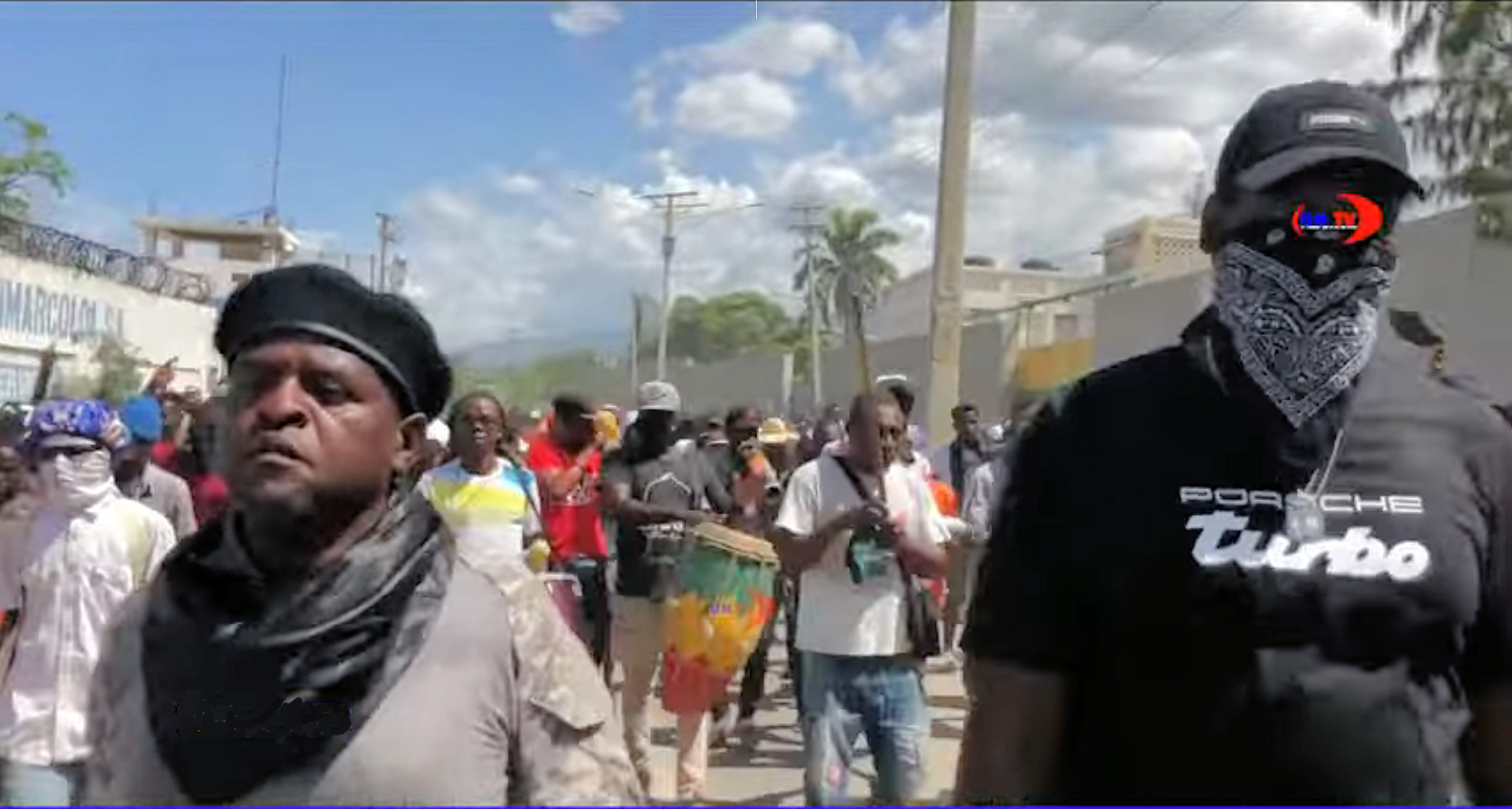
Today’s revolution is also being carried out by men whom many in the West, including some “leftists,” regard as sub-human. The revolutionaries are simply characterized as “gangs” or “thugs,” and, indeed, some of them not only committed crimes but survived off of crime, most notably kidnapping. But many others in the Viv Ansanm coalition, which now is battling the Haitian National Police (PNH), fought the criminal “gangs” with which they are currently united. Both the formerly crime-based and crime-fighting armed groups, now united for “system change,” arise directly out of Haiti’s proletariat and lumpen-proletariat in Port-au-Prince, the sprawling capital of close to three million souls.
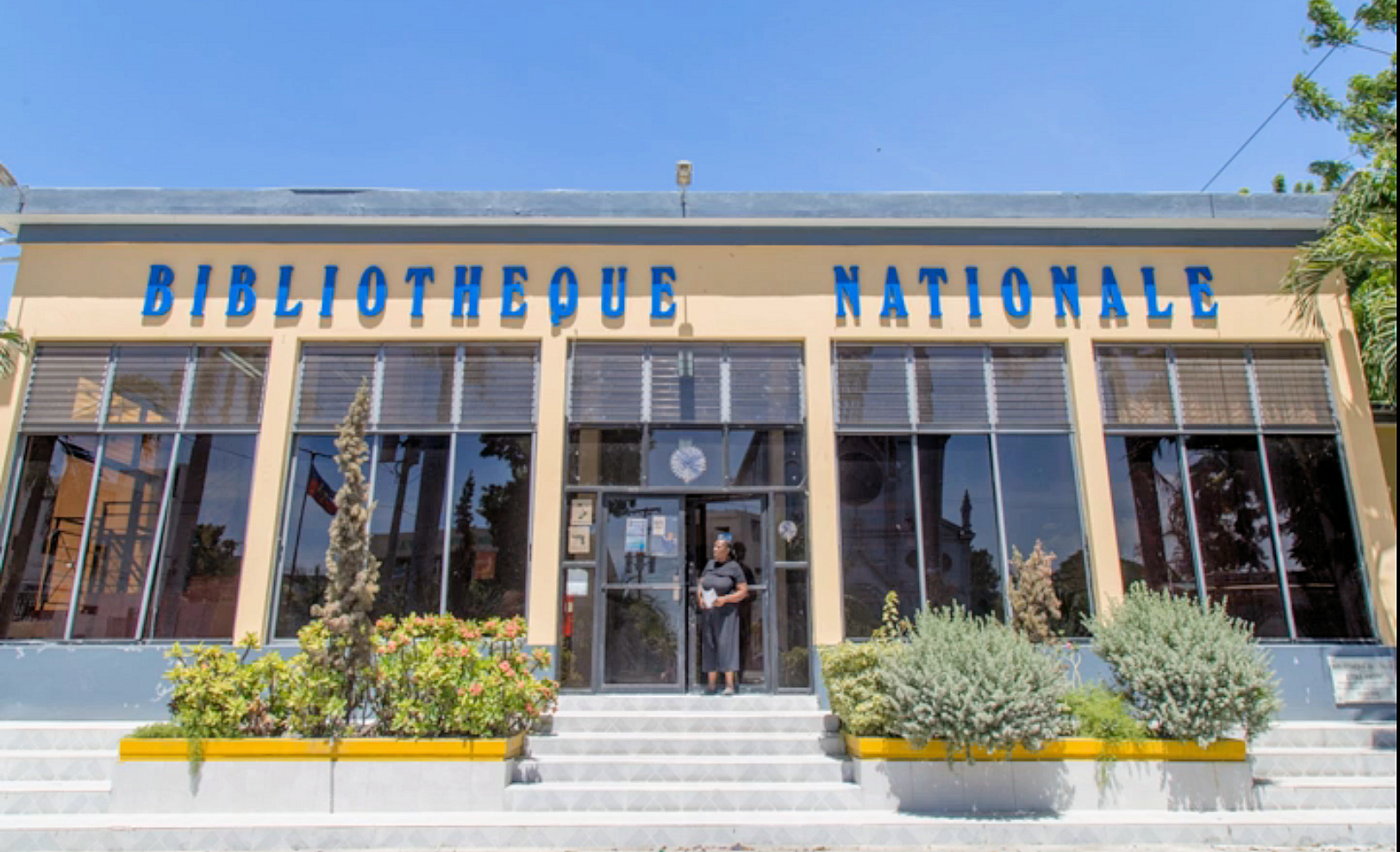
Like the European writers two centuries ago, the mainstream media today shrieks daily about the “horrors” that they claim the modern-day insurgents are committing: wanton killings of innocent people, burning poor people’s homes, vandalism of national institutions like the National Library and the General Hospital.
In fact, the violence now seizing Haiti can be divided into four different categories.
1) Popular Rage: Like the uprising of the 18th century slaves, Haiti’s modern day wage slave masses have deep anger at those who have oppressed and exploited them for decades. This can be seen in their assault on institutions, however imperfect, that are essentially, formally their own, like the General Hospital. But due to corruption, lack of funding, and incompetence in its running, the masses have become alienated to the institution and take it as a parasitic body disconnected from themselves.
2) Indiscipline, ignorance, and lack of control: The “soldiers” of the various armed groups that make up the Viv Ansanm coalition have different levels of training and discipline. Some have an almost military preparation and structure, while others are more informal and anarchic.
“When a young man is armed and he’s not trained, he’s a danger to himself and to society. There are things that have happened, places that have been pillaged or burned, that we deplore.”
On April 3, armed individuals stormed and looted the National Library of Haiti. “I was told that the thugs are taking away the institution’s furniture,” the library’s director general Dangelo Neard said. “They also destroyed the building’s generator. I alerted the police for rapid intervention… We have rare documents, more than 200 years old, of heritage importance which risk being burned or damaged by bandits.” The library holds some 26,000 volumes.
“No Viv Ansanm leader gave an order to attack the National Library,” Jimmy “Barbecue” told Haïti Liberté the next day. “It was attacked by a group of men who don’t even know what a library is. They can’t read, they don’t know anything, they can’t even understand the concept of a library. That, in the end, is the state’s fault; the poor devils never went to school so they don’t understand that a library is a national treasure that should not be uprooted, that it has rare books, archives, important for the nation. Some of those books are irreplaceable.”
Journalist Kim Ives: Haiti Is Going Through a Social Revolution & US Wants to Crush It (Interview)
As for the General Hospital, “who in their right mind and who has gone to school would destroy and vandalize a hospital?” Cherizier asked, again blaming the state for not educating poor young men. “We have now given a formal order to all the troops to protect hospitals, schools, libraries, and the like.”
Cherizier also bemoaned that his Masonic Lodge was vandalized. “Some guys broke into my lodge and pillaged it,” he said. “I want to make a video about it. It’s again because the state never invested in educating these young men. I don’t blame them; I blame the state.”
In another interview on April 9 with ON TV, Cherizier again seemed to follow the Amilcar Cabral maxim for revolution: “Tell no lies, claim no easy victories.”
He admitted to many problems but asserted that the fight would go on.
“We knew that this struggle would not be easy,” he said. “Furthermore, we are fighting against an adversary which is very rich and powerful and a system which has been in place for over 200 years. We only launched this struggle two months ago. We can’t get it in our heads that we could have already finished with this system. It is powerful, controls the media, makes many opportunists hungry and uses journalists for hire to say that we are making the poor suffer and are attacking people who look like us, all to discredit our struggle… Our forces still remain strong and united, despite many difficult moments and several disagreements we have had. We will continue the struggle.”
3) False Flag or Psychological Operations: Viv Ansanm leaders have claimed that the police are carrying out attacks on poor neighborhoods to blame them on Viv Ansanm. On Sunday, April 7, one Viv Ansanm leader released a statement saying “we are going to uproot the oligarchs with the police. The police have killed too many men and women in the poor neighborhoods. They come in their cars, shooting everyone, motorcycle drivers are killed, people have been assassinated in the Croix-des-Mission market, in Clercine, people can’t pass through Bobine… We can’t take these attacks. Nobody talks of human rights… When the police fight with us, they burn the things of poor people and then pretend that we did it… We know that literacy has not reached many in our poor neighborhoods. Often they believe the lies they hear people saying and don’t hear our side of the story even though we live in the same poor neighborhood.”
Such psy-ops are then echoed in the mainstream media, what the State Department calls “information operations engagements.” Also the DoS calls for “security cooperation,” which is a euphemism for deploying US Special Forces to train, command, or even fight alongside Haitian police or army.
Meanwhile, there are home-grown “psy-ops” in Haiti. Under the Aristide government, the organization KID of Evans Paul and André Michel used to take bodies from the morgue and put them in the streets as if they were victims of government death-squads. It is not far-fetched to think that they have or will resort to such tactics again today.
4) Opportunistic crimes and the settling of scores: In any revolution or wartime situation, the state is weakened, the police are busy fighting, and there are people who take advantage of the situation to steal, grab, squat, or get even with a rival. Often, the culprits are unclear in the fog of war.
Last week, an octogenarian counselor and board member of Haïti Liberté, Edmond Bertin, saw the house he owns just off Avenue Jean-Jacques Dessalines in Port-au-Prince attacked by assailants and burned. Its residents had to flee. This is how blind and indiscriminate some of the violence is, especially in conflict zones near the National Palace and police stations.
Was it vandals? Was it undisciplined Viv Ansanm soldiers? Was it police or their agents? Until now, we don’t know.
But the mainstream and Haitian bourgeois media wants to magnify and call attention to every faux pas, every injustice, every error in these early days of the struggle, so as to build the case for the foreign military intervention that Washington, Ottawa, and Paris want to see. On that note, let us give the final word to Jimmy Cherizier from his April 9 statement:
There are many things that have happened since we launched this movement which we deplore and regret. We wish they hadn’t happened. Unfortunately, when there are battles, the leaders of different zones, we are not in the streets. Unfortunately, when some of the soldiers are in the street, they carry out their own actions and initiatives, and this harms the struggle. We don’t want to be the devil’s advocate. We’re trying to understand things.
When a young man is armed and he’s not trained, he’s a danger to himself and to society. There are things that have happened, places that have been pillaged or burned, that we deplore. But the state is responsible, because if it had educated young men and women, some of these tragedies might not have happened.
Despite these setbacks, we’re not discouraged. We know why we’re fighting, where we’re going, and we will continue our struggle to get to exactly where we want to go.
Everybody with guns in hand are victims. Don’t let people pass us off as the guilty ones, as the killers. Our objective is clear, and we won’t retreat. Either we work for Haiti to become a paradise for everyone, or it will become a hell for everyone.