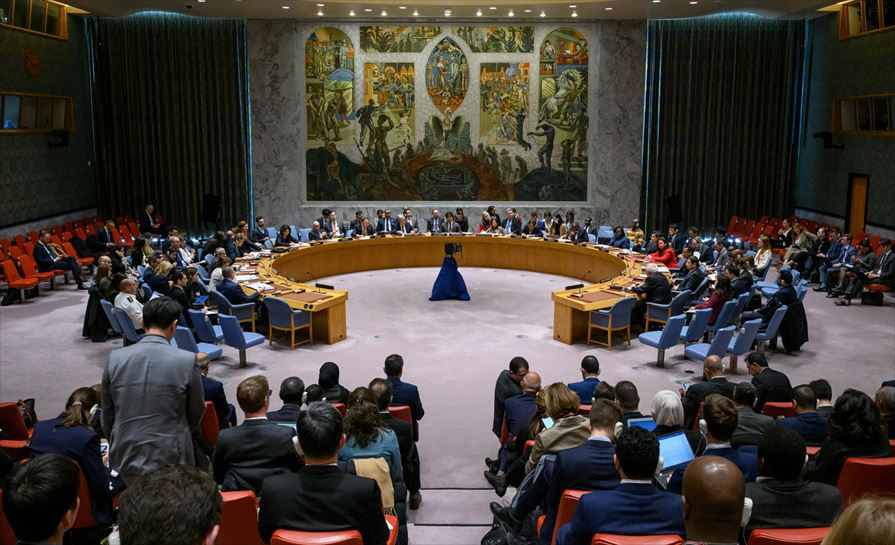
The UN Security Council voting on Oct. 2, 2023 to authorize a non-UN military invasion of Haiti. Photo: Haïti Liberté/File photo.
The UN Security Council voting on Oct. 2, 2023 to authorize a non-UN military invasion of Haiti. Photo: Haïti Liberté/File photo.
By Kim Ives -Dec 20, 2023
It took the U.S. government one year to push through the United Nations Security Council its project for a fourth foreign military invasion of Haiti, but even now it is not a sure thing.
Although, on Oct. 2, the UN body blessed the “Multinational Security Support” mission (MSS) which 1,000 Kenyan police will supposedly lead, the Kenyan Supreme Court has given itself until Jan. 26, 2024 to decide on whether the Kenyan police can constitutionally be deployed abroad. Many Kenyan lawyers and opposition leaders say they cannot.
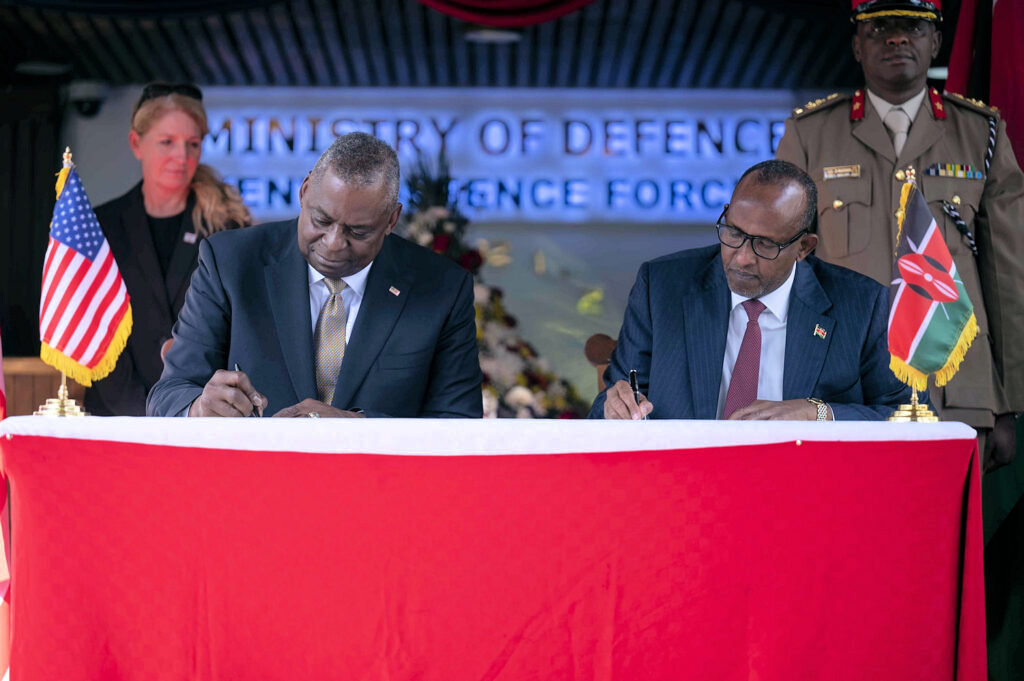
Whatever the court decides, it is uncertain that Kenyan President William Ruto will respect it. He has been promised a lot of money from Washington, with U.S. Defense Secretary Lloyd Austin traveling to Nairobi on Sep. 25 to sign a new five-year security deal. Frantz Elbé, chief of the Haitian National Police (PNH), just traveled with a delegation to Nairobi, and some 200 Kenyan officers were reportedly sent to Haiti to do “reconnaissance.” So the fix may be in, as far as U.S. planners are concerned.
But Washington now has its hands full with other problems. Its proxy war against Russia via Ukraine is going very badly, a fact that even the U.S. mainstream media is now forced to acknowledge. Meanwhile, the successful Oct. 7 uprising by Palestinian fighters against Israeli occupiers has apparently blindsided both the U.S. empire and its foremost client state. The entire Arab world and Global South are both horrified and outraged by Israel’s ever-growing war crimes, as over 20,000 Palestinians, half of them children, have been slaughtered and starved. Meanwhile, the dysfunction in Washington is deepening, Biden’s approval rating is plummeting, and the U.S. economy is lurching toward another crash.
All this means that Haiti may finally catch a break. The desperation in Haiti is very intense but so is the apprehension of and indignation against another foreign intervention. That resistance continues in the streets of Haiti and its diaspora.
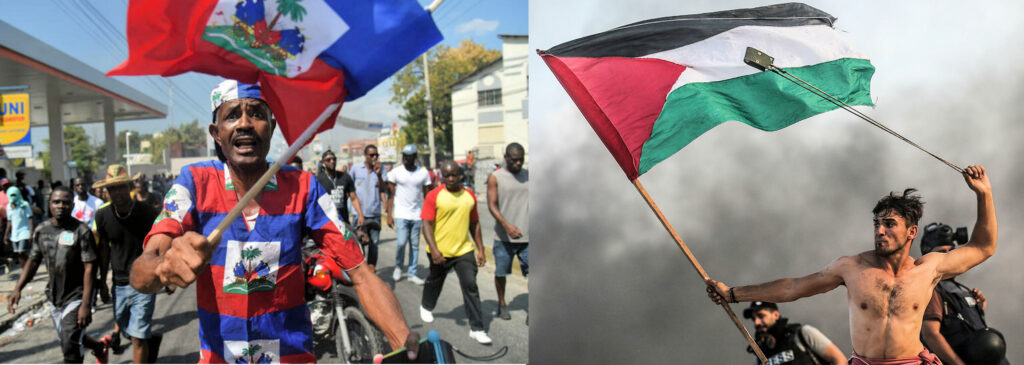
So it may turn out that two of the world’s greatest political underdogs – Haiti and Palestine – will finally begin to see their future brighten after decades of darkness.
Jan. 5: The Biden administration announces that Haitians can apply for two-year work visas in the U.S., part of the “CHVN Parole Program,” also extended to Cuba, Venezuela, and Nicaragua. The program unleashes a flood of Haitians seeking the “Biden visa.”
Jan. 9: The last of Haiti’s elected officials – 10 senators – saw their terms expire.
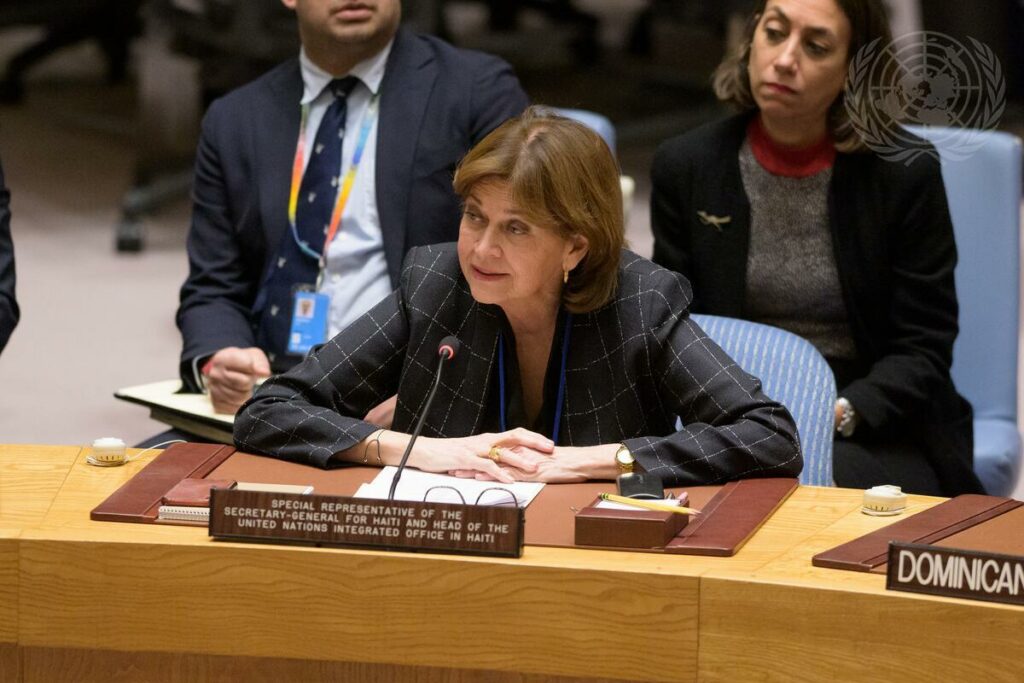
Jan. 24: Helen La Lime, chief of the UN Office in Haiti (BINUH), addresses the UN Security Council to again push for foreign military intervention in Haiti, while China warned that “countries should take into full consideration the different views within Haiti and avoid repeating the historical lessons of failed foreign interventions.”

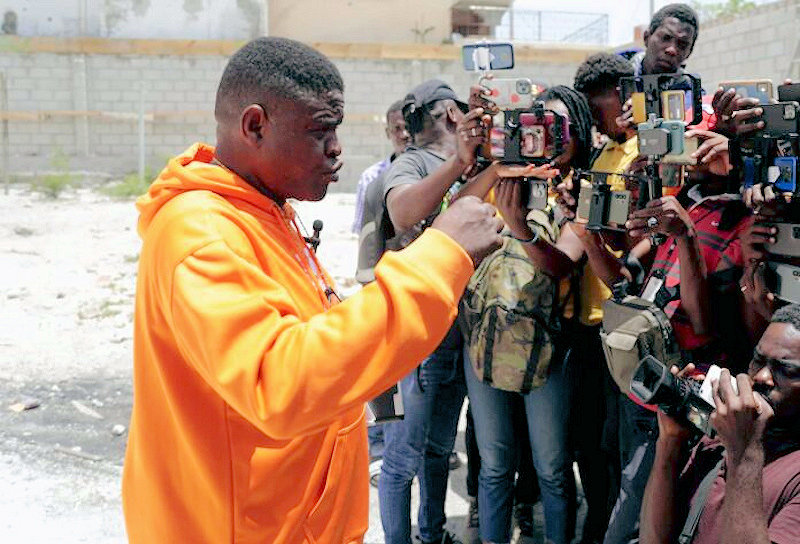
Jan. 20: Sherlson Sanon, 35, is released from prison after 10 years without trial. He begins a series of press conferences to contend that Pierre Espérance, director of the National Network for the Defense of Human Rights (RNDDH), lured him into signing a false confession for crimes he never committed.
Jan. 30: Jacques Magloire, 84, a well-known long-time Haitian journalist and activist, died in New York from dementia. He had been held in Jean-Claude Duvalier’s infamous Fort Dimanche jail and was among 12 political prisoners freed in January 1973 in exchange for the release of U.S. Ambassador Clinton Knox, who had been kidnapped by a still anonymous three-member Haitian commando team.
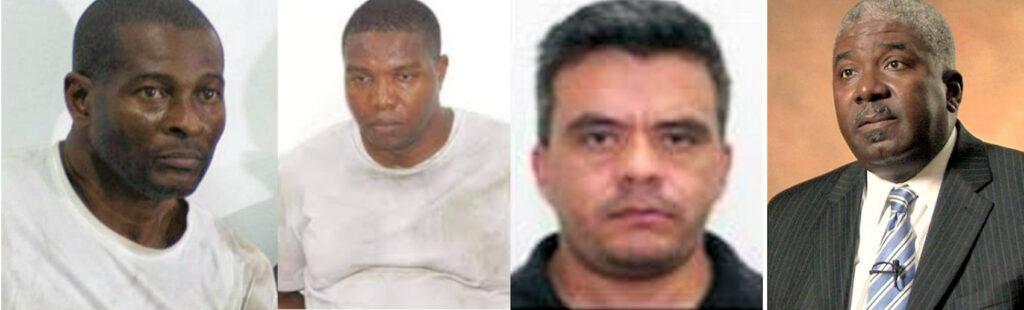
Jan. 31: Washington flies four of the suspects – Joseph Vincent, James Solages, Germán Alejandro Rivera Garcia, and Christian Emmanuel Sanon – implicated in the Jul. 7, 2021 assassination of President Jovenel Moïse to Miami for prosecution, thus taking greater control of the crime’s investigation.
Feb. 5: Canada deploys a long-range CP-140 Aurora military surveillance plane in flights over Haiti as a show of force, which is widely ridiculed.
Feb. 16: Despite intense pressure from the U.S. and Canada, CARICOM, in its 44th meeting of heads of state in Nassau, Bahamas, demurs from leading a foreign intervention force into Haiti.
Feb. 27: Headed by Jamaican Prime Minister Andrew Holness, CARICOM sends a delegation to Haiti to encourage political unity between de facto Prime Minister Ariel Henry’s “National Consensus for an Inclusive Transition and Transparent Elections” coalition and its rivals in Haiti’s opposition.
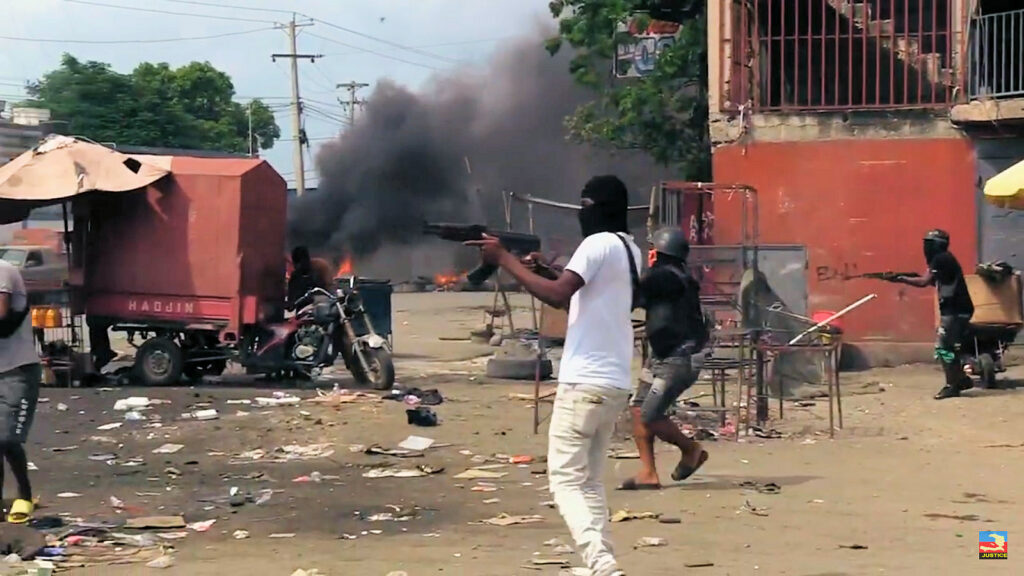
Mar. 3-4: Fierce fighting between the criminal gang of Kempes Sanon in Belair and the G9 Family and Allies anti-crime alliance of Jimmy “Barbecue” Cherizier flairs, as Sanon also attacks the once neutral neighborhood of Solino.
Mar. 17: De facto Prime Minister Ariel Henry officially mobilizes the Armed Forces of Haiti to reinforce the Haitian National Police (PNH) in the struggle against Haitian gangs.
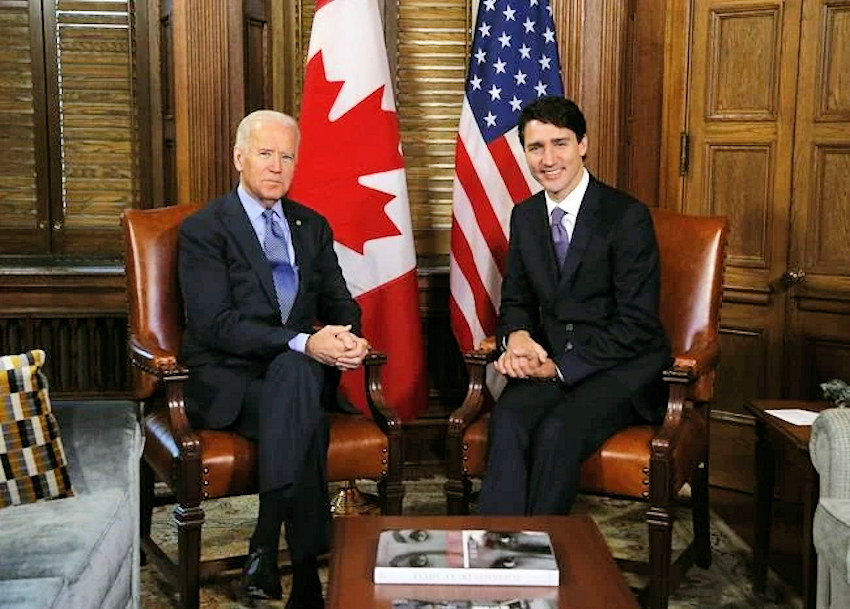
Mar. 24: U.S. President Joe Biden travels to Ottawa to press Canadian Prime Minister Justin Trudeau to have Canadian troops head a multinational intervention force to Haiti, but Trudeau declines.
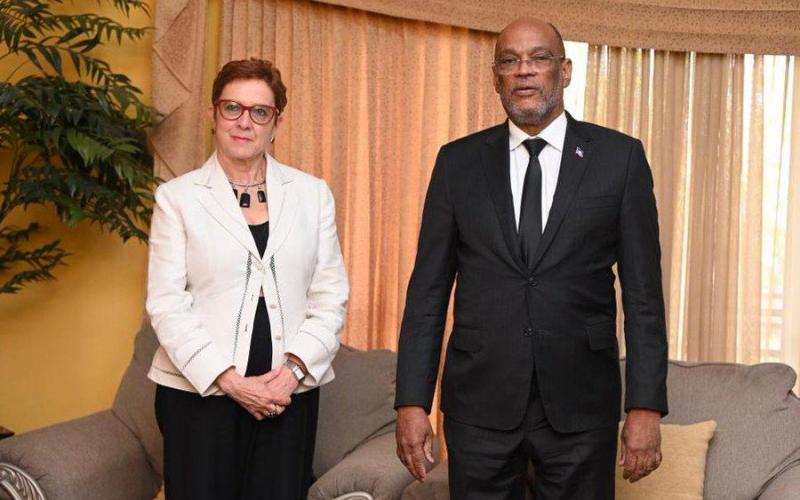
Apr. 3: Former Ecuadorian government minister Maria Isabel Salvador replaces Helen La Lime as the head of the UN Office in Haiti (BINUH)
Apr. 12: Long-time activist lawyer William O’Neill was appointed for one year, renewable, as the UN’s new independent expert on human rights in Haiti, following a request from the UN Human Rights Council.
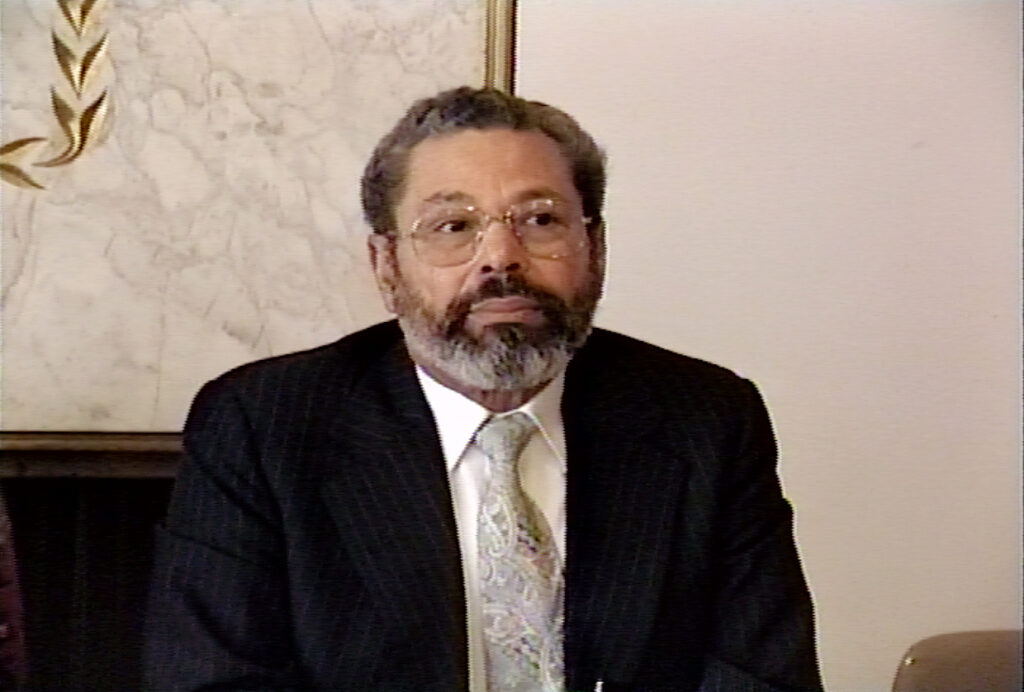
Apr. 23: Ben Dupuy, a prominent Haitian revolutionary leader for five decades, dies in Miami Beach, FL at the age of 91.
Apr. 23: A spontaneous, unorganized vigilante movement known as “Bwa Kale” (peeled wood) erupts in Haiti, where machete-wielding crowds sought out and executed suspected criminal gang members.
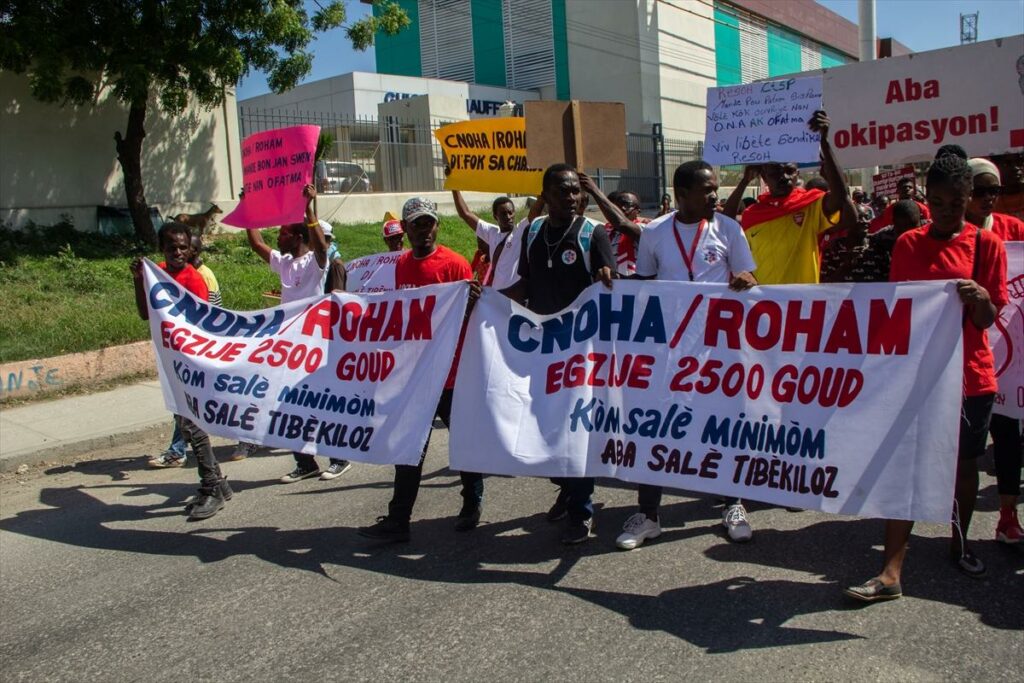
May 8-10: Haitian assembly factory workers hold three days of demonstrations to demand a daily minimum wage of 2500 gourdes ($16.25), up from the current 685 gourdes ($4.45).
May 15: UN Secretary General Antonio Guterres travels to Jamaica to again pressure Prime Minister Andrew Holness to head a UN-sponsored multinational military intervention into Haiti.
May 16-17: Haiti’s ceremonial governing body, High Commission of Transition, holds a two-day conference on security.
May 19: President Joe Biden nominates career diplomat Dennis Hankins to be the new U.S. Ambassador to Haiti.
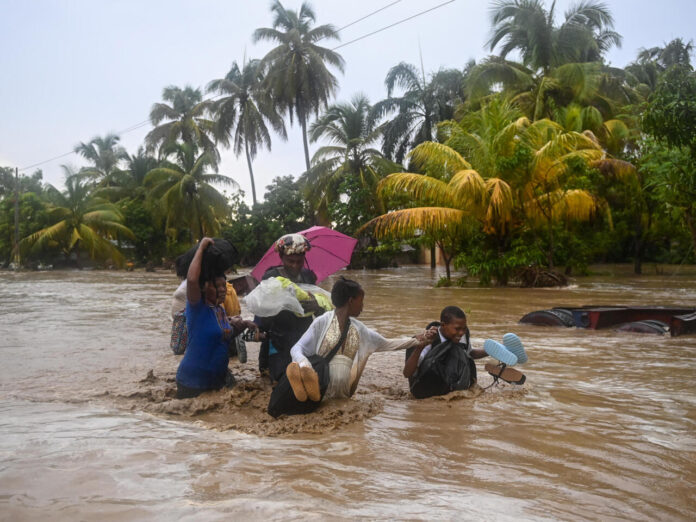
Jun. 4: Huge floods ravage southern Haiti, killing at least 51 people and leaving over 13,000 uprooted.
Jun. 6: A magnitude 5.7 earthquake strikes near the southwestern town of Abricot, killing at least four, wounding 36, and destroying dozens of homes.
Jun. 9: De facto Prime Minister Ariel Henry attends a CARICOM summit in Nassau, Bahamas. U.S. Vice President Kamala Harris and Under Secretary of State for the Western Hemisphere Brian Nichols also attend to push for foreign intervention in Haiti.
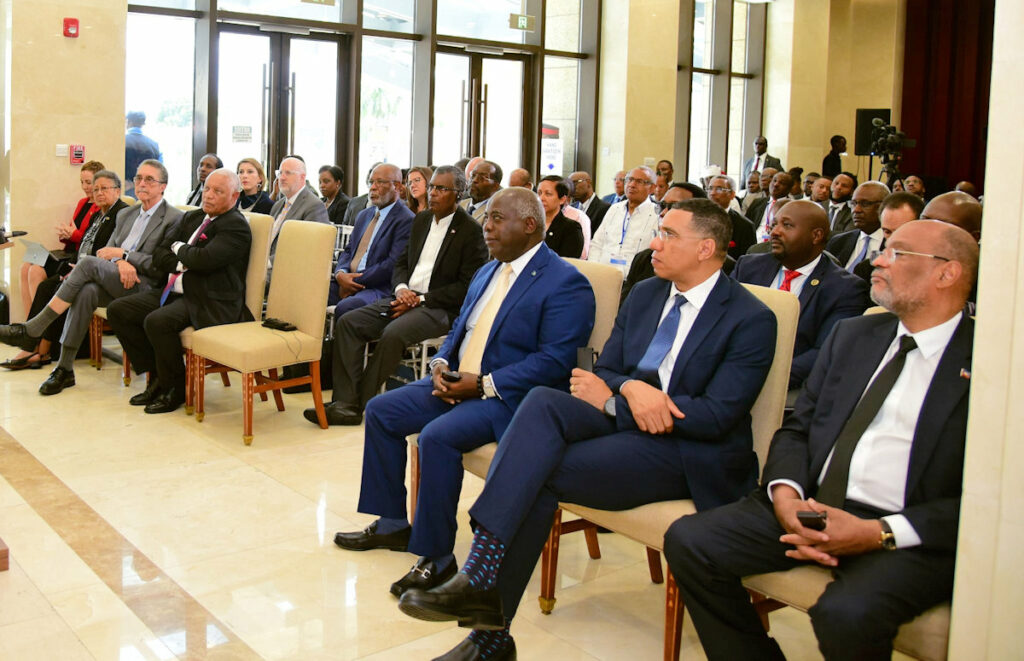
Jun. 11-13: Under the aegis of CARICOM, a three day conference is held in Kingston, Jamaica aimed at forming a coalition government between de facto Prime Minister Ariel Henry and his political rivals. Most of Haiti’s political class attends.
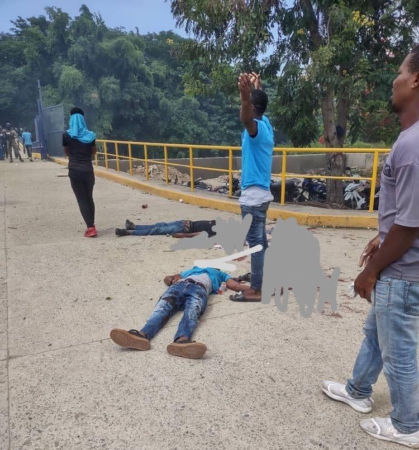
Jun. 15: Following an altercation, Dominican soldiers of the POLIFRONT force shot dead two workers, Gerby Millien and Datilus Winer, at the CODEVI industrial park in Ouanaminthe, on the Haitian/Dominican border. Several other people were wounded.
Jun. 30: The Dominican Republic’s Foreign Ministry publishes a communiqué defending President Luis Abinader’s policy of massive deportation of Haitians in violation of the Dominican Constitution.
Jul. 1: UN Secretary General Antonio Guterres flies to Haiti to meet with Ariel Henry and the opposition in yet another effort to broker a unity government and press for a “robust” foreign military intervention.
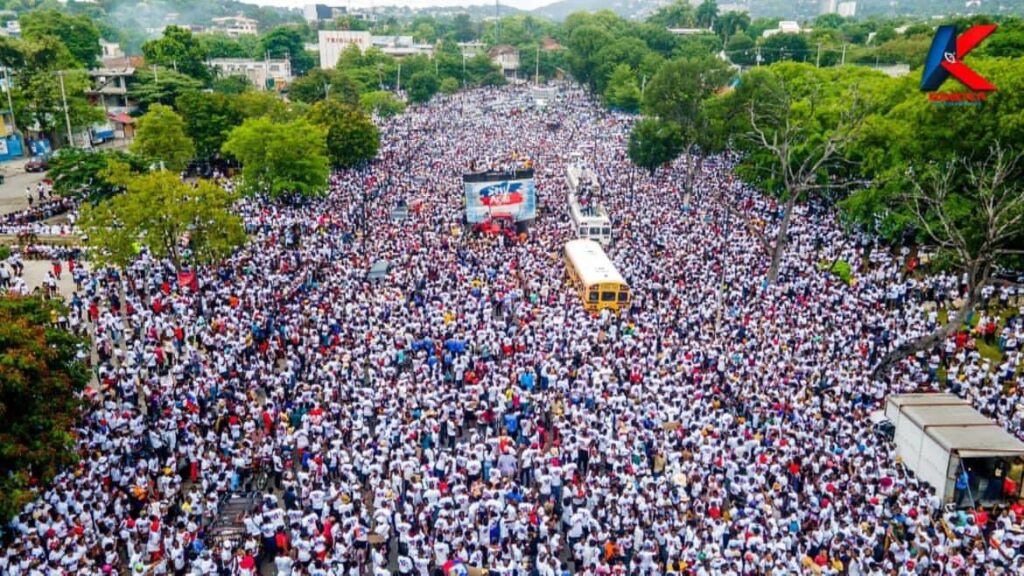
Jul. 9: Hundreds of thousands of Haitians take to the streets of cities around Haiti, the U.S., Canada, and worldwide to demand a “Souf pou Ayiti” (Respite for Haiti), a call put out to Protestants by Pastor Grégory Toussaint of the Tabernacle of Glory in North Miami, FL.
 Some 130,000 also sign a petition calling on Biden to maintain the “CHVN Parole Program” work visa and to “implement a plan to legalize parolees” after the two-year visas expire.
Jul. 23-24: Dozens of Haitians, including children and elderly, seek shelter from rampant violence in Croix-des-Bouquets, Tabarre, Vivy Mitchell, and other areas by occupying an area in front of the U.S. Embassy in Tabarre. The Haitian Police, instead of pursuing the criminal gangs, attacked the crowd, dispersing them with tear-gas.
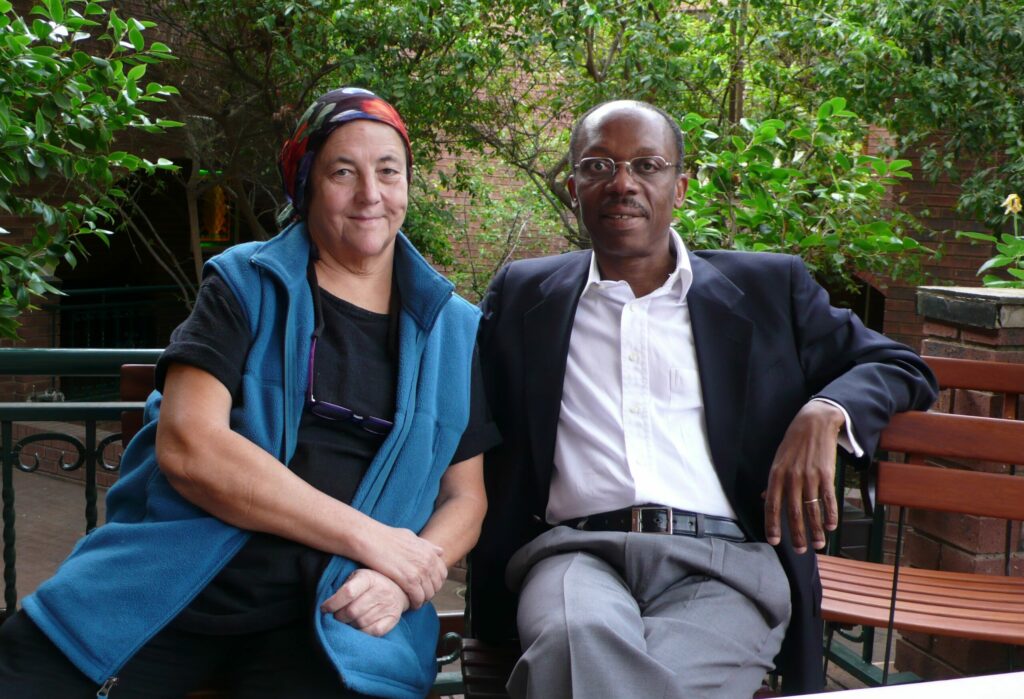
Jul. 25: Filmmaker, artist, and activist Katharine “Keke” Kean dies in her New York home after a long illness. The producer of many films, CDs, and events about Haiti and Cuba, she was close friends with the Aristides and the creator of Tap Tap Restaurant in Miami Beach, FL.
Jul. 29: Following pressure from U.S. Secretary of State Anthony Blinken, Kenya’s Foreign Minister Alfred Matua tweets out that his country will “positively consider leading a Multi-National Force to Haiti.”
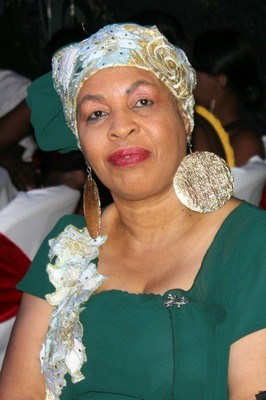
Jul. 31: Radio journalist Liliane Pierre-Paul, 70, dies in Haiti from a heart attack.
Aug. 7: The American Apparel and Footwear Association (AAFA), whose member companies assemble their products with cheap Haitian labor, applaud the looming invasion of Haiti saying “a country like Kenya has shared values, and shared prosperity, with the United States and with Haiti.”
Aug. 14: With a long report, Human Rights Watch supports foreign military intervention into Haiti, calling it a “consensual deployment of an international force, as requested by Haitian authorities.”
Aug. 17: Jimmy “Barbecue” Cherizier, spokesman of the G9 Family and Allies neighborhood anti-crime alliance, responds to the looming foreign invasion, saying that unless the force was coming to arrest Ariel Henry and the Haitian oligarchs and politicians in league with him, “the Haitian people will fight [the invaders] until our last drop of blood.”
Aug. 20: A 10 member Kenyan delegation arrive in Haiti to make an assessment of what will be needed regarding the proposed deployment of 1,000 Kenyan troops.
Aug. 26: Pastor Marcorel Zidor of the Church of the Evangelical Pool of Bethesda leads hundreds in an organized “Bwa Kale”-style march in the Port-au-Prince suburb of Canaan against a local criminal gang known as “Jeff,” but gang members open fire on the crowd, killing more than 20 and wounding many more, despite assurances of protection from the police.
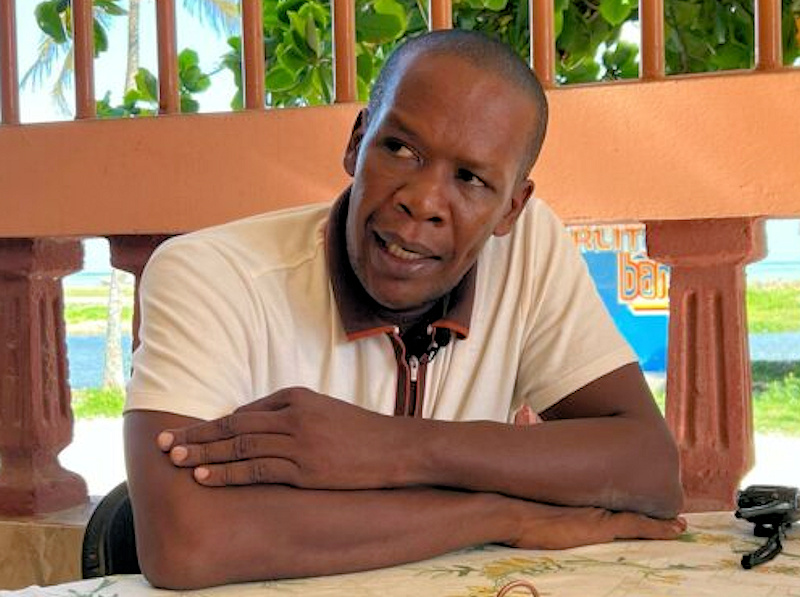
Aug. 29: Jean Ernest Muscadin, the no-nonsense tough-on-crime Government Commissioner in the southern town of Miragoâne, grants a rare interview to Haïti Liberté, in which he asserts that “today, we have a [Southern] Department which is safe and secured.”
Sep. 4: CARICOM sends yet another delegation to try to work out the differences between Ariel Henry’s HCT coalition and its rivals in the Haitian political class.
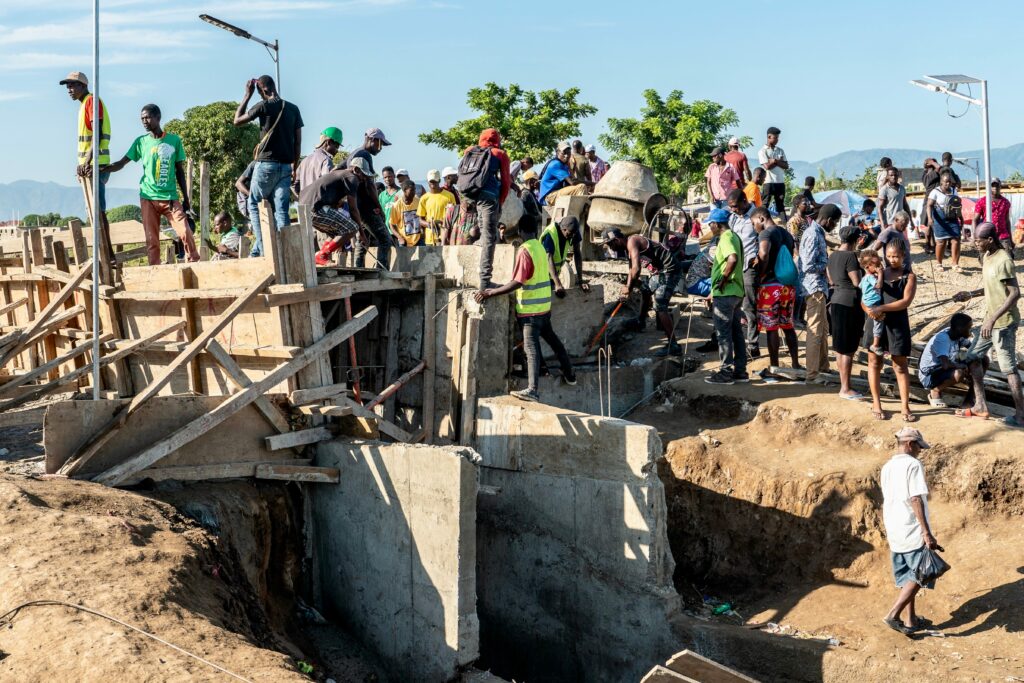
Sep. 10: National attention begins to focus on an irrigation canal being built on the border-forming Massacre River, without government help, by the peasants of the Maribaroux Plain in Haiti’s Northeast near Ouanamin
Sep. 14: In response to the canal, Dominican President Luis Abinader closes the Haitian/Dominican border. “I urge the [DR] Government to reconsider its decision, which will have serious impacts on people on both sides of the border,” said William O’Neill, the UN human rights expert.
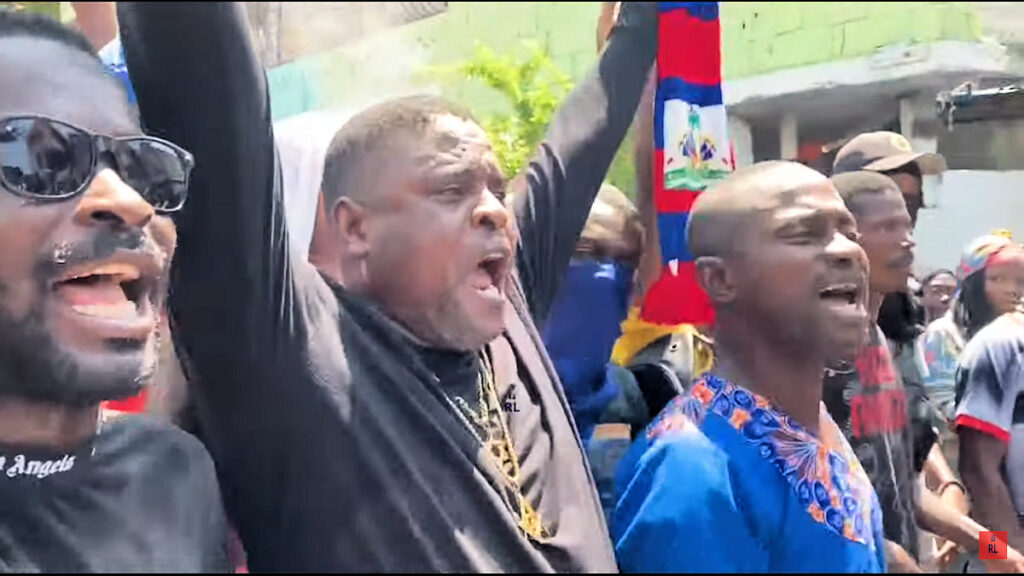
Sep. 18: Former foes Jimmy Cherizier and Marc-André “Toto” Alexandre, the political spokesman for the Belair neighborhood, lead a march of over 1,000 in Port-au-Prince to demand that de facto Prime Minister Ariel Henry resign and to voice their strong support for the peasants building the canal near Ouanaminthe. Cherizier also announces the formation of a new coalition, “Viv Ansanm” (Live Together), a would-be merger of his G9 Family and Allies with its nemesis, the G-Pèp coalition of criminal gangs.
Sep. 22-26: Members of Canaan’s “Taliban” gang, working in concert with Johnson “Izo” Alexandre’s Five Seconds gang from Village de Dieu, carry out deadly attacks on the towns of Saut d’Eau and Mirebalais, before driven back from Mirebalais by large crowds armed with machetes.
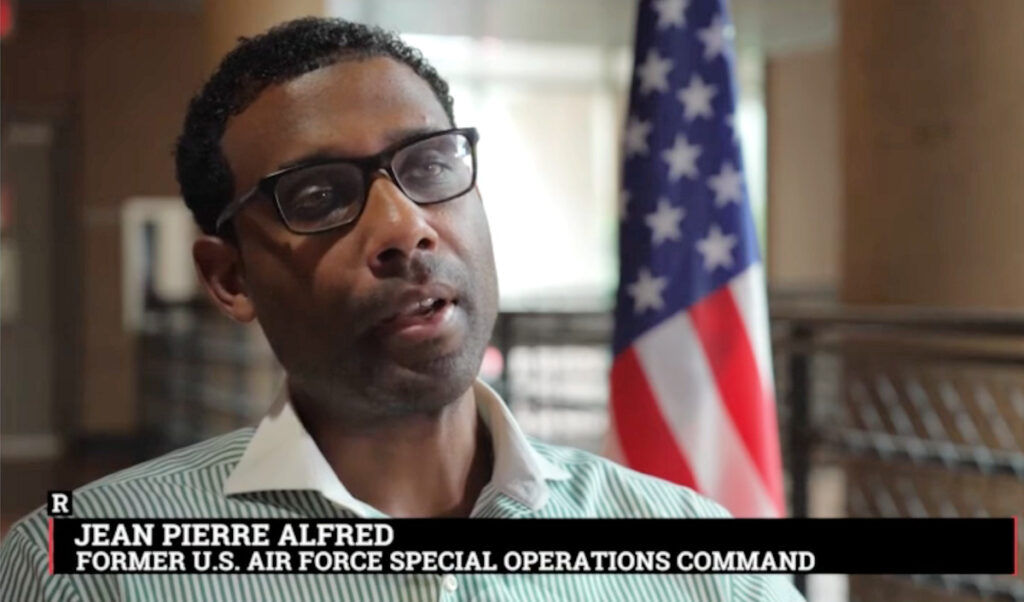
Sep. 26: Former Airforce Special Forces soldier Jean-Pierre Alfred tells journalist Dan Cohen that dozens of U.S. Special Forces soldiers have been deployed to Haiti to neutralize, above all, Jimmy Cherizier.
Sep. 27: The Communist Party of Kenya condemns the project of sending Kenyan police to Haiti as a “form of neocolonialism and condemns attempts to use a Black face to brutalize Haiti.”
Oct. 2: The UN Security Council finally approves the “Multinational Security Support” mission (MSS), which the Kenyan police will nominally lead, for a one-year deployment in Haiti. Russia and China abstain from the vote. The MSS is not a genuine UN peace-keeping force, controlled by the Security Council, but rather an independent force acting with the body’s benediction. U.S. Ambassador Jeffrey DiLaurentis calls it “a new way of preserving global peace and security.”
Oct. 9: The Kenyan Supreme Court blocks the deployment of Kenyan police to Haiti until it has had time to examine the suit by opposition lawyer Ekuru Aukot that the Kenyan Constitution prohibits the international deployment of Kenyan police officers.
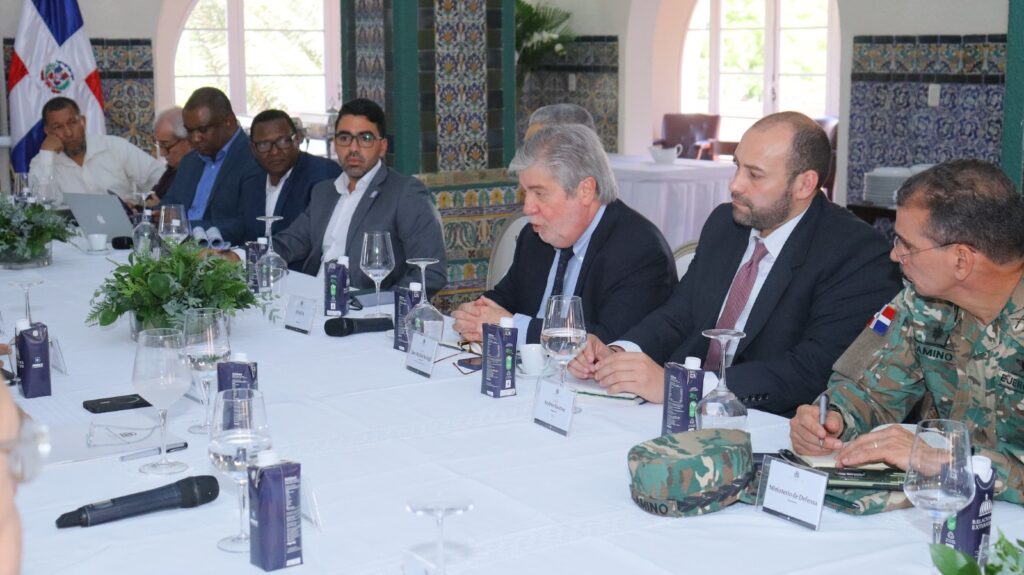
Oct. 16: A delegation of the Organization of American States (OAS) travels to the Dominican Republic to meet with officials about the conflict arising from Haiti’s construction of the canal on the Maribaroux Plain.
Oct. 19: Joseph Félix Badio, accused of ordering Colombian soldiers to murder President Jovenel Moïse on Jul. 7, 2021, is arrested when shopping in a Port-au-Prince supermarket.
Oct. 25: At the Montana Hotel, a new opposition coalition is formed. The “United Front for an Effective and Durable Exit from the Crisis” believes that Ariel Henry must step down on Feb. 7, 2024 and includes OPL, MOPOD, Ede, Konsyans Patriyotik, UNIR, PHTK, LAPEH, GREH, PLH, Konstwi Lavi, PNDPH and unaffiliated politicians.
Oct. 26: A delegation of officials of the de facto government meet with the committee in charge of the construction of the Massacre River canal to see how they can help, effectively engaging the government in a project that has captured the imagination of Haitians worldwide.
Oct. 26: Dominican President Luis Abinader announces a “National Pact faced with the present crisis in Haiti,” with which he hoped to garner wide support for his anti-Haitian initiatives. But only 28 parties sign the document, and none of the major ones, including PLD, PRD, and FP.
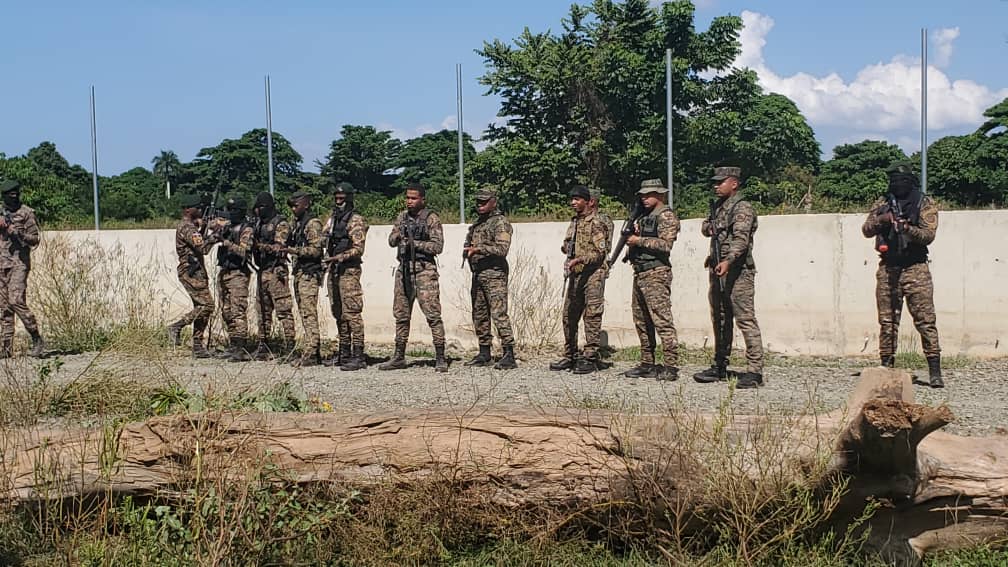
Nov. 7: Armed Dominican soldiers have a tense confrontation on the border near the canal with unarmed Haitian officers of the Brigade for Surveillance of Protected Spaces (BSAP). On Nov. 4, Abinader had been in Washington to meet with President Joseph Biden.
Nov. 8: CARICOM’s Eminent Persons Group, led by former prime ministers Dr Kenny Anthony (St. Lucia), , Bruce Golding (Jamaica), and Perry Christie (Bahamas) visit Haiti to broker a consensus between Ariel Henry and the opposition arrayed against him for a new Council of Transition.
Nov. 13: The leaders of the border town of Ouanaminthe forbid Haitian merchants from bringing into Haiti any merchandise from the Dominican Republic.
Nov. 16: The Kenyan Supreme Court extends its stay of deploying police to Haiti until Jan. 26, 2024.
Nov. 21: Kenyan President William Ruto, speaking before the European Parliament, says about 5,000 policemen will be needed for the mission in Haiti to “fight gangs.”
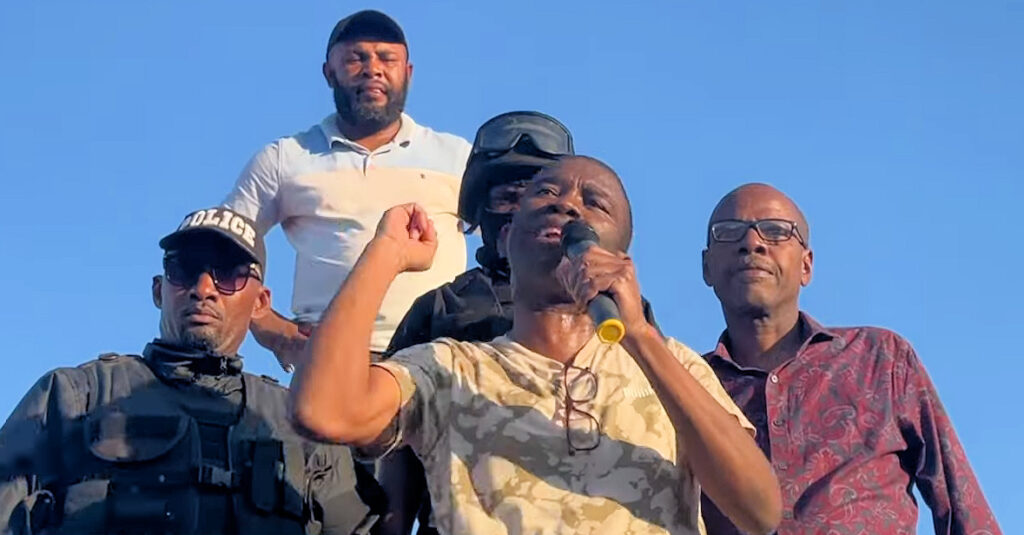
Nov. 30: Former coup leader Guy Philippe is returned to Haiti from an almost seven-year prison term in the U.S.. He receives a hero’s welcome and strongly criticizes Ariel Henry, foreign intervention, and the U.S. role in Haiti, calling for “radical change.” But many Haitians remain wary due to his role in overthrowing Aristide in 2004.
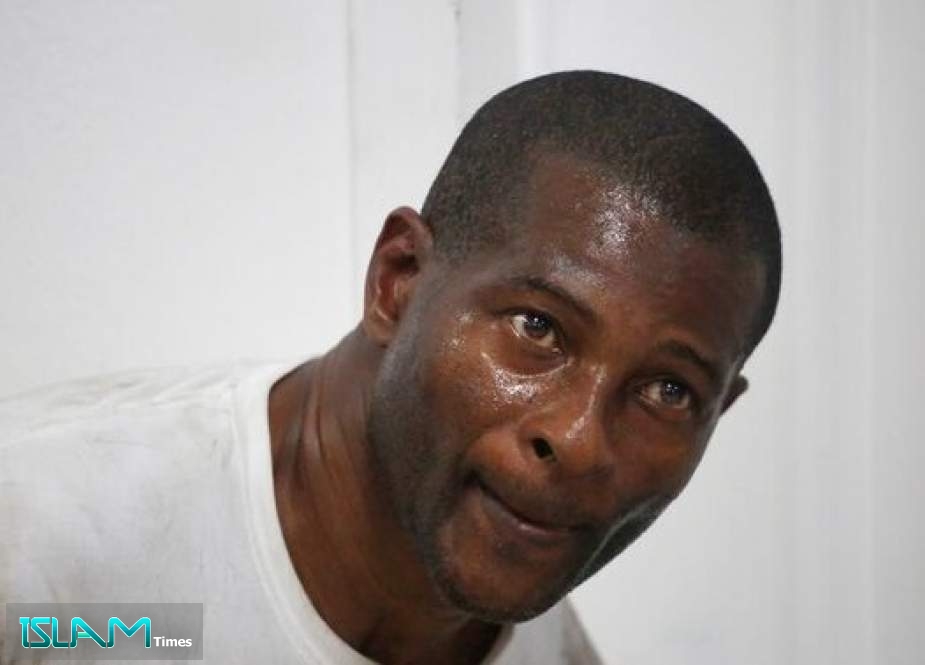
Dec. 5: Haitian-American Joseph Vincent pleads guilty in Miami to his role in the assassination of Jovenel Moïse, which included providing political advice to the killers and introducing the team to key community leaders.
Dec. 6: CARICOM’s Eminent Persons Group returns to Haiti to try to finalize a consensus between Ariel Henry and the opposition, but an agreement on a new government remains elusive.
Dec. 14: Smashing it with a big green truck, a man from the Dominican side of the border destroys the Haitian metal barrier on the bridge spanning the river that divides Haiti and the Dominican Republic. Local Haitian official denounces the crime as a grave act against Haiti.
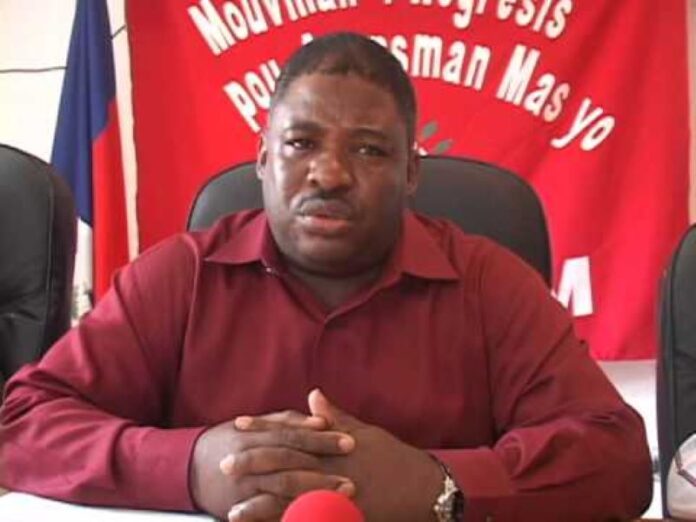
Dec. 19: Former Senator of the Fanmi Lavalas party from 2009 to 2015, John Joel Joseph, is sentenced to life in prison in the U.S. after pleading guilty to playing a support role in the Jul. 7., 2021 assassination of President Jovenel Moïse, although claiming to the judge that he had never understood that Moïse would be killed.