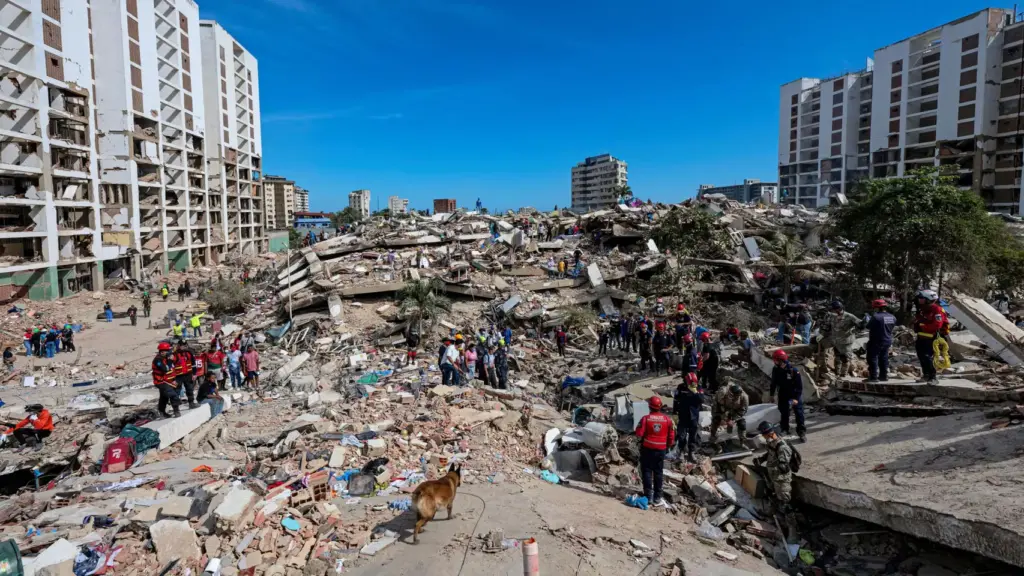
Rescue team over a collapsed building in La Guaira state, Venezuela. Photo: RTVE.
Rescue team over a collapsed building in La Guaira state, Venezuela. Photo: RTVE.
Caracas (OrinocoTribune.com)—The president of the National Assembly of Venezuela, Deputy Jorge Rodríguez, has reported the updated figures on the ongoing emergency response and the scale of the natural catastrophe that Venezuela has been suffering.
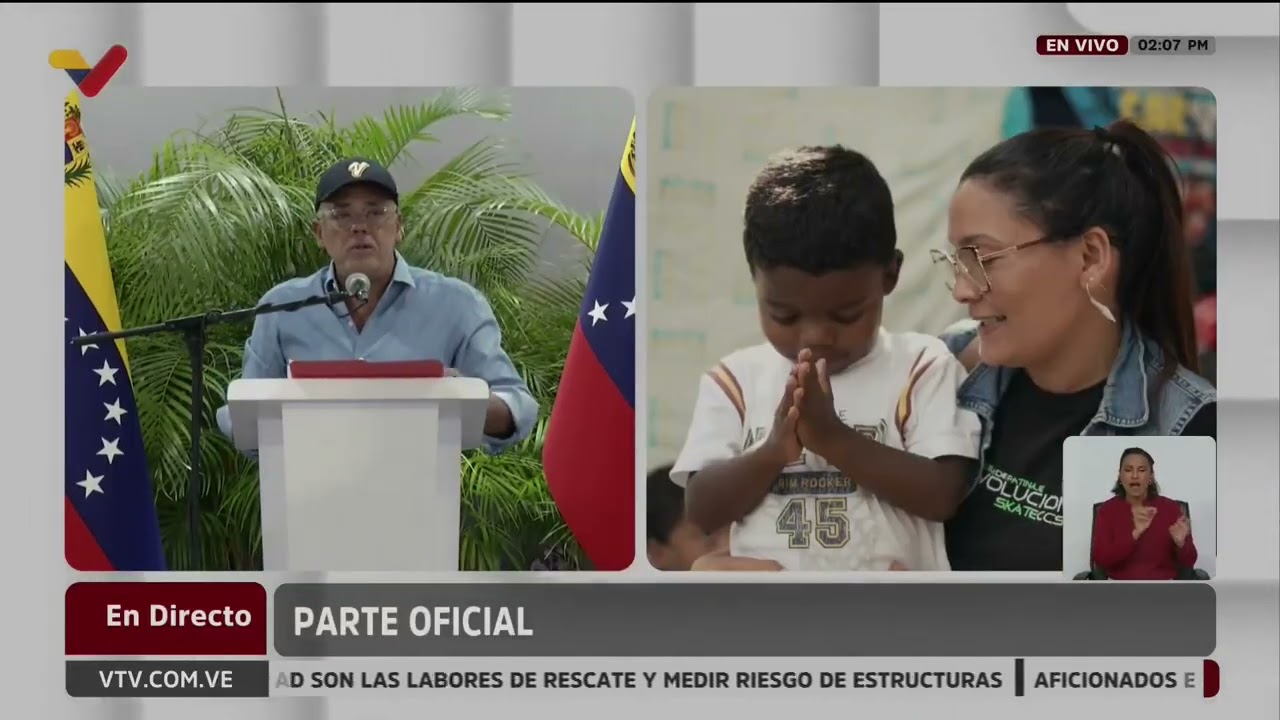
During his daily broadcast in the early afternoon this Wednesday, July 1, Rodríguez provided the latest casualty reports that mark seven days since the devastating June 24 earthquakes.
Updated casualty and rescue figures
According to the top Venezuelan official, 2,295 people have lost their lives so far, and a further 11,267 individuals are reported injured. On a positive note, 6,461 people have been successfully rescued from the debris, including a young girl who was pulled alive from the rubble on Tuesday.
Seismic activity continues to stabilize, with 782 aftershocks recorded so far. Rodríguez also indicated that these tremors are becoming less frequent and are of a lesser magnitude. While he cautioned that the nation is not entirely out of the woods yet, the downward trend represents a positive development for the affected regions.
Deployment of rescue teams and humanitarian aid
A massive mobilization force remains active in the disaster zones, consisting of 26,000 institutional personnel and 18,000 volunteers. This force includes 4,000 international rescuers and specialized personnel who continue to search for survivors, aided by 153 search dogs from international brigades and 49 support vehicles.
The Venezuelan state’s social and logistical deployment has reported the following metrics:
• Directly affected citizens: 12,841 people have been registered as directly impacted.
• Severe housing loss: 26,403 people are categorized as affected due to losing their homes or suffering severe structural damage to their residences.
• Family assistance: 81,589 families have received direct institutional support.
• Food distribution: Total food delivered for free has reached 8,893 tons, complemented by the delivery of 27,614 standardized food bags.
• International aid: A total of 707 tons of international humanitarian assistance has successfully arrived in Venezuela.
Medical response and temporary shelters
The public healthcare network has provided medical attention to 17,026 patients within the designated triage areas. Among those treated, 4,565 patients required hospitalization, while 13,942 individuals have already been discharged following significant health improvements.
To accommodate displaced populations, 25 temporary camps are currently active across five states:
• La Guaira: 13 camps
• Caracas: 8 camps
• Miranda state: 2 camps
• Carabobo state: 1 camp
• Yaracuy state: 1 camp
Support for frontline workers and housing initiatives
The Venezuelan government has issued an urgent call to all healthcare workers, including doctors, nurses, bioanalysts, orderlies, and general medical staff, as well as firefighters, police officers, and members of the Bolivarian National Armed Force (FANB) whose homes were impacted by the disaster. These frontline workers have been urged to immediately report their housing situation through the Patria System. Affected personnel will be temporarily accommodated in hotels while their long-term housing needs are processed.
Rodríguez emphasized that the installation of temporary camps is being heavily expedited. These spaces are designed to provide short-term, dignified living conditions while the government simultaneously initiates an accelerated construction process to deliver permanent housing to those who lost their properties.
Venezuela Earthquakes: Over 6,400 Rescued in La Guaira as Death Toll Reaches 1,943
Condemnation of disinformation
Closing his address, the legislative leader pointed out that the current crisis leaves no room for politicking or the spread of disinformation. He explicitly condemned malicious rumors, citing a fake news report in particular regarding a supposed tsunami on the second day of the tragedy, which caused panic and directly delayed critical rescue operations in the field.
Special for Orinoco Tribune by staff
OT/JRE/AU