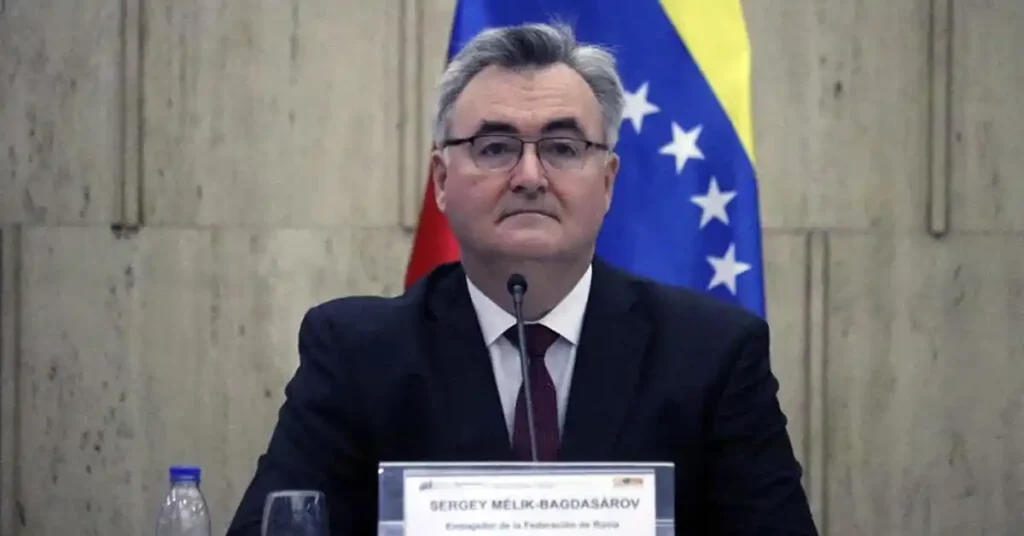
Russian ambassador to Venezuela Sergey Melik-Bagdasarov. File photo.
Russian ambassador to Venezuela Sergey Melik-Bagdasarov. File photo.
Caracas (OrinocoTribune.com)—Russia’s ambassador to Venezuela, Sergey Melik-Bagdasarov, denounced the United States’ use of unfair practices to expel Russian and international businesses from Venezuela, as well as acts of piracy to steal its oil. The Russian diplomat said on Tuesday, February 10, that these actions are rooted in economic and financial limitations and extraterritorial sanctions that the US applies in open violation of international law.
Melik-Bagdasarov asserted that the objective of Washington’s actions is to clear the Venezuelan market of “undesirable” foreign companies through unfair competition, making room for corporations that control the US foreign policy. He noted that US officials openly acknowledge this policy in their public statements. The ambassador’s accusation follows the US piracy of the Aquila II tanker in the Indian Ocean and at least seven other vessels since December 2025, actions considered by legal experts as acts of piracy and a naval blockade on Venezuela.
🇷🇺🇻🇪 Comentario del Embajador de Rusia en Venezuela, Sergey Mélik-Bagdasárov, a los medios de comunicación en el acto solemne de la ofrenda floral, dedicado al Día de Diplomático#DíaDelDiplomático #RusiaVenezuela pic.twitter.com/2yK06O7OsZ
— EmbajadaRusaVEN (@EmbajadaRusaVen) February 11, 2026
The Russian diplomat stated that “certain projects are forced to adapt to the pressure of sanctions,” with adjustments to deadlines and work formats after the horrific US military attack against Venezuela on January 3. During the early hours that day, the US carried out a brutal bombing campaign across several states and kidnapped President Nicolás Maduro and his wife, National Assembly Deputy Cilia Flores. The attacks resulted in the deaths of approximately 120 people, including 32 Cuban and 47 Venezuelan soldiers.
Melik-Bagdasarov asserted that despite the US pressure, Russian companies will not renounce their obligations and will maintain their operations in Venezuela. Since the attack, the inability of US imperialism to achieve regime change has forced Washington to negotiate with Chavismo and ease some sanctions through OFAC licenses. However, Venezuela, in turn, has been compelled to negotiate with the US for the release of blocked national funds, the sale of crude oil, and the restoration of diplomatic relations with the US.
Russia in Venezuela after January 3
According to analysts, the positive image of Russia and China following the January 3 attack has been damaged in Venezuela. Despite multiple statements, their lack of decisive support in halting the US aggression proved that their strategy was largely ineffective. Furthermore, during a January 26 interview with the Russia24 channel, Ambassador Melik-Bagdasarov made controversial statements regarding “betrayals” within the Venezuelan military—a move some analysts consider an effort to deflect responsibility for deficiencies in Russian-made Venezuelan air defenses during the US bombing.
“First of all, what do we understand by treason, and when did the treason occur? If by treason we mean criminal negligence, then yes,” the ambassador explained in the interview. “Many of the local security forces did not do what they could have done. If we consider as treason everything that happened long before these events, then of course there was treason. We know all their names, people who fled Venezuela,” he added, which analysts consider a reference to far-right politicians and former high-level Venezuelan officials who had betrayed Chavismo years ago.
While there are valid questions regarding internal betrayals associated with the bombing, many analysts agree that such statements from a foreign diplomat felt unpleasant to many Venezuelans, as they appeared as attempts to absolve Moscow of its own responsibilities. This narrative was reinforced on January 30 by the permanent representative of Russia to the United Nations, Vasily Nebenzia, who told Prensa Latina that “some high-ranking officials have, in fact, betrayed President Nicolás Maduro.” Nebenzia added that the US would not be able to “repeat that stunt” in Cuba.
These events have eroded to a certain extent the longstanding positive image that Russia enjoyed among the Chavista majority. While analysts do not believe Venezuela would renege on its commitments to Russia or China, they indicate a growing desire among Venezuelans for these powers to assume—beyond statements—their responsibility as world leaders to halt the disastrous course that the US is pursuing, pushing the world towards a collapse.
Special for Orinoco Tribune by staff
OT/JRE/SC