
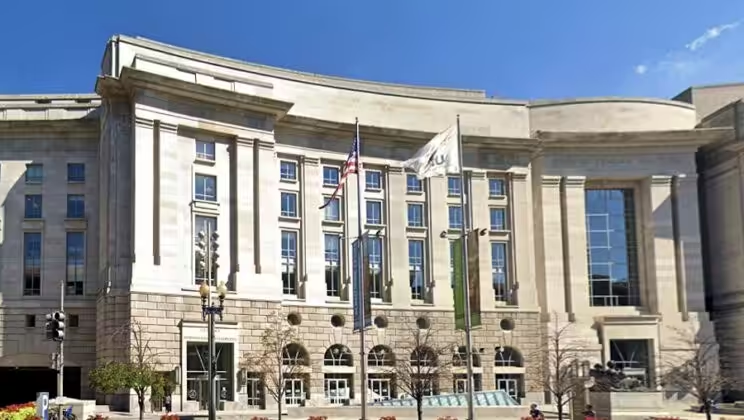
USAID headquarters in Washington, DC. Photo: Haïti Liberté/File photo.
USAID headquarters in Washington, DC. Photo: Haïti Liberté/File photo.
By Travis Ross – Apr 24, 2024
(The second of three parts)
In Part One, Ross shows how United States Institute for Peace (USIP) writers like Keith Mines and Nicolás Devia-Valbuena telegraph Washington’s foreign policy months in advance, prompting other sectors of the academic-military-industrial complex to churn out preparatory propaganda. Mines and Devia-Valbuena also outlined a “Council of Sages” 2.0, providing a framework for what would become the Transitional Presidential Council – TPC – that may soon appoint a transitional government to organize elections. However, a “privatized security force” would be required to install the TPC in Haiti‘s National Palace, they argue.
Mines proposed a National Advisory Council (NAC) that ought to be established “one step down” from the TPC. He suggested that this NAC be made up of “20 individuals, an equal number of men and women, drawn from key areas of civil society and the country’s departments, [and it] would be empowered with the mandate to bring new ideas, expertise, and awareness to the Presidential Council. In addition to the 10 departments, sectors could include agriculture, business, the diaspora, education, health, human rights, labor, religion, women, and youth.”
The Washington-led negotiations (with CARICOM’s assistance) which birthed the agreement creating the nine-member TPC provides for the creation of a National Advisory Council.
According to a report by Juno7, the “agreement provides for the creation of a control body of the Executive called the Government Action Control Body (Organe de Contrôle de l’Action Gouvernementale – OCAG).” OCAG’s members will be named after “broad consultations by the Presidential Council with Haitian civil society organizations [CSOs] in the capital, the departments, and the diaspora.”
OCAG will be composed of “15 members, including two designated by the diaspora, two by organizations defending the rights of women and young people, two for the West department, and one for each of the other nine departments.”
OCAG, whose role is to advise the TPC, is nearly exactly what Mines proposed.
Mines and others in the U.S. deep state are aware of the various Haitian organizations who receive funding from USAID programs and National Endowment for Democracy (NED) grants. These organizations receive funding because they facilitate U.S. interests in Haiti. A handful of these organizations will likely provide spokespeople to sit on OCAG as advisors to the TPC.
USAID and the NED – Planting Seeds for Compliance with U.S. Policy
For example, USAID’s Civil Society Strengthening Program (CSSP) for Haiti, announced on Oct. 21, 2022, has a budget of $15 million. USAID plans to fund 250 unnamed Haitian CSO “partners” under the CSSP program.
A U.S. Embassy press release explained that the CSSP’s goal is to “strengthen the capacity of Haitian civil society organizations, including faith-based organizations, local groups, and those working with the diaspora that are registered and operating in Haiti.”
“There is a critical need” for Haitian CSOs to collaborate and “expand their impact” and “their influence on public policy and decision-making,” the press release explained. One of the CSSP’s main objectives is to “support productive working relationships between civil society organizations and development actors including, but not limited to, local/central government, the private sector, and major donors.”
While the 250 Haitian CSOs have yet to be identified, Counterparts and Papyrus, the two organizations implementing the CSSP in Haiti, have begun working to implement the first phase of the CSSP.
The NED also funds several organizations inside Haiti but recently scrubbed from its website the names and information of several of its grantees in Haiti. The NED has also not published information about what funding it has given Haitian organizations over the past two years.
The NED funds organizations in Haiti which either endorse U.S. foreign policy or do not oppose U.S. hegemony. An in-depth analysis of the NED’s funding for Haitian CSOs and human rights groups is available in an article for the Black Agenda Report: The NED’s Role in Undermining Democracy in Haiti.
Some of these CSOs and “human rights” groups, funded either by the NED or USAID through the CSSP, will provide spokespeople or leaders who can dutifully parrot U.S. State Department talking points or, at the very least, not challenge U.S. foreign policy in Haiti.
Careful attention ought to be provided to whether members selected for OCAG represent organizations who receive funding from foreign governments or other institutions such as the NED and the Open Society Foundations.
Haitian organizations like FOKAL and the RNDDH, funded by the NED and Open Society Foundations, support U.S. foreign policy in part by explicitly endorsing neoliberal reforms.
The Canadian government, a CORE Group member, also provides funding for CSOs in Haiti, often overlapping with other institutions and the U.S. government. For example, a recent investigation revealed that Canada provides funding to the RNDDH through a Canadian NGO. The RNDDH also receives funding from the NED and Open Society Foundations.
Selecting Millennial Haitians for OCAG
The activists who make up Nou Pap Domi (NPD) (We’re Not Sleeping), a collective of Haitians dedicated to fighting corruption, came from the Petrochallenger movement that led massive protests inside Haiti in 2017 and 2018 against President Jovenel Moïse’s government.
NPD is also a founding member of the coalition behind the Montana Accord.
The Montana Accord, once the main political rival to Henry’s coalition, has since devolved into a CSO representing a sector of Haiti’s bourgeoisie. The Montana Accord occupies one of the TPC’s seven seats for voting members.
Many NPD members have since moved on to found organizations with funding from the Canadian government, the NED, the Open Society Foundations, and American Jewish World Services (AJWS), among others.
Consequently, these new organizations led by former NPD members do not fundamentally oppose U.S. hegemony in Haiti. Aside from backing the Montana Accord, these individuals often publicly support U.S. policy in Haiti.
One of NPD’s foremost spokespersons, Pascale Solages, founded the feminist organization Négés Mawon with funding from several organizations, including Open Society Foundations, as well as the Canadian government, which has provided funding for Négés Mawon since its founding.
Négés Mawon’s Advisory Council includes Rosy Ducema of the NED-funded RNDDH and Yanick Lahens, a former member of the Group of 184. The U.S.-backed Group of 184 led “civil society” protests and opposition against President Aristide in the lead up to the 2004 coup d’état. According to Guy Philippe, elites within the Group of 184 financed the purchase of arms and ammunition for paramilitary forces which played a key role in the 2004 coup.
Emmanuela Douyon, another prominent NPD spokeswoman, previously worked for the NDI, an arm of the NED, which in turn is funded by the U.S. State Department and USAID. Later, she received an NED grant and funding from AJWS to found a “think tank” named Policité.
Douyon offered support for Washington’s Global Fragility Act (GFA) at a Dec. 15, 2022 Alliance for Peacebuilding conference.
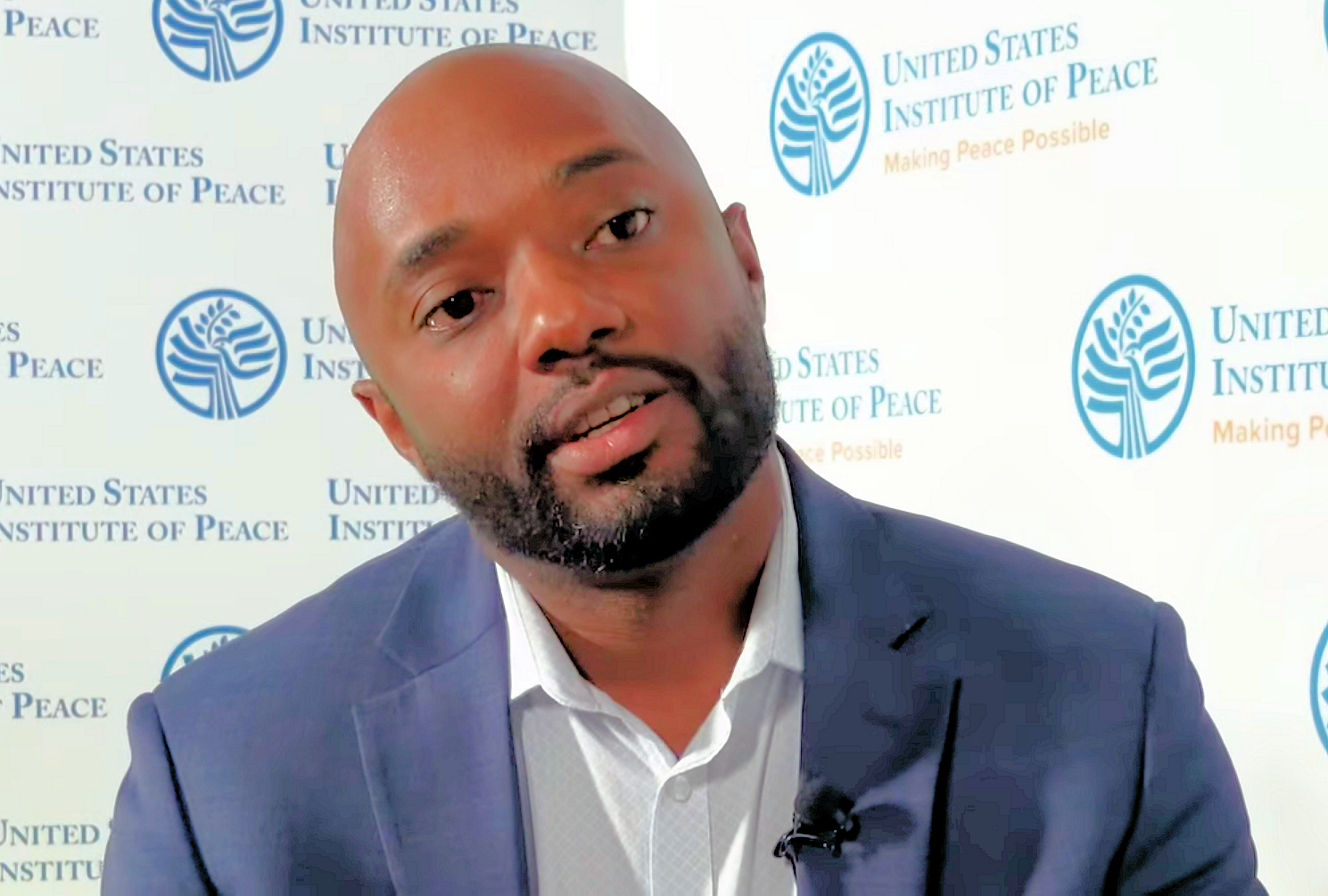
Jeffsky Poincy, another NPD member, signed the Kingston-Joint Accord on behalf of NPD. He also spoke at the Alliance for Peacebuilding conference, saying he was “glad Haiti is part of the GFA.” Poincy is a program manager at Partners Global, a consultancy firm funded by the U.S. State Department, the Canadian government, the Open Society Foundation, and USAID.
Washington has also manufactured consent for U.S. policy in Haiti through other NED-supported groups, like Initiative de la Société Civile and OCAPH, which have also endorsed the Global Fragility Act.
Elections Managed by Washington and the CORE Group
Once a private security force (mercenaries) has installed the transitional government, the U.S. would have the Kenyan police-led Multinational Security Support Mission (MSS) deployed to secure key infrastructure and government buildings, starting with the airport. Plans are already underway to build a base for the MSS near Port-au-Prince’s Toussaint L’Ouverture airport, the same area that the MINUSTAH was based. In a recent interview with the BBC, Brian Nichols said that he expects construction to begin “any day now” and that it will take “about a month to construct.”
Next, the TPC will appoint and publish a list of people composing the Provisional Electoral Council within 60 days. The OCAG, consisting of representatives vetted by Washington, will likely be established soon after.
Washington has interfered in all of Haiti’s elections following the 2004 coup that it backed to remove Aristide from power. USAID has a program in place to influence future Haitian elections. The Haiti Electoral Security and Support Program (HESSP), initiated in May 2023, has a budget of over $8.5 million.
USAID funding for this program has been awarded through the Consortium for Elections and Political Process Strengthening (CEPPS), which claims to pool the “expertise of three premier international organizations,” including the NDI and the International Republican Institute (IRI), NED tentacles. NDI and IRI representatives are part of the CEPPS’ staff. The IRI played a key role in backing many Aristide opponents and founding the Group of 184, which was a central player in Haiti’s 2004 coup.
Considering the many vectors that Washington has created to influence Haiti’s eventual elections, it is very likely that any future polling held without curbing these groups will result in a government and parliament that will align with U.S. foreign policy and accept the deal offered by the GFA.
Once the GFA is negotiated and installed, Washington will have a variety of strategies to control Haiti’s future.