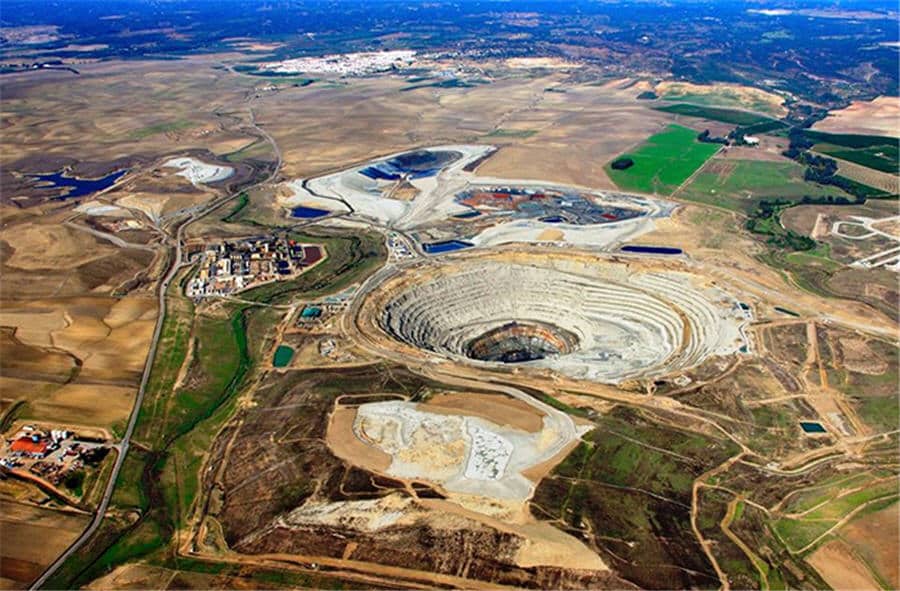
First Quantum Kansanshi Mine Zambia. Photo: yvesengler.com/file photo.
First Quantum Kansanshi Mine Zambia. Photo: yvesengler.com/file photo.
By Yves Engler – Jun 9, 2023
While a geopolitical tussle between Washington and Beijing over Zambia’s debt default has received significant international attention, Canada’s contribution has been largely ignored.
“China is ‘barrier’ to ending Zambian debt crisis, says Janet Yellen,” reported a recent Financial Times headline while Foreign Policy asked, “Is China Responsible for Zambia’s Debt Crisis?” and African Business queried “Should China be blamed for Zambia’s debt talks holdup?”
Two weeks ago the Associated Press published a long piece headlined “China’s loans pushing world’s poorest countries to brink of collapse”, which focused extensively on Zambia.
Washington has criticized Beijing for failing to fall into line with the International Monetary Fund/Paris Club of creditor nations’ plan to renegotiate the landlocked Southern African nation’s debt. For their part, the Chinese have told the US to focus on their own debt issues.
The campaign to ‘blame China’ for the debt crisis reflects Washington’s broader demonization of China as well as worry about declining IMF/Paris Club influence. While the weakening of IMF/Paris Club power is welcome, there are legitimate concerns about the impact of a growing international debt crisis.
A recent Tricontinental article on Zambian debt highlighted the dearth of discussion about the country’s difficulty in generating the funds to pay its debt. Part of the reason is that the IMF, Ottawa and Canadian mining companies took advantage of a previous debt crisis in the copper-rich nation to strip Zambia of its lucrative assets.
China Tells US to ‘Solve Its Debt Problem’ Instead of Worrying About Zambia’s
The largest foreign investor in the country of 16 million, Vancouver based First Quantum Minerals (FQM) controls half of all the country’s copper. In total, Canadian mining assets in Zambia were worth $9.4 billion or equivalent to half its entire GDP.
FQM’s presence dates to the late 1990s privatization of Zambian Consolidated Copper Mines (ZCCM), which once produced 700,000 tonnes of copper per year. In a report on the sale, John Lungu and Alastair Fraser explain that “the division of ZCCM into several smaller companies and their sale to private investors between 1997 and 2000 marked the completion of one of the most comprehensive and rapid privatisation processes seen anywhere in the world.”
The highly indebted country was under immense pressure to sell its copper and public mining company. Zambia’s former finance minister Edith Nawakwi said, “we were told by advisers, who included the International Monetary Fund and the World Bank that…for the next 20 years, Zambian copper would not make a profit. [But, if we privatised] we would be able to access debt relief, and this was a huge carrot in front of us — like waving medicine in front of a dying woman. We had no option.”
Ottawa played a part in the privatization push. Canada was part of the World-Bank-led Consultative Group of donors that promoted the copper selloff. With the sale moving too slowly for the donors, a May 1998 Consultative Group meeting in Paris made $530 US million in balance of payments support dependent on privatizing the rest of ZCCM. (Canada had, in fact, been using its aid as leverage to promote neoliberal reforms in Zambia since the late 1980s. As part of a push for economic reform Ottawa secured an agreement that gave a former vice president of the Bank of Canada the role of governor of the Bank of Zambia, where he oversaw the country’s monetary policies and “responses to the “IMF.”)
The hasty sale of the public mining behemoth was highly unfavourable to Zambians. The price of copper was at a historic low and the individual leading the negotiations, Francis Kaunda, was later jailed for defrauding the public company. “ZCCM’s privatization was carried out with a complete lack of transparency, no debate in parliament, and with one-sided contracts which few of us have ever seen,” said James Lungu, a professor at Zambia’s Copperbelt University.
Taking advantage of the government’s weak bargaining position, First Quantum and other foreign companies picked up the valuable assets for rock bottom prices and left the government with ZCCM’s liabilities, including pensions. The foreign mining companies also negotiated ultralow royalty rates and the right to take the government to international arbitration if tax exemptions were withdrawn for 15 years or more. Many of the multinationals made their investment back in a year or two, and when the price of copper rose five fold in the mid-2000s, they made huge profits.
Having conceded tax exemptions and ultralow royalty rates, the government captured little from the surge in global copper prices. In 2006 Zambian royalties from copper represented about $24 million on $4 billion worth of copper extracted. The 0.6% royalty rate was thought to be the lowest in the world. The government take from taxing the mining companies wasn’t a whole lot better. Between 2000 and 2007 Zambia exported $12.24 billion US in copper but the government only collected $246 million in tax.
Zambia subsequently wrestled more from the companies, but it had to overcome stiff corporate resistance. FQM, Toronto’s Barrick Gold and a number of other foreign mining companies screamed murder, repeatedly threatening (and instigating) legal action as well as mass layoffs in the job-hungry country. The mining corporations’ strong-armed tactics have repeatedly succeeded in a country where ZCCM’s privatization gave them immense power over Zambian economic life. By shuttering their mines they could produce economic hardship for thousands and even influence the country’s exchange rate.
Many factors contributed to Zambia’s debt default. While it suits the American Empire’s geopolitical interests to blame China, Canadian companies’ looting of the country’s vast mineral wealth was an important factor in that country’s financial woes.

Yves Engler is Montreal-based writer and political activist. In addition to ten published books, Engler's writings have appeared in the alternative press and in mainstream publications such as The Globe and Mail, Toronto Star, Ottawa Citizen, and Ecologist.