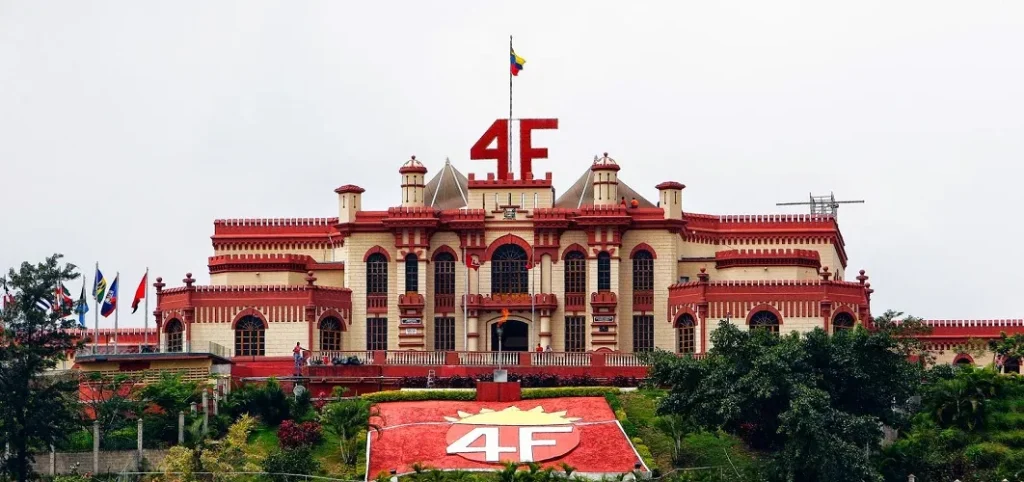
The Cuartel de la Montaña, Commander Hugo Chávez's final resting place. File photo.

Orinoco Tribune – News and opinion pieces about Venezuela and beyond
From Venezuela and made by Venezuelan Chavistas
The Cuartel de la Montaña, Commander Hugo Chávez's final resting place. File photo.
By Jesús Arteaga – Feb 13, 2026
This article, originally published on the portal Cimarrón, was titled “Fulfilling Duty in the Storm.” Its author, journalist Jesús Arteaga, narrates his actions from the moment his sleep was interrupted by the sound of the explosions from the US imperialist bombing of Caracas on January 3, 2026.
I was awakened by the sound of explosions and the buzzing of planes. Immediately, at 1:57 a.m., I received a call from Miranda, my daughter: “Dad, they are bombing us.” She and Gabriela, her mother, knew what to do, which made me calm.
I looked out the window of my house that faces the center of Caracas: the night was clear, and the explosions of the missiles lit up the sky with red flashes. The roar was terrifying.
Miranda and Gabriela live in La Pastora, in a place with a view over much of the Caracas valley. With their binoculars, they were able to see the places the US was attacking. They gave me an excellent report, both acting with composure in difficult moments.
Miranda was in her mother’s womb in April 2002 [during the failed coup against Hugo Chávez]. Gabriela has some experience with such situations; she breathed in quite a bit of gas during our student days.
My brother Juan and I immediately went to Radio Rebelde. My sisters, distressed, stayed at home. Almost in unison, they told us, “Take care of yourselves.”
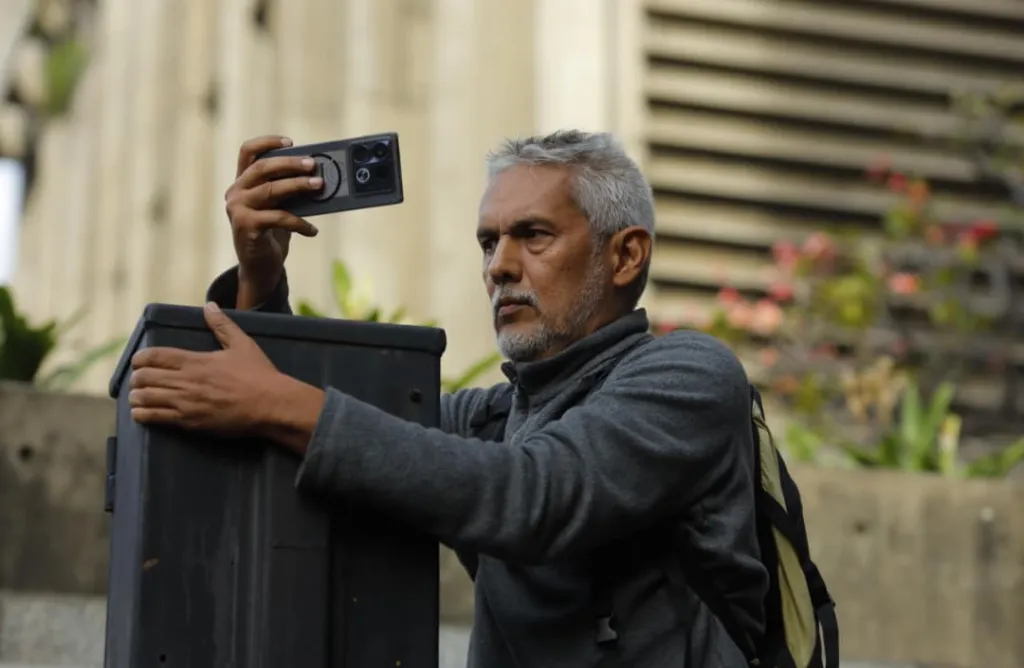
We arrived at the radio station very quickly, immediately waking up Camacaro, a member of the Rebelde team who lives on the radio premises, and we started broadcasting at 2:15 a.m.
Juan, the operator, interrupted the music that was playing—I think it was Edgar Alexander—activated the speaker that can be heard in the nearby area, and started playing Alí Primera.
Once “América Latina obrera” started playing, I began: “People of the glorious west of Caracas, at this moment we are being attacked by US imperialism. It is time to honor the legacy of our liberators. Let us show them that we are the sons and daughters of Bolívar. Let us follow the example of Chávez and Guaicaipuro. No one surrenders here!”
I passed the charge to Camacaro, who, along with Juan, executed the plan that we had reviewed thoroughly: first, convey calm and rally the population; second, maintain the radio’s operability for as long as we could. The speeches gave way to the voice of Alí Primera and Commander Chávez. The listeners participated with their reports and questions.
There are threats that, even though they are obvious, many insist on not seeing, as a spell to prevent them from materializing.
At Radio Rebelde, we held several meetings to discuss the threat from the United States and what to do when the aggression would occur. Some producers did not participate because they were of the opinion that nothing would happen here, as if their wish could prevent the attack. Others were punctual and made their contributions, and a few were present when the time came.
I went out on my motorcycle to report on the situation in areas of Catia and to establish some contacts. The streets were deserted, of course, it was 2:00 in the morning.
The Bolivarian National Police (PNB) officers who were in Sucre Square stood firm, without hesitation.
We could hear the voices of some drunks who continued the New Year’s Eve party and seemed unaware of what was happening, sometimes muffled by the flying planes.

From the square, I made the first report that spread like wildfire. I sent a message to my comrade Gabriela—not Miranda’s mother, another Gabriela—she replied immediately, informing me that the enemy planes were still in full flight. She, too, was “fulfilling her duty in the storm.”
I continued to apply the protocol, I communicated with Toro, the person in charge of the Sucre parish, and went to the designated place. I immediately verified that the civic-military-police unity is no joke: women and men arrived and obediently followed the instructions.
The place of the gathering was illuminated by a beautiful, bright moon, which provided enough light to recognize some comrades. Among the people present at that place were several officers of the Bolivarian National Armed Force. They were in civilian clothes, but their stature and confident demeanor revealed that they were our soldiers.
“Coffee is ready!” A female voice could be heard saying. Women had prepared that elixir and were distributing it.
From Gramovén, I went out with Toro to tour several key points of Sucre parish. We arrived at Coopercentro, where the people were active, including my buddy Yovani. We also toured other areas of Catia, and the attitude of the organized groups was the same: an absolute willingness to defend the homeland.
We returned to the point of gathering, and people kept arriving.
Alcides, who was in Maracay and whom I woke up at 2:00 a.m. with the news of the bombing, called me to tell me that he had made a connection with a journalist from the New York Times. She had seen my first report made from the Catia square, and he asked if I wanted to speak to her. I said yes, that it was necessary to tell everyone what was happening, to inform the world about the US aggression and the determined attitude of our people. The journalist called me, and I told her the story. I do not know if they published anything.
While I was in Gramovén, my colleague Francisco Trías, a photographer, called me and sent some pictures of the city center. We agreed to meet at the corner of Santa Capilla, where José Valero and Luis Hugas were already. We were the only journalists at the scene. It was still dark, and people were already starting to arrive to support President Nicolás Maduro.
Francisco and I went out to explore Caracas. The rumor of the bombing of the Cuartel de la Montaña made us go up there, where we verified that the 4F monument was still standing and intact. Francisco took some photos, and I wrote another report.
At the roundabout of block 7, the people were ready for defense, and Ramón Padrón was there commanding a large group. We went down to the Coordination Committee, and its members, as always, were ready for battle.
From the 23 de Enero neighbourhood, we headed east, touring the strongholds of the opposition. Altamira Square was deserted. A couple of guys from the Chacao Police were watching us from the south sidewalk of Francisco de Miranda Avenue. We went down to the highway and passed in front of La Carlota, and we did not notice anything unusual. We were not able to see the attacked area.
We decided to go to El Valle. Everything was silent, and there were few people on the street. We noticed that there was no electricity service because the traffic lights were off. In front of the Pedro Emilio Coll high school, Nicolás Maduro’s supporters were beginning to gather.
We arrived at checkpoint number 3 of the Tiuna Fort. There were some people who wanted to return to their apartments; they had left their houses while the bombs were falling.

An Army officer told them that they could not go back, that they were in danger. However, he let a few in to retrieve documents and something to change into because they had escaped in their nightclothes.
Among those people, there was a very beautiful woman in her 40s, wearing a short, very pretty pajama set. I asked Frank: “Did you take a picture of the girl?” “Nooo Chu, how could you even think of that?” he responded. “Ahh, but you saw her.” “Of course I saw her!”
In contrast was a man of about 70 years, short and fat, he too had sensual clothing: worn-out boxers, a stretched undershirt that had been white in the past, and barefoot.
We returned to Santa Capilla. More people had arrived: there were representatives from the National Assembly, Mayor Carmen Meléndez, and PSUV leaders. That is where I found out, as Desiree Santos Amaral informed me, about the president’s kidnapping by the US.
Venezuela to Iran: The Fate of Our People is Not Determined by Bombs
In Santa Capilla, I did a live report for Radio Rebelde. I interviewed Councilor José Reyes and a National Assembly deputy whose name I forgot.
There was brother Matías, an Argentinian journalist who had made Venezuela his home, and Venezuela had made him its own. We gave each other a tight hug. Mati said to me, “I knew I would find you here, Chu.”
Matías and I decided to keep looking for news. We went to the [opposition] Copei party headquarters to get the opinion of its leaders. That was a bust.
I returned to 23 de Enero, and this time I was able to talk to Juan Contreras, the historical leader of the Simón Bolívar Coordination Committee. I asked him about his son, Freddy Sebastián, a brave kid who fights for his life every day. Then we exchanged information and said goodbye with a strong hug, knowing, without saying it, that we were risking our lives.
From 23 de Enero, Mati and I set off to meet with Toro. Now there were more people in our group. Wilfredo and Yaguaramay arrived there by car. From Gramovén, we left with clear instructions and everything else to exert absolute control over our territory.
Back at the radio station, Vicente and his partner Nena, both with military training in the Militia, were waiting for us, as well as Rondón, Nelson, Reyes, Maikel, and Marcos. Then Franki, Vicente’s brother, two “tenants” of the Citadel, Jhon and Evelio, and Matías joined us. With everyone, we organized the defense of the Citadel, then José Félix joined, who, along with Juan, Camacaro, and Rondón, kept the audience of Rebelde informed.
Several people arrived, including women who asked to be taught how to use weapons to defend their land, their neighborhood, and their children. Nena, who was the instructor, had to conduct several sessions of a rifle handling “workshop.” The will and conviction of our people were manifested with the same firmness as always.
Camacaro had been in charge of the “ranch” for months. We had stored some food, water, and, of course, more coffee—so necessary during the sleepless nights.
We managed to form a larger team than planned, and there was no shortage of timely midnight coffee, messages of support, commitment, and love for this homeland.
On Sunday, January 4, I received another call from Miranda: “Dad, where are you? We are at the march.” “I am on my way, daughter, wait for me, I am heading there now,” I told her. I arrived with my sister, Denis. It was my daughter calling me, and I could not let her down.

Thus passed the first days after January 3 for this people who resist, who demand the liberation of their president and first lady, who support comrade Delcy Rodríguez as acting president of the Bolivarian Republic of Venezuela.
Many young people joined, in various ways, in the defense of the homeland. My daughter did it her way. I feel a deep pride in her. Gabriela and I had not worked in vain. Neither had Simón and Hugo.
Translation: Orinoco Tribune
OT/SC/SF