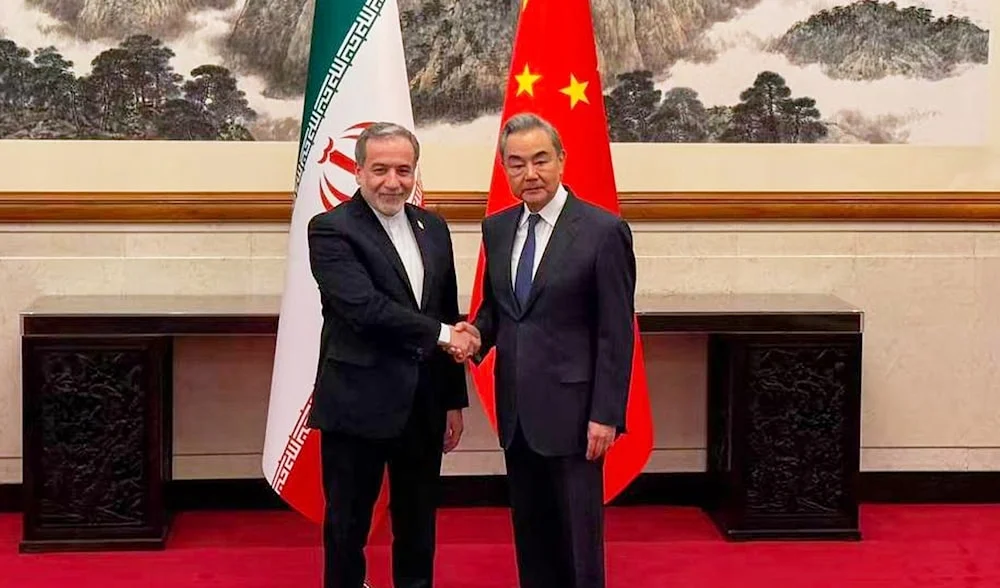
In this photo released by the Telegram channel of Iranian Foreign Minister Abbas Araghchi, China's Foreign Minister Wang Yi (right), meets with Iran's Foreign Minister Abbas Aragchi in Beijing, China, May 6, 2026. Photo: Telegram Chanel of the Iranian Foreign Minister via AP.
China urged a complete halt to hostilities, warning that renewed US-Israeli aggression is unacceptable and stressing that continued diplomatic negotiations are essential following talks in Beijing.
Iranian Foreign Minister Abbas Araghchi met China’s top diplomat in Beijing on Wednesday, highlighting the close relationship between Tehran and Beijing, shortly ahead of a planned visit by US President Donald Trump, who is scheduled to travel to China to meet Xi Jinping.
The visit, announced by the state news agency Xinhua, marks Araghchi’s first trip to China since the US-Israeli aggression on Iran triggered the most severe global oil supply shock in history.
Following the meeting, Iran’s foreign ministry said Araghchi updated Foreign Minister Wang Yi on recent discussions with the United States. He reiterated Tehran’s position, stating: “Iran, just as it demonstrated strength in defending itself and remains fully prepared to confront any aggression, is also serious and steadfast in the field of diplomacy.”
Araghchi also expressed Tehran’s strong appreciation for China’s four-point proposal aimed at promoting peace and stability in West Asia.
Tehran signals trust in Beijing and diplomatic commitment
Araghchi stressed Iran’s confidence in China and voiced hope that Beijing would continue playing a constructive role in resolving regional wars.
“We will do our best to protect our legitimate rights and interests in the negotiations,” Araghchi stressed, according to the Iranian Students’ News Agency. “We only accept a fair and comprehensive agreement,” he added, referring to talks between Tehran and Washington.
Beijing calls for de-escalation and continued negotiations
In a statement after the talks, China’s foreign ministry said “the current regional situation is at a critical juncture of transition from war to peace,” adding that “China believes that a complete cessation of hostilities is imperative, restarting the conflict is unacceptable and persisting in negotiations is particularly important.”
Beijing also called on the “parties involved” to restore “normal and safe passage” through the Strait of Hormuz, emphasizing the importance of stability in the strategic waterway.
On the nuclear issue, the Chinese foreign ministry stated that “China appreciates Iran’s commitment not to develop nuclear weapons, while also recognizing Iran’s legitimate right to the peaceful use of nuclear energy.”
Separately, China recently intensified its opposition to US sanctions targeting Chinese oil refineries purchasing Iranian crude. The Chinese Ministry of Commerce instructed companies not to comply with sanctions imposed on five independent refiners, including Hengli Petrochemical.
Beijing cited for the first time a domestic law allowing retaliation against entities enforcing sanctions it considers unlawful, marking a further escalation in its dispute with Washington over Iran-related trade restrictions.