We need to learn to see through lies and recognize right-wing power grabs.
By Nathan J. Robinson
In Bolivia, within the course of a month, one of the most successful contemporary governments to call itself “socialist” has been replaced by an unelected right-wing leadership that has killed protesters, promised to restore the rule of Christianity, and demanded the jailing of former president Evo Morales as a “terrorist.” What went wrong?
Let us review the most uncontroversial facts of what happened in Bolivia. Evo Morales, the country’s first indigenous leader, had been praised for his sound management of the country’s economy, which “experienced a spectacular run of economic growth and poverty reduction.” Even harshly critical media assessments mentioned “the country’s growing economy and shrinking inequality,” and the New York Times noted that “tiny, impoverished Bolivia, once a perennial economic basket case, has suddenly become a different kind of exception—this time in a good way,” as the country became South America’s fastest-growing economy. As with China, the heavily state-led economic program of Bolivia—which included successful nationalization of certain parts of industry—threatens free market orthodoxies about the inevitable catastrophe of socialism and state “intervention in the economy.” (According to the Center for Economic and Policy Research, “the importance of the government’s nationalization of hydrocarbons to Bolivia’s economic progress over the past 13 years cannot be overemphasized.”)
But by 2019, Morales had been in office for 12 years, and his popularity had ebbed. As Christine Mathias writes in Dissent, even some on the left, including former indigenous supporters, had begun to question his leadership:
They raised concerns about Morales’s desire to remain in office indefinitely, alleged corruption in his inner circle, his administration’s response to recent fires in the Amazon, and especially its extractivist development model. Aymara leader Felipe Quispe presented some of the most damning critiques, describing [Morales’ Movimiento al Socialismo] as “neoliberalism with an Indian face.”
Morales ran for a fourth term this year. Previously, the new Bolivian constitution that Morales had introduced imposed term limits. There was a referendum on whether to scrap term limits in 2016, and Morales lost narrowly. Bolivia’s Supreme Court then overturned the results of the referendum, allowing Morales to run again.
Now, I’ve seen a lot of mockery directed at the Bolivian court for this decision, which said that barring Morales from running violated his “human rights.” It is seen as a transparent power-grab by Morales, and a sign that his rule was undemocratic and illegitimate, because he simply had “cronies” rewrite the law. A few bits of context are important, though. First, the president actually has less direct control over the makeup of the Bolivian court than the United States president has over the composition of our Supreme Court. And second, the ruling was not actually as crazy as it is being made to sound. The ruling was based on the American Convention of Human Rights, which Bolivia is a signatory to. The relevant section reads as follows:
Article 23. Right to Participate in Government
1. Every citizen shall enjoy the following rights and opportunities:
a. to take part in the conduct of public affairs, directly or through freely chosen representatives;
b. to vote and to be elected in genuine periodic elections, which shall be by universal and equal suffrage and by secret ballot that guarantees the free expression of the will of the voters; and
c. to have access, under general conditions of equality, to the public service of his country.
2. The law may regulate the exercise of the rights and opportunities referred to in the preceding paragraph only on the basis of age, nationality, residence, language, education, civil and mental capacity, or sentencing by a competent court in criminal proceedings.
As you can see, every citizen is guaranteed the right to be elected in periodic elections, and that right can be regulated only on the basis of a number of very particular grounds. “Having served in office previously” is not one of those grounds. Now, your instinct here may be to say “Oh, but that’s silly, of course term limits are permitted, it would be ridiculous to say that term limits are a violation of human rights.” The entire argument made by legal textualists like Antonin Scalia, however, is that it doesn’t matter what you might have meant, it matters what the law says. If the drafters of a law believe that you should be able to restrict people from running for office based on their previous service in office, they need to put that in the rights convention, otherwise that exception won’t be valid.
I am not saying that I am anti-term limits, or that I share Scalia’s theory of jurisprudence, although it’s worth remembering that term limits do prevent people from choosing the candidate that they might want the most and are a restriction on democracy (after all, Obama would probably still be president if we adopted the democratic principle that “the candidate the most people would want to vote for should win the election”). I am saying that it’s not obvious that the Supreme Court was simply mindlessly throwing out the rule of law, and that the reactions after the Court’s decision (some called the decision itself a “coup”) was not justified.
This is important, because now that Morales has been forced out of power by an illegitimate leader, every effort is being made to paint him as having been illegitimate himself. (The New York Times, using the language preferred by the right-wing government, calls him a “strongman.”) And if these arguments are correct, it undermines critics of the anti-Morales coup. After all, if he was an autocrat who himself had no democratic mandate and disrespected institutions, it was less bad for his successors to seize power, even if they did so without being elected. The present Bolivian “leadership” has made a very strong effort to portray themselves as “restoring” a democracy that Morales had “undermined” (with the new self-declared president saying that “the coup d’état was by Evo Morales”) even as they behave undemocratically themselves, so it’s important to actually scrutinize the facts and remember what happened.
I find Morales’ decision to keep running indefinitely to be frustrating, and a sign that he was relying more on his personality than a political movement, but I do not think that he disrespected the law any more than Michael Bloomberg did when he had the New York City Council get rid of term limits. I would not have called Bloomberg an “illegitimate” mayor or a “dictator,” nor would I say that he was not the “real” mayor of New York and could justly be overthrown by the NYPD. So I think Morales was within his rights to run again, and since his term has not expired, and he was forced out by threats of violence, he should still be considered the president of Bolivia.
What of the election itself? American media has reported on the election as if it was self-evident that Morales stole it or committed election fraud. The central allegations here, however, do not appear to hold up. Read the analyses from Kevin Cashman in Jacobin and Mark Weisbrot in MarketWatch, who both provide careful explanations of how the Bolivian election actually worked, as opposed to vague innuendos.
RELATED CONTENT: The New York Times’ Long History of Endorsing US-Backed Coups
We know that, as protests escalated after the election, Morales lost the support of members of the Bolivian police and that the military “encouraged him” to resign. Morales fled to Mexico; he says his life was threatened and a bounty was put on his head. His home was ransacked, and a racist right-wing minor legislator, Jeanine Añez, declared herself president of the country. She vowed to be a mere caretaker until new elections could be held, “[telling] reporters that her only aim was to unite the country and restore it to the path to democracy,” and saying that her mission in office was “to call for clean and transparent elections with all the qualified political actors as soon as possible.” Of course, that word “qualified” should have been the tip-off from the beginning that Añez would soon unilaterally declare Morales ineligible to run.
But it was very evident that she was lying about her intentions, which were not to preside over a “caretaker” government but to re-establish right-wing rule after a decade of successful socialism. She acted like “anything but a caretaker,” and has “been putting her own ideological stamp on South America’s poorest nation as she pursues the opposition’s long-held dream of undoing nearly 14 years of socialist rule under former president Evo Morales.” She “replaced Bolivia’s top military brass, cabinet ministers and the heads of major state-owned companies with appointees of her own.” She immediately moved to reshape the county’s foreign policy, reinstall Catholic rituals, and gave soldiers immunity from prosecutor for murdering protesters. Sure enough, “within hours, a confrontation between soldiers and Morales supporters near Cochabamba left nine dead.” (It is ironic that Áñez had previously “denied that Morales had been the victim of a coup,” saying “a coup d’etat is when there are soldiers in the streets.”)
Añez’s government barely pretended to care about equality. She brought a giant Bible to her swearing-in, and said “the Bible has returned to the government palace.” As the press noted, this was “a pointed attack on Morales, since the constitution he passed in 2009 placed Christianity on equal footing with indigenous spiritual traditions.” Añez’s open Christian supremacist ideology was evident even when she was making half-hearted gestures toward inclusiveness:
“We want to be a democratic tool of inclusion and unity,” said the 52-year-old religious conservative, sitting at a table bearing a huge open Bible and crucifix.
Añez was not just repudiating Morales, socialism, and secular pluralism, but the indigeneous population more broady. She had previously “published provocative posts on Twitter mocking Indigenous people’s culture, branding their religious rites ‘satanic’ and calling Mr. Morales a ‘poor Indian.‘” She “quickly set up a transition cabinet with almost no indigenous people, but full of business elites who oppose Morales.” At a public rally by a close Añez ally, a speaker cried: “We have tied all the demons of the witchery and thrust them into the abyss. Satans, get out of Bolivia now.” As one analyst noted, her government seems to be “thinking that what Bolivia needs right now is a purge.”
And the purge is underway. The interim interior minister threatened “to arrest lawmakers loyal to ousted President Evo Morales for alleged acts of subversion and sedition,” even though Morales’ MAS party still technically held a legislative majority. He “announced the creation of a ‘special apparatus of the Prosecutor’s Office’ that will crack down on elected officials from Morales’ Movement Toward Socialism (MAS) party, which controls about two-thirds of the legislature,” and “said he would be publishing a ‘list’ of legislators he claims are guilty of ‘subversion’ and that those individuals will be blocked from continuing their duties as representatives and will be subject to arrest starting Monday.” He “began by promising to hunt down Mr. Morales’s top former minister, Juan Ramón Quintana, who has gone into hiding,” saying “We’re going to go hunting for Juan Ramón Quintana… because he is an animal that feeds on the blood of the people.”
The Wall Street Journal reported:
Several MAS officials have been detained, fled the country or have sought refuge in foreign embassies. Meanwhile, debate has brewed over whether the party, which still enjoys wide support, should even be allowed to exist due to the alleged electoral manipulation.
The Journal quotes a Morales critic saying: “MAS is dead… We have a saying here: When the dog dies, so do the fleas.”
* * * *
Surely, some things are clear here. The new right-wing government is not actually interested in democracy, but in destroying socialism and indigenous power. They’re literally threatening to “hunt down” socialist legislators. They don’t want fair elections. They want elections that have socialists either excluded from running or intimidated by force. Why is Evo Morales in Mexico? He’s not there because he wants to be in Mexico. He’s there because if he had stayed in Bolivia he might have been jailed as a “terrorist” or killed. I do not know why there is “debate” over whether what happened in Bolivia was a “coup.” The elected president fled the country at the direction of the military and has been branded a criminal by an unelected leadership that has murdered protesters and explicitly vowed to destroy socialism and restore Christian rule.
Yet now we enter the topsy-turvy world of the U.S. media, whose response to the Bolivian coup has been a case study in Chomsky and Herman’s theory of “manufacturing consent.”
The Wall Street Journal, unsurprisingly, has heralded the ousting of Morales as a victory for democracy. “No one should shed a tear” for Morales, its editorial board said. Bolivia’s “people have suffered enormously” under Morales, it said, citing no evidence. (Hard to know what to cite when what the people have suffered from its record growth and diminishing poverty.) The Journal said that “Bolivian law forbids a candidate caught in fraud from running again,” though it did not cite which Bolivian law allows unconfirmed allegations to override court precedents. Another editorial, “Morales Made Bolivia A Narco State,” essentially repeated the word “narco” over and over, emphasizing that Morales started as the head of the coca grower’s union, to convince readers to think of him as nothing but a drug trafficking dictator. (The editorial had the audacity to center criticism of Morales around his violations of indigenous people’s rights, said the military “suggested” he step down, and suggested that he simply ran illegally, failing to mention the court decision that allowed him to participate and the justifications given by the court.)
One expects this stuff from a fascist-sympathizing Murdoch paper, of course. But the New York Times has been just as bad, full of sentences like: “Morales’s grip on power unraveled after he tried bending electoral rules to stay in power for a fourth term in October, flouting constitutional term limits he himself had set.” (Again, a Supreme Court decision allowed him to run under the terms of a treaty.) “How an Unknown Female Senator Came to Replace the Bolivian Strongman Evo Morales” is an incredible article. It does not quote any socialist legislators, but quotes plenty of figures from the conservative opposition, including heavy quotation from a “cement magnate.” It discusses the “transition talks,” and says that Añez was brought to the capital to “pre-empt any power grab,” without noting that she was doing the power grab. The article treats the conservatives as pragmatic and patriotic restorers of order who were concerned with preventing a slide into chaos and wanted to maintain the constitutional order. “We knew that she was the only constitutional thread we had.” Calling Morales a “strongman” is bad enough. He is a democratically elected president, and the Times did the opposition’s work for it by printing a word that suggested Morales was an illegitimate tyrant. (Even if you believe this year’s elections were fraudulent, Morales’ term does not expire until January!) Perhaps because of public outcry about this use of a loaded, and arguably racist, term, the Times later stealth-edited “strongman” out of the headline and replaced it with “president,” without offering a correction or apology.
RELATED CONTENT: US Is Again Complicit in an Illegal Coup, This Time in Bolivia
The Times editorial board published an incredible editorial blaming Morales for what happened, saying that “the country’s growing economy and shrinking inequality propped him up for years. But its democracy and its institutions suffered, and that’s what brought him down.” (The idea of being “propped up” by a growing economy is funny.) “Predictably,” the Times editors said, stodgy old leftists were denouncing the “coup,” but “what brought Mr. Morales down was not his ideology or foreign meddling, as he claimed, but the arrogance of the populist, evident in so many other parts of the world — the claim to be the ultimate arbiter of the will of the people, entitled to crush any institution that stands in his way.” The Times editorial is an interesting example of how institutions in other countries are spoken of differently than they would be in our own. It says Morales had the country’s Supreme Court “by now stuffed with his loyalists, rule that limiting his time in office somehow violated his human rights.” Our Supreme Court, of course, is not “stuffed with loyalists,” even though it too is a nakedly political institution. Of Añez, all it said was that she was “offering to lead the country to new elections,” and that Morales “would do well to call on his backers to clear the way.”
Witness, too, this Times op-ed, written in sorrow and lament, about how Bolivia offers “lessons on how to fix semi-democracies,” saying that the coup was “a reminder that the process of stopping semi-democratic leaders is likely to be semi-democratic as well.” But Morales was elected! The op-ed pretends there is no difference between Morales’s democratic election and Añez’s seizure of power without an election. “Blaming the coup is to blame the symptoms and ignore the overall shock on the system caused by the preceding democratic backsliding…. Fixing a semi-democracy will not always follow strict democratic playbooks… The best that can be hoped for is that the military sides with moderate civilians, democratic norms, and constitutional rule.”
Here, we would do well to remind ourselves that anything can be cloaked under euphemisms: mass murder can be “restoring order,” overthrowing an elected government can be “preserving democratic rule.” And the most dangerous political actors are going to have a very strong incentive to use these kinds of euphemisms, which is why it’s important for ordinary people to be extremely skeptical, and why newspapers shouldn’t quote powerful people’s words as if they are facts. (Order Restored Amid Unrest, Government Says is a headline that could easily mean A Dozen Unarmed Protesters Murdered In Cold Blood.)
When you are reading about Bolivia in the U.S. press, make sure to ask critical questions: Whose voices are being quoted here, and whose voices don’t I hear? What is taken as being self-evident that should actually require some proof? How are words being shaded in ways that could disguise what is actually going on? Is one action being described two different ways when done by two different people? (When X does it, they’re a “strongman” or “caudillo” and when Y does it they are a “caretaker” or “interim leader.”) Propaganda often looks very reasonable, on the surface, especially to those of us who don’t have access to the facts on the ground. Every word needs to be read carefully to see how our perceptions of reality are being manipulated.
One interesting thing about propaganda, as Noam Chomsky has pointed out, is that you can often find the truth buried within it. U.S. newspapers often do report all the facts you need to know in order to understand what is going on, but the analysis and framing buries those facts. (I’ve previously written about how the Holocaust, far from being unknown, was reported in the pages of the New York Times as something trivial not worth caring about.) You need to notice the small stuff. For example, when someone is quoted talking about how “when a dog dies, the fleas do too,” that sounds an awful lot like they’re probably going to try to destroy the socialist movement. Amid all the Wall Street Journal‘s discussions about whether or not to call the “transition” a “coup,” you will find little sentences like: “debate has brewed over whether the party, which still enjoys wide support, should even be allowed to exist due to the alleged electoral manipulation.” Um, there is debate over whether a movement with wide support should be allowed to exist? Who is “brewing” this debate?
When Añez announced that Morales couldn’t run in a new election, Current Affairs predicted that the next thing that would happen was a new election which wouldn’t be legitimate, but which would quickly be declared legitimate. Sure enough, MAS legislators are being persecuted and threatened, and Evo Morales is being told that if he comes back to the country he will be tried as a terrorist. No election held under these conditions can be legitimate, and it will inevitably be worse than the “fraud-marred” original election. But when the right wins, they will declare democracy restored. In fact, fake elections are historically a powerful tool of the right. The 1933 German election was not a real election, because the Nazis’ opponents were systematically persecuted and threatened. But they used it to claim they had a democratic mandate. This is also what happened in Brazil: The most popular Workers Party candidate, Lula, was barred from running, and cleared the way for the far-right Jair Bolsonaro to take power. This is what the Bolivian right needs now: an “election” in which the most popular opposition candidate is barred from standing, and the majority party is threatened and intimidated. Then, when the right narrowly wins the election (as Bolsonaro and Hitler did) they will demand recognition for the “people’s will.” If you do not notice what is happening, you need to read some more history! This is a very old story and has been told many times.
The situation in Bolivia is still uncertain, but it is worth discussing a few lessons that we can take so far. First, Morales clearly made a serious miscalculation. His movement was successful, but it was built around him as a person, and so he had to keep running for office. He did what critics insisted was impossible: He ran an economy using (somewhat) socialistic grounding principles, and it prospered. But on the political side, he did not create a lasting mass movement. If he had, there would have been half a dozen figures ready to step into his shoes when his term ended. People on the left in other countries need to learn from this example: A movement cannot be centered around a single person, even if they are competent and their principles are good. Individuals will let you down (Morales made many disappointing moves that dulled enthusiasm for him).
Second, we can see very clearly here a lesson in why liberalism always helps totalitarians get into power. The liberal philosophy is “Wait and see, let us be reasonable, don’t let’s cast accusations until all of the facts are in.” However, when an important political moment comes, and the right tries to seize power, one must be prepared to full-throatedly call out what is happening. If you grant the “benefit of the doubt” to the far right, by the time you realize what is going on, it will be too late. This is what happened to all the German conservatives and liberals in the 1930s who thought they could work with the Nazis. By the time it was obvious that the Nazis would just massacre anyone who opposed them, it was too late. One has to have a very clear understanding of what the far right is trying to do, and not believe it when it says that all it wants is democracy.
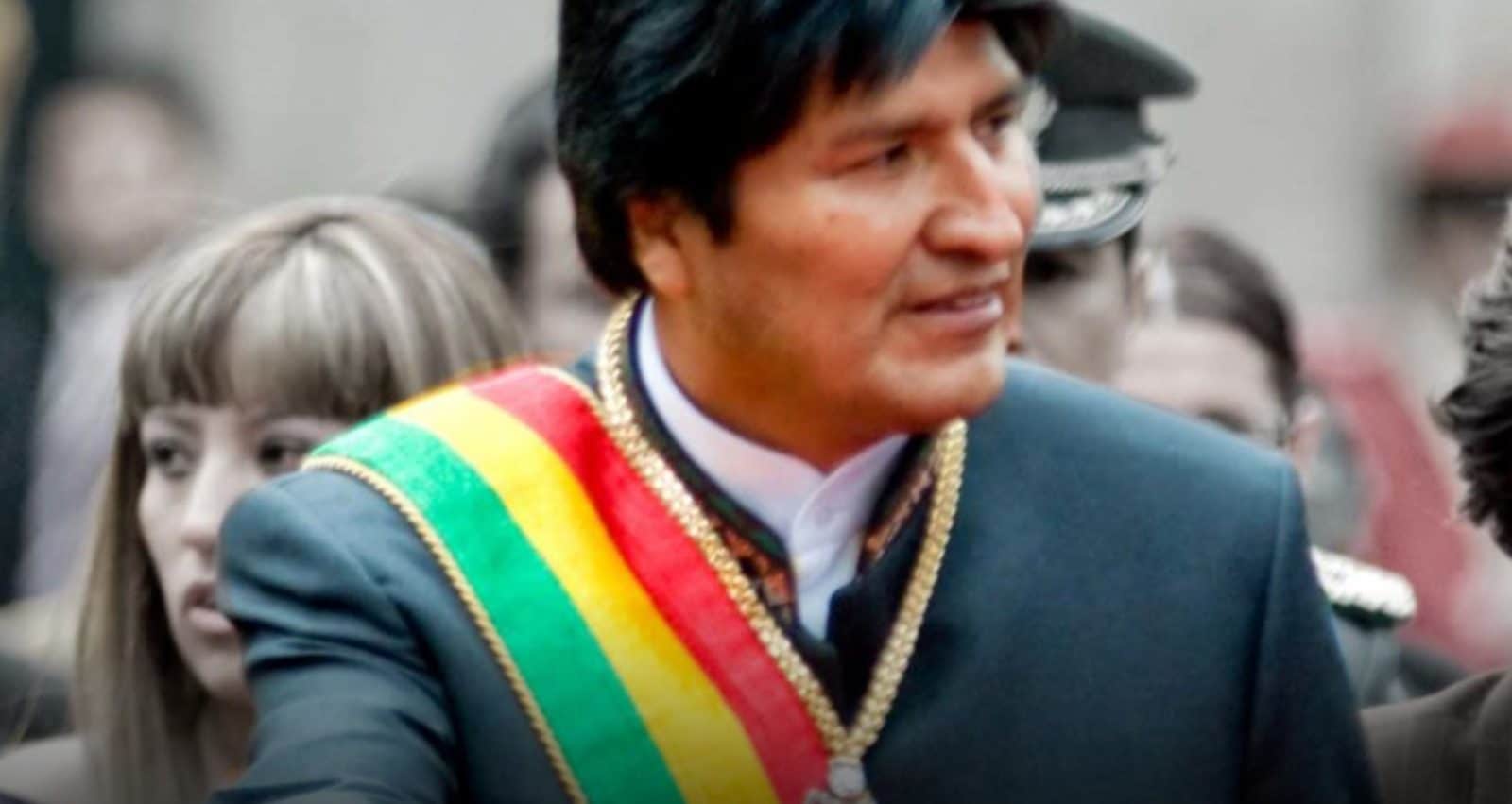
We need to make sure we understand how political power works and how people get it, and avoid being fooled by euphemisms. The right are often very clever at maneuvering. They understand, for example, that the best way to get power is to put on the presidential sash and declare that you are the president, then challenge anyone to stop you. (See, for example, the dispute over the leadership of the Consumer Financial Protection Bureau in 2017. The Obama appointee tried to get control by filing a court case while the Trump guy just showed up at the office, sat in the chair, and handed out donuts to the employees. Guess who won?) At the moment, the right is following a very obvious playbook in Bolivia, and Western media are helping them. Delegitimize the president, ignore the fact that his term isn’t up, declare that democracy needs restoring, declare your enemies terrorists, round them up, then hold an “election,” claim a mandate, and reverse all the socialist policies even if a majority of people supported them. Right-wing governance tends to rely on undemocratic measures like this, because right-wing politics rarely command majority support (after all, they support enriching business elites at the expense of ordinary people). So they need to find ways to make undemocratic policies seem like democratic ones, hence Germany 1933, Brazil 2018, the U.S. 2000, Bolivia 2019.
The central lesson here is: Call things what they are and do not hesitate, because if you hesitate it will be too late. Our media organizations need to be shamed for their failure here. When a minister promises to hunt down the opposition like animals, your headline needs to be “Right-Wing Government Threatens To Hunt Down Opposition Like Animals,” not “Interim Leader Sets Conservative, Religious Tone.” We must talk about massacres as massacres, not pacification and order-restoration. “Controversial” must not be used when “illegitimate” is the correct word. The right will always try to claw back the gains made by socialist parties, but the very least we can do is recognize that this is what they are trying to do and point out when they are doing it.