Prospects of reaching the U.S. border are remote after Trump’s crackdown on migration as Mexico and Guatemala tighten control on migrants
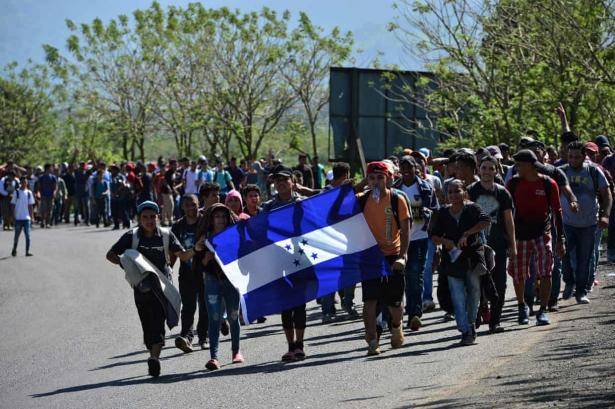
Hundreds of Hondurans have started walking and hitching rides from the city of San Pedro Sula, in an attempt to form the kind of migrant caravan that reached the US border in 2018.
But the prospects that they could reach the US appear remote: many people in the 2018 caravan applied for asylum, something that is now difficult or impossible thanks to Donald Trump’s crackdown on migration. Meanwhile, under pressure from the US, Mexico and Guatemala have tightened their own controls on undocumented migrants.
Some waved Honduran flags and shouted slogans against President Juan Orlando Hernández as they set out for the Guatemalan border on Wednesday morning.
Most attempts at forming caravans in 2019 were broken up by police and the national guard in Mexico, which has come under increased US pressure to prevent migrants from arriving at the US border.
RELATED CONTENT: Activist Faces Jail for Resisting Massachusetts Sheriff’s Collaboration With ICE
On Wednesday afternoon Guatemala’s new president Alejandro Giammattei told reporters that Mexico was determined to halt the caravan’s advance.
“The Mexican government told us that they won’t let it pass,” he said. “They will do everything in their powers to stop it from passing.”
Some migrants said they were aware the voyage would be tough, but said they would try anyway.
“We aren’t living here, we’re just surviving,” said Elmer García, 26, a migrant from the town of Comayagua. “So it doesn’t make much difference if you die there or die here.”
Gerson Noé Monterroso, 34, has been unemployed for the last five years. He left his hometown of Choloma, just north of San Pedro Sula, in hopes of finding a job and sending money back to his family.
Monterroso set out with his toddler son in his arms, but left his other children with their grandparents in Choloma.
RELATED CONTENT: ACLU Challenges Trump Rule Forcing Asylum Seekers to Guatemala
“Here in Honduras, opportunities are scarce and crime is unbearable,” Monterroso said. “We are not even safe in our own homes.”
This was his third attempt to reach the United States, he said. He was turned back the other two times.
The US has used a carrot-and-stick approach in bilateral agreements struck since July with Guatemala, Honduras and El Salvador to deny people an opportunity to apply for asylum in the US. They are instead to be sent to Central America with an opportunity to ask for protection there.
“The truth is, it is going to be impossible for them to reach the United States,” said human rights activist Itsmania Platero. “The Mexican police are going to catch all the migrants without documents – and they will be detained and returned to their home countries.”
Israel Connor, a Nicaraguan who has been living in Honduras since fleeing political and social unrest in his home country, was undeterred. He set out on Wednesday with his wife Darlen Suazo and their three children, aged three to five.
“We are going to struggle, but if God is with us, nobody can stop us,” said Connor. “We know we are going to get through Guatemala, and God will soften the hearts of the Mexican authorities.”
That was similar to rhetoric heard from migrants in the first caravans, but things have changed since then.
Immigration analyst Sally Valladares told local media: “The risks have become much higher because of Mexico’s threats of deportations, but also because, when they are not able to cross [Mexico] as part of a caravan, they are going to search out routes as individuals, and they could fall into the clutches of criminal gangs that prey on migrants.”
Featured image: Honduran migrants heading to Puerto Barrios, in Guatemala, after breaking a police fence at the border crossing between Honduras and Guatemala on Wednesday., Photograph: Orlando Sierra/AFP via Getty Images