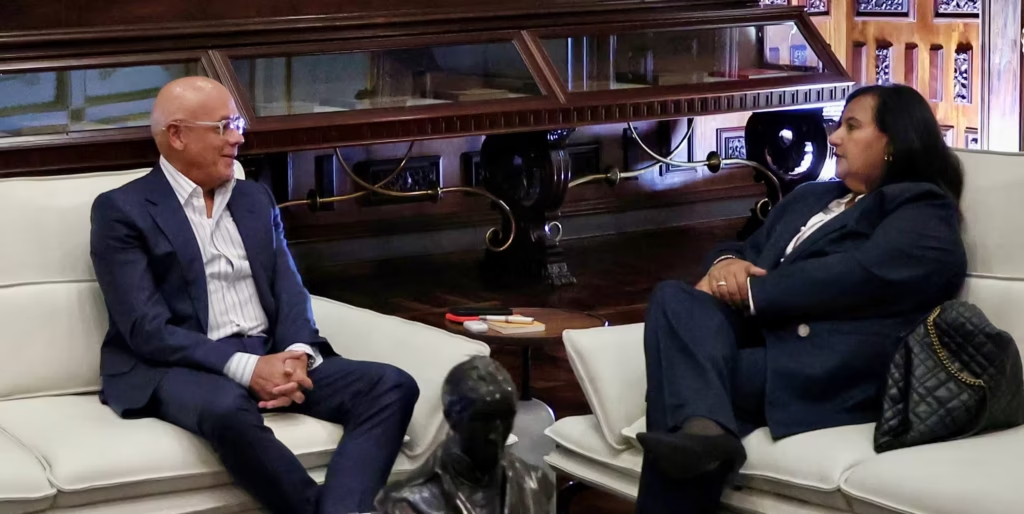
Venezuelan National Assembly President Jorge Rodríguez and anti-Chavista former Deputy Dinorah Figuera meet in Caracas, July 14, 2026. Photo: Telegram/JorgeRodriguezPsuv.
Venezuelan National Assembly President Jorge Rodríguez and anti-Chavista former Deputy Dinorah Figuera meet in Caracas, July 14, 2026. Photo: Telegram/JorgeRodriguezPsuv.
By William Serafino – Jul 24, 2026
August 1 has been established as the date of a new turning point in Venezuelan politics. The current National Assembly and the defunct 2015 national assmebly, whose functions ceased constitutionally in 2020, have agreed on a dialogue agenda. For US Secretary of State Marco Rubio, the proposed “roadmap” will signify the beginning of the transition in the country.
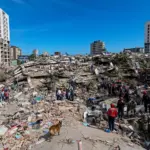
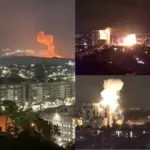
Amid the thick fog that envelops Venezuela’s political course, the announcement must be approached with a conditional perspective. If the January 3 bombings and last month’s earthquakes showed us anything, it is that anything is possible in the eventful 2026 Venezuela.
The general dimension of the approach
On July 14, the National Assembly chaired by Jorge Rodríguez and the self-proclaimed “2015 National Assembly” led by anti-Chavista activist Dinorah Figuera issued statements in unison. They announced the start of talks to address the effects of the double earthquake, strengthen democracy, and evaluate broader political issues including the electoral system.
The statements formalized the first meeting held in Caracas between Jorge Rodríguez and Dinorah Figuera, former deputy from the opposition party, Justice First, in mid-June. The meeting was propelled by Washington, which facilitated Figuera’s arrival.
Through the meeting, which was surprising to many, the Trump administration disavowed the “Panama Manifesto” signed by María Corina Machado and the partisan coalition Democratic Unitary Platform (PUD) just a few days earlier. The manifesto supposedly aimed to promote a negotiation, potentially validated by Trump, where Machado, the head of the Vente Venezuela party, would be at the forefront.
The July 14 announcement has finally confirmed that the White House’s calculations in Venezuela do not include Machado. She is considered a figure aligned with the Democratic Party who could disrupt the current status quo of stability agreed upon between Washington and Caracas, which is functional for the US plundering of Venezuelan oil resources, but also functional for Miraflores’ interest in governing with a greater margin of political, economic, and financial maneuvering.
Rubio’s turn
However, it was Rubio who gave a semantic twist to some statements that, until the moment of their publication, were redundant in generalities and did not mention the word “transition.” On July 19, the US secretary of State and national security advisor stated that a “format and forum had been agreed upon not only for reconciliation talks but also to initiate the transition process, which is what the people of Venezuela need.”
Instantly, the media landscape was filled with headlines that took the beginning of a transition in Venezuela under Washington’s umbrella as a fact. It is highly probable that this was the effect that Rubio was looking for, with a discursive move aimed at reinforcing the notion of US tutelage over Venezuelan politics.
The crux of the matter is that Rubio’s statement did not clear the fog about what had been agreed upon. In fact, he appeared surprised and unaware of the dynamics of the negotiation.
Rubio stated that he “believed” that the conversations would start in August, but then asserted that “we’ll see how the situation evolves.” On one hand, he pretends not to be fully aware of the situation. On the other hand, he avoids committing to a verifiable final outcome subject to concrete parameters.
However, the “transitional” framework has already been configured according to the viceroyal status over Venezuela that Rubio wishes to have, to the extent of using the New York Times for this purpose.
A hot potato?
At this point, it would be appropriate to ask how a concept as concrete as that of transition fits with the instrumental ambiguity that Rubio demonstrated. If Washington’s control is so absolute, what would prevent the process beginning in August from being accompanied by specific institutional steps and precise election dates? Why does “we’ll see” replace the despotism that accompanies the actions of every viceroy?
The only answer available, for the moment, seems to come from the convergence of multiple contradictions originating from the eccentric Washington-Caracas relationship following the January 3 aggression. Marco Rubio is also a victim of these contradictions.
So far, the Venezuelan government, focused on post-earthquake recovery and reconstruction, has been absolutely tight-lipped about Rubio’s comments and regarding the topics that would be addressed with the spectral “2015 National Assembly.”
For her part, Figuera has limited herself to arguing that the negotiation will focus on “re-institutionalizing” the electoral and justice system and guaranteeing political rights. However, she has been careful not to address the electoral issue and the content of the hypothetical transition.
The prominence given to Figuera by Washington has generated suspicion among the rest of the opposition, creating a new episode of internal division.
Henrique Capriles unexpectedly criticized Machado’s exclusion from the talks. Henry Ramos Allup has stated that communication between Figuera’s team and the PUD is not smooth. Meanwhile, some names of those who would participate in the negotiations are already circulating, including Leopoldo López and others from the Justice First circles, fracturing the minimal possibilities of consensus in the broad anti-Chavista ecosystem.
In addition to the internal dissent of the opposition, there is the centrality of the post-earthquake scenario and a Trump that is increasingly comfortable with the geopolitical and energy dividends provided by the relationship with Caracas. Thus, a transitional process does not seem to be among his immediate priorities.
The Challenge of Reconstructing Venezuela’s Political Fabric
However, there are internal pressures in the US as well. Republican Congress members Bernie Moreno and María Elvira Salazar are constantly projecting dates for a presidential election in Venezuela and calling on the White House to accelerate the transition. This is particularly relevant given that the continuity of a presidency led by Delcy Rodríguez endorsed by Trump undermines Latino support for the Republican Party in the midterms.
In the crossfire, Rubio cannot rely on inertia. The US intervention in Venezuela not only bears his name but has also become his main reputational investment as a future aspirant to the US presidency.
Therefore (and until proven otherwise), Rubio is setting up a kind of simulation in which he is trying to manage the contradictions that surround him. Yet, the horizon of the unthinkable remains open, now more than ever.
Pretending that he has not influenced the development of the Rodríguez-Figuera negotiation, Rubio presents the narrative of transition, but does not commit to its final consequences to avoid being caught up in the divisions of anti-Chavismo.
With this, within the US, he is also trying to calm the Republicans who demand to “finish the job” to win votes in November. At the same time, he guarantees the support of his boss in the White House, who still does not find a transition led by Machado as economically lucrative as the current relationship with Caracas, with returns exceeding $13 billion according to the Financial Times.
Playing it to the limit, Rubio is trying to fulfill the difficult task of pleasing both God and the Devil. He is caught between pressures for a quick transition and maintaining the status quo. Meanwhile, Machado’s exclusion hits his prestige, and the good relationship with Delcy Rodríguez undermines the Republican capital among the Latino electorate.
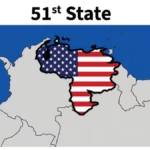
Between a viceroy forced to distribute more than what he has, an opposition programmatically kneeling to Washington, and a Chavismo that insists that its premise is to buy time without clearly defining its medium- and long-term objectives, the August round of Venezuelan politics is defined. Amid the fog, opacity, and US interference, basic concepts like sovereignty and national dignity are beginning to appear strange.
Translation: Orinoco Tribune
OT/SC/SF

William Serafino in a Venezuelan political scientist, graduate of the Central University of Venezuela (UCV). Researcher, writer, and analyst specializing in geopolitics. Winner of Venezuela's Simón Bolívar National Journalism Prize, Research category (2019).