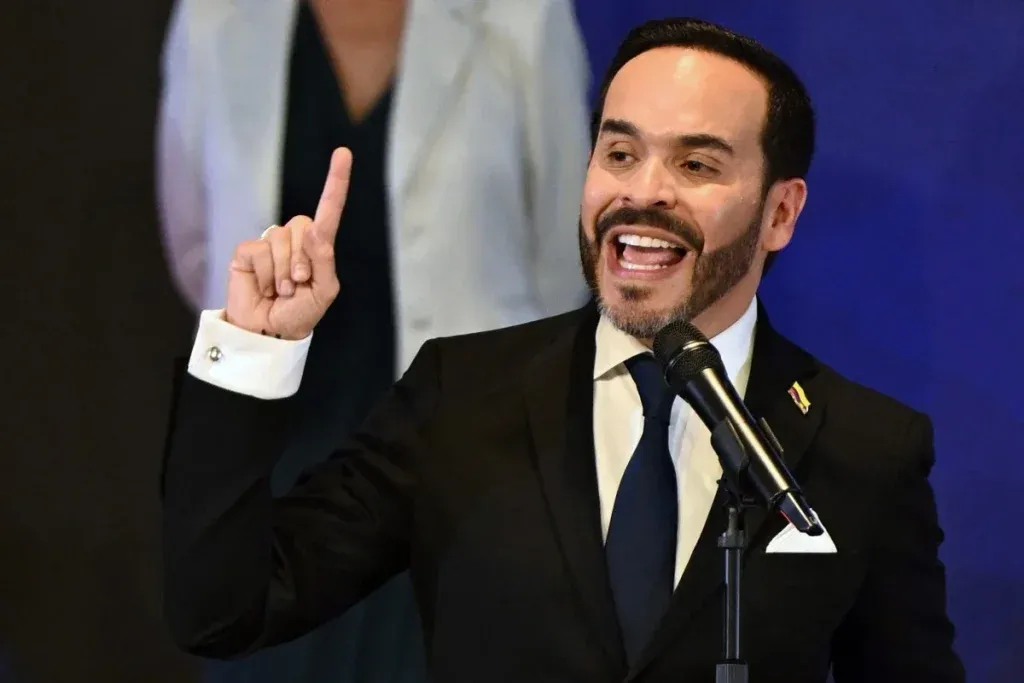
The president of Colombia, Abelardo de la Espriella. Photo: EFE.
The president of Colombia, Abelardo de la Espriella. Photo: EFE.
The president of Colombia, Abelardo de la Espriella, instructed Migración Colombia and the Barranquilla Police to carry out operations to identify undocumented foreigners and deport those who, according to him, are committing crimes.
He said that the operations, which are based on the criminalization of migration instead of a human rights approach, will initially be focused on immigrants who commit crimes, and subsequently on those who do not have their immigration status regularized, who “in the long run will have to be deported.”
This is part of a strategy that also eliminates the differences in the categorization of criminal groups. Under the Colombian government’s directive, all armed and illegal organizations operating in the country will be treated under the single category of “terrorist groups.” This way of enabling the actions and use of force by the State falls outside of international regulations that clearly distinguish criminal organizations from terrorist groups, in addition to the fact that Colombia also has armed political organizations.
Presidente De La Espriella anuncia estrategia integral de seguridad: todos los
grupos criminales serán tratados como terroristas. pic.twitter.com/HV5dJcog7K— Presidencia Colombia 🇨🇴 (@infopresidencia) August 25, 2026
The government ordered the immediate formation of a National Anti-Extortion Search Bloc, composed of the Armed Forces, the National Police, the Attorney General’s Office, and the judiciary.
In addition, the Financial Information and Analysis Unit (UIAF) will inspect bank transactions from the past four years (President Gustavo Petro’s term), along with the execution of urgent prison transfers, raids, and a reward system.
The plan also includes the pursuit of the land cartel, the fight against the loan system known as “drop by drop,” and the creation of elite units of prosecutors and judges in each city.
How USA & Israel Put Drug Cartel-Linked US Citizen in Power in Colombia
Regarding the government’s security measures, former President Gustavo Petro, at the end of his term, expressed his criticisms by comparing them to the United States Immigration and Customs Enforcement (ICE), and warned about the risk of triggering further violence.
Petro warned that this repressive strategy against the youth in the low-income neighborhoods will only bring more violence, death, and a potential social explosion.
“The ICE strategy has caused a lot of pain, violence, and death in the United States,” Petro had stated in early July. “Abelardo wants to create an ICE-like force to confront the youth in the poorer neighborhoods of the big cities, that will only bring more violence and death.”
(Telesur)
Translation: Orinoco Tribune
OT/SC/SH