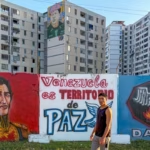
Photo composition showing far-right politician Maria Corina Machado holding a banner with the face of Edmundo Gonzalez (left) and Chavistas in a rally holding PSUV and President Nicolas Maduro banners (right). Photo: Orinoco Tribune.
Photo composition showing far-right politician Maria Corina Machado holding a banner with the face of Edmundo Gonzalez (left) and Chavistas in a rally holding PSUV and President Nicolas Maduro banners (right). Photo: Orinoco Tribune.
By Roger D. Harris – Jul 12, 2024
The future of Venezuela’s 25-year-old socialist movement will be decided in the upcoming July 28 election. Venezuelans will go to the polls knowing that a vote for incumbent President Nicolás Maduro means no relief from US unilateral coercive measures.
These so-called “sanctions” have been central to Washington’s regime-change campaign explicitly designed to asphyxiate the Venezuelan economy and turn the people against their government; what Venezuelanalysis calls “a war without bombs.”
Venezuela, with some 930 unilateral coercive measures imposed on it by the US, is the second most sanctioned country in the world after Russia. “Washington singled out Venezuela for special treatment,” observes political economist Steve Ellner.
The Bolivarian Revolution
Venezuela’s Bolivarian Revolution began with the election of Hugo Chávez in 1998. Having a proud Afro- and indigenous-descendent from a poor background as president, infuriated racist and classist elite sentiment. Chávez’s successor, Maduro, a bus driver and union leader who never went to college, was no more palatable to this elite.
Under Chávez’s leadership, Venezuela became “a beacon of hope for the struggle against neoliberal immiseration and imperialist pillage for the world over,” according to Francisco Dominguez with the UK-based Venezuela Solidarity Campaign.
Approximately three-quarters of Venezuela’s current discretionary budget goes to social expenditures; about the same proportion of the US budget going to the military and related expenses. Some five million houses for the poor have been built, health care is free, and food for the poor is subsidized. Mass popular organizations and communes flourish.
A quarter century of US regime-change efforts
Chávez survived a US-backed coup in April 2002 that lasted only 47 hours, when the people spontaneously arose and demanded his reinstatement. That was followed by a “boss’s lockout” during the Christmas holidays, which failed to create an uprising but did cause a 29% GDP loss.
A referendum, openly backed by the US, to recall Chávez in 2004 was decisively defeated. He won the 2006 presidential election by a large margin, although the opposition continued to foment lethal street violence. A military coup in 2008 by dissident officers was aborted.
Chávez was reelected in October 2012 but died from cancer shortly thereafter in March 2013. His chosen successor, Maduro, won the constitutionally mandated snap election by a margin of less than 2%. Sensing weakness at this moment of national mourning, the US offensive intensified, trying to provoke a civil insurrection.
The main opposition candidate, Henrique Capriles, immediately charged fraud and called on his followers to show their rage. Violent street demonstrations by the US-backed far-right opposition followed. The so-called guarimbas continued periodically through 2017 in an attempt to achieve by extra-parliamentary means what they failed to do democratically.
The US was the only country to deny the legitimacy of the Maduro government in 2013. A subsequent audit done in public, which compared the electronic count to the paper ballots, reaffirmed the electoral outcome. Former US President Jimmy Carter, incidentally, commented: “of the 92 elections that we’ve monitored, I would say the election process in Venezuela is the best in the world.” Venezuela was the first country to have both an electronic vote and a paper backup.
After Maduro won the presidency, the international oil market tanked, which severely impacted an economy dependent on petroleum sales. With the deteriorating economic situation, the opposition won a majority of the National Assembly in December 2015. The Maduro government immediately recognized the electoral results. Today, Washington considers the 2015 National Assembly the only legitimate government of Venezuela, even though the legislators’ terms have long ago expired.
Hybrid war intensifies
That same year, 2015, US President Obama incredulously declared Venezuela to be “an unusual and extraordinary threat” to US national security as a pretext to impose illegal unilateral coercive measures. That year, too, marked a regional geopolitical shift to the right with the election of Mauricio Macri in Argentina.
The coercive measures were harshly intensified by Trump and continued with some minor relief with Biden in a bipartisan effort to defeat the Bolivarian Revolution.
The US took no chances in anticipation of the 2018 presidential election in Venezuela. Washington declared the election fraudulent a full half year before the vote and ordered its funded proxies to boycott. When opposition politician Henri Falcón ran, Washington threatened him with sanctions. Maduro easily won reelection. The far-right opposition sat out the election, still banking on a military coup, a popular rebellion, direct US intervention…or a successful assassination.
While at a public ceremony, Maduro survived an exploding drone attack in August 2018. In October of that year, the former US ambassador to Venezuela, William Brownfield, opined, “At this moment perhaps the best solution would be to accelerate the [county’s] collapse, even if it produces a greater period of suffering.”
By January 2019, the Venezuelan economy, plagued with runaway inflation, was teetering on breakdown precipitated by the economic blockade imposed by the US and its allies. Washington then recognized the unknown new head of the national assembly, 35-year-old Juan Guaidó, as “interim president” of Venezuela. Over 50 US allies recognized the US security asset and handed Guaidó’s team billions of dollars of Venezuelan assets held abroad.
Venezuela was also subject to paramilitary attacks launched from Colombia across its western border. A cyber-assault on Venezuela’s electric system triggered a nationwide blackout in March 2019. Among the continuing assassination and coup attempts was the May 2020 so-called “bay of piglets” fiasco involving two former US Green Berets, who Biden subsequently repatriated in a prisoner exchange.
Also in 2020, the US officially designated Maduro as their “new target” and put a $15 million bounty on his head. Washington’s unilateral coercive measures had by then produced a precipitously declining economy plus the collateral damage of tens of thousands of deaths. Venezuela experienced the largest peacetime economic contraction in recent world history.
Of course, corruption, inefficiencies, and plain mistaken policies also plagued the economy. But to be fair to the victims of the sanctions, these were hardly conditions unique to Venezuela and would not have been devastating absent the sanctions. Otherwise, the US would not have needed to have been so inhumanely aggressive. Further, secondary effects of sanctions, such as the need for secrecy to circumvent them by using back channels, became fertile grounds for dishonest officials.
Opposition Candidate Edmundo González Claims US Sanctions Do Not Harm Venezuela
Venezuela resists
Although the US hybrid war continued, Venezuela began to reverse the economic freefall around 2021-2022. This could not have been done without a combination of an unflinching political will under the leadership of President Maduro coupled with strong grassroots popular support; plus vital help from Russia, China, and Iran.
GDP growth during the first four months of 2024 exceeded forecasts of the International Monetary Fund (IMF) and are projected to be 4% for this year, compared to IMF figures for the US at 2.7% and China at 4.6%.
After a series of corruption scandals, even the hardline opposition abandoned “interim president” Jaun Guaidó. Today only the US, Israel, and a handful of Washington’s most sycophantic allies fail to recognize the Maduro administration.
A recent internal house cleaning on the government’s side saw former oil minister Tareck El Aissami along with 54 others arrested for corruption; a development much celebrated by the Chavista base (i.e., supporters of the Bolivarian Revolution).
Contrary to the US strategy to isolate Venezuela, Venezuela may soon join BRICS+ and was recently elected to a vice presidency of the UN General Assembly. Another game-changer was that Venezuela’s two immediate neighbors, Brazil and Colombia, went from US client states to friendly allies.
The regional integration organizations initiated by Chávez, such as ALBA and CELAC, remain robust. Meanwhile, Biden was humiliated when Mexico led a boycott after he excluded Venezuela along with Cuba and Nicaragua from his planned Organization of American States “democracy summit” in 2022.
Election campaign homestretch
The fact that all opposition factions will compete on the ballot is de facto recognition of the government’s legitimacy. And the fact that there are nine such candidates is proof, despite Washington’s best efforts, that the US could not unite a fractious opposition around Maria Corina Machado’s far-right candidacy.
The aforementioned Ms. Machado had been thoroughly vetted in DC and was Washington’s chosen candidate. Appearing before a US congressional committee, she threatened not to have “a system of impunity” for the Chavistas when she’s president. However, she is not on the ballot.
Back in 2015, Machado had been disqualified from running for office until 2030 for multiple wrongdoings. The US ordered her to contest before the Venezuelan supreme court, but the ban was upheld. Machado’s NGO, Súmate, was funded by the NED, a CIA cutout. Her current campaign activities reportedly received $3.2 million from a US lobbying firm.
Machado personally chose surrogate candidate Edmundo González to run in her place. The elderly González has mainly stayed home, while Machado hit the campaign trail with a paper poster of González. This arrangement gives the US the option to claim victory if González wins and to claim fraud – because of Machado’s disqualification and other concerns– if he doesn’t.
All but González and another far-right presidential candidate pledged to abide by the results of the election.
Meanwhile, the government reported sabotage of a bridge and the electrical grid, while multiple assassination attempts on Maduro have been thwarted. A Colombian paramilitary group, ACSN, reportedly was contacted by opposition elements to attack infrastructure and even the president in the contingency of a Maduro victory.
Election outcome not at all certain
Although the US still does not formally recognize the Maduro government, Washington and Caracas – this time with the Venezuelan opposition excluded – engaged in direct dialogue as equal sovereigns just a month before the election. This signals that the US strategy for regime change now has to be different from the 2018 election. The far-right opposition cannot be ordered to boycott the election in anticipation of the government collapsing. Venezuela’s economy is no longer on the ropes, despite Washington’s best efforts.
However, Venezuelan political commentator Clodovaldo Hernández cautions about ongoing issues of inadequate healthcare delivery, salaries and pensions that have not kept pace with inflation, erratic electric power, and dysfunctional police and judicial services. All of these disproportionately impact the Chavista base of poor and working people, who are wearied by so many years of Yankee siege. On the other hand, much of the opposition is discredited and detested precisely because they supported the US hybrid war that contributed to those conditions.
As ever, polling in Venezuela produces highly partisan and unreliable results. Both Chavistas and opposition/Voice of America cite polls showing overwhelming support for their side.
The whole world will be watching on July 28. Venezuela has strived to offer an alternative to the imperialist world order and endured decades of attacks as a consequence. Will the majority of Venezuelans vote to continue their independent path despite such heavy costs?
RDH/OT
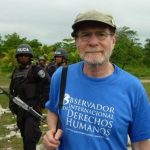
Roger D. Harris lives in California and is with the anti-imperialist human rights organization Task Force on the Americas, the Venezuela Solidarity Network, the US Peace Council, and the Marxist Forum. He writes regularly on Latin American and the Caribbean with a special emphasis on Venezuela, Cuba, and Nicaragua.