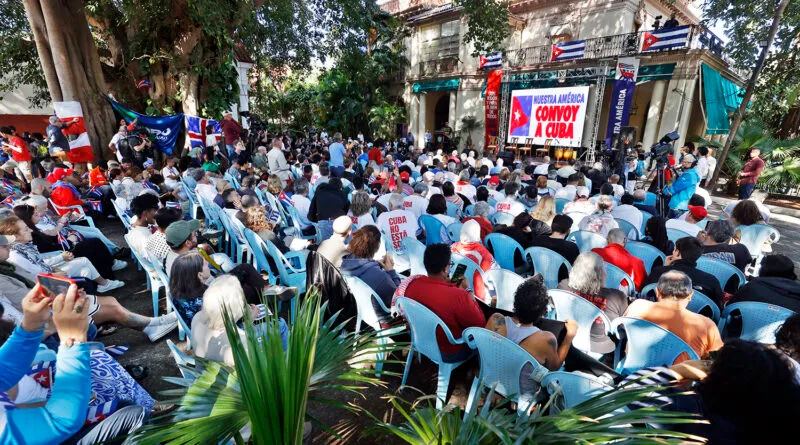
Opening event at ICAP. Photo: Struggle La Lucha.

Orinoco Tribune – News and opinion pieces about Venezuela and beyond
From Venezuela and made by Venezuelan Chavistas
Opening event at ICAP. Photo: Struggle La Lucha.
By Resumen – Mar 23, 2026
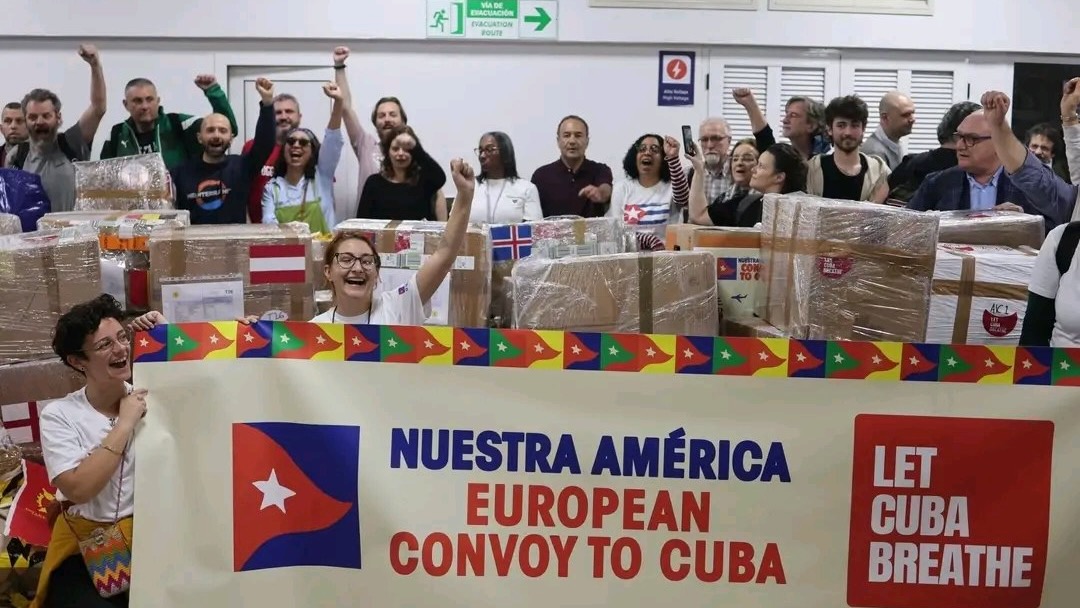
As the Trump Administration ratchets up its threats of war and economic strangulation on Cuba the international Nuestra América Convoy has arrived in Cuba. The convoy unites more than 600 solidarity activists from 38 nations, representing over 140 social, political, and cultural organizations across nearly every continent. Participants include parliamentarians, judges, ambassadors, intellectuals, trade unionists, and community leaders committed to justice and sovereignty.
The international humanitarian mission converged in the capital to delivering essential supplies and to reaffirm global support for the island amid intensified US economic pressure and threats of invasion.
The solidarity groups were greeted personally by Cuban President Miguel Díaz-Canel Bermúdez. at the welcoming ceremony held at the Cuban Institute of Friendship with the Peoples (ICAP), where the group handed over significant donations of food, medicines, hygiene products, medical equipment, and energy-related items like solar panels. These contributions aim to alleviate hardships caused by the long-standing US blockade.
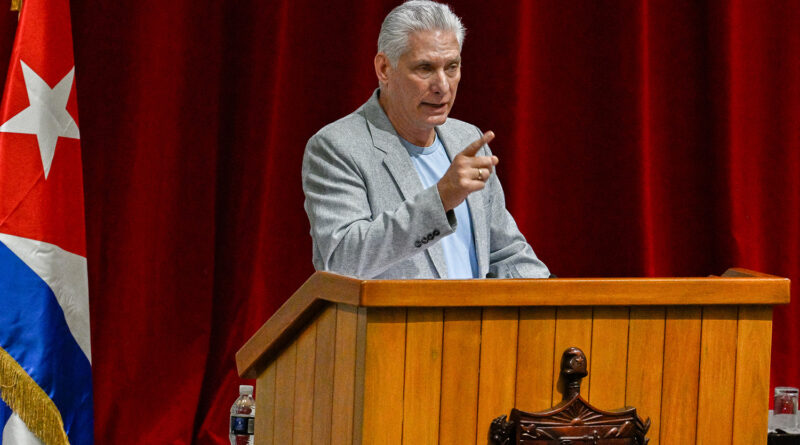
At the welcome Díaz-Canel described the blockade as an “economic and energy asphyxiation project” targeting the Cuban people. He expressed profound gratitude for the convoy’s courage and self-financed efforts, noting that participants covered their own travel and stay expenses to maximize aid delivery.
David Adler, coordinator of the Progressive International and a key organizer, highlighted the mission’s scale. He emphasized that the convoy represents millions worldwide who reject collective punishment and demand an end to coercive unilateral measures.
Nuestra América Convoy Strengthens Global Resistance Network
The initiative, initially conceived as a maritime flotilla inspired by other humanitarian efforts, expanded rapidly into a multi-modal global convoy. Aid arrived by air from Europe and Latin America, with charter flights coming from the US and sea components following from Mexico.
Three vessels—the Granma 2.0 from Puerto Progreso, Yucatán, and two sailboats from Isla Mujeres—are en route, carrying additional tons of supplies. This Latin American contribution underscores regional unity against external aggression.
Participants stressed that Cuba’s challenges—blackouts, shortages, and infrastructure strain—stem largely from tightened sanctions and financial restrictions. The convoy’s direct aid bypasses these barriers, demonstrating practical internationalism.
Organizers declared March 21 an “International Day of Solidarity with Cuba”, resulting in coordinated actions worldwide, including protests at US embassies. The effort builds on prior mobilizations and signals international sustained pressure for policy change.
Geopolitical and Regional Implications
The Nuestra América Convoy reflects deepening Global South solidarity in response to unilateral coercive measures. In Latin America and the Caribbean, it reinforces CELAC principles of non-interference and regional self-determination, countering attempts to isolate progressive governments.
Globally, the mission challenges the normalization of economic blockades as foreign policy tools, highlighting their humanitarian costs and questioning their legality under international law. It amplifies calls in forums like the UN General Assembly—where annual resolutions condemn the US embargo—for multilateral respect of sovereignty.
The convoy’s convergence in Havana strengthens networks among progressive movements, trade unions, and civil society, potentially influencing future coordinated actions on issues like debt relief, climate justice, and anti-imperialist resistance. For Cuba, it bolsters resilience and morale amid ongoing crisis
Message of Brotherhood and Continued Commitment
The welcoming ceremony featured expressions of mutual respect and shared struggle. Díaz-Canel reiterated Cuba’s readiness to collaborate on common causes, from health cooperation to sustainable development.
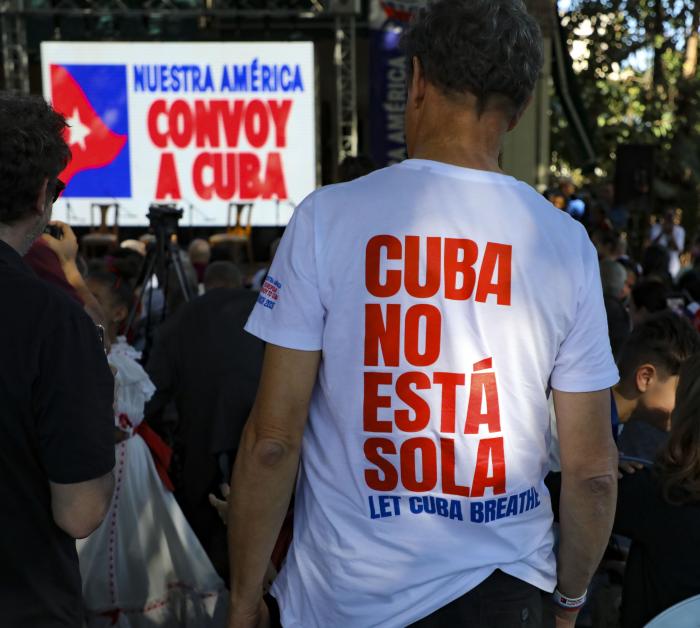
Activists reaffirmed their pledge to continue advocacy until the blockade ends. Many highlighted personal connections—family ties, cultural affinities, or admiration for Cuba’s achievements in education and medicine despite adversity.
As additional delegations arrive and aid distribution begins, the Nuestra América Convoy stands as a powerful symbol of people-to-people diplomacy. It demonstrates that solidarity transcends borders, offering tangible relief while pressing for systemic change in international relations.
In a world marked by polarization and power asymmetries, such initiatives remind us that collective action rooted in justice can challenge dominant narratives and support nations defending their right to self-determination.