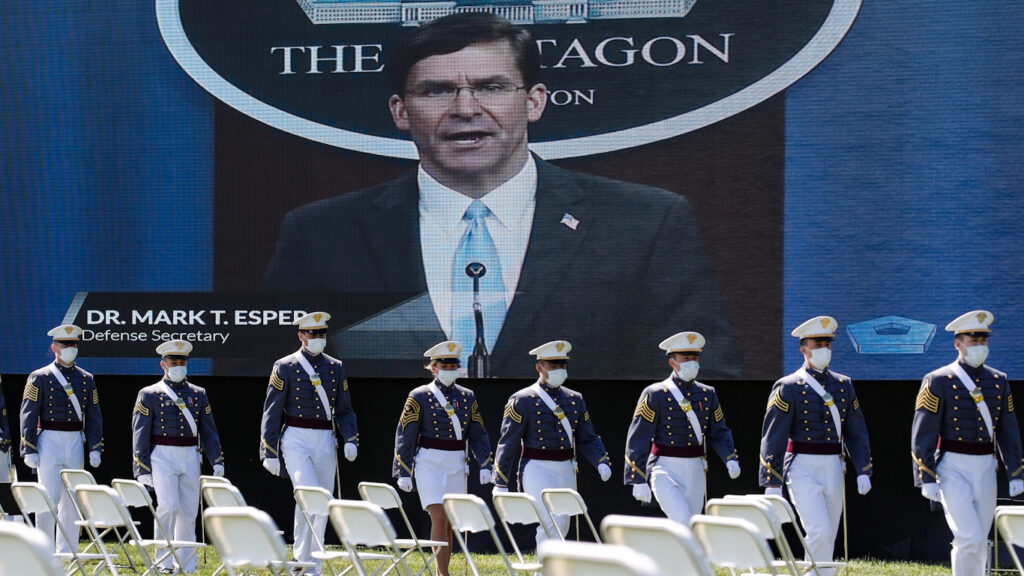
US Defense Secretary Mark Esper speaks during military ceremonies, Saturday, June 13, 2020, in West Point, NY. Photo: John Minchillo/AP
US Defense Secretary Mark Esper speaks during military ceremonies, Saturday, June 13, 2020, in West Point, NY. Photo: John Minchillo/AP
By Alan Macleod – May 23, 2022
A new book from former Defense Secretary Mark Esper has revealed shocking new details about the Trump administration’s war on Venezuela. A Sacred Oath: Memoirs of a Secretary of Defense During Extraordinary Times admits that the Trump administration plotted to invade Venezuela and discussed assassinating President Nicolas Maduro, carrying out a wave of terrorist attacks on civilian infrastructure, and raising a mercenary army to start a Contra-style terror war. Esper also all but confirms Washington’s involvement in Operation Gideon—a botched military invasion of the country, and a 2018 attempt on Maduro’s life.
While barely covered in Western media, Esper’s confessions have caused a storm of commotion in the South American nation. However, Diego Sequera, a Caracas-based investigative journalist, told MintPress that few were taken aback by the news. “It is, in a way, shocking. But on the other hand, it is pretty much usual for us here,” he said, adding: “The news is not surprising at all; we in Venezuela are used to it. Since 2004, when the first Colombian paramilitary unit with a plan to assassinate President [Hugo] Chávez was arrested, there have been a lot of exposés of this nature.”
“Really part of the United States”
Donald Trump invited self-declared Venezuelan President Juan Guaidó to be the guest of honor at his State Of The Union address in 2020, where Guaidó was described as “the true and legitimate president” and received a standing ovation from Republicans and Democrats alike.
Trump and Guaidó’s post-SOTU meeting was reported in the press at the time as “focused on actions to achieve democracy and liberty.” Esper’s account, however, reveals that the conversation revolved around an American invasion of the country. Trump, who Esper says had been “fixated on Venezuela since the early days of his administration,” asked Guaidó directly, “What if the US military went down there and got rid of Maduro?” The offer was music to the ears of the Venezuelan, who replied, “Of course we would always welcome US assistance.” Guaidó had attempted four coups already, each time calling on the people and the military to rebel and join his side, but had received a less than enthusiastic response.
Esper’s account aligns with that of a previous tell-all book from National Security Advisor John Bolton. In The Room Where It Happened: A White House Memoir, Bolton claims Trump said that it would be “cool” to invade Venezuela because it is “really part of the United States.”
The invasion had some vociferous backers in the room, including Mauricio Claver-Carone, senior director of the National Security Council, and Robert O’Brien, Trump’s national security advisor. Esper felt Claver-Carone’s judgment was clouded by his personal investment in undermining Latin American socialism, being as he was, a member of the virulently anti-communist Miami-Cuban community. Often called “the capital of Latin America,” Miami is full of emigres who push Washington for a more hawkish stance on Cuba, Venezuela, and Latin America more generally. Bolton’s book also paints Claver-Carone and O’Brien as hawks.
Esper, however, was alarmed by the prospect of a military quagmire and suspected that Guaidó was far less powerful than he made out to be. As Esper told Trump, the Venezuelan opposition would only “fight to the last American.” When he asked Guaidó directly whether “his people” would be willing to organize, train and fight, the response amounted to “It would be so much easier and quicker if the US would do this for us.”
Operation Gideon
Instead, Esper and Chairman of the Joint Chiefs of Staff Gen. Mark Milley suggested raising an army of mercenaries to carry out a terror war against the Venezuelan population, along the lines of what the US did with the Contras in Nicaragua. As Esper wrote: “General Milley also thought we should look at irregular warfare options, such as the U.S. training and arming of Venezuelan expatriates [REDACTED]. The United States had a long history with these types of operations. It was an idea worth developing. Milley and I had discussed this several times before.”
However, Guaidó’s team was more interested in discussing secret plans of which even Esper was unaware. At one point, one of Guaidó’s colleagues leaned forward and said, “We have some plans you [the US government] know we are working on; they’re just not ready yet,” made a quick reference to Florida, and shared a smile, a nod and a knowing look with Claver-Carone.
At the time, Esper claims to have been nonplussed by this comment. However, he later understood it as a reference to Operation Gideon, an attempt by a semi-private Florida mercenary firm to mount an amphibious invasion of Venezuela, shoot their way to the presidential palace, capture, detain, or “remove” Maduro, and install Guaidó as “president.”
Operation Gideon was attempted just a few weeks after the meeting, but failed spectacularly as the heavily armed mercenaries were overpowered even before they reached land, when disgruntled lobstermen from the local fishing collective disarmed them with nothing more than fishing knives and old revolvers. The event has since been christened Trump’s “Bay of Piglets.”
While the operation was carried out with extraordinary incompetence, the seriousness of the event should not go understated. Guaidó himself signed a contract with SilverCorp USA, a Trump-linked mercenary firm, that stated the group would become his personal death squad after the insurrection, with the power to murder and assassinate all people resisting the new government. For this service, Guaidó promised to pay SilverCorp an initial fee of around a quarter of a billion dollars. The deal was signed at Trump’s Mar a Lago resort in Florida. The US servicemen who participated in the botched operation were sentenced to 20 years in a Venezuelan prison.
This seems pretty big: The contract seems to suggest Silvercorp was going to become a private death squad training up Venezuelan paramilitaries, a la Colombia, after the coup. pic.twitter.com/JIuME9OpBC
— Alan MacLeod (@AlanRMacLeod) May 8, 2020
“I wasn’t at all surprised by Mark Esper’s revelations, given the US’s long and sordid history of destabilization of governments that are not to its liking,” said Steve Ellner, a retired professor of economic history and political science at the Universidad de Oriente in Venezuela.
Ellner, an American who has lived in Venezuela for over 40 years and closely studied the rise in tensions between the two nations, added: “Esper’s revelations lead to nothing less than the conclusion that Washington was involved in the abortive drone strike in August 2018 that exploded at a public event that was meant to kill Maduro, his wife Celia Flores and various top military commanders. It also leads to the conclusion that Washington was involved in the Operation Gideon of 2020 that had as its goal the kidnapping of Maduro.”
Bolton’s book also hints at US involvement in the 2018 assassination attempt, which he describes as “hilarious.” Shortly after the attempt, Trump demanded that Bolton “get it done”—“it” meaning the removal of Maduro. “This is the fifth time I’ve asked for it,” he added.
Terror squad
Esper’s memoir also reveals that senior U.S. officials often spoke frankly and candidly about carrying out waves of terror attacks on Venezuelan civilian infrastructure, a disclosure that sheds new light on a number of highly suspicious explosions, fires, blackouts and other mishaps inside Venezuela—events that the Maduro administration has long blamed on the United States. Western media, however, routinely dismissed these allegations as conspiracy theories.
Esper alleges that on June 9, 2020, O’Brien proposed a military strike on a coastal port that handled much of the country’s oil imports and exports. “The means could be either an air strike or the use of Navy SEALs,” he said. The effect would be to “further disrupt their energy supplies and provoke more unrest.” According to Esper, the group rejected the plan in favor of a coordinated cyberattack on critical Venezuelan infrastructure instead.
However, ten days later, the US government (including Esper himself) agreed to what he called the development of “kinetic and nonkinetic options, both overt and [REDACTED], that could disrupt Venezuela’s oil and arms shipments. Options would need to include actions that would have a material impact on key industrial and other high-value targets.”
Just weeks after this decision, former US Marine and CIA agent Matthew Heath was arrested outside Venezuela’s largest oil refining complex. When apprehended, Heath was carrying a submachine gun, a grenade launcher, four blocks of C4 explosives, a satellite phone, stacks of US dollars and detailed information about the complex. Both the US government and US media have largely ignored Heath’s trial for terrorism and arms trafficking, strongly suggesting that he was indeed caught in the act while on “official business.”
The Beto O’Rourke of Venezuela
While Trump was publicly singing Guaidó’s praises, endorsing him as the true leader of a free Venezuela, behind closed doors, he said exactly the opposite. According to Esper, Trump thought Guaidó was a remarkably “weak” politician, especially compared to the “strong” and “tough” Maduro.
Trump commented on the fact that Guaidó’s wife, Fabiana Rosales, did not even wear a wedding ring, another sign of weakness, according to the president. In fact, Esper says, “Trump seemed more impressed by Rosales than her husband,” always making time to speak to her rather than him, and treating her very warmly. The 73-year-old president commented that the 27-year-old Rosales looked “very young” and attractive.
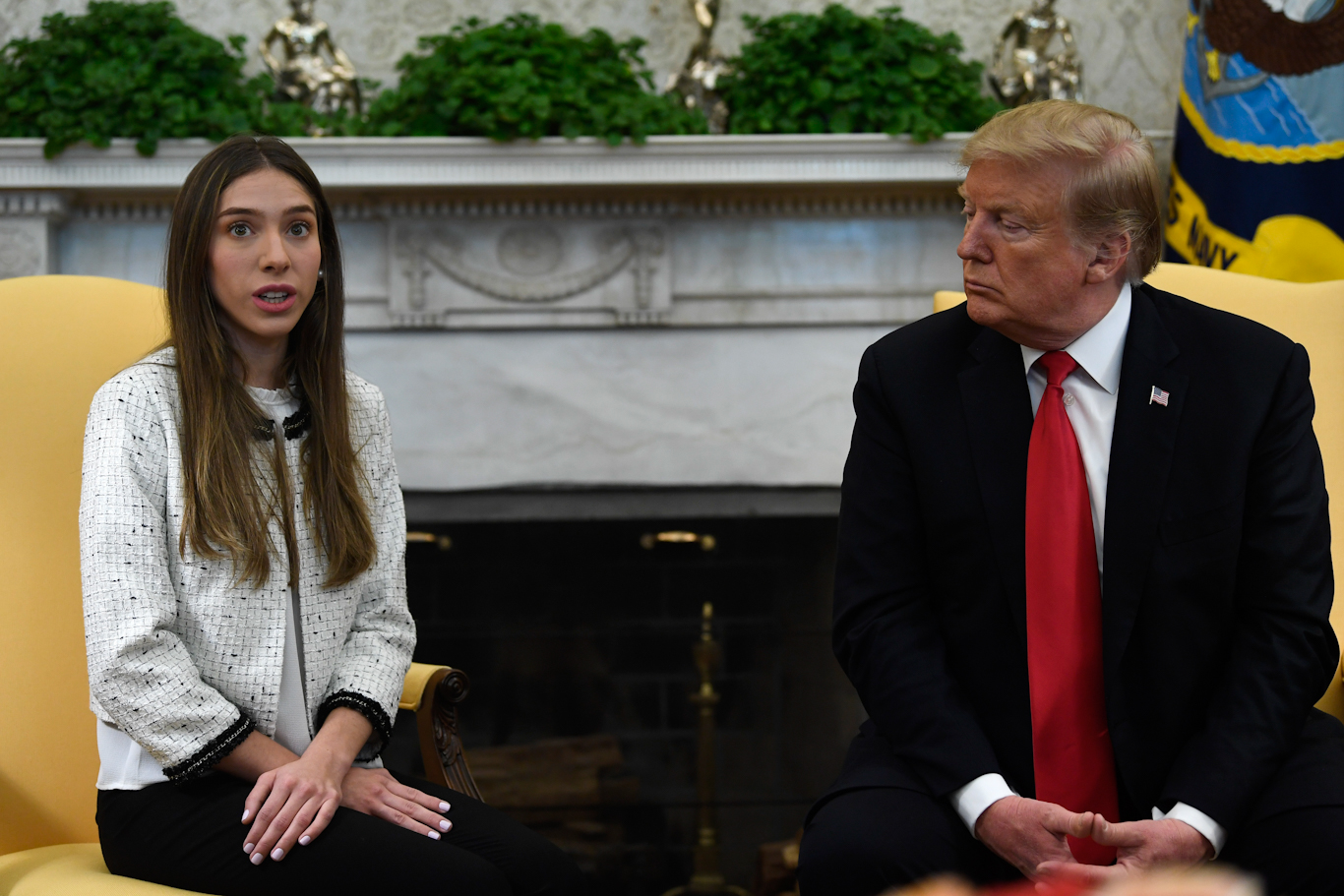
Bolton’s book also mentions that Trump quickly soured on Guaidó but remained intensely interested in his wife. After multiple failed coups, Trump reportedly took to calling him “the Beto O’Rourke of Venezuela”—suggesting that he saw Guaidó as someone who talked a good game but had no substance or support behind him.
Trump’s judgment appears to have been better than that of those around him. After a series of failed coups and embezzlement scandals, what support Guaidó had appears to have withered away, with some polls showing only 4% of the Venezuelan public backing him. As the population suffers, Guaidó continues to live a life of extreme luxury, mostly from Venezuelan funds confiscated by the US. “At this point, Juan Guaidó is nothing other than a joke in Venezuela,” Ellner told MintPress, adding, “I say that not only because he is totally discredited among the Venezuelan people, but because leaders of the hard-line faction of the opposition have distanced themselves from him, and of course even more so in the case of the other half of the organized opposition, which favors dialogue with Maduro.”
Sequera agreed, calling Guaidó the “frontman of a criminal operation that is stealing our own goods.”
Financial terrorism and invading Africa
The Trump administration also tightened the noose around Venezuela’s economy by intensifying the Obama administration’s sanctions. Companies found to be in breach of the US economic blockade could be shut down, fined, and their executives threatened with decades in prison. The result was a collapse in the Venezuelan economy and huge shortages of goods. A United Nations Special Rapporteur who visited the country likened the Trump administration’s actions to a medieval siege, estimated that over 100,000 Venezuelans had been killed as a result, and recommended the UN investigate the US for crimes against humanity.
Esper claims that as Venezuela and Iran tried to find ways of trading with each other to prevent their economies collapsing and to prevent mass deaths, his team “looked for ways to shut those activities down.” One of these methods was to arrest and kidnap Venezuelan businessman and diplomat Alex Saab, who was traveling between the two countries to secure a trade deal. On US orders, Saab was arrested after his plane stopped off in Cabo Verde, an island nation off the west coast of Africa. Saab was detained and is now being held hostage in Florida. In November, MintPress traveled to Caracas to speak to Saab’s wife Camila.
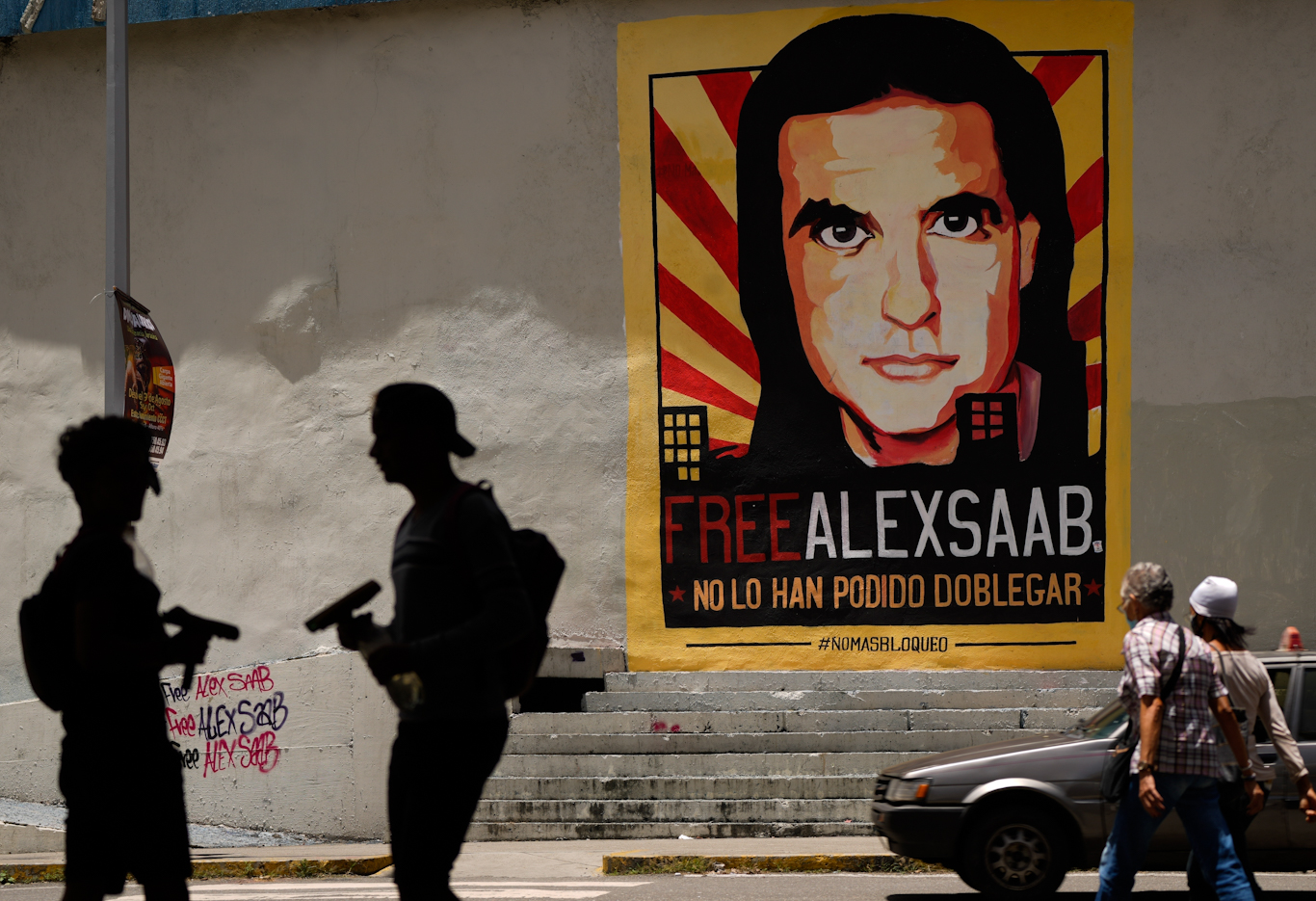
The detention of Saab—who was traveling on official business using a diplomatic passport—was a major violation of international law. Esper reveals that the Trump administration was paranoid that Russia, a Venezuelan ally, would stage a special operations mission to rescue Saab. As a precaution, the Department of Defense immediately ordered the US fleet in the Mediterranean Sea be deployed to Cabo Verde—including thousands of marines.
Thus, the US would be effectively invading Cabo Verde under the pretext that Russia might try to free the diplomat they had kidnapped. Esper and others put a stop to this plan at the 11th hour, but the US continues to hold Saab captive to this day.
By the time of the Saab affair, Bolton had been kicked out of the White House. But his account of US sanctions against Venezuela tells a similar story (although he uses much more sadistic language than does Esper). In Bolton’s view, “we had Maduro by the windpipe and needed to constrict it.” “We began devising steps to take immediately against Maduro’s regime, and also Cuba,” he explained, “Oil sanctions were a natural choice, but why not declare Venezuela a ‘state sponsor of terrorism,’ something I first suggested on October 1, 2018, and also return Cuba to the list after Obama had removed it?” he asked, thereby inadvertently conceding that the State Sponsors of Terrorism list has nothing to do with terrorism and is merely a list of governments the US wants to overthrow.
As Bolton—a much more openly cold-blooded person than Esper—states, sanctions are not about justice, but about “using America’s massive economic power to advance our national interests.”
RELATED CONTENT: Esper Confirms US Was Aware of Saab’s Diplomatic Status
What comes after sociopath?
Throughout his account, Esper portrays himself as a long-suffering but loyal bureaucrat who was trying to do the best thing for his country while surrounded by fools and loose cannons. While he considered quitting in protest, even knowing he would be treated as a “hero” for doing so, he decided to persevere as “it was the right thing to do for our country.” “My soldiers don’t get to quit when the going gets tough, so I won’t either,” he added. Indeed, at some points, Esper presents himself as a veritable saint, claiming that, “[o]n more than one occasion, Leah would say to me, ‘As your wife, please quit. As an American citizen, please stay.’”
Despite his best intentions, Esper still comes off as a sociopath attempting to intimidate the world into submission. Throughout the book, he reveals how he had to constantly quash Trump’s desire to end endless wars and pursue peace with adversaries.
Trump himself proposed a complete withdrawal of American troops from Afghanistan and South Korea, nations where US forces have been stationed for nearly 20 and 70 years respectively. This, for Esper, was “outlandish.” He explained to Trump that, “[w]ithout [the US occupation], we would squander the leverage that a continued US military presence and the threat of force gave us.”
Esper was also “disgusted” by Trump’s proposition to meet with the Taliban for peace talks that could have ended the war. According to Esper, the entire team was against ending the occupation, stating: “As the president went around the room, we each tried to dissuade him in different ways. I recommended against it, reminding him that ‘the Taliban have the blood of American service members on their hands, not to mention their role in the death of nearly three thousand civilians killed on our own soil on 9/11.”
Esper refrained from noting that none of the 9/11 hijackers were Afghans and most came from US ally Saudi Arabia.
Trump was also reportedly highly skeptical of the need to flood Ukraine with weapons, questioning why the United States had to support such a corrupt administration as Zelensky’s and asking why Germany or other European nations could not do so if it were so imperative. To Esper’s relief, the hawks in the room were able to win the day on that issue as well.
MintPress also spoke with Joe Emersberger, co-author of the book Extraordinary Threat: The U.S. Empire, the Media, and Twenty Years of Coup Attempts in Venezuela. In Emersberger’s opinion, there is “absolutely no basis for doubting the truth of the excerpts from Esper that have been so widely cited.” As he explained: “Esper is not ‘confessing’ to anything that could bring legal trouble for himself or other US officials. The US has imposed murderous and utterly criminal sanctions on Venezuela in broad daylight, flaunting its extreme impunity. Esper speaks with [the] calm candor of a hitman who has already cut a rock-solid deal with prosecutors and fears nothing.”
Trump was far from an anti-war activist, however, and was committed to regime change in Venezuela, whatever the cost. The billionaire president reportedly saw it as a massive money-spinner and was obsessed with gaining control over Venezuela’s vast oil fields, something Esper saw as gauche. Esper was also committed to overthrowing Maduro, but only in “the right way, the smart way.”
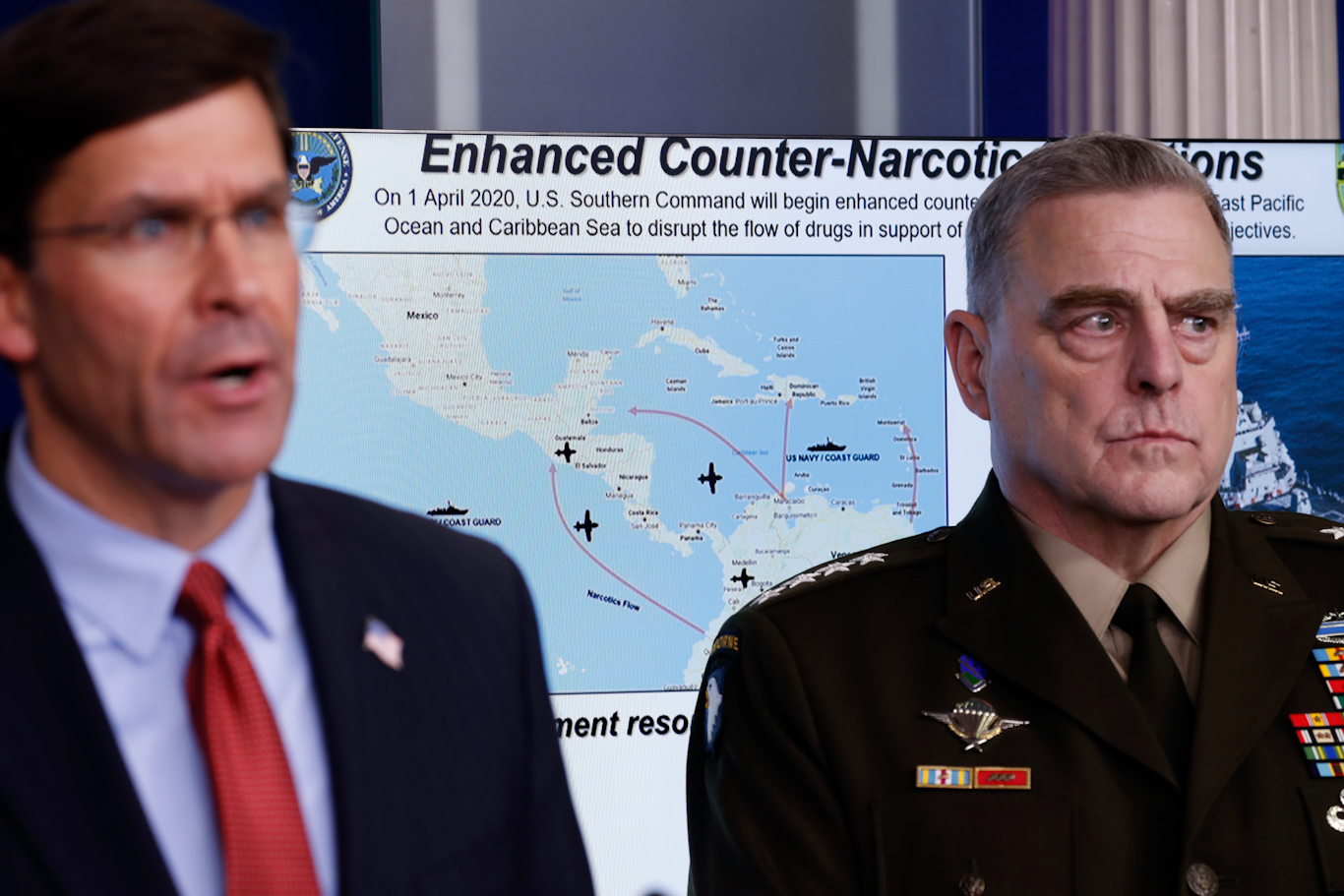
According to Emersberger, “Trump ignorantly assumed the Maduro government would be an easy target, something a bully like Trump could not resist, especially the prospect of direct looting of its oil. By the time he realized otherwise, he and his gang were locked into a cycle of escalation that Biden has essentially maintained, backtracking only slightly due to fallout from the war in Ukraine.”
While Esper was no dove, others in Trump’s inner circle appear to have delighted in cruelty. Esper claims that the president’s senior policy advisor, Stephen Miller, argued that US forces in the Middle East should cut off the heads of enemy forces, smear them in pig’s blood (which Muslims consider to be unholy), and display them in public as a means of psychological warfare.
Yesper
Esper’s new book also makes a number of other sensational claims about what went on in the White House behind closed doors. Among them is that Trump was furious at the George Floyd protests in Washington, asking General Milley why he would not simply shoot them all in the legs as he had asked. Trump demanded 10,000 troops in the streets of the nation’s capital in order to “restore order.”
Trump also reportedly discussed sending 250,000 troops to the Mexican border and firing missiles into Mexico in order to destroy cartel-run drug labs. “We could just shoot some Patriot missiles and take out the labs quietly… no one would know it was us,” he insisted.
Trump, for his part, has rejected the comments about shooting protesters in the leg, although he refused to comment on the Mexico missiles idea. “Mark Esper was a stiff who was desperate not to lose his job,” Trump retorted. “He was a lightweight and a figurehead, and I realized it very early on.” Trump went on to say that Esper was a “RINO [Republican in name only] incapable of leading” and that he called him “Yesper”—a nickname suggesting that he saw him as a spineless yes man.
While the revelations about Mexico and the George Floyd Protests have received significant attention in corporate media, such is the bipartisan consensus in Washington on Venezuela that carrying out wars, regime-change operations, terrorist attacks and assassination attempts against an elected foreign head of state has been ignored. When it comes to the US empire, everyone, it seems, is on the same page.
Featured image: US Defense Secretary Mark Esper speaks during military ceremonies, Saturday, June 13, 2020, in West Point, NY. Photo: John Minchillo/AP

Alan MacLeod is a member of the Glasgow University Media Group and a Senior Staff Writer for MintPress News. After completing his PhD in 2017 he published two books: Bad News From Venezuela: Twenty Years of Fake News and Misreporting and Propaganda in the Information Age: Still Manufacturing Consent, as well as a number of academic articles. He has also contributed to FAIR.org, The Guardian, Salon, The Grayzone, Jacobin Magazine, and Common Dreams.