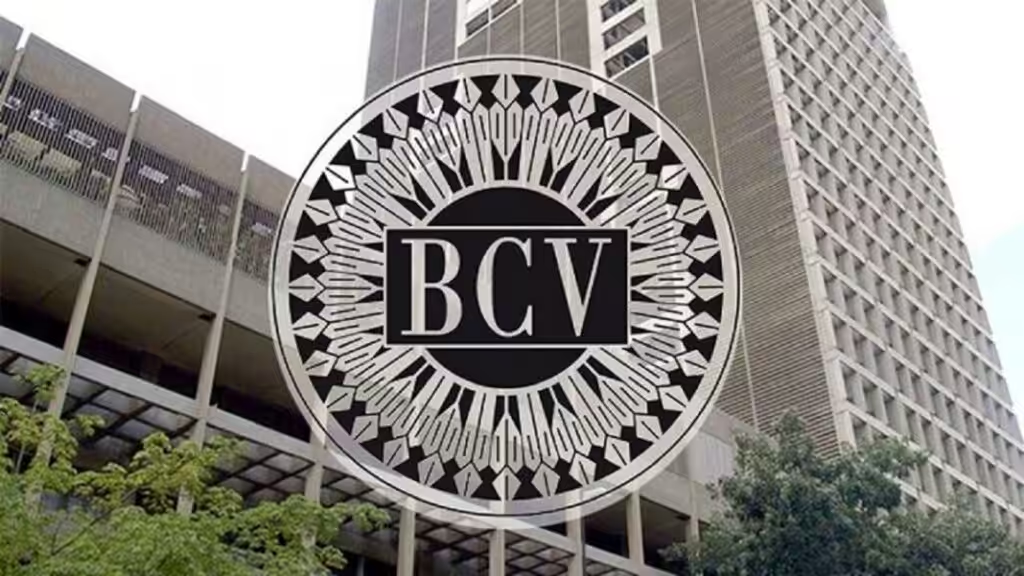
Headquarters of the Central Bank of Venezuela, with the BCV logo in the foreground. File photo.
Headquarters of the Central Bank of Venezuela, with the BCV logo in the foreground. File photo.
Caracas (OrinocoTribune.com)—Venezuelan revenues from oil exports reached US $5.49 billion during the first quarter of the year according to data reported Monday by the Central Bank of Venezuela (BCV), which represents an increase of 21% compared to the same period in 2025, when the country earned US $4.5 billion.
Similarly, non-oil exports reached US $2.26 billion for the first quarter of the year, representing a 15% increase compared to the same period in 2025, when it stood at US $1.96 billion.
This is the first Balance of Payments report published by the BCV in seven years, as illegal US sanctions acutely distorted the Venezuelan economy, and Venezuelan monetary authorities opted for data opacity. This data is key if a country seeks to have its foreign debt restructured with International Monetary Fund (IMF) assistance.
Investment growth
Oil investments have been steadily increasing in the country following the recent reform of the Organic Hydrocarbons Law and the ease of illegal US sanctions via OFAC licenses, which have allowed for the renegotiation of agreements with major international oil corporations such as Chevron, Repsol, BP, Shell, Eni, Hunt Overseas Oil Company, and Crossover Energy Holding. These negotiations are seen by many Chavista analysts as concessions to US imperialism.
Recently, Acting President Delcy Rodríguez announced that the country has reached a production of 1.25 million barrels of oil per day and projected sustained growth by the end of the year thanks to the aforementioned conditions and the diligence of the nation’s workers in the petroleum sector. This is the highest level of oil output that Venezuela has recorded in seven years.
All the aforementioned conditions came to light after the January 3 US invasion of Venezuela and abduction of President Nicolás Maduro. In the criminal attacks, the US killed more than 100 people, including 32 Cuban and 47 Venezuelan soldiers.
Recently, Acting President Rodríguez noted the importance of maintaining the productive growth path set by the Ministry for Hydrocarbons and PDVSA to reach the goal of a production of 1.4 million barrels per day by the end of this year.
Meanwhile, a monthly report published in early June by the Organization of the Petroleum Exporting Countries (OPEC) for May showed that Venezuela’s crude oil production had increased by 27.6% from January to May.
Economic forecasts project a GDP growth of 15.2% for 2026, with oil GDP increasing by 20.8% and non-oil GDP by 13.9%. The increase in oil GDP will serve as the main driver of overall national economic growth. During 2025, oil GDP grew by 16%, due to a 17.4% increase in production.
Venezuela has the world’s largest proven crude oil reserves, some 303 billion barrels, equivalent to 17% of the global total. Most of it is found in the Orinoco Belt in the form of extra-heavy crude oil that requires advanced technology and large investments to be exported.
Venezuela’s Education Minister: There is No Plan to Lay Off Public Sector Workers
According to an economic projection by the United Nations Development Program (UNDP) on Venezuela, published in April, the country is projected to earn more than US $22 billion from oil exports in 2026, exceeding the US $14.7 billion earned last year by more than 50%.
Special for Orinoco Tribune by staff
OT/JRE/SL