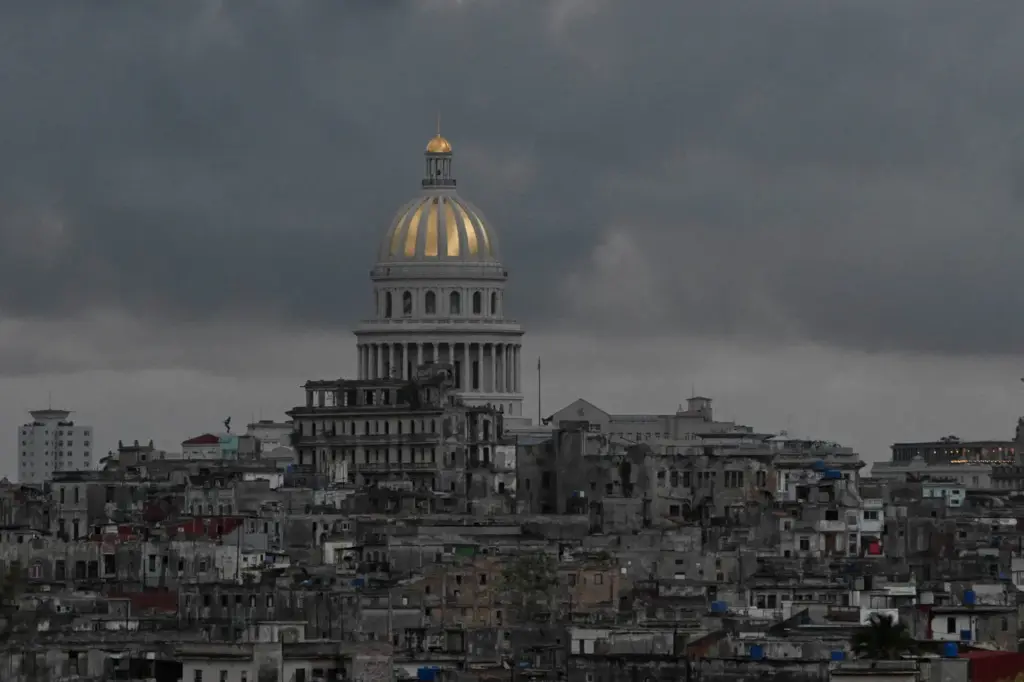
A view of Havana with the National Capitol building following a nationwide blackout, March 17, 2026. Photo: Reuters/file photo.
A view of Havana with the National Capitol building following a nationwide blackout, March 17, 2026. Photo: Reuters/file photo.
On Tuesday, July 14, the Havana Electric Company reported that at 11:05 a.m., another total blackout occurred in the National Electric System (SEN), the third one in the last eight days.
The company explained that a shutdown of the Felton 1 unit caused a fluctuation in the system parameters with a sudden frequency change, which led to the SEN outage. Work is currently underway to restore power to the thermoelectric plants in western Cuba.
The SEN is preparing plans for the creation of microsystems, which will allow for the restoration of power to vital centers once the necessary technical conditions are met, as part of the recovery process.
This latest interruption comes amid growing economic pressure on Cuba, marked by an oil blockade imposed by the United States.
Washington is blocking oil shipments to the island following an executive order signed in January by US President Donald Trump, which threatens tariffs on countries that export or facilitate the supply of fuel to Cuba.
La nueva desconexión del Sistema Eléctrico Nacional es una consecuencia directa del cerco energético y el recrudecimiento extremo del bloqueo de EEUU contra #Cuba.
Forma parte del castigo colectivo al pueblo cubano al que el gobierno estadounidense está apostando para destruir… pic.twitter.com/06vJreNITd
— Bruno Rodríguez P (@BrunoRguezP) July 11, 2026
Since late 2024, the National Electric System has suffered several nationwide blackouts amidst the effects of the more than six-decade-long economic blockade, which limits access to resources for the maintenance and development of the electricity sector.
Restoring the SEN is a slow and laborious process. It begins with simpler starting sources such as solar, hydroelectric, and generating engines, followed by interconnecting small areas and bringing power to the thermoelectric plants, the backbone of national electricity generation.