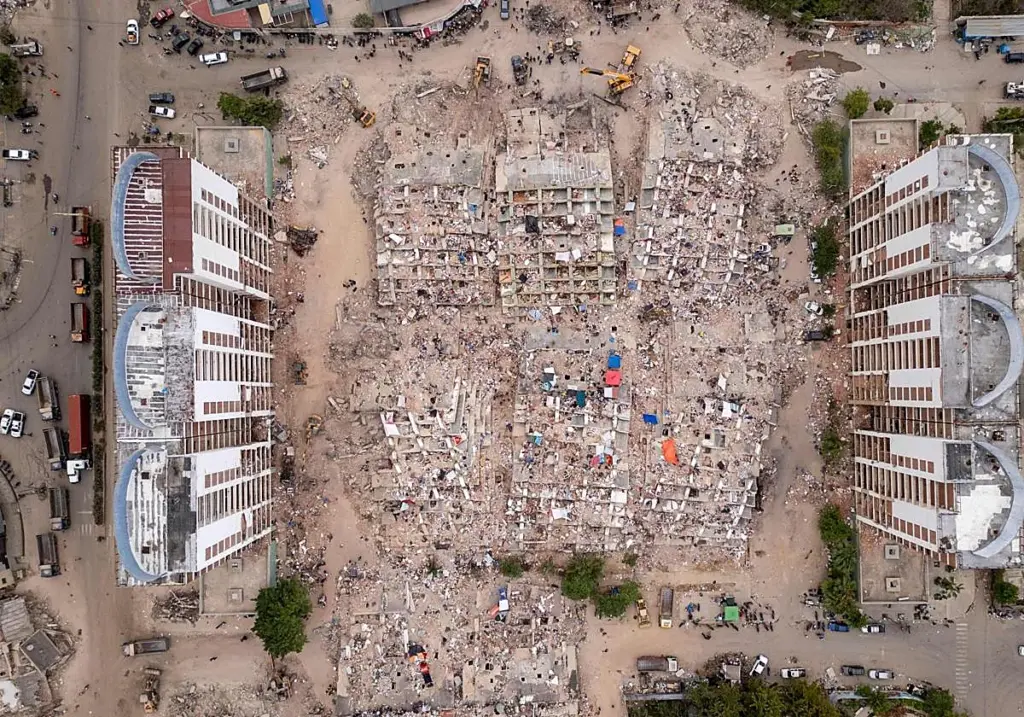
An aerial view of the catastrophic destruction across the Caraballeda and Caribe neighborhoods in the coastal city of La Guaira, Venezuela, on July 4, 2026, the area hardest hit by the recent 7.2- and 7.5-magnitude twin earthquakes. Photo: AFP.
An aerial view of the catastrophic destruction across the Caraballeda and Caribe neighborhoods in the coastal city of La Guaira, Venezuela, on July 4, 2026, the area hardest hit by the recent 7.2- and 7.5-magnitude twin earthquakes. Photo: AFP.
Caracas (OrinocoTribune.com)—The official death toll from the devastating double earthquake that struck Venezuela on June 24 has risen to 4,490, while the number of reported injuries remains stable at 16,740. The updated figures were shared on Sunday by Jorge Rodríguez, the head of the General Staff for the Creation of Temporary Camps. Urban search and rescue operations have successfully brought a total of 6,462 survivors to safety, a figure that has plateaued as operations transition into long-term recovery and stabilization.
Despite the physical magnitude of the disaster and the ongoing challenges imposed by the illegal West’s economic blockade, Venezuela continues to expand its comprehensive relief operations in close cooperation with organized popular power. To date, seismological agencies have recorded a total of 1,222 aftershocks, keeping civil defense units on constant alert.
Infrastructure damage and the housing response
The dual seismic events caused severe structural damage across north-central Venezuela, particularly along the coastal regions. Technical inspections have confirmed that 856 buildings suffered varying degrees of structural compromise, while 190 structures collapsed entirely. Only 5% of the damaged buildings are newly built housing. This severe damage has left 17,907 citizens temporarily homeless.
In stark contrast to the predatory logic of capitalist crisis management, where displaced populations are frequently left to fend for themselves, the Venezuelan government has rapidly deployed a humanitarian safety net. A network of 108 fully equipped temporary camps has been established, currently providing dignified shelter, security, and baseline resources to 19,583 people. In total, Venezuela’s emergency response mechanisms have provided direct, comprehensive assistance to 120,794 families affected by the disaster.
Logistical victory and popular mobilization
The scale of the humanitarian and medical relief effort highlights the resilience of Venezuela’s civil-military alliance under emergency conditions. State healthcare networks have provided specialized medical care to 32,401 patients within the affected zones. On the logistical front, specialized supply lines have distributed 9,995 tons of food and 18,507,166 liters of potable water to ensure food security and prevent public health crises in vulnerable communities.
This massive logistical operation is sustained by a formidable human contingent. A total of 31,837 public safety, rescue, and military personnel remain active on the ground. This official deployment is reinforced by the revolutionary solidarity of 30,535 organized civil volunteers and the technical expertise of 2,422 international rescue workers from a wide range of nations that responded to Venezuela’s emergency appeal.
Grid stabilization and sovereign environmental protocols
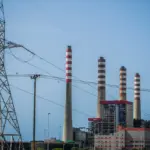
Adding to the recovery efforts, the Venezuelan Public Works Ministry released statements on Saturday, July 11, detailing crucial advancements in basic services and public safety protocols, with 96% of the electricity service restored. Electrical brigades have been deployed extensively to stabilize the local power grid and restore electricity service across the hardest-hit sectors of La Guaira and Caracas. These rapid infrastructure repairs have been achieved despite the strict limitations imposed by illegal US sanctions, which have restricted Venezuela’s access to critical electrical components and grid technologies.
Furthermore, Jorge Rodríguez’s Sunday briefing outlined a strict environmental protocol overseeing the extensive debris removal operations. Reaffirming its commitment to ecological protection, the Venezuelan government announced that all structural rubble and collapsed materials are being systematically transported to designated inland processing zones located far from the sea. This strategic disposal plan ensures that the delicate marine ecosystems off the Caribbean coastline remain protected from contamination and environmental runoff. The protocol demonstrates a conscious, sovereign approach to disaster management that prioritizes both human safety and ecological integrity.
Special for Orinoco Tribune by staff
OT/JRE/SF