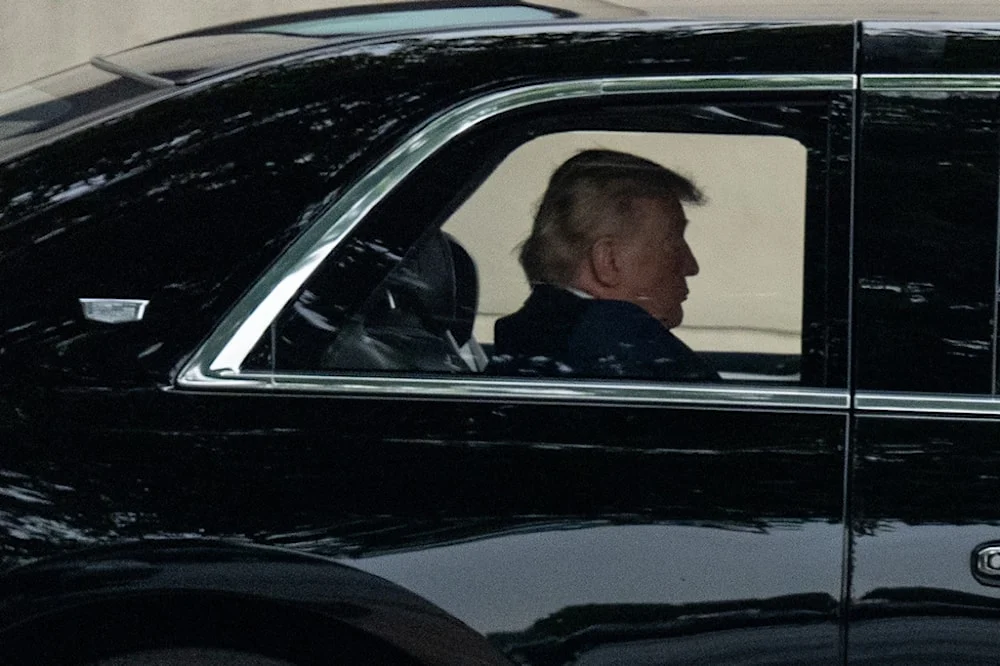
US President Donald Trump departs Walter Reed National Military Medical Center, May 26, 2026. Photo: AP.
US President Donald Trump departs Walter Reed National Military Medical Center, May 26, 2026. Photo: AP.
The United States faces growing economic risks if the war on Iran continues to drive up energy prices, with a leading economist warning that a prolonged oil market shock could increase the likelihood of a recession.
Speaking to Bloomberg on Friday, May 29, Moody’s Analytics chief economist Mark Zandi said the US economy has limited time to avoid the consequences of sustained increases in crude oil and gasoline prices.
According to Zandi, financial markets are hoping that a diplomatic breakthrough with Iran will help ease pressure on global energy markets and reverse the recent surge in oil prices.
“It would have to happen very quickly – in the next day, two days, three days, next week or so,” the economist said of a possible peace agreement with Iran. “After that, I think we’re going to have a real problem.”
Oil shock warning
Oil prices have climbed amid concerns that escalating regional tensions could disrupt global supplies, particularly if shipping routes in the Gulf are affected. Analysts have focused on the Strait of Hormuz, a key transit corridor for international oil exports.
Zandi warned that persistently high fuel costs could begin to weigh heavily on American consumers, reducing spending and slowing economic activity. He identified gasoline prices exceeding $5 per gallon as a critical threshold that could trigger broader economic consequences.
“We’re going to get to that $5 a gallon,” Zandi said. “I think that will be enough to push an already fragile economy into recession.”
The economist also pointed to shrinking US oil reserves, noting that the country’s Strategic Petroleum Reserve recently stood at 365 million barrels, its lowest level in roughly two years, according to data from the US Energy Information Administration.
In addition to fuel prices, Zandi said crude oil reaching more than $125 per barrel would be another warning sign that recession risks are intensifying.
Markets react sharply
The concerns come as reports indicate Tehran may suspend negotiations and take measures affecting maritime traffic if its demands are not addressed. Iranian news agency Tasnim reported Monday that Iran intends to halt talks and block the Strait of Hormuz until key conditions are met, particularly if Israeli attacks on Lebanon continue.
The report added to market anxiety, helping drive oil prices higher at the start of the week. Brent crude and US benchmark crude both rose by about 7% on Monday morning.
Later, markets eased somewhat after US President Donald Trump claimed that a ceasefire understanding had been reached between “Israel” and Lebanon and that an Israeli attack on Beirut had been averted. Following the announcement, oil prices retreated but remained elevated, trading below $95 per barrel.
Iran’s Foreign Minister: No Final Agreement Reached With US, Talks Still Ongoing
Time running out
Energy consultancy HFI Research also warned that time may be running out to prevent more severe economic consequences if the situation remains unresolved.
“The issue is already going on for hours, for days: options and Trump is running out of time,” the company wrote in a post published Sunday on Substack. “By the end of June, if the Strait of Hormuz is still closed, the global oil supply is guaranteed to fall to an operating low.”
Despite the warnings, recession forecasts remain uncertain. An analysis by the Federal Reserve Bank of New York found that bond market indicators placed the probability of a US recession within the next 12 months at approximately 17% as of the end of April.