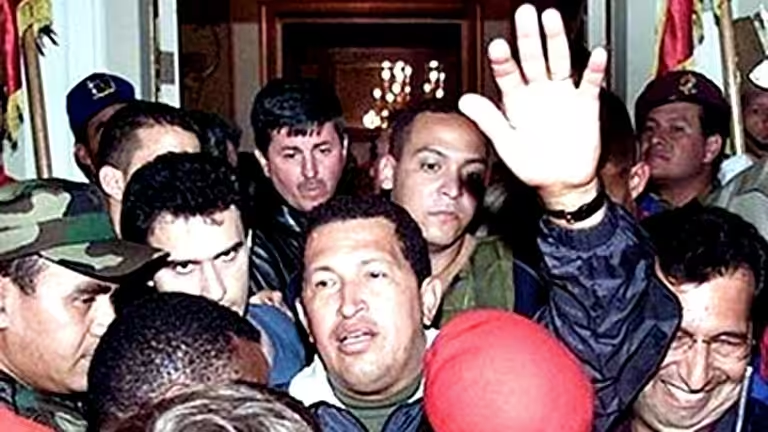
President Chávez freed from captivity by the people, thus defeating the coup within 48 hours. File photo.
President Chávez freed from captivity by the people, thus defeating the coup within 48 hours. File photo.
By Yves Engler – Jan 6, 2026
As part of justifying Donald Trump’s crass imperial aggression in Venezuela Canadian officials have taken up the mantra of “democracy”.
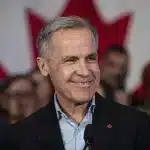
In one post on the weekend Mark Carney opined about “the democratic will of the Venezuelan people” while in a follow-up statement the prime minister boasted that “Canada has not recognised the illegitimate regime of Maduro since it stole the 2018 election.” But Canadian hostility to the independent, socialist minded government dates to a time when no credible observer questioned the government’s electoral legitimacy.
Ottawa has been hostile to the Venezuelan government for over two decades. The Jean Chretien government wasn’t overly concerned about democracy in April 2002 when the military took President Hugo Chavez prisoner and imposed an unelected government. Ottawa passively supported a coup, which lasted only 48 hours before popular demonstrations, a split within the army and international condemnation returned Chavez. While most Latin American leaders condemned the coup, Canadian diplomats were silent. “In the Venezuelan coup in 2002, Canada maintained a low profile, probably because it was sensitive to the United States ambivalence towards Venezuelan president Hugo Chavez,” writes Flavie Major in Promoting Democracy in the Americas.
Taking up his post three months after the coup, Canada’s ambassador to Venezuela, Allan Culham was hostile to Chávez. According to a WikiLeaks publication of US diplomatic messages, “Canadian Ambassador Culham expressed surprise at the tone of Chavez’s statements during his weekly television and radio show ‘Hello President’ on February 15 [2004]. Culham observed that Chavez’s rhetoric was as tough as he had ever heard him. ‘He sounded like a bully,’ said Culham, more intransigent and more aggressive.”
The US cable quoted Culham criticizing the national electoral council and speaking positively about the group overseeing a presidential recall referendum targeting Chavez. “Culham added that Súmate is impressive, transparent, and run entirely by volunteers,” it noted. The name of then head of Súmate, Maria Corina Machado, was on a list of people who endorsed the coup against Chavez, for which she faced charges of treason. Machado signed the now-infamous Carmona Decree that dissolved the National Assembly and Supreme Court and suspended the elected government, the attorney general, comptroller general, and governors as well as mayors elected during Chavez’s administration. It also annulled land reforms and reversed increases in royalties paid by oil companies.
In January 2005, Global Affairs invited Machado to Ottawa. Machado oversaw Súmate, an organization at the forefront of efforts to remove Chavez as president. Just prior to this invitation, Súmate led an unsuccessful campaign to recall Chavez through a referendum in August 2004.
Canada also financed Súmate. According to disclosures made in response to a question by NDP foreign affairs critic Alexa McDonough, Canada gave Súmate $22,000 in 2005. Minister of International Cooperation José Verner explained that “Canada considered Súmate to be an experienced NGO with the capability to promote respect for democracy, particularly a free and fair electoral process in Venezuela.”
In fact, alongside large sums from Washington, Canada has provided millions of dollars to groups opposed to the Venezuelan government over the past two decades. According to a 2010 report from Spanish NGO Fride, “Canada is the third most important provider of democracy assistance” to Venezuela after the U.S. and Spain. In a 2011 International Journal article Neil A. Burron describes an interview with a Canadian “official [who] repeatedly expressed concerns about the quality of democracy in Venezuela, noting that the [federal government’s] Glyn Berry program provided funds to a ‘get out the vote’ campaign in the last round of elections in that country.” You can bet it wasn’t designed to get Chavez supporters to the polls.
The Stephen Harper government didn’t hide its hostility to Chavez. When Chavez was re-elected president with 63 per cent of the vote in December 2006, 32 members of the Organization of American States — which monitored the election — supported a resolution to congratulate him. Canada was the only member to join the U.S. in opposing the message.
Just after Chavez’s re-election, Harper toured South America to help stunt the region’s rejection of neoliberalism and U.S. dependence or as a Global Affairs official told Le Devoir “to show [the region] that Canada functions and that it can be a better model than Venezuela.” During the trip, Harper and his entourage made several comments critical of the Chavez government. Afterwards the prime minister continued to demonize a government that had massively expanded the population’s access to health and education services. In April 2009 Harper responded to a question regarding Venezuela by saying, “I don’t take any of these rogue states lightly.” A month earlier, the prime minister referred to the far-right Colombian government as a valuable “ally” in a hemisphere full of “serious enemies and opponents.”
After meeting opposition figures in January 2010, Minister for the Americas Peter Kent told the media, “Democratic space within Venezuela has been shrinking and in this election year, Canada is very concerned about the rights of all Venezuelans to participate in the democratic process.”
The head of Canada’s military joined the onslaught of condemnation. After a tour of South America in early 2010, Walter Natynczyk wrote: “Regrettably, some countries, such as Venezuela, are experiencing the politicization of their armed forces.” (A Canadian general criticizing another country’s military is, of course, not political.)
After Chavez died in 2013 Harper declared that Venezuelans “can now build for themselves a better, brighter future based on the principles of freedom, democracy, the rule of law, and respect for human rights.” But when Maduro won the presidential election later that year Ottawa called for a recount, refusing at first to recognize the results.
In response to Venezuela’s economic troubles, the rightward shift in the region and Donald Trump’s hawkishness, Canada ramped up its bid to oust Venezuela’s elected president in 2017. Under Chrystia Freeland’s direction Canada helped create the Lima Group, imposed sanctions, broke off diplomatic relations, took Venezuela to the International Criminal Court and recognized a marginal opposition figure as president in January 2019.
None of this had anything to do with an equal voice for every Venezuelan. Rather it was about trying to keep a country trying to go its own way in line with the US empire.
Canadian support for the kidnapping of Nicolas Maduro has nothing to do with “democracy”.
Yves Engler is Montreal-based writer and political activist. In addition to ten published books, Engler's writings have appeared in the alternative press and in mainstream publications such as The Globe and Mail, Toronto Star, Ottawa Citizen, and Ecologist.