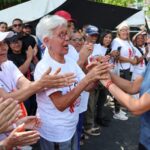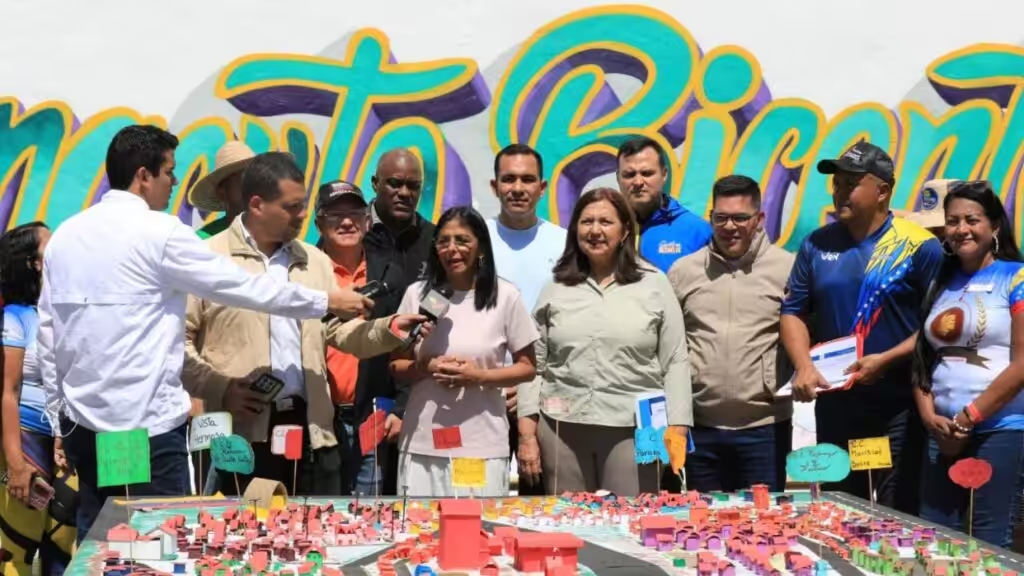
Venezuelan Acting President Delcy Rodríguez giving statements during a visit to the Guaicamacuto Commune in the Caracas-La Guaira old road on Thursday, February 19, 2026. Photo: X/@DrodriguezVen.
Venezuelan Acting President Delcy Rodríguez giving statements during a visit to the Guaicamacuto Commune in the Caracas-La Guaira old road on Thursday, February 19, 2026. Photo: X/@DrodriguezVen.
Caracas (OrinocoTribune.com)—During a visit to the Guaicamacuto Bicentennial Commune located on the Caracas-La Guaira old road, Venezuelan Acting President Delcy Rodríguez highlighted the importance of the communal economy in breaking the economic blockade.
“These communal economic circuits are precisely aimed at, firstly, breaking the criminal economic blockade against Venezuela. Through what means? Community organization,” the acting president explained this Thursday, February 19. “Secondly: supplying our people with food. And thirdly: ensuring fair prices for the Venezuelan people.”
Rodríguez emphasized that the communal economy is a fundamental engine of the new economic model the Chavista government aims to build—a diversified economic model independent from oil revenues.
She also urged the country to learn from the lessons of the criminal blockade against the homeland: to be autonomous and not to be dependent. “And here, from the communal economy, we are building an independent, diversified economic model, based on the vast capabilities that Venezuela has,” she stated.
Communal circuits and price stability
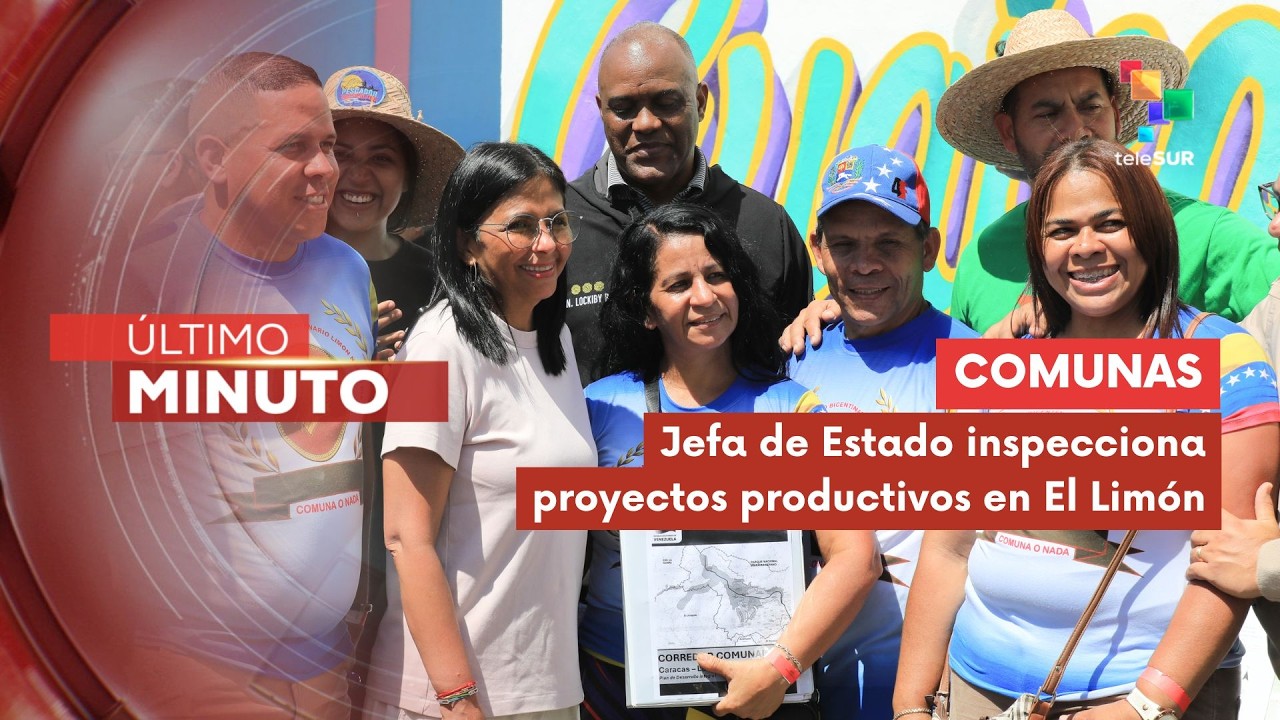
Rodríguez highlighted that, thanks to the linking of economic activity in the country’s communal circuits, a 20% reduction in the price of meat has been achieved compared to private market prices.
She noted that the economic cabinet has been working gradually since October to lower the price of this product. This achievement was made possible through an agreement with the Apure state slaughterhouse, the largest in the country, which allows cattle to be transported directly to the capital’s meat processing plants to supply communal stores, open-air markets, and the Protein Supply Plan.
Venezuela’s Cumanacoa Commune Produces Cane Blocks and Molasses
March 8 popular consultation
Rodríguez reported that more than 36,000 projects have already been registered for the Communal Popular Consultation, scheduled for March 8. Of that volume, the Chavista leader stated that 67% are “human city” projects, which address the areas where the economic blockade has had the greatest impact: public services.
“The remaining 33% is for economic transformation,” Rodríguez continued. She emphasized that the large number of projects heading to a popular vote in March signifies that the communes are “participating, and taking action.”
“Through communal-based organization, the Venezuelan people participate in their destiny, in the transformations the country needs,” she explained, “in economic transformation, in the transformation of the human city, for services, for citizen security, for the social protection system, in the political organization of the communes, respecting the environment, science, technology, and geopolitics.” Rodríguez further reaffirmed that the communes are “showing a glimpse of how great Venezuela can be and what we can achieve as a people.”
Special for Orinoco Tribune by staff
OT/JRE/AU