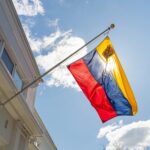
Almost a year on from the Trump administration’s failed bid to oust Venezuela’s socialist leader, the media is scrambling to make sense of where it all went wrong – and finally admitting that Nicolas Maduro is going nowhere.
When the “virtually unknown” US-backed opposition figure Juan Guaido declared himself “interim president” in January, he won instant support from Washington’s global allies as the “legitimate” leader of Venezuela. Western media was soon consumed with a sense of hopeful anticipation that Washington was on the verge of overthrowing another ‘bad actor’ and preparing to pat itself on the back for supporting the cause of “democracy” and “human rights.”
Change of tune
Now, nearly a year later, the sense is one of reluctant resignation and an admission that, despite best efforts, another attempt at ‘regime change’ has failed – and that Guaido’s opposition was not all it was cracked up to be.
In a recent lament for the failed coup, the Wall Street Journal admits that Maduro appears to be “in firm control” and bemoans that the Trump administration had predicted his “imminent downfall” too early. The WSJ admits that the White House showed “excessive optimism” and suffered from what critics called “unrealistic expectations that [US] pressure tactics” would easily force Maduro from power. The newspaper acknowledges that Maduro’s position is secure despite debilitating US oil sanctions and attempted international isolation.
RELATED CONTENT: Venezuela’s Civilian Militia Surpasses Target, Reaches 3.3 Million Members
It’s a common pattern and one analysts watching US regime-change efforts around the world know all too well. The same script played out in Syria as Washington and its allies predicted the swift downfall of President Bashar Assad as early as 2012, but are still waiting today, causing Foreign Policy magazine to admit recently that he is now Syria’s “best case scenario” after US efforts to install “moderate” jihadis into power failed.
What went wrong?
In Venezuela, US media is even starting to admit that the troubled economy is showing signs of improvement under Maduro, thanks to an uptick in oil exports and increased dollarization, while the Guaido-led opposition grapples with its own corruption scandal, proving to Venezuelans that it may not be an “honest alternative” to Maduro at all.
The WSJ points to the removal of former national security adviser John Bolton (one of Maduro’s “staunchest adversaries”) as part of the reason why US efforts failed. It also points to the eruption of anti-government protest movements across the region, in Ecuador, Bolivia and Chile, which it says allowed Maduro to distract from his own “misrule” and food and medicine shortages. Though there is no mention of how crippling US sanctions directly impacted the lives of ordinary Venezuelans, despite a study showing that they’ve caused “very serious harm to human life and health” including an estimated 40,000 deaths.
Determined not to admit defeat, top US envoy to Venezuela Elliott Abrams, whose career has been defined by repeated efforts to topple uncooperative leaders in Latin America, told the paper that it was “flatly wrong” to assume things were improving for “precarious” Maduro – but reality seems to tell a different story.
RELATED CONTENT: How What Could Not Be Achieved in Venezuela was Done in Bolivia
What to do next?
A recent piece published by Bloomberg gives an indication of where US policy on Venezuela may be headed next – and it’s another familiar road. When all options are exhausted and failed, it seems the next step is always to look to Russia for help.
Sources “familiar with the matter” told Bloomberg that the Trump administration is “losing confidence” that Guaido can ever topple Maduro and, as such, is considering “new and more aggressive strategies.” One of those strategies, they said, would be “an attempt to partner with Russia” –an ally of Maduro– in order to “ease out” the leader.
This has echoes of US policy in Syria, too, where Washington repeatedly demanded that Moscow change its strategy and abandon its support of Assad – before eventually seeming to admit that ousting him should no longer be a top priority.
Indeed, there was a time when Western media were suggesting that, under US pressure, Moscow could help push Assad out, too. There were even reports that Russian President Vladimir Putin had asked the Syrian leader to step down. Nothing came of that pipe dream and a US effort to partner with Russia to push out Maduro seems equally likely to fail, since Moscow has remained supportive of the democratically-elected leader and shown no indication that it takes “interim president” Guaido very seriously.
While US media is still largely reluctant to offer the perspective of pro-Maduro Venezuelans or analysts who point out that Washington’s policies have wreaked havoc on Latin America for decades – they are at least finally painting a picture closer to reality.
Featured image: © Reuters / Miraflores Palace