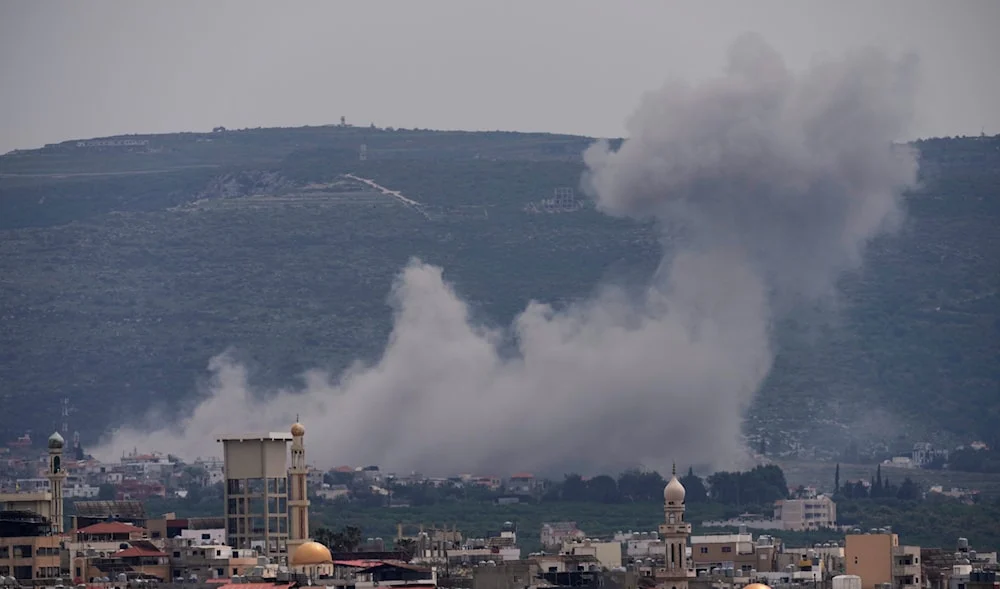
Smoke rises following an Israeli airstrike on the village of Qlaileh, as seen from the southern port city Tyre, Lebanon, April 15, 2026. Photo: AP.
Smoke rises following an Israeli airstrike on the village of Qlaileh, as seen from the southern port city Tyre, Lebanon, April 15, 2026. Photo: AP.
A temporary ceasefire in Lebanon is expected to be announced wednesday following Iranian pressure, yet concerns over Netanyahu potentially disrupting the agreement remain.
A ceasefire in Lebanon is expected to be approved starting wednesday, following Iranian follow-ups and pressure efforts, a senior Iranian political-security source told Al Mayadeen.
“With much follow-up and pressure from Iran, a ceasefire in Lebanon will be approved as of wednesday,” the source told Al Mayadeen, adding that “the duration of the ceasefire will be one week, extending until the end of the ceasefire period between Iran and the United States.”
Commenting on possible challenges to the agreement, the source said there remains a risk of disruption by Israeli Prime Minister Benjamin Netanyahu. They stated, “It is possible that Netanyahu, being the disruptive element he is, will try to sabotage this agreement.”
“However, we are dealing with Washington as the sponsor and partner of the occupation and the party responsible for restraining him,” the senior source asserted.
Lebanese officials informed of ceasefire efforts
Ibrahim al-Moussawi, a member of the Loyalty to the Resistance bloc in the Lebanese parliament, told Reuters that diplomatic efforts by Iran and other regional countries could produce a ceasefire in Lebanon “soon”, adding that Tehran had used its blockade of the Strait of Hormuz as leverage.
“The Iranians are exercising high pressure against the Americans and they have put their conditions that the Americans should include Lebanon in the ceasefire. If they don’t do it, they are going to continue their blockade of Hormuz. It’s the economic card,” al-Moussawi said.
“The Iranians have opened up to several regional and international parties to achieve this goal,” he said.
Moreover, two senior Lebanese officials told Reuters that Lebanon has been briefed on the ongoing efforts to reach a ceasefire in Lebanon, with the duration of the ceasefire in Lebanon being likely linked to the US–Iran truce.
Commenting on the developments, Al Mayadeen’s Beirut Bureau director stated, “The Resistance has, through its accomplishments on the ground, managed to impose elements of strength in the negotiation process.”
Israeli cabinet meeting
Meanwhile, Israeli media reported that the entity’s Security and Political Cabinet is expected to meet this evening at 8 pm to discuss and vote on a US-backed ceasefire proposal for Lebanon.
The reports added that, if the proposal is approved, the ceasefire could take effect as early as the following morning.
Commenting on the issues, Israeli Channel 13 reported that the United States has effectively accepted Iran’s condition linking renewed negotiations to a ceasefire in Lebanon.
According to the channel, the decision to move forward with a ceasefire was made in Washington and then transmitted to “Israel”, where it is expected to receive formal approval and ratification by the cabinet.
Iran ties its ceasefire to ceasefire in Lebanon
Iran has tied its ceasefire with the US to a ceasefire in Lebanon since the very beginning of the negotiations in Islamabad on April 11.
According to the report, Washington has agreed to Iranian preconditions that include the establishment of a tangible ceasefire across West Asia, with Lebanon specifically referenced as part of the broader regional truce being discussed.
Tehran has emphasized that any final deal must ensure the ceasefire is fully enforced throughout Lebanon, particularly in the south, where it says continued Israeli strikes on civilian infrastructure violate the spirit of the negotiations.