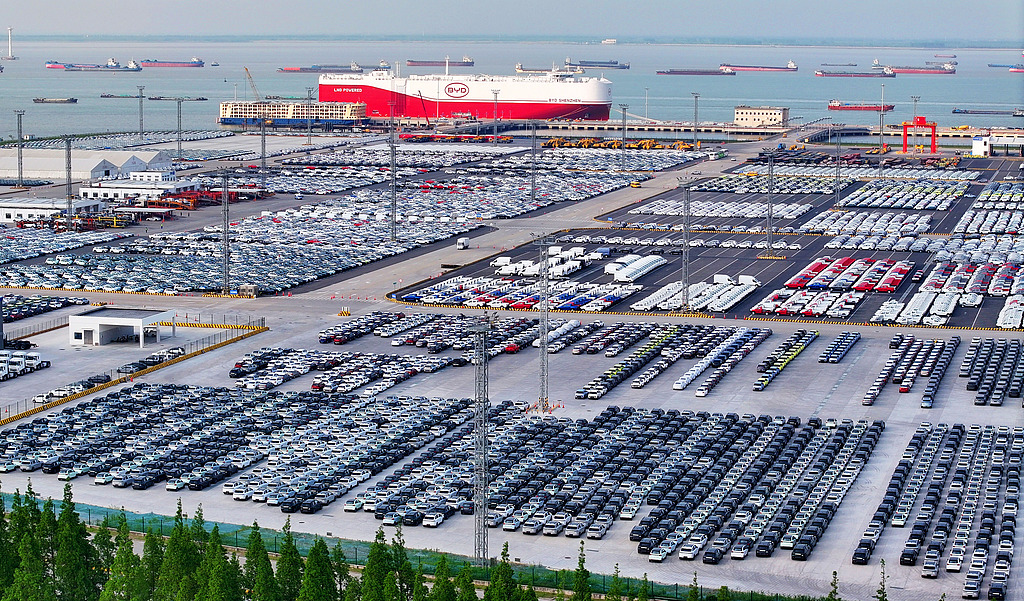
Chinese EVs at the Suzhou Port, awaiting carriers for export. Photo: Facebook/Xi's Moments.
Chinese EVs at the Suzhou Port, awaiting carriers for export. Photo: Facebook/Xi's Moments.
Amid the war in the Middle East, which is causing a record increase in fuel prices, China has increased its exports of electric vehicles. According to Bloomberg, exports abroad surged by 140 percent compared to the previous year, reaching 349,000 units.
This growth is understandable. Consumers are looking for electric cars to protect themselves from sudden increases in fuel prices.
Europe, one of the regions most affected by the crisis, risks suffering a severe blow to its industry after many years of attempts to curb the entry of Chinese cars into its market.
However, the damage could affect not only Europe but also one of the parties involved in the conflict: the United States, where Donald Trump also distrusts the Chinese automotive industry.
Europe losing the competition
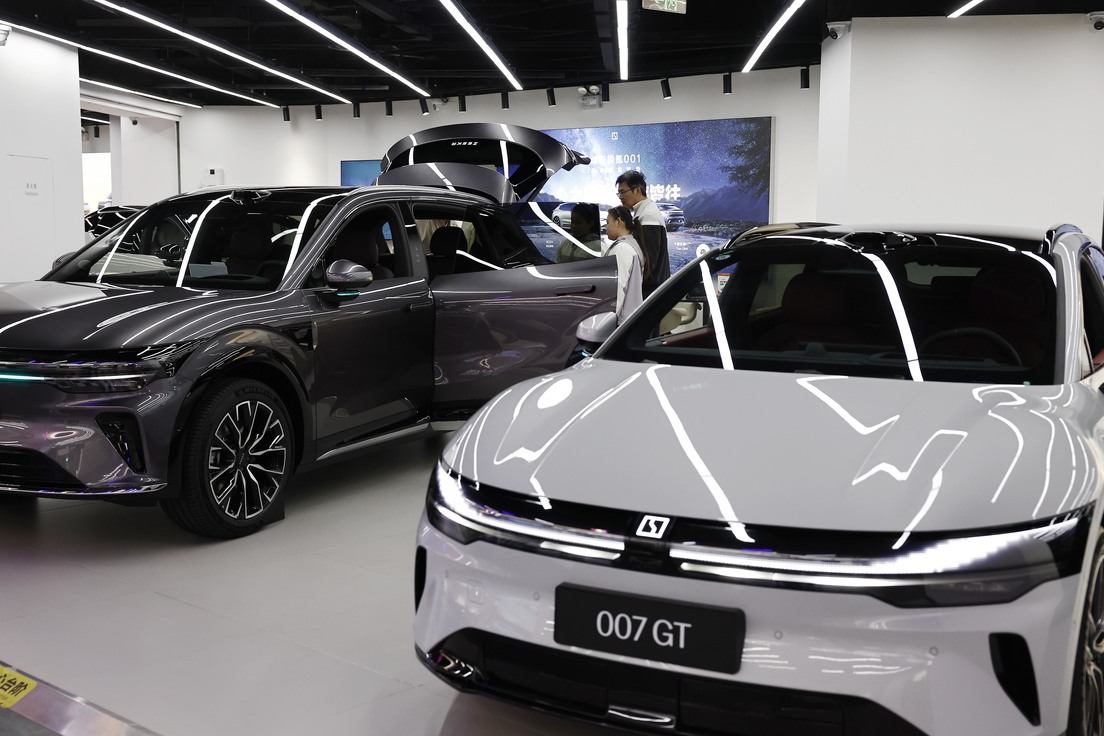
Chinese manufacturers are rapidly consolidating their position in Europe. Imports of cars manufactured in China to the European Union in 2025 increased by 30.7 percent compared to the previous year, reaching 1.006 million vehicles, according to a report published in April by the European Automobile Manufacturers Association.
The report highlights the increasing competitiveness of Chinese brands, especially in electric and hybrid models. China even surpassed its competitors from Japan and South Korea in sales. Although the figures on the impact of the crisis in the Persian Gulf on these indicators are not yet known, the trend points to an increase in the market share of Chinese vehicles.
European authorities have long expressed concern. In 2024, the European Union imposed tariffs of up to 35.3 percent on Chinese electric vehicles, in addition to the standard 10 percent rate. However, given the strong sales growth, these measures do not appear to have achieved their intended effect.
At the same time, European manufacturers are doing everything possible to maintain their foothold in China, a key market for their products. According to the report, EU car exports to China fell by 43 percent in value last year, to €8.3 billion ($9.7 billion), while shipment volumes dropped by 42.8 percent, to 159,743 units.
Trump’s premature joy
In this context, US President Donald Trump highlighted the problems of his European partners in a recent interview. “They are ruining Europe because they are taking a lot of business away from Mercedes and BMW, etc.,” he claimed. “In our country, we don’t have any Chinese cars because they would have wiped out General Motors and Ford.” He added that he imposed “a 100 percent tariff on Chinese cars.” “We don’t have a single Chinese car in the entire country,” he said.
However, Trump might be underestimating the situation. As part of the trade agreement signed in January with Beijing, Canadian Prime Minister Mark Carney agreed to reduce tariffs on 49,000 Chinese electric vehicles from 100 percent to 6.1 percent during the first year of the pact’s validity. The quota will increase to 70,000 units per year by 2030. The Carney government has also expressed its desire to create joint ventures with Chinese manufacturers.
Why Has China Remained Stable Amid Soaring Global Oil Prices?: People’s Daily Rui Ping
Given the small size of the Canadian market, the prime minister’s expectations appear focused on exporting those vehicles.
“Canadians are welcome to visit the United States in their new Chinese [electric vehicles], but if they think they are going to sell them here, that’s not going to happen,” US Ambassador to Ottawa Pete Hoekstra told The Hill.
Considering that European tariffs failed to curb the flow of Chinese cars, the US decided to take preventive measures. Former President Joe Biden’s January 2025 regulation prohibits the use of Chinese and Russian components and software in vehicles.
However, Chinese cars can still enter the US market, something Trump himself admitted. In January, he told the Detroit Economic Club that he is willing to allow Chinese manufacturers to build factories in the United States. Ford has hinted that it would be open to forming a joint venture with a Chinese automotive company.
“Their price [of Chinese cars] and the quality of their vehicles are far superior to what I see in the West. We are in a global competition with China, and it’s not just about electric vehicles. And if we lose this, we have no future at Ford,” declared Ford CEO Jim Farley last year.
Although US manufacturers have surpassed Japanese and other foreign competitors on more than one occasion, the Chinese industry could become an insurmountable challenge.
(RT)
Translation: Orinoco Tribune
OT/SC/SH