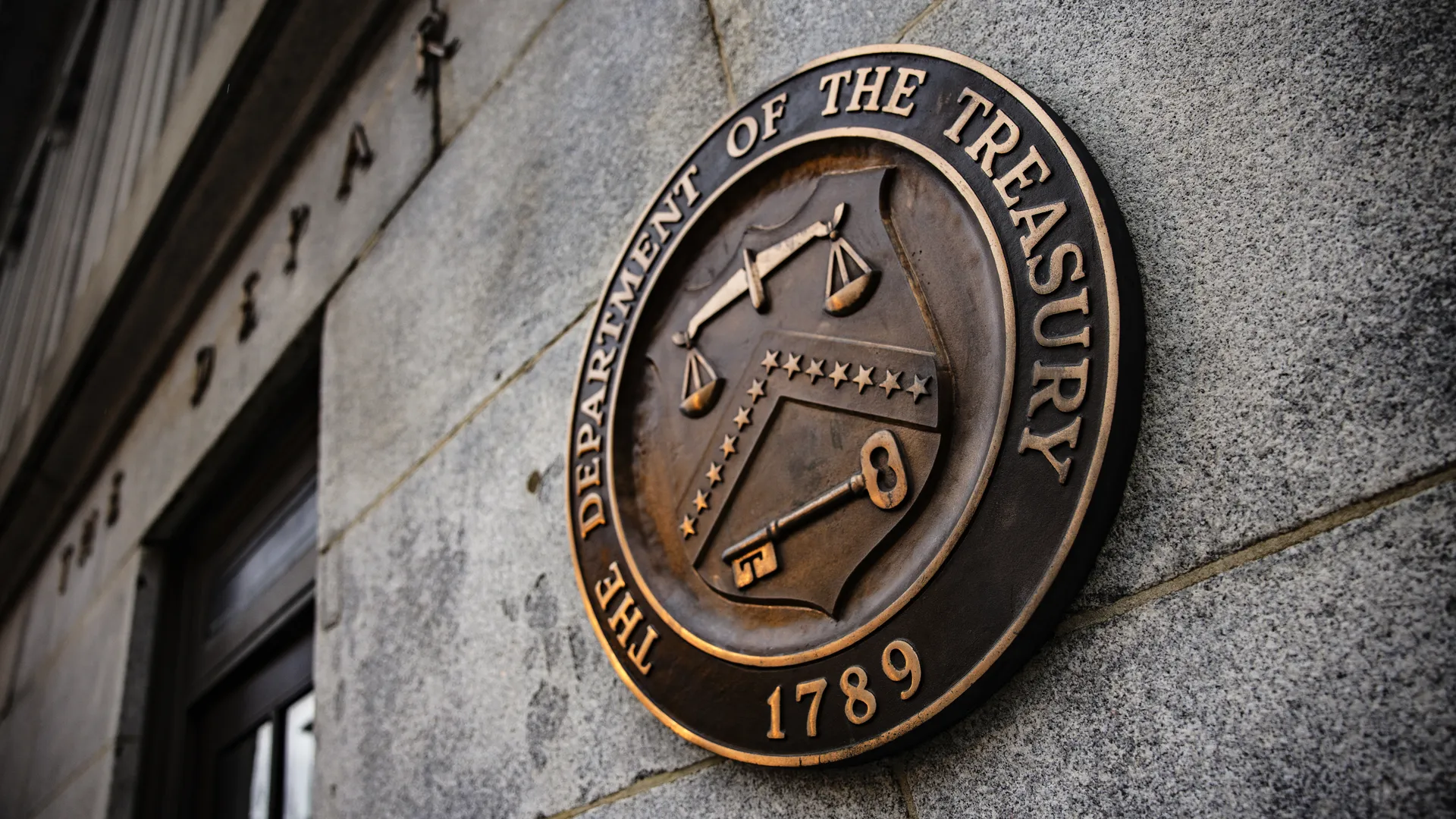
The US Treasury Department’s Office of Foreign Assets Control (OFAC) has issued a general license that removes obstacles preventing the Venezuelan government and Petróleos de Venezuela, S.A. (PDVSA) from contracting legal and financial advisory services for the restructuring of Venezuela’s sovereign debt.
This measure marks a significant technical step toward future negotiations on the country’s multimillion-dollar external debt. Until now, US sanctions have blocked Venezuela from engaging in any form of debt restructuring.
While imposing unilateral coercive measures, the US seized Venezuelan assets abroad—including CITGO, valued at more than $14 billion. Meanwhile, two tonnes of Venezuelan gold remain frozen by the Bank of England, valued at approximately $5 billion.
Additionally, several billion dollars were frozen in international banks for an overall dispossession of more than $30 billion, not including the loss of income resulting from illegal sanctions.
OFAC’s General License 58 specifically authorizes “ordinary and necessary” transactions enabling the Venezuelan state to receive consulting, financial advisory, and legal representation services. The authorization applies directly to:
- The central government and its dependencies,
- Petróleos de Venezuela, S.A. (PDVSA),
- Subsidiary companies in which PDVSA holds 50 percent or more ownership.
According to the official document, experts may now work on evaluating, developing, and preparing debt restructuring options, as well as drafting proposals and supporting documentation.
Despite this opening for the “planning” phase, the US administration maintains strict control over capital flows and the execution of agreements. The license does not permit:
- Direct negotiations: No exchange, transfer, or settlement of debt with creditors is allowed.
- Non-conventional payments: Debt-for-debt swaps, payments in gold, or transactions in cryptocurrencies—including the Petro—are prohibited.
- Enforcement of judgments: Signing settlement agreements or seizing assets blocked under current sanctions remains forbidden.
- Involvement of restricted actors: Any transaction involving persons or entities from Russia, Iran, North Korea, Cuba, or China is excluded.
OFAC emphasizes that this measure does not constitute the “unblocking” of Venezuelan state assets. Rather, it provides a legal pathway for Venezuela to begin charting a financial roadmap with professional guidance.
Central Bank of Venezuela Adapts to New Geopolitical Realities
Venezuela has the right to live free from sanctions
William Castillo, Vice Minister of Anti-Blockade Policy at the Ministry of Economy and Finance, clarified on an official social media account that General License 58 “does not authorize” the restructuring, transfer, or liquidation of Venezuelan debt—but only the hiring of market intermediaries to eventually prepare for such processes.
“Licenses do not mean the lifting of sanctions. They are the instrument to manage the sanctions. They are relief, not the end of the pain… Venezuela has the right to live free from sanctions,” Castillo wrote.
Translation: Orinoco Tribune
OT/JB/SH