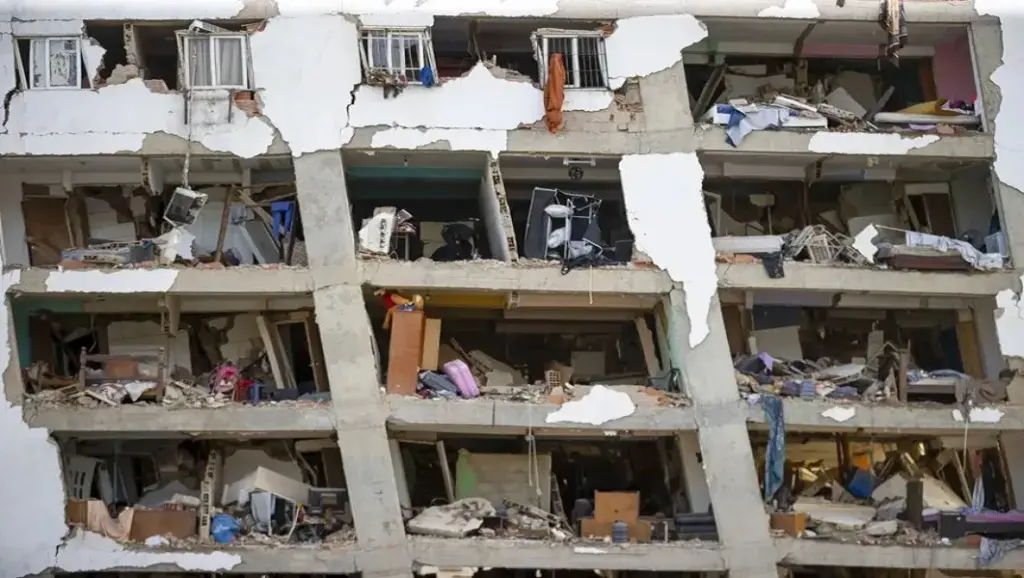
Scenes of the disaster from the double earthquake which has shaken Venezuela. Social media photo.
Scenes of the disaster from the double earthquake which has shaken Venezuela. Social media photo.
By Francisco Garcés – Jun 30, 2026
Faced with a natural tragedy of the magnitude of the recent double earthquake in the Morón-Yumare area, it is completely normal for despair, pain, and anxiety to grip the population. We all want immediate answers; we want to see the survivors safe and the streets cleared in record time. However, turning collective anguish into a weapon of political criticism, accusing the teams risking their lives among the rubble of inefficiency or slowness, not only demonstrates a profound technical ignorance but also an alarming lack of human empathy.
To understand the magnitude of what Venezuela faces today, it’s necessary to examine the reality of urban search and rescue (USAR) engineering and compare it to international scenarios where resources were unlimited.
The mirror of Surfside, Miami, 2021: maximum resources, weeks of work
For those who demand miracles in 48 or 72 hours, it is worth remembering what happened on June 24, 2021, in Surfside, Florida. The Champlain Towers South building collapsed. This was a single 12-story building in Miami-Dade County, USA, within the world’s leading economic power.
Resources: The United States immediately deployed its world-class teams, such as Florida Task Force 1, with unlimited budgets, the most advanced cutting-edge technology on the market, thermal sensors, drones, and state-of-the-art heavy equipment. There were no sanctions, no blockade, and the logistics were just miles away via well-maintained highways.
Time: Despite having everything in their favor and it being a single structure, the search and rescue efforts for the 98 victims dragged on for weeks.
Why did it take so long? Because physics and structural safety do not respond to political pressure or complaints on social media. If one introduces heavy machinery or hastily removes concrete from an unstable structure, one can cause an instant, secondary collapse that crushes pockets of life (empty spaces where survivors may still be) and puts the rescuers themselves at mortal risk. Each block of concrete must be stabilized, shored up, and removed with surgical precision, almost by hand.
Venezuela Solidarity Campaign’s Statement on the Devastating Earthquake In Venezuela
The scale of the disaster in Venezuela: two earthquakes and a blockade to boot
If the rescue in a single building in Miami took weeks under ideal conditions, I demand a level-headed analysis of what is happening today in Venezuela. Our country is not dealing with a localized accident; Venezuela faces the aftermath of two major earthquakes (magnitudes 7.2 and 7.5) that have affected multiple states simultaneously, damaging hundreds of structures, transportation routes, and public services, under the constant threat of aftershocks.
Added to this is a factor that no one can hide: the impact of a brutal economic blockade. For years, Venezuela has been denied access to international markets for funds required to maintain its fleet of heavy transport vehicles, acquire specialized spare parts for civil engineering machinery, purchase rapid response equipment, or import fiberoptic rescue technology and underground sensing devices.
Demanding the speed of a world power from a state whose logistical capabilities have been intentionally stifled from abroad is, to say the least, an act of profound hypocrisy.
Venezuela Earthquake Death Toll Rises to 1,719 as New Aftershock Shakes Capital Region
True heroism is on the ground
Despite the material limitations resulting from this financial strangulation, Venezuelan firefighters, Civil Protection personnel, paramedics, structural engineers, and volunteers have been immersed in the mud and concrete since the very first minute. They are working 24-hour shifts, braving unstable ground and extreme exhaustion, relying on ingenuity, experience, and human strength where technology is lacking.
To comment on the process from the comfort of a screen, seeking to politically capitalize on the pain of the affected families, is despicable. Rescue engineering has its own pace and physical laws, and violating them simply to satisfy the demands for immediacy on social media would cost more human lives.
In moments like these, the absolute priority must be solidarity, institutional support, and unwavering respect for the work of the specialists on the front lines, saving lives. Reconstruction and assessments will come, but today, prudence and national unity are the best tools for civil defense.
Francisco Garcés is former president of FUNVISIS and a civil engineer specializing in structural damage analysis.
Translation: Orinoco Tribune
OT/CB/SL