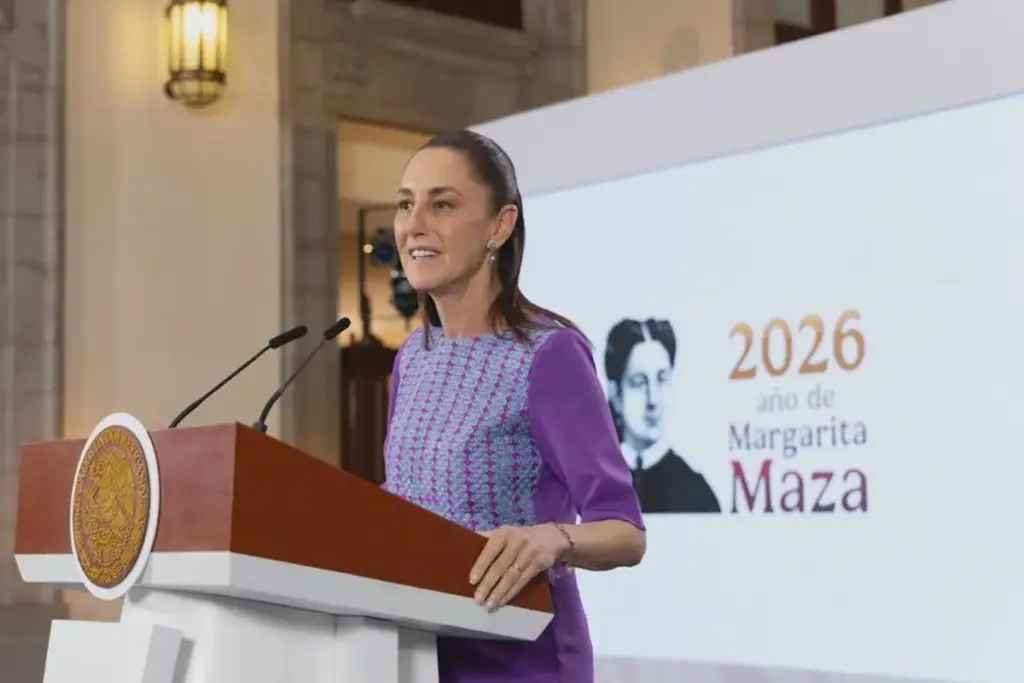
Mexican President Claudia Sheinbaum. X/@ActualidadRT.
Mexican President Claudia Sheinbaum. X/@ActualidadRT.
Conqueror Hernan Cortes was responsible for massacres, looting, and the imposition of a colonial system.
On Tuesday, Mexican President Claudia Sheinbaum criticized Isabel Ayuso, president of the Community of Madrid, for glorifying the Spanish conquest and Hernan Cortes.
During the commemoration of the Battle of Cinco de Mayo in Puebla, the president asserted that those who seek to rehabilitate Cortes and his atrocities “are destined for defeat.”
The day before, Ayuso participated in an event in Mexico City alongside producer Nacho Cano, where she praised Cortes and Queen Isabella I of Castile, defending the conquest and the mixing of races as a shared legacy.
The event, held at the Fronton Mexico after its cancellation at the Metropolitan Cathedral, sparked protests from Indigenous groups who denounced the glorification of the conquistador and demanded apologies for colonial abuses.
Hernan Cortes (1485-1547) led the expedition that brought about the fall of the Aztec Empire in 1521. He was appointed governor and captain-general of New Spain by the Spanish Crown.
The text reads:
“Indigenous authorities from various communities rejected Ayuso’s visit and her participation in commemorative events about the Conquest, stating that they offend the historical memory of the native peoples.”
Mexico Rejects OAS Allegations of Labor Rights Violations Against Cuban Doctors
Cortes forged alliances with indigenous peoples who were enemies of the Aztecs, such as the Tlaxcalans, and employed military and diplomatic strategies that culminated in the capture of Tenochtitlan, the empire’s capital.
While some consider him the founder of New Spain, others hold him responsible for massacres, looting, and the imposition of a colonial system that devastated indigenous populations.
The debate surrounding Cortes remains relevant in Mexico and Spain, where some defend the mixing of races as a cultural contribution, while others emphasize the violence and exploitation that characterized the conquest.
The Mexican President’s statements are part of a broader dispute over historical memory, cultural sovereignty, and the recognition of indigenous peoples in the face of narratives that seek to legitimize colonization.
(Telesur) by JP