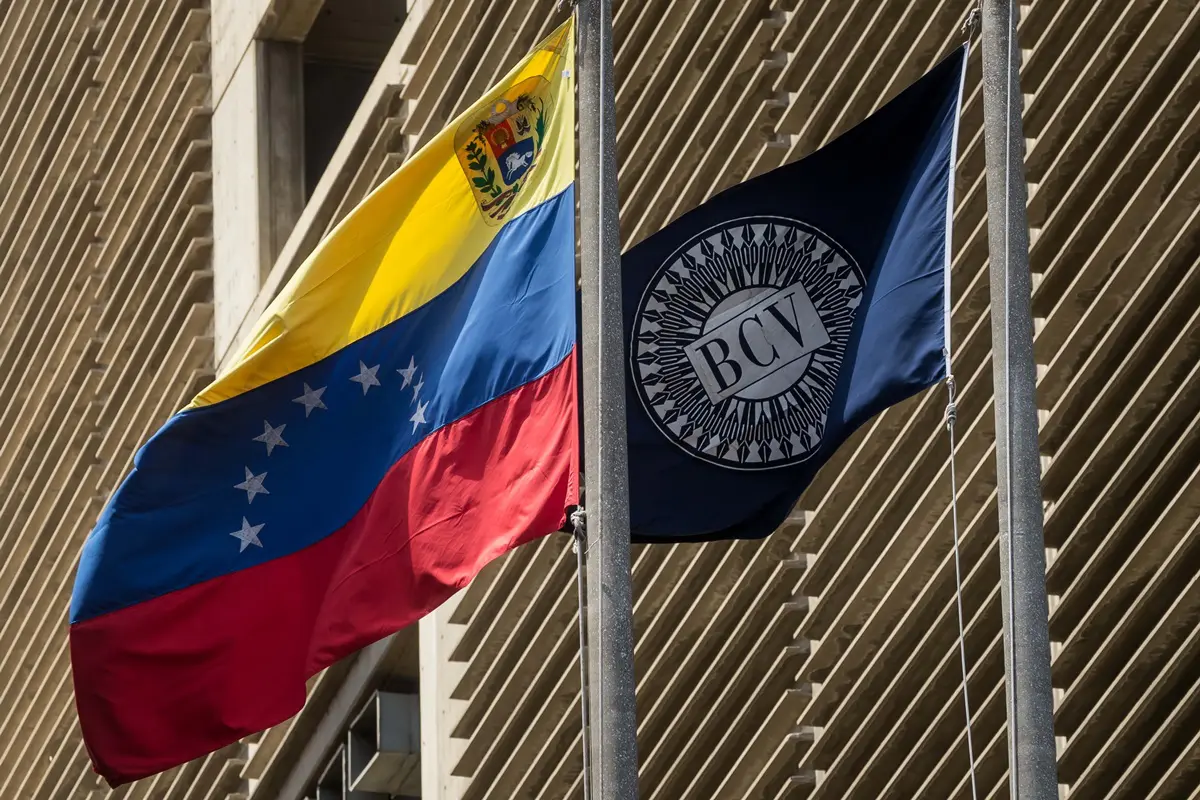
The Office of Foreign Assets Control (OFAC) of the US Treasury Department has eased sanctions on the Central Bank of Venezuela (BCV). This was published on the agency’s website under General License No. 57, seven years after the US empire imposed sanctions on Venezuela’s main financial institution.
The measure, enacted this Tuesday, April 14, also includes the following public financial entities: Banco de Venezuela, Banco Digital de los Trabajadores, and Banco del Tesoro.
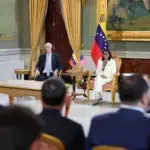
The action comes 24 hours after Acting President Delcy Rodríguez once again urged the US to lift the illegal sanctions imposed against Venezuela since March 2015. Her appeal was made during the signing of an agreement between Petróleos de Venezuela SA (PDVSA) and Chevron, an event attended by the US chargé d’affaires in Venezuela, Laura Dogu, and the US under-secretary of hydrocarbons and geothermal energy, Kyle Haustveit.
“I always take the opportunity to insist that we must move towards a Venezuela without sanctions,” Rodríguez said on Monday, April 13, in the Sol del Perú Room of the Miraflores Palace, Caracas. “I always tell this to the [US] ambassador, to the [US] government, because it is also a way to provide institutional legal security to investors who come to Venezuela.”
The BCV was sanctioned in April 2019, during President Trump’s first term ruling the US entity.
What does License 57 say?
The document issued by the US agency on Tuesday, April 14, states: “All transactions prohibited by the Venezuela Sanctions Regulations, 31 CFR Part 591 (VSR), that are inherent and necessary for the provision, export or re-export, directly or indirectly, of financial services to, from or for the benefit of the following persons are authorized: (1) Central Bank of Venezuela; (2) Banco de Venezuela, SA Banco Universal (Banco de Venezuela); (3) Banco Digital de los Trabajadores Banco Universal CA; (4) Banco del Tesoro, CA Banco Universal (Banco del Tesoro)…”
The text describes that for the purposes of this general license, the term “financial services” includes “the maintenance, operation or closure of accounts; loans; transfers; fund transfers; banking services; money transfer services; collections; presentations; promissory notes; orders; consignments; the acceptance of deposits; insurance; guarantees; cash withdrawals; check services; transfers through the Automated Clearing House (ACH); electronic transfers; debit cards, prepaid cards, ATM transactions and any other payment as defined in Section 3-602 of the Uniform Commercial Code; the issuance and use of payment cards and digital wallets; foreign exchange; banking, payment and correspondent account services denominated in US dollars.”
It also includes “services related to the collection, sending, processing or receipt of funds or remittances; services related to the processing or receipt of salaries, pensions, annuities, payroll and other employment payments or benefits; fund transfers sent by means of mobile money, mobile wallets, digital bank accounts, credit cards, debit cards, online payments or other digital technologies; services and technologies related to security, fraud prevention, verification, authentication, cybersecurity and protection; investments; securities; and futures or options on commodities.”
The removal of the illegal sanctions that the US applied against the BCV for seven years, as well as the sanctioning measures it maintained against the Banco de Venezuela, Banco Digital de los Trabajadores, and Banco del Tesoro, does not mean the lifting of the more than one thousand sanctions that the Yankee regime has imposed against Venezuela since 2015.
In fact, on February 18, 2026, the US empire extended the March 8, 2015, sanctions—passed by then-President Barack Obama—for another year in Executive Order 13692, which declares Venezuela as an alleged “unusual and extraordinary threat.”
Since 2015, both Obama and the presidents who succeeded him—namely Donald Trump in his first term (2017-2021) and in his second (2025-), as well as Joe Biden (2021-2025)—have imposed more than a thousand illegal colonial sanctions on Venezuela.
Contingent contracts
The Treasury Department’s Office of Foreign Assets Control (OFAC) also issued License 56 on April 14, which “authorizes” “Conditional Contract Trade Negotiations with the Government of Venezuela.”
“This general license authorizes all transactions prohibited by Executive Order (EO) 13884 that are inherent and necessary to enter into commercial negotiations of contingent contracts with the government of Venezuela,” the text reads, “provided that the execution of such contracts is expressly conditioned upon a separate authorization from the Office of Foreign Assets Control (‘contingent contracts’).”
Order 13884, issued on August 5, 2019, among other things, blocks the assets of the Venezuelan government, defined similarly to the term in Executive Order 13857. Order 13884 expanded the program of unilateral measures to include an “embargo” and authorized the application of secondary sanctions. Order 13857, issued on January 25, 2019, established the blocking and freezing of PDVSA (CITGO) assets in the US.
For the purposes of the aforementioned general license, License 56 explains that “contingent contracts includes contracts pending execution, pro forma invoices pending execution, agreements in principle, offers pending execution that are subject to acceptance, such as tenders or proposals in response to public competitions, binding memoranda of understanding or any other similar agreement.”
Venezuela’s Diosdado Cabello: Some Beneficiaries of Amnesty Seek to Incite Violence
Anti-blockade deputy minister’s take
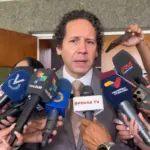
The Venezuelan Anti-Blockade deputy minister, William Castillo, explained on Wednesday in an interview that the license allows companies from the US empire or related to it to establish negotiations with public financial entities in Venezuela.
According to his statements, the document authorizes transactions with the Central Bank of Venezuela (BCV), as well as the Banco de Venezuela (BDV), the Banco Digital de los Trabajadores (BDT), and the Banco del Tesoro (BT).
“It is very important because it authorizes US or related companies to have financial negotiations with the Central Bank of Venezuela and with the three banks that form the heart of public banking in Venezuela,” he explained. “They can open accounts, they can make transfers, and by allowing them this operation, it opens a window for these banks to precisely be able to have operations in the international financial system.”
(Diario Vea) by Yuleidys Hernández Toledo with Orinoco Tribune content
Translation: Orinoco Tribune
OT/JRE/AU