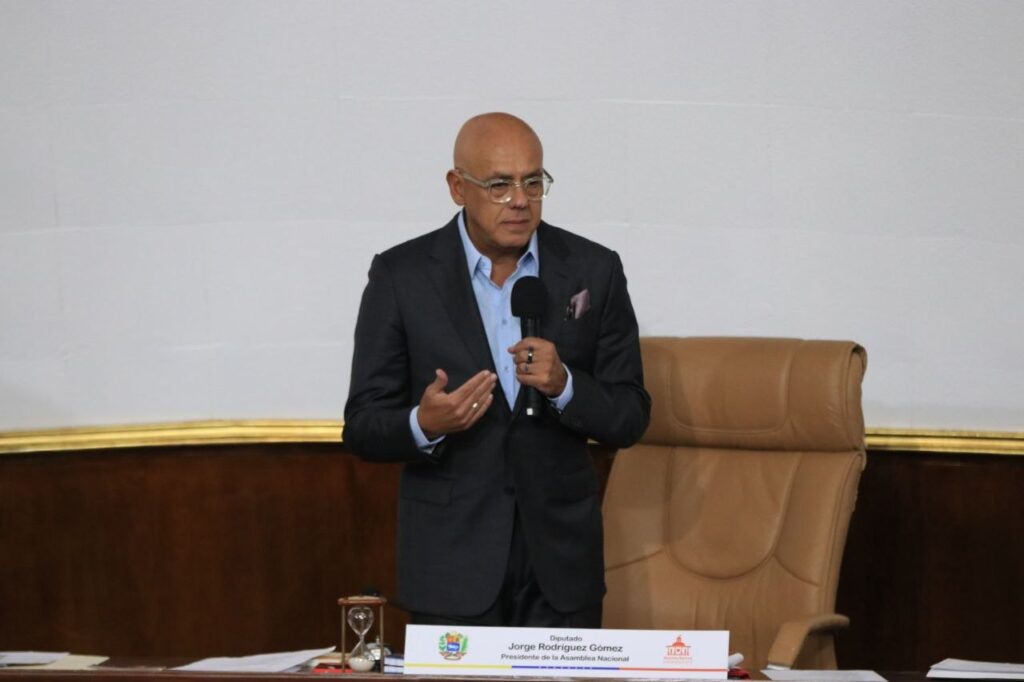
Venezuelan National Assembly's President Jorge Rodríguez giving statements about Alex Saab's deportation, in Caracas, May 19, 2026. Photo: IG/@asamblea_ven.
Venezuelan National Assembly's President Jorge Rodríguez giving statements about Alex Saab's deportation, in Caracas, May 19, 2026. Photo: IG/@asamblea_ven.
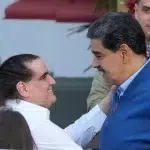
The president of Venezuela’s National Assembly (AN), Jorge Rodríguez, has reaffirmed that the national government “will not give an inch” to any form of irregularity, illegal activity, or acts committed against Venezuela, and revealed a number of alleged links between Alex Saab—the former Venezuelan minister for industries who was recently deported to the US empire—and agencies in that country since 2019.
When addressing Saab’s deportation this Tuesday, May 19, Rodríguez made a strong revelation by stating that Saab’s situation is “a matter between him and US agencies,” and promised to make public the type of relationship he had or continues to have, thus directly implicating US entities in this controversial case and its narrative.
“In short, since 2019, and we’re only finding this out now, the Alex Saab issue is about him and US agencies,” he said. “And you’ll all soon find out what kind of relationship Alex Saab had and has with those US agencies.”
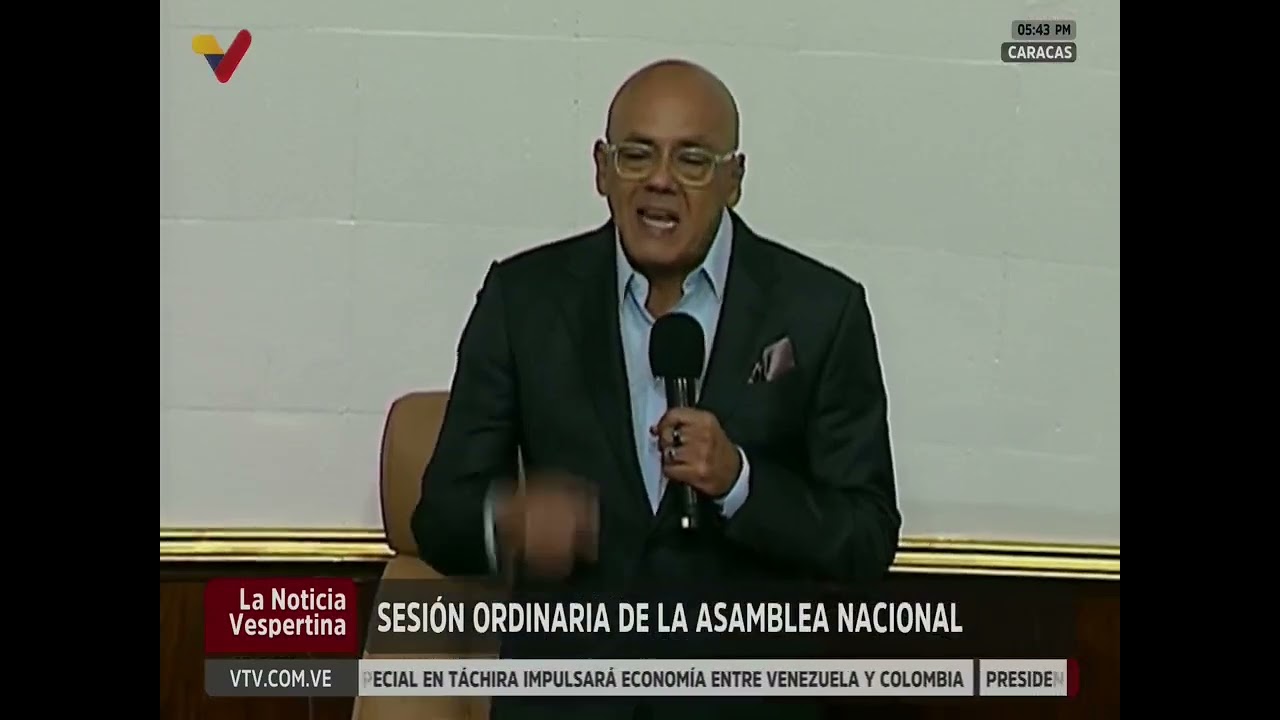
He reiterated the controversial statement claiming that “Saab is a Colombian citizen. The Constitution clearly establishes that Venezuela cannot obstruct or impede a deportation process if there is any type of criminal activity in another country or any type of action or relationship between the agencies.”
The top Chavista leader reaffirmed that neither Alex Saab nor the 257 Venezuelans rescued from the CECOT detention center in El Salvador have immunity or impunity; if they committed crimes, stole money, or planned other offenses, “they must face the law and be prosecuted,” emphasizing that Venezuela is serious about fighting corruption and impunity, unlike the hypocrisy shown by the US settler state on these issues.
2023 Alex Saab’s release
Rodríguez also addressed the accusations circulating on social media regarding his diplomatic efforts to secure Saab’s release in 2023. He recalled that his work as a mediator with the US administration have consistently made such releases possible, such as during 2025, when he successfully obtained the repatriation of the baby Maikelys Espinoza and the rescue of 252 Venezuelan migrants who were being held in El Salvador—facts that, he claimed, are often omitted by those attacking the decision.
Rodríguez condemned the “gigantic theft” perpetrated by sectors of the opposition with Venezuelan money abroad, referring to CITGO dividends frozen in New York and the Monómeros case, demonstrating the audacity of the US empire in the diversion of Venezuela’s resources.
He directly accused Juan Guaidó of orchestrating a “witch hunt” to misappropriate millions of Venezuelan dollars, funds that were distributed to former members of the National Assembly from 2015-2020, pointing to the inaction of international organizations in the face of these events.
“Whoever steals, whoever betrays, whoever violates the high condition of trust placed by the people of Venezuela or by the government of Venezuela, must be prosecuted according to the laws of the Republic,” Rodríguez declared. However, some analysts saw this as a potentially contradictory statement, taking into consideration that Saab was sent to the US to be prosecuted.
Rodríguez recalled the words of the leader of the Cuban Revolution, Fidel Castro, regarding the betrayal of former general Arnaldo Ochoa, calling it a “stab in the back to the homeland,” to emphasize that the current struggle in Venezuela is a “problem of morality, principles, and honor” in the face of those who betray the trust of the Revolution and are defended by imperial powers from abroad.
During the plenary debate, the legislator questioned the narrative that seeks to exploit the very accusations made by the executive branch to attack the Chavista authorities who expose these wrongdoings themselves. He condemned the existence of “600 paid agents” dedicated to disinformation, a tactic aimed at discrediting the Venezuelan state’s efforts to repatriate its citizens and combat corruption, and noted that these destabilizing campaigns are typically funded from abroad.
The president of the Venezuelan National Assembly also condemned the hypocrisy of the US, pointing out the double standard of the external narrative they continue to push, which attempts to discredit Venezuela’s actions while protecting those who attack public assets. He criticized high-ranking US officials for not questioning the crimes of those released by Venezuela during prisoner swaps.
He reaffirmed Venezuela’s sovereignty to handle its diplomatic affairs without external interference and recalled his role as the state’s representative in negotiations with Washington, such as the exchange in the Caribbean last December, the liberation of Alex Saab, the recovery of the Espinosa Bernal girls, and the return of 252 migrants from El Salvador.
Rodríguez reiterated the commitment of his political party and the government to combat internal deviations, maintaining that any official, including mayors belonging to the United Socialist Party of Venezuela (PSUV), who engages in economic or drug trafficking crimes, will face the consequences directly and won’t be labeled as political prisoners like far-right politicians do in order to protect criminals within their own ranks.
(Alba Ciudad) with Orinoco Tribune content
Translation: Orinoco Tribune
OT/JRE/AU