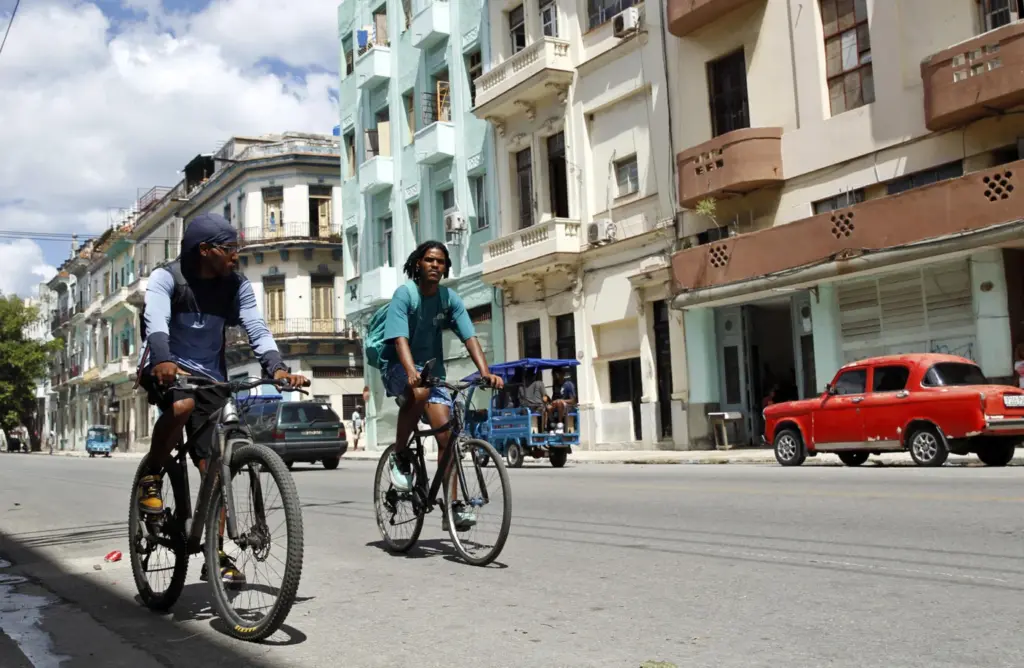
The image shows two Cubans riding bicycles on a street with little traffic. Photo: EFE.
The image shows two Cubans riding bicycles on a street with little traffic. Photo: EFE.
The Caribbean Network for Solidarity with Cuba (CNSC) this Wednesday formally requested an update from CARICOM on the delayed delivery of humanitarian aid promised to Cuba nearly three months ago, amid the intensifying U.S. blockade and its severe impact on the Cuban people.
The Caribbean Network for Solidarity with Cuba (CNSC), representing various Cuba friendship associations across the Caribbean, expressed its alarm over the humanitarian situation in Cuba in a letter to CARICOM Secretary General, Dr. Carla Barnett, highlights growing concern over the apparent lack of progress since the commitment was made in February 2026.
The Trump’s Government has significantly intensified the blockade against Cuba with more external sanctions, aiming to inflict maximum suffering on the Caribbean nation. A central element of this aggressive policy is a recently established fuel blockade, which has led to frequent and prolonged power blackouts. These energy disruptions cause severe hardship, particularly affecting critical institutions such as hospitals, clinics and care homes for the elderly people, which cater to the most vulnerable segments of the population.
Cuba has consistently demonstrated exemplary solidarity within the Caribbean countries, always extending support during times of crisis, providing an invaluable assistance in responding to natural disasters and medical emergencies, crucial support in fields like education, medicine and professional training. Therefore, the announcement on February 27, by CARICOM Chairman, Dr. Terrance Drew, that Heads of Government meeting in St. Kitts and Nevis had agreed to provide Cuba with humanitarian support, was widely welcomed across the region.
However, nearly three months have elapsed since this pivotal announcement, and according to the Caribbean Network for Solidarity with Cuba, no substantial humanitarian support has reached Cuba, either collectively from CARICOM or from individual member Governments.
Cuba Calls Out as Lie the United States’ Alleged $100 Million Humanitarian Aid Offer
This lack of visible action contrasts sharply with the determined efforts of solidarity groups across the region. These groups, operating with very limited resources, are already actively delivering much-needed humanitarian assistance to the Cuban people, underscoring the urgency of the situation and the perceived delay from the regional body.
On March 24, CARICOM issued a press statement publicly affirming that its Governments were “preparing to dispatch humanitarian aid to Cuba.” The specified items included critical supplies such as powdered milk, including baby formula, along with non-perishable goods like beans, wheat flour, rice and canned goods. Additionally, the aid was slated to include basic medical supplies, solar panels, batteries, and water tanks.
Despite this public commitment being made over six weeks ago, there remains no official news or confirmation that any of this promised humanitarian aid has actually arrived in Cuba, deepening concerns among solidarity advocates.
The Caribbean Network for Solidarity with Cuba is therefore urging CARICOM Secretary General, Dr. Carla Barnett, to publicly clarify the current status of CARICOM’s humanitarian support for Cuba. In this sense, the network demands a clear timeline for when this essential aid will actually be delivered to the Cuban people, emphasizing the critical need for transparency and accountability from the regional organization.
(teleSUR)