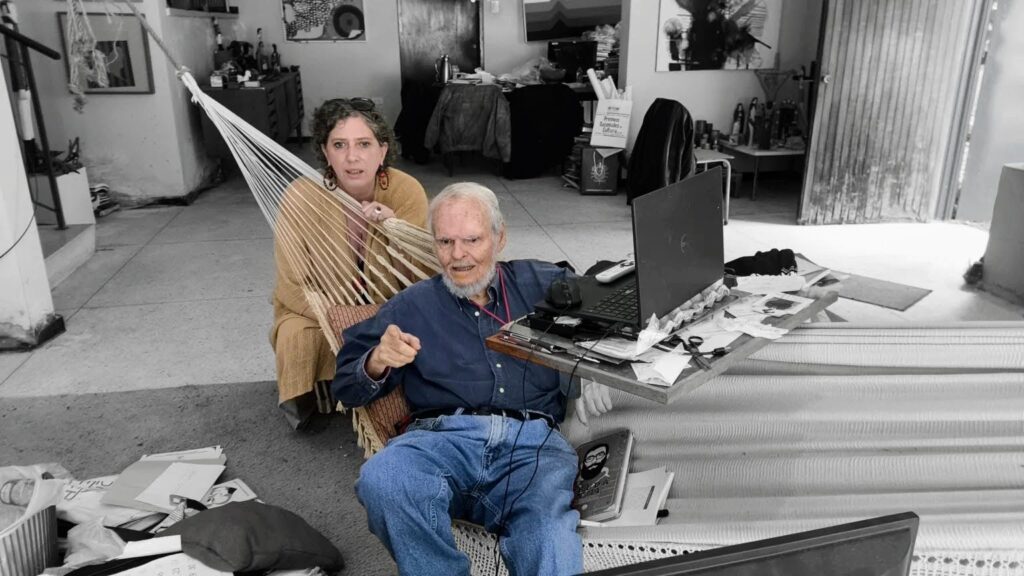
Luis Britto García and Ximena González Broquen. Photo: REDH.
Luis Britto García and Ximena González Broquen. Photo: REDH.
Caracas (OrinocoTribune.com)—A technical glitch on the website of renowned Venezuelan writer and essayist Luis Britto García has been resolved following an intervention by a support team from the Network of Intellectuals, Artists, and Social Movements in Defense of Humanity (REDH). Despite both far-right and far-left activists publicizing the issue as an act of censorship by the government of Acting President Delcy Rodríguez, the actual cause stemmed from access credentials that had not been updated since 2020.
Telesur reported this Wednesday, May 20, that Britto García’s blog experienced access disruptions for several days. This technical window provided an opportunity for critics of the Chavista leadership to fabricate narratives of state censorship against the intellectual.
Ximena González Broquen, international coordinator of REDH, visited the writer’s residence alongside a technical support team to address the matter. “The problem originated with access credentials that had not been updated since 2020,” she explained, noting that the outage affected both his blog and his email address. González dismissed the censorship rumors and confirmed that the technical team successfully restored access to all of the writer’s digital content.
An intellectual legacy
On his website, Britto García describes himself as a storyteller, essayist, playwright, illustrator, and underwater explorer. His extensive intellectual output comprises over 90 published titles, including celebrated works of fiction such as Rajatabla (Casa de las Américas Prize, 1970) and Abrapalabra (Casa de las Américas Prize, 1969). He was awarded the National Literature Prize in 2002, as well as the Alba Cultural Prize for Literature in 2010.
His work encompasses geopolitical analysis, philosophical reflections, and cultural criticism. In his recent texts, he has frequently focused on US military strategy, writing that “the Pentagon has replaced long-term territorial occupation with high-tech surgical interventions.” His anti-imperialist perspective heavily permeates much of his recent production, with Telesur quoting his observation from a widely shared essay: “The brutal practices of empire teach that you can only rely on what you defend.”
However, some analysts note that Britto García has taken a highly critical perspective following the January 3 invasion of Venezuela by the US empire, which resulted in the kidnapping of President Nicolás Maduro and the assassination of more than 100 people, including 32 Cuban and 47 Venezuelan military officers.
Debates over the Hydrocarbon Law Reform
The intellectual has strongly criticized the recently approved Hydrocarbon Law Reform, labeling it unconstitutional. In his view, the reform permits international oil corporations to seek “international arbitration” in foreign tribunals. Conversely, some Venezuelan right-wing lawyers’ claims make this interpretation appear contradictory, as they question the fact that the reform specifically refers to “independent arbitration,” and not “international arbitration.”
In his most recent controversial piece, “I Resist; Therefore, I Exist,” Britto García continues his criticism of the Hydrocarbon Law Reform, repeating accusations that his critics argue would only serve those aiming to crush the Bolivarian Revolution. Nevertheless, the piece raises significant points, such as the need for a proper evaluation and explanation of the Venezuelan military fiasco during the defense of the nation and the kidnapping of President Maduro in January, alongside calls for an improved state communication strategy.
Venezuela: Jorge Rodríguez Exposes US Hypocrisy and Alex Saab’s Ties to Washington
Censorship narratives vs. open debate
The controversial piece was initially published by Telesur before being taken down, and the earlier essay was not printed by Últimas Noticias, a news website that analysts describe as leaning toward Chavismo where Britto himself is a columnist. These editorial decisions served as arguments for various sectors to denounce any alleged government censorship.
Telesur commented on the speed with which political factions attempted to capitalize on the incident, stating that it “demonstrates a strategy of turning any incident into a propaganda weapon.” They added that Britto García resumed his regular publications immediately after the technical resolution, ensuring his digital platform remains open to his readers.
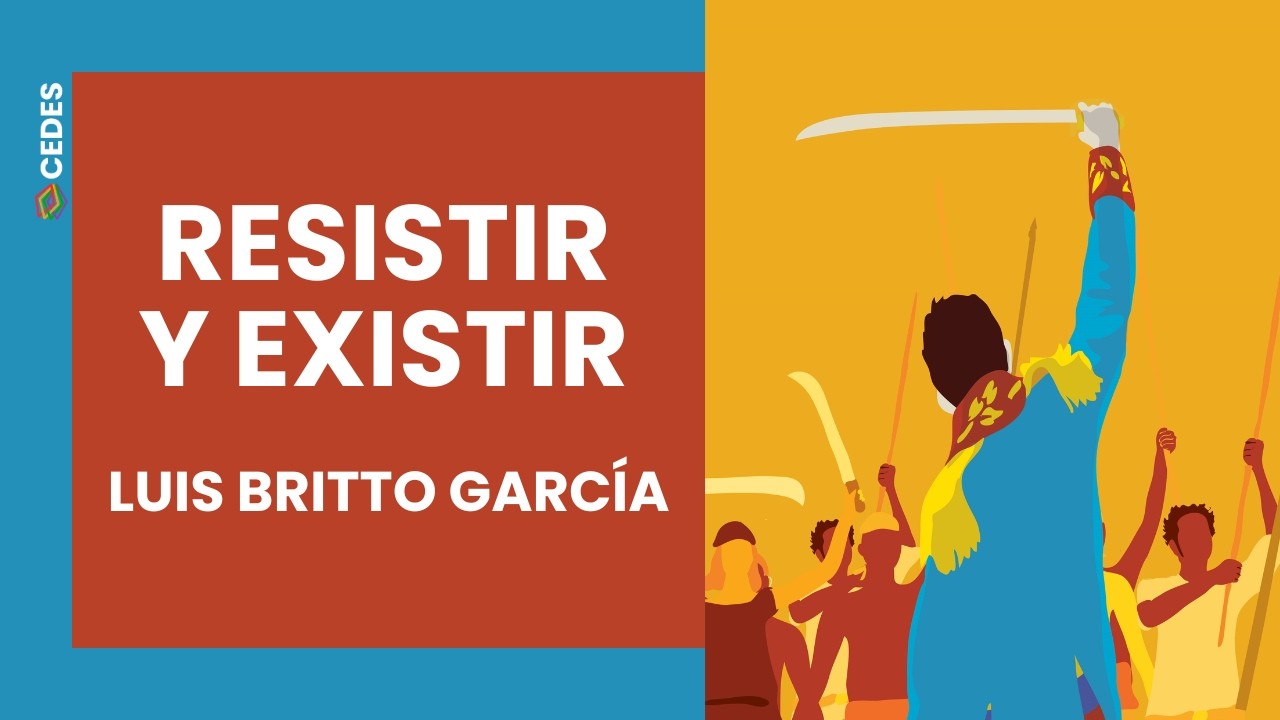
Further contradicting the censorship narrative, Britto García participated just days after his essay’s initial publication in a seminar at the Socialist Democracy Studies Center (CEDES)—an institution where former Culture Minister Reinaldo Iturriza and former Foreign Minister Elías Jaua play leading roles. During the seminar, the writer reiterated most of his sharp criticisms without any restrictions.
When consulted on the matter, Orinoco Tribune Editor Jesús Rodríguez-Espinoza stated that the intellectual does not appear to face any genuine censorship or systemic restriction, given his ability to freely express his recent far-left-leaning criticisms of the government of Acting President Delcy Rodríguez.
However, Rodríguez-Espinoza expressed surprise at several references made by Britto García comparing contemporary Venezuela to the pre-February 27, 1992, era. The editor characterized the comparison as exaggerated and ill-intentioned, pointing out that the rebellious nature of the 1992 Caracazo social explosion does not match current Venezuelan reality, which differs enormously from the widespread hopelessness and desperation experienced by the majority of the population in 1992.
Special for Orinoco Tribune by staff
OT/JRE/AU