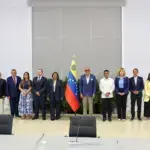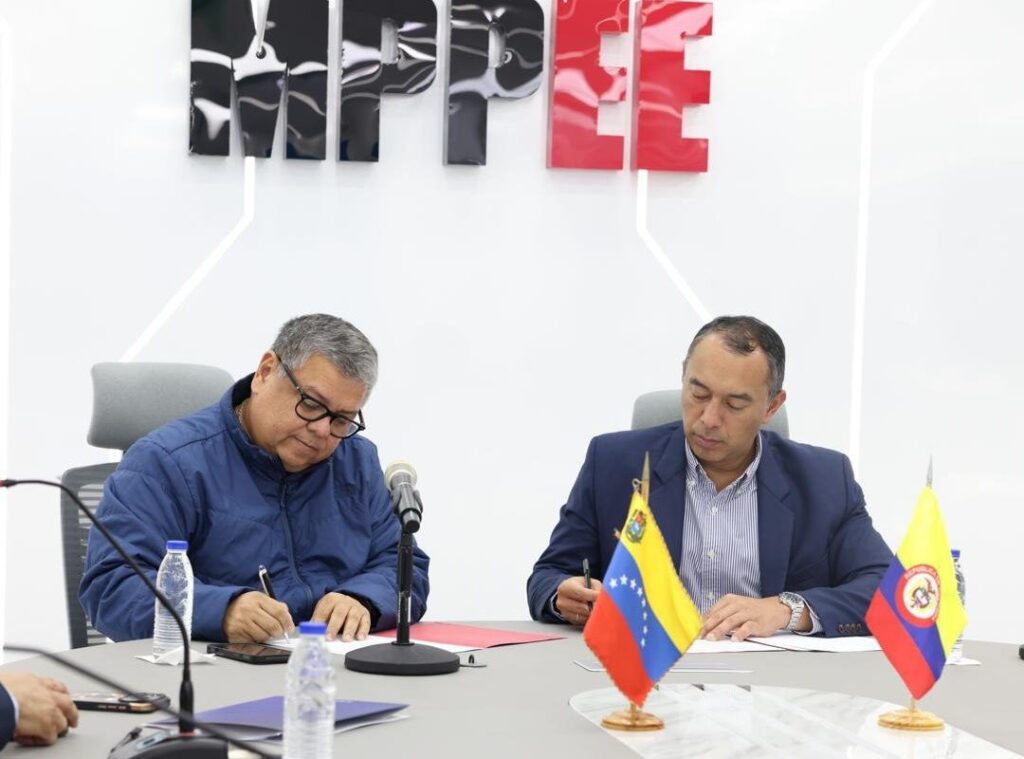
Representatives of Venezuela's CORPOELEC and Colombia's IPSE signing an agreement for energy connection in Caracas, April 28, 2026. Photo: IG/@minenergia_ve.
Representatives of Venezuela's CORPOELEC and Colombia's IPSE signing an agreement for energy connection in Caracas, April 28, 2026. Photo: IG/@minenergia_ve.
Caracas (OrinocoTribune.com)—The governments of Venezuela and Colombia have formalized the reactivation of their energy connection through an agreement signed between Venezuela’s National Electric Corporation (CORPOELEC) and Colombia’s Institute for Planning and Promotion of Energy Solutions for Non-Interconnected Zones (IPSE).
The signing took place this Tuesday, April 28, following intensive work by joint technical delegations and was materialized during last week’s visit of Colombian President Gustavo Petro to Caracas. This alliance is part of a new phase of binational integration, aiming toward energy sovereignty to improve the quality of life for populations in the border region of the two nations.
The project prioritizes electrical interconnection for western Venezuela, an area severely affected by illegal sanctions led by the US empire and its allies that restrict investment and access to parts for the National Electric System (SEN).
Regional integration efforts
The foundations for this exchange were initially established during the Seventh Ministerial Meeting of the Community of Latin American and Caribbean States (CELAC), held in Bogotá in 2015. At that meeting, both nations formalized regional agreements to promote an Electrical Interconnection Plan, which is now being reactivated with the signing between CORPOELEC and IPSE.
Following Washington-led regime change operations against Venezuela, relations were gravely severed under the administration of far-right Colombian President Iván Duque in 2018. This period jeopardized joint projects, diplomatic relations, and the historical brotherhood between the two countries.
Venezuela and Colombia Reach Broad Agreements Following Presidential Meeting in Caracas
Venezuela’s acting president, Delcy Rodríguez, described the rapprochement with Gustavo Petro’s administration as a fundamental step during a time when unity is paramount. She emphasized that technical cooperation with the neighboring country is vital for stabilizing the electricity supply in border regions and improving the quality of life for local residents.
Special for Orinoco Tribune by staff
OT/JRE/AU