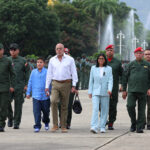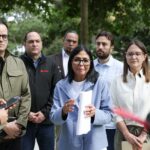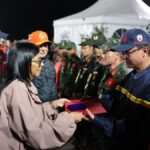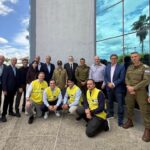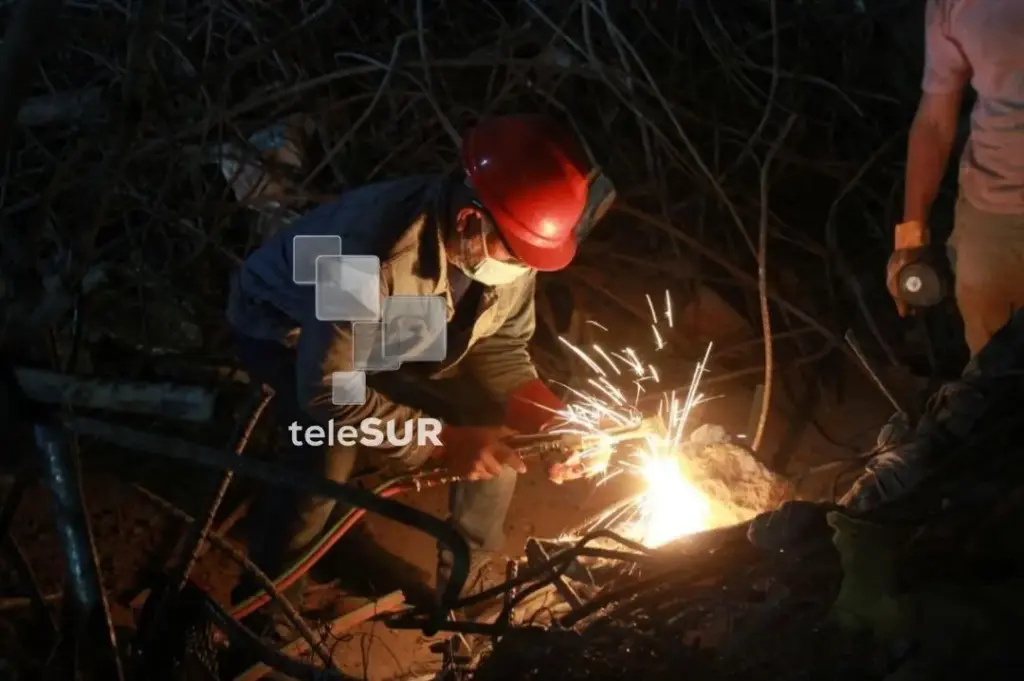
The joint action in Los Corales demonstrates how organization and mutual aid guide the stabilization efforts in the area. Photo: Telesur.
The joint action in Los Corales demonstrates how organization and mutual aid guide the stabilization efforts in the area. Photo: Telesur.
The scene across several sectors of La Guaira state, Venezuela, reflects the magnitude of the damage caused by the earthquakes, with collapsed buildings and severely damaged structures in areas such as Los Corales, Los Cocos, Caribe, Caraballeda, and Catia La Mar.
Under the principle of international solidarity and cooperation, rescue brigades from Cuba, Mexico, Brazil, and Venezuela maintain operational deployments for over 18 hours a day in the Los Corales sector. They use technological and manual efforts to locate and protect people after the recent earthquakes.
Joint action in Venezuela demonstrates how organization and mutual aid guide stabilization efforts in the area.
Below, a minute-by-minute account of the fight against the rubble on Los Corales Avenue is portrayed.
1. Mechanical clearing at the epicenter of the disaster
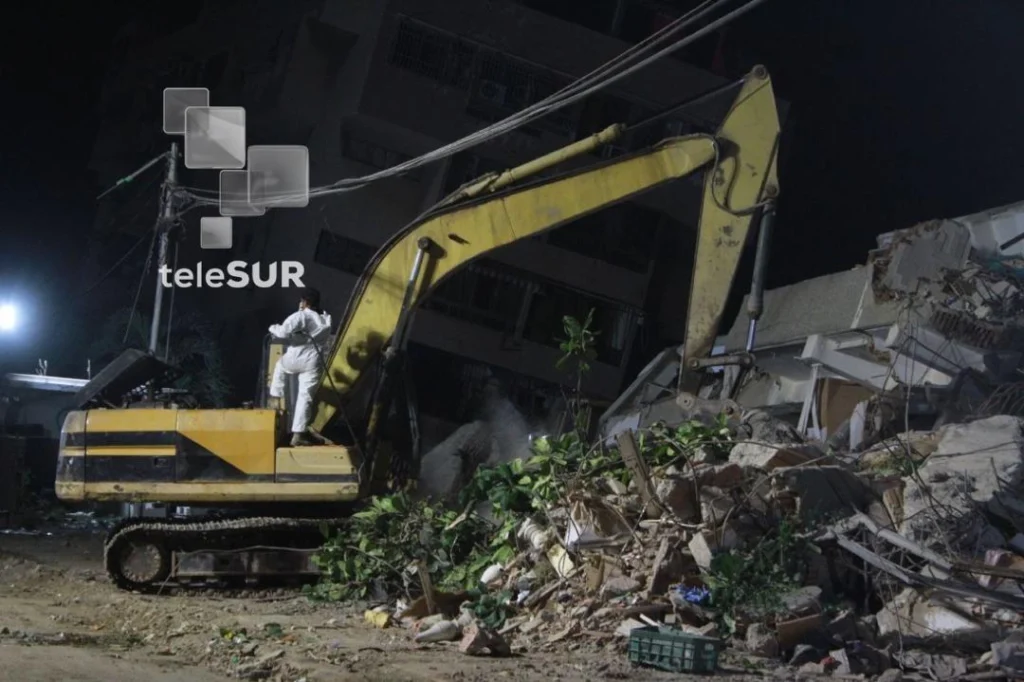
Large hydraulic excavators are removing tons of fractured concrete overnight. The use of heavy machinery is crucial in the initial phases of the Los Corales Avenue project to remove the upper slabs and allow rescuers safe access to the lower levels of the collapsed structures.
2. Breaking the concrete block by block
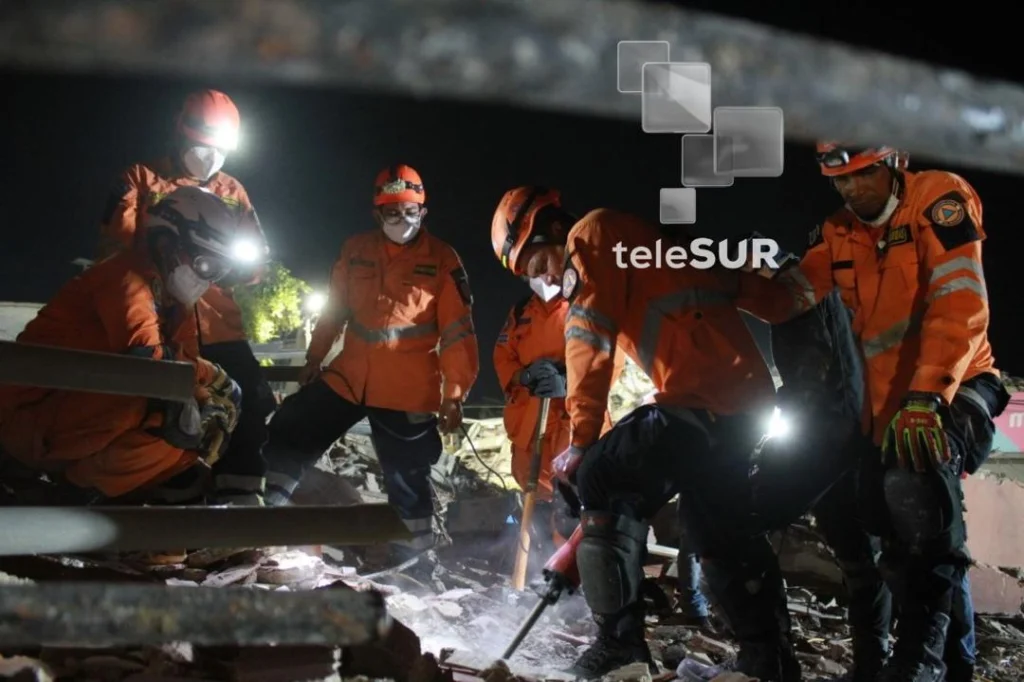
Equipped with pneumatic jackhammers and portable lighting equipment, the specialists break through the compacted layers of cement. Each maneuver is executed under strict engineering protocols to avoid secondary movements that could compromise the detected life-saving voids.
3. Millimeter-precise coordination in confined spaces
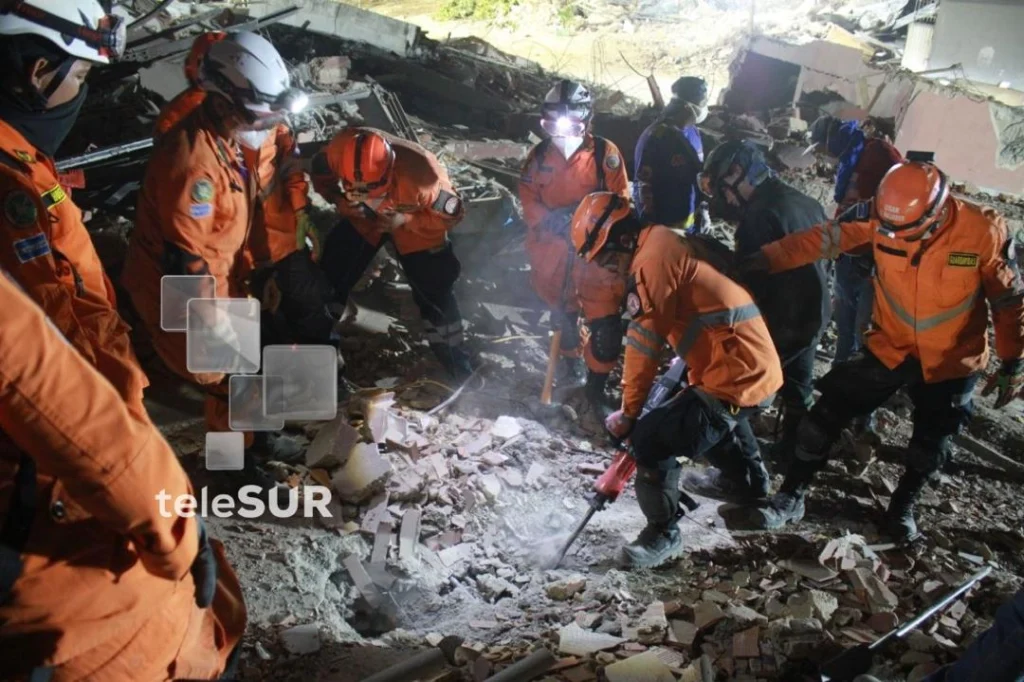
The rescue team is directly assessing the drilling sites. The joint effort between the Cuban Rescue Unit, the Mexican USAR team, and the Caracas Fire Department allows for the standardization of technical criteria and the rotation of personnel shifts to ensure operations continue uninterrupted during the early morning hours.
4. Millimeter-by-millimeter technical search
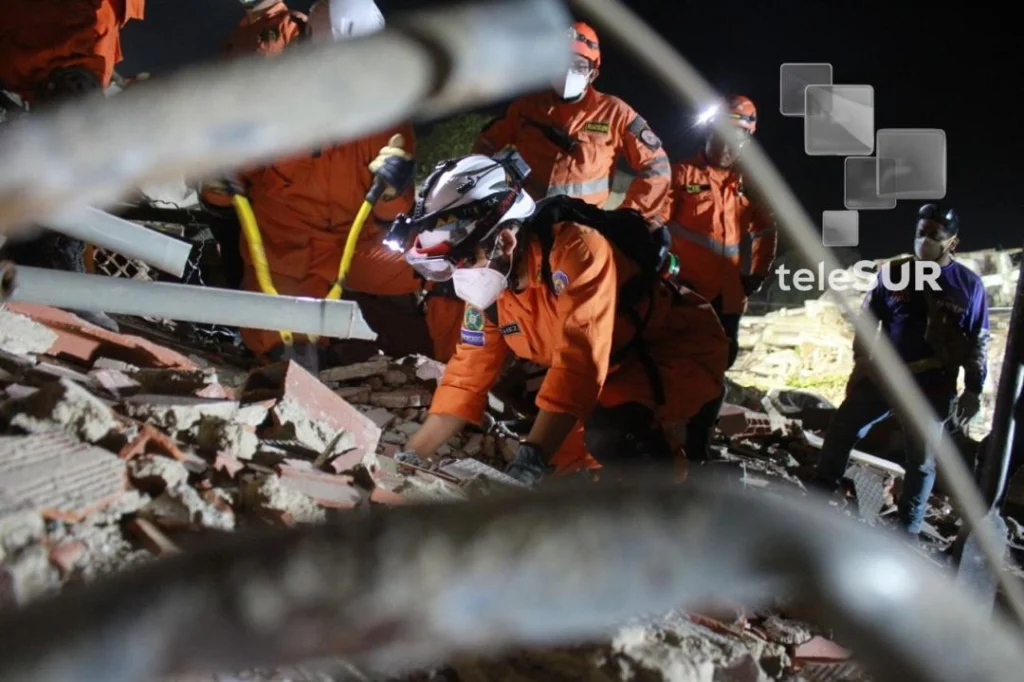
Specialists in collapsed structures manually remove minor debris. The use of precision cutting tools and noise monitoring at the scene guides the teams in locating survivors trapped within the steel-rod framework.
5. Oxy-fuel cutting and release of metallic structures
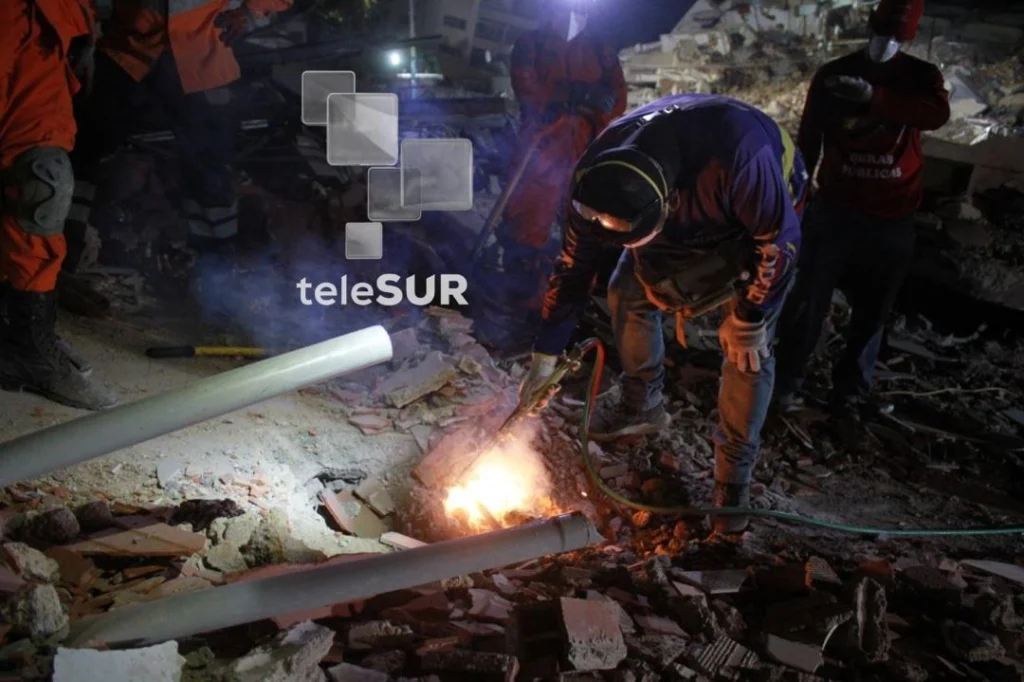
Specialized workers use oxy-fuel cutting techniques to sever the twisted iron beams blocking the main entrances. Sparks from the torches illuminate the makeshift tunnels created by the rescue workers to reach the collapsed buildings in Los Corales.
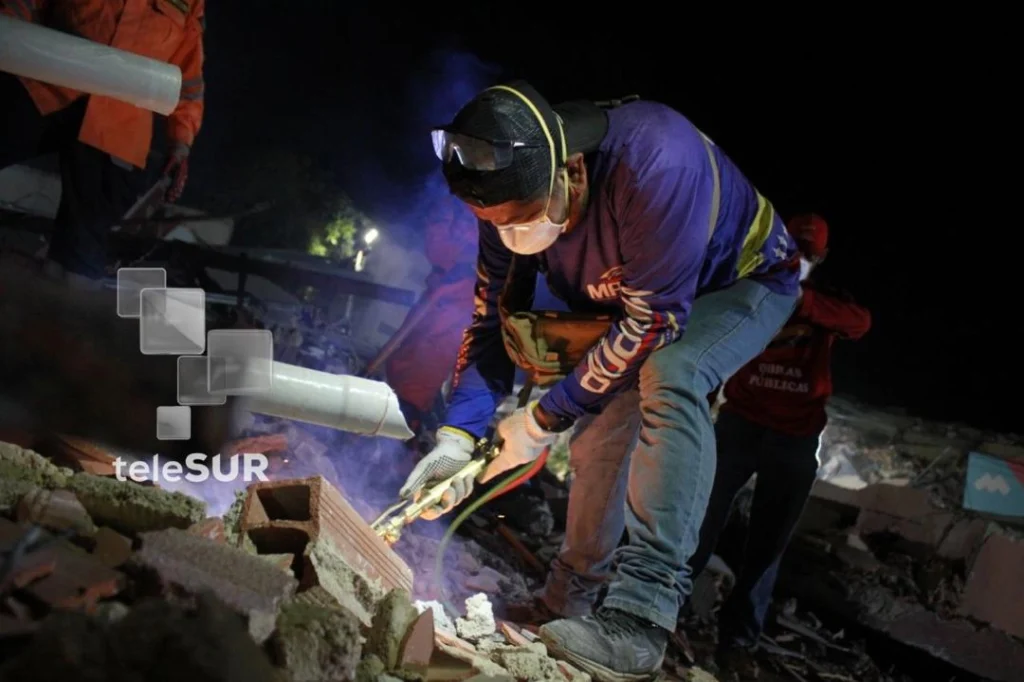
6. The Ministry of Public Works on the front-line
7. Cleaning and stabilization of secondary roads
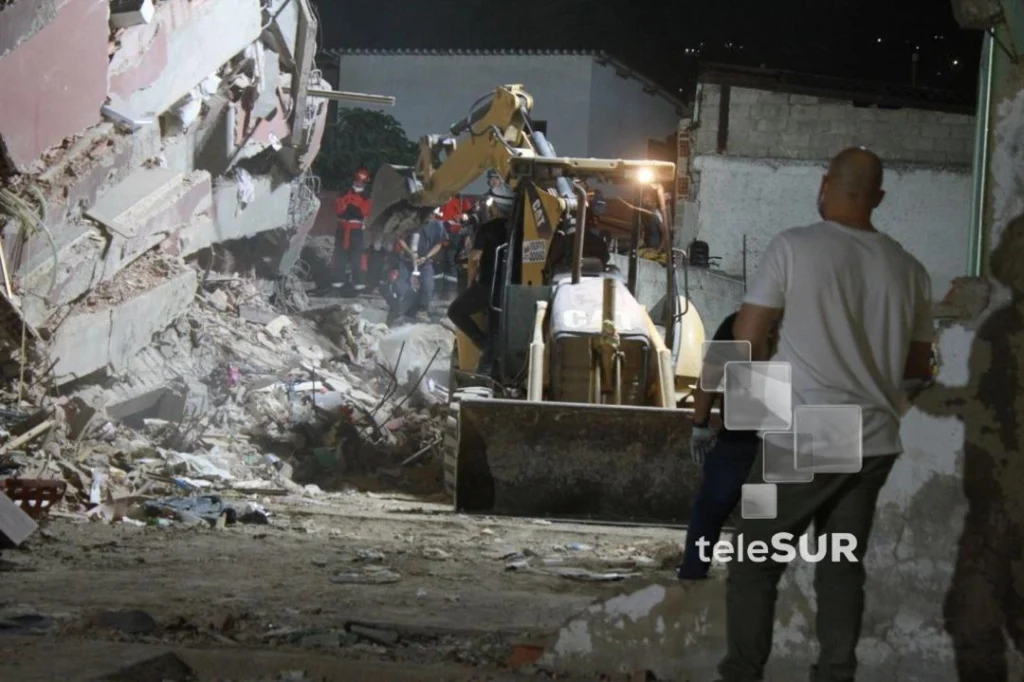
Smaller backhoes are maneuvering in the alleyways adjacent to the main avenue. Keeping the access roads clear is a priority to allow free passage for emergency vehicles and expedite the removal of debris to temporary collection centers.
8. The instability of multifamily structures
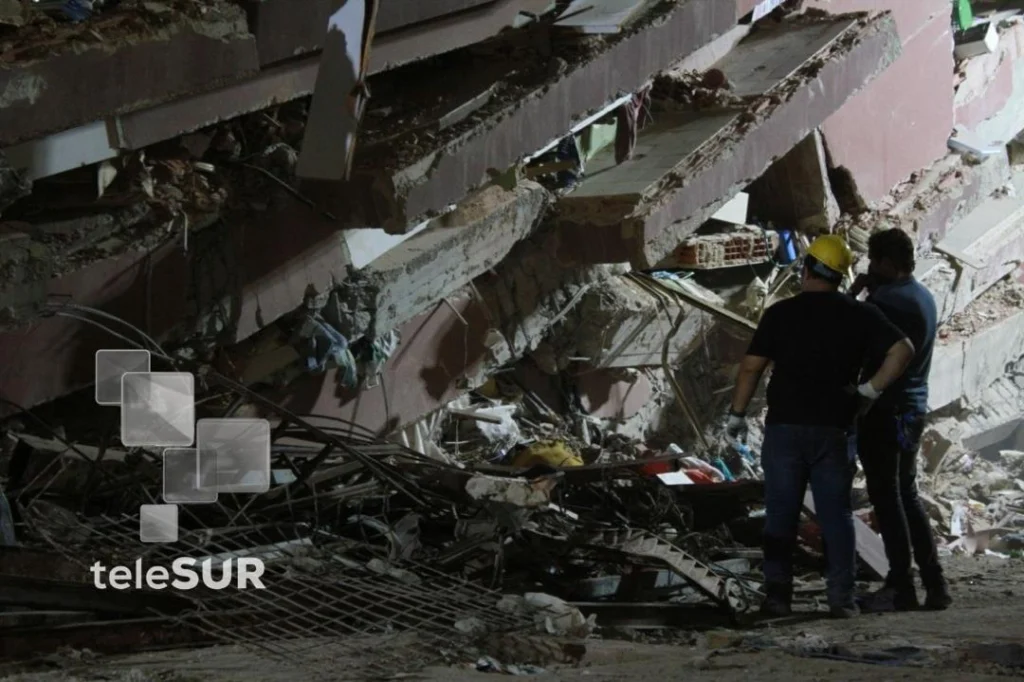
The state of the multifamily buildings in Los Corales demonstrates the severity of the double earthquake. Engineers from the Brazilian brigade (Bombeiro Militar Minas Gerais) and Venezuelan technicians are evaluating the inclination and shear failures in the exposed columns to determine the areas that require urgent shoring.
9. Technical removal with support of front loaders
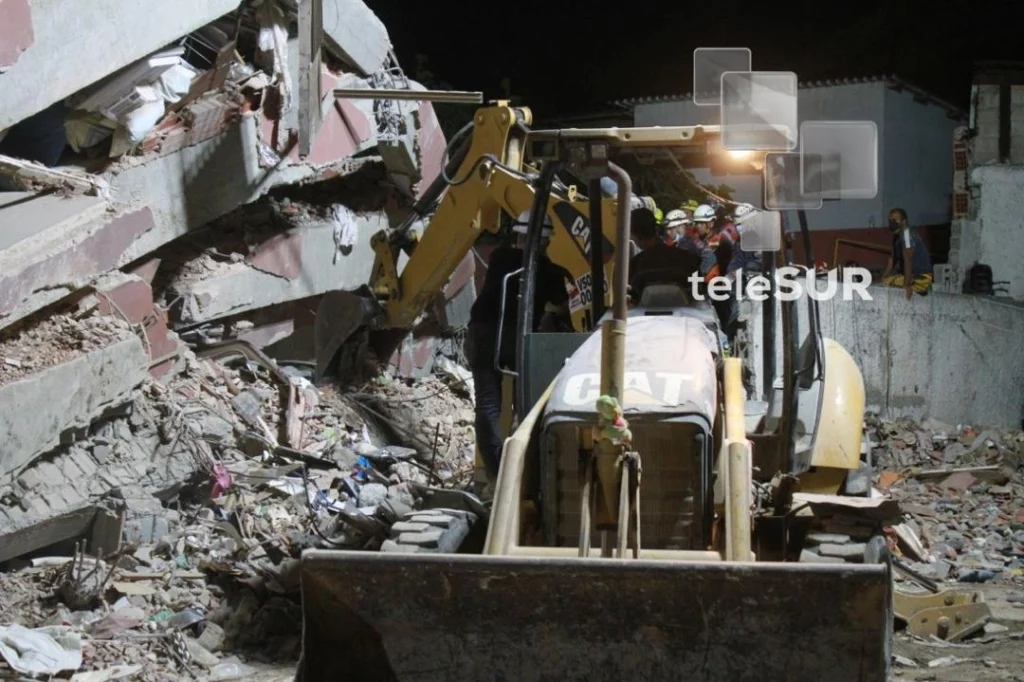
Heavy machinery is advancing steadily under the direct supervision of rescue leaders on the ground. The controlled collection of solid waste mitigates health risks and facilitates surface sweeping in severely affected residential areas.
10. Permanent medical alert and immediate transfer
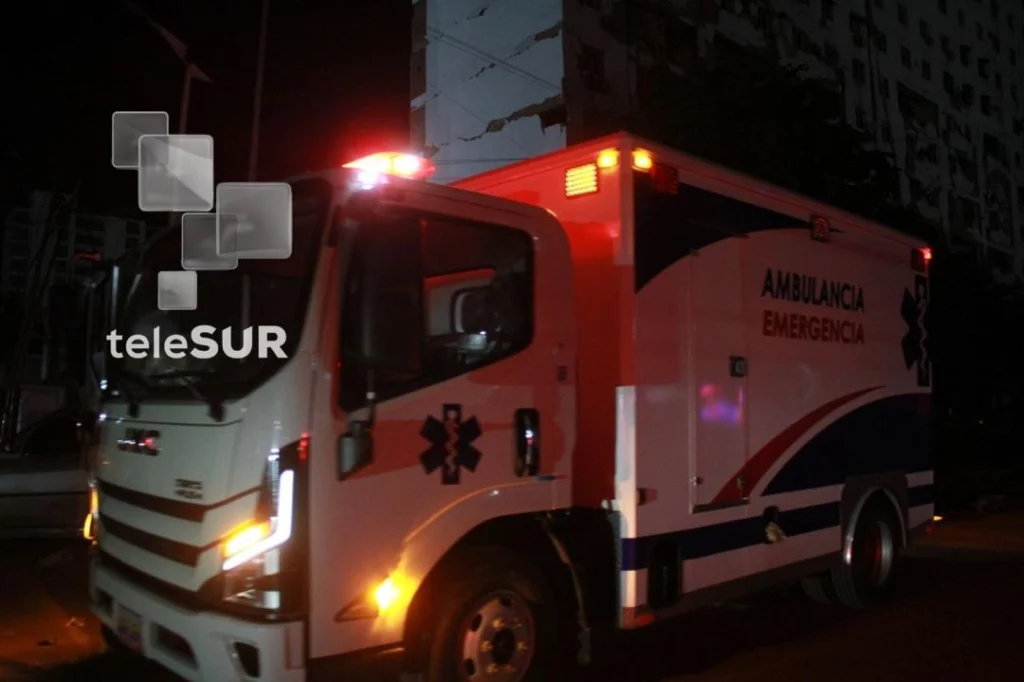
Advanced life support units and emergency ambulances remain stationed with their alert systems activated around the work perimeter. Medical personnel are on call 24 hours a day to ensure the stabilization and immediate medical evacuation of anyone rescued from the rubble.
The scale of the emergency was reflected in the official report from the Venezuelan Ministry of Communication and Information issued on Saturday, July 4, in which the death toll rose to 2,954 people. The number of injured reached 16,592, and the total number of rescued citizens remained at 6,462.
Venezuela Activates Caracas-la Guaira Air Bridge for Post-Quake Aid
The disaster has left 16,309 people homeless after 856 buildings were damaged and 190 completely collapsed. In response, the national government is operating 80 temporary camps to provide shelter for those most in need.
(Telesur)
Translation: Orinoco Tribune
OT/JRE/SF